
In this post, we preview August’s PubSci, reflect on July’s talk, look to the skies and more. Read on!
STOP PRESS: Our August event is next week – only 20% of tickets remaining.
August’s PubSci is Nearly Fully Booked
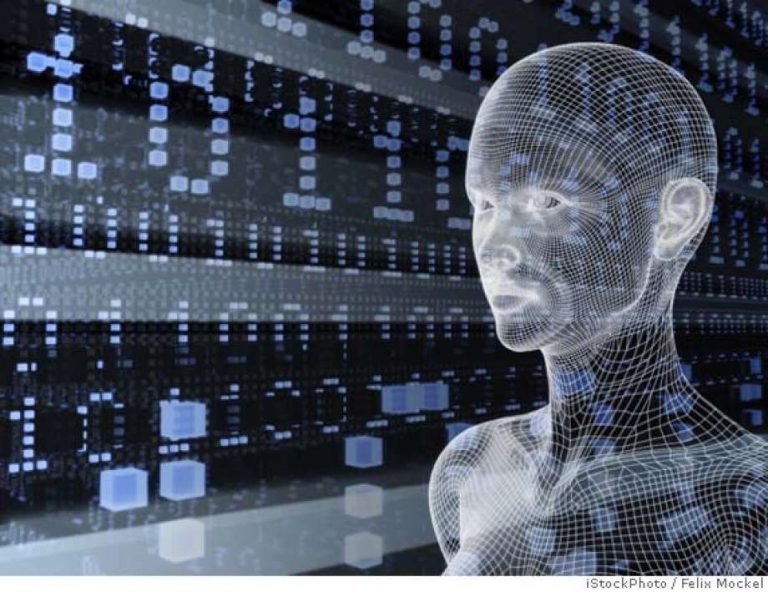
80% of tickets for next week’s talk on Demystifying AI have already been snapped up at the time of writing. Head to the booking page now if you don’t want to miss out.
Many of us have questions about AI and want to understand it better. As ChatGPT, Microsoft Copilot and Apple Intelligence get embedded into our devices and our lives, it’s increasingly important that we understand this tool and are comfortable with what AI really is (and what it really isn’t). On Wednesday 20th August Dr Ruth Stalker-Firth shares insights from three decades of involvement in AI to give us the solid grounding we need if we are to make informed choices.
~
Art meets science in words and images – Wellcome Photography Prize Winners Announced

Since 1997 the Wellcome Photography Prize has been celebrating compelling imagery that captures stories of health, science and human experience. This year’s winners were announced on 16th July and the top 25 images are on show at The Francis Crick Institute close to London’s King’s Cross until 18th October. The Crick is worth a visit just for the fabulous modern architecture and a very nice cafe.

There’s no need to book, just turn up during normal opening hours (open Wednesday to Saturday).
~
Open your eyes, Look up to the skies…
A few years ago I was camping in Sussex at this time of year, and we were treated to most spectacular display of ‘shooting stars’ I’ve ever seen. While many looked like static or short, bright scratches in the night sky, some seemed impossibly long and slow as they grazed the tree-line. We’d been fortunate to camp during a particularly good year for the Perseid meteor shower.
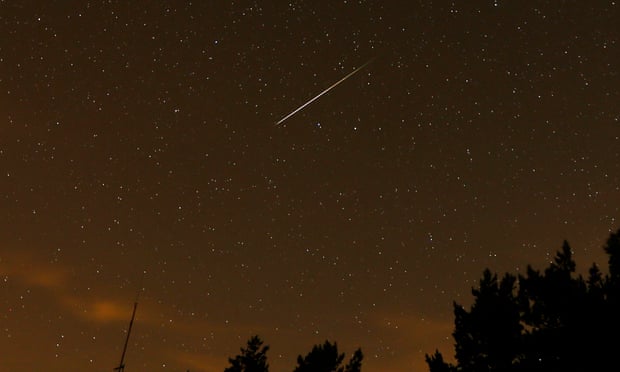
The Perseids, as the shower is known, are one of the most dramatic things to see in the night sky between July and August, and a highlight of meteor hunters’ calendars due to their frequency and brightness. Dark skies are best, of course.
The Perseids are caused by the Earth slamming into the debris left behind by comet 109P/Swift-Tuttle and are so-called because they appear to be radiating from the Perseus constellation. Unfortunately this year’s peak is 12th August (tonight, as I write) when the moon is still quite bright in the sky and there’s hazy cloud above South London.
Greenwich Observatory has written a super guide for anybody wanting to see the Perseids this year.
~
Easy come, Easy go…
If the thought of bright meteors streaking across the skies (albeit from comet debris) brings June’s PubSci to mind, when Dr Stuart Eve explored why large asteroids strike Earth at surprisingly regular intervals, you might be interested in a study published today in the Planetary Science Journal called Placing the Near-Earth Object Impact Probability in Context. This paper looks at the lifetime odds of an individual dying from an asteroid impact with global effect and compares them to other odds of dying from what it describes as “other preventable causes of death”.
How rabies, elephant trampling and lightning strikes count as entirely ‘preventable’ is a little beyond me, but I’m sure Stuart would be heartened to know that impact by a 140 m diameter asteroid is also considered preventable by the study’s authors in the light of our ability to catalogue increasingly small near-Earth objects (NEOs) – something Stuart discussed towards the end of his talk.

You can find a very readable discussion of the paper on phys.org but the original is definitely worth a look. You’ll need to click the graphic to enlarge it, which plots the probability of an event happening in an individual’s lifetime against the likelihood you’ll die if it does happen to you. It seems elephant attacks are nearly always fatal, though mercifully rare.
Surprisingly, Nugent et al estimate you’re more likely to witness a 140m+ asteroid hit somewhere on Earth during your lifetime than you are personally to be struck by lightning, and the lightning is also more likely to be fatal. Which leads us nicely onto statistics.
~
Looking back on July’s PubSci

On Wednesday 16th July, PubSci welcomed Professor Adam Kucharski (pictured centre with Mike and Richard from PubSci and King Henry VIII), epidemiologist, statistician, and bestselling author of The Rules of Contagion. Adam came to talk about the crucial ideas behind his new book, Proof: The Uncertain Science of Certainty. New Scientist described it as a “life raft in a sea of fake news and misinformation.”
You can order both of Adam’s books here. Many thanks to Adam for a brilliant talk that ranged from drinking habits of Cambridge colleges (and how they non-causally predict exam success) to fake news and self-driving cars.
In the pre-covid days, I taught a lecture on Ethics for Engineers, featuring the famous trolley problem which challenges us to make moral choices when neither delivers a “good” outcome. There’s no right or wrong answer — what matters is how you make the choice: what data, which biases, and which ethics you bring to bear in the decision. This is exactly the kind of decision that AI in self-driving cars will have to quickly make when faced with knocking down a pedestrian in the road or swerving into a family of ducklings. Adam talked about MIT’s Moral Machine project which invites the public to submit their choices for various scenarios and reveals some interesting cultural differences.

We were delighted to learn that somebody in the audience had actually worked on Moral Machine. Read all about the experiment and its fascinating findings here.
~
Talking of AI, here’s one last reminder to book for August’s talk: Demystifying AI with Dr Ruth Stalker-Firth. With over 80% of tickets already snapped up at the time of writing, you’ll need to be quick.
• • •
The Summer / Autumn Programme is Out
PubSci’s latest programme runs from July to November (there’s no event in December) and is perfect for printing out and pinning to your work noticeboard or sticking to the fridge, It’s always available on the Current Programme page, along with past event programmes, and you can link to the image below on your own website.

Click the image to open the programme in a new tab.
Thanks for reading. Please feel free to email or comment in response. Hope to see you at The Old King’s Head on Wednesday 20th August.
12/8/2025 Posted by Richard, PubSci programmer and host
PubSci: Sipping • Supping • Science
• • •
Keeping Up With Future Events
To make sure you don’t miss out on future events, subscribe to our Google Calendar to be the first to know when new talks are scheduled, and follow PubSci’s events on Eventbrite to be notified when tickets are available. You can also sign up to our own mailing list on any page on this site.
• • •
About PubSci talks
PubSci is organised and hosted by science communicator, Richard Marshall, assisted by Mike Lucibella. Events are held upstairs at the Old King’s Head, near London Bridge tube. No specialist knowledge is required, just curiosity. Doors open at 6.30pm for a 7pm start. Talks run for ~45 minutes and are followed by a Q&A session. The Old King’s Head has a happy hour before 7pm, and the kitchen serves excellent pub grub.
There is no charge for attending PubSci talks, but we have a cash whip-round to cover expenses on the night – consider it “Pay What You Can Afford”. As few of us carry cash these days, you can make a donation when registering for ticketed events with Eventbrite. Please help us continue putting on events. PubSci has no other source of funding.
We aim to keep PubSci accessible for all, although it is unsuitable for under 18s as we meet in the function room of a pub. Regrettably, there is no wheelchair access.
You can find all our links on our LinkTree.

Address:
The Old King’s Head (upstairs room)
King’s Head Yard
45-49 Borough High Street
London SE1 1NA
Discover more from PubSci
Subscribe to get the latest posts sent to your email.
 PubSci