In this post: Details of October’s PubSci on Darwin’s botanical obsessions; The Science Show podcast delves into the miasma, and what to see in Regents Park this month if you love science and art.
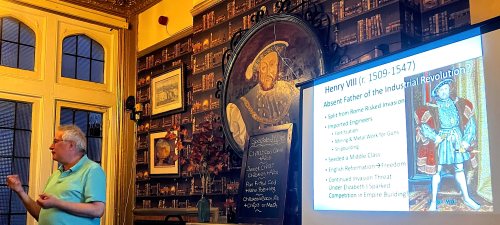
Probably none of us had considered that, despite the amazing technical achievements of the Roman and early medieval period, very few purely engineering advances were made! It certainly provoked lively discussion, which always makes for a good evening. And who among us had ever considered Henry VIII as the “absent father of he industrial revolution”? Laurence certainly made a good case for it, while Henry looked on approvingly.
Beauty, Sex and Death at Down House
That’s not the title of a murder mystery, but a reference to this month’s PubSci when Sheila Poole from the Down House visitor outreach teamdelves into the great naturalist’s obsession with orchids and insect-eating plants on Wednesday 21st October, in Beauty, Sex and Death – Charles Darwin on botanical deception and carnivory.
If you’re reading this on Tuesday, the event is tomorrow. It’s hugely popular and fewer than 10 tickets remain, so get your skates on if you want to grab a place. You can read more about it here or go straight to the booking page here.
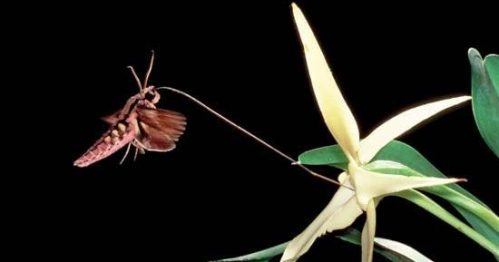
Sphinx moth feeding on Darwin’s Orchid
The venue is PubSci’s regular home, The Old King’s Head near Borough Market, which offers a great range of drinks, has a happy hour before 7pm, and opens the kitchen serving classic pub grub especially for us. Doors open at 6.30 for a 7pm start. Talks generally run for ~45 minutes and are followed by a Q&A session. Full address on the booking page.
As most of you know by now, PubSci talks are pay-what-you-can: You can make a contribution when booking on Eventbrite. We have no other source of funding. There are two ticket options:
Book for one + Support PubSci (max 1 ticket) if you prefer to contribute when booking – this option also reserves you one spot at the event. You may need to scroll down to see this option on Eventbrite.
Book without donating (max 4 tickets) if you prefer to put cash in the pot on the night.
Advance News of November PubSci
If you’ve checked out our current events programme, you’ll have noticed that November’s talk is a bit special.
The speaker will be Oxford professor of mathematics and holder of the Simonyi Chair in the Public Understanding of Science, Marcus du Sautoy. We’ve been in discussion since late last year, and I’m delighted we were able to find a date for Marcus to come to the Old King’s Head onWednesday 18th November.
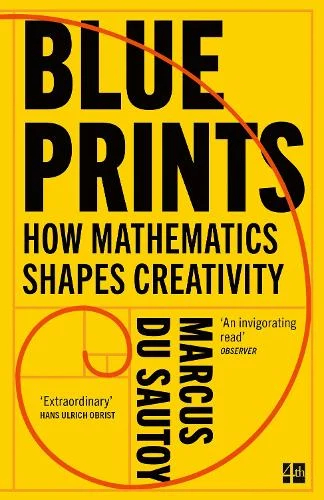
Marcus is a regular guest on BBC Radio 4’s In Our Time and anybody listening to the Today Programme on Radio 4 on Monday 19th October will have heard him give his response to the huge AI backlash from some leading mathematicians. Marcus is also my interview guest for next episode of The Science Show, to be broadcast on Monday 2nd November. We’ll be looking at some of the nine popular science & maths books he’s published, discussing AI in maths, and exploring the amazing maths that subtly underpins much of art and creativity. This was the topic of his latest book, Blueprints – now out in paperback – which he’ll be signing after November’s talk.
Art, Science and Worms
If you fancy getting outside this month, here are a couple of great science-related things to explore.
Worm Weekend at Down House, Charles Darwin’s family home in Kent, takes place this coming weekend, 24th – 25th October when you can Learn about different types of earthworm and take part in hands-on worm sampling in the beautiful gardens at Down House.
Darwin was himself rather obsessed with earthworms. He studied them over 40 years, tried to charm them by playing the piano and the bassoon at them – despite apparently having no skill in bassoon playing – and declared that no other animals have played “so important a part in the history of the world“. Find out why at Down House. It’s free to join in the events with a ticket to the English Heritage house and gardens.
Earthworms were the subject of Darwin’s final scientific book, The Formation of Vegetable Mould Through the Action of Worms, published in October 1881, just six months before his death. His most famous book, On The Origin of Species was published on 24 November 1859, and that will be celebrated at Down House with a weekend of special events on 21st – 22nd November.
Artist Conrad Shawcross is well known for creating art inspired by science. His piece Ringdown featured in the Science Gallery’s Quantum Entangled exhibition which ran from October 2025 to March 2026. He’s also exhibiting a piece inFrieze Sculpture 2026, the annual open air sculpture trail in London’s Regents Park. His piece ‘Eye of the Needle (Time Pebble (E30A13))’ was inspired by a 2008 visit to the Holmdel Horn Antenna in New Jersey, USA, which is the historic instrument that identified cosmic microwave background radiation and confirmed the Big Bang theory in 1964.
You can see Eye of the Needle (Time Pebble (E30A13)), along with 10 other sculptures throughout Regent’s Park until Sunday 1st November. There’s even a video of the artist discussing how his sculpture relates to cosmic time and the limits of human understanding on the Frieze website.
The Number 1 Science Podcast – again!
The Science Show is a magazine-style miscellany packed with news, interviews, chat and discussions, plus great music and cultural crossovers. Episode 11 was broadcast on Monday 5th October and is available to stream or download on Mixcloud.
Deborah Rowe joins me to discuss OpenAI solving one of the hardest problems in maths, worth $1 million (or did it…), Stanford University’s apparent claim that the brain evolved from two separate organs, the death of the Leap Second, and El Niño continuing to break records. Danielle Green joined me for a Random Walk though the history of miasma, mosquito borne diseases, gin and tonic, and a Soho water pump. And historian of mathematics (and former PubSci speaker) Snezana Lawrence discusses how future historians might look back on the AI explosion currently causing ructions in the maths world.
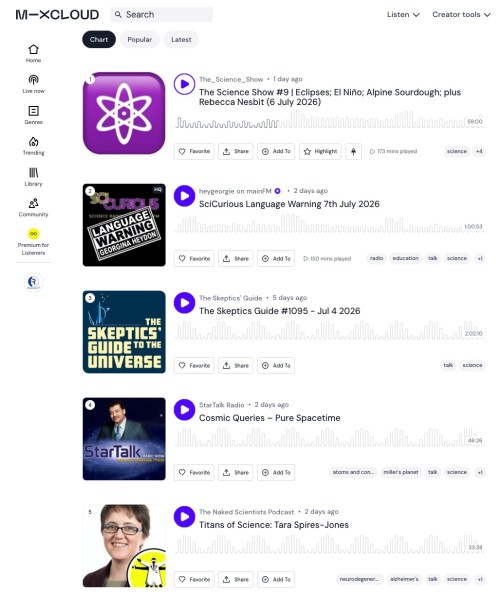
Episode 11 of The Science Show hit the top spot in Mixcloud’s science chart within a day of release, and broke into the Top 10 of the overall Podcast and Talk charts for the first time. I’m delighted by this unexpected success but what matters more is what you think of it. Please give it a listen and follow the show. If you like it, do please tell your friends!
Well that’s it for this post. Hope to see you at the Old King’s Head on 21st October, and don’t forget to put Wednesday 18th November in your diary.
Richard (Science communicator and PubSci organiser/host)
In this blog post: September’s PubSci, The Science Show podcast returns, and what’s the big fuss about eclipses anyway?
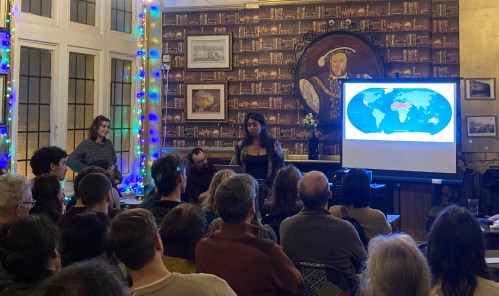
First of all, huge thanks to Parry Hashemi from Imperial College for July’s PubSci when she talked about serotonin’s role in depression and the incredible potential of measuring serotonin in brain organoids cultured from a patient’s own stem cells. And than she shared some music created from the electrical signals made by neurons in those organoids!
Parry Hashemi (Photo: Andy Powell)
What Has Engineering Ever Done For Us?
Quite a lot, as it happens, and on Wednesday 16th September, PubSci is putting the E back into STEM when scientific tour guide Laurence Scales will take us on a virtual tour through 3,000 years of engineering advances, in Great Engineering Leaps – Archimedes to Brunel and Beyond.
From Ancient Egypt and Greece to the Victorian age of steam and iron bridges, Laurence will highlight the some of the great leaps in imagination and engineering achievement and the people who made such things possible, all in just 45 minutes! Expect some surprises.
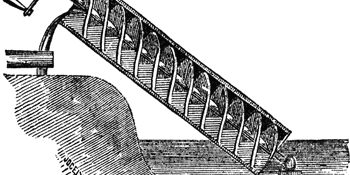
Archimedes famous screw for raising water
Laurence is a long time friend of PubSci and an established London tour guide who has spent years digging up historical nuggets in scientific archives and libraries, so we’re really looking forward to this one over at PubSci Towers.
If you’d like to know more, jump over to our Next Event page, otherwise head straight to the Eventbrite booking page ASAP, where you’ll find full details, ticket info, and a link to reserve your spot.
The venue is PubSci’s regular home, The Old King’s Head near Borough Market, which offers a great range of drinks, has a happy hour before 7pm, and opens the kitchen serving classic pub grub especially for us. Doors open at 6.30 for a 7pm start. Talks generally run for ~45 minutes and are followed by a Q&A session. Full address on the booking page.
As most of you know by now, PubSci talks are pay-what-you-can: You can make a contribution when booking on Eventbrite. We have no other source of funding. There are two ticket options:
Book for one + Support PubSci (max 1 ticket) if you prefer to contribute when booking – this option also reserves you one spot at the event. You may need to scroll down to see this option on Eventbrite.
Book without donating (max 4 tickets) if you prefer to put cash in the pot on the night.
How was the eclipse for you…?
I hear many who watched August’s partial solar eclipse in the UK were rather underwhelmed. I’d put it on a par with a lunar eclipse (which always accompanies a solar eclipse two weeks before or afterwards on what would otherwise be a full moon). Lunar eclipses are great to look at, but they don’t rock your world.
As I mentioned lat time, the tip of Cornwall saw around 96% totality (96% of the sun covered by the new moon) but even the remaining 4% of the sun remains intensely bright and shouldn’t be looked at directly without special eclipse viewing specs. Most of England saw little more than 90% coverage, but even at 96% you don’t get the dramatically darkened sky and animals behaving strangely. To experience an eclipse, over 99.5% coverage is required. I wrote about some of the experiences of seeing an eclipse in my 2024 blog piece after the four minute long Mexican eclipse.
Significantly, the sky is not black during a total eclipse because the atmosphere scatters the shorter wavelengths of light coming from the sun, making the sky a deep blue. This is known as Rayleigh scattering and is the very reason the sky is blue in general but we see red sunsets — all the blue light has been scattered out so only read can reach our eyes.
Nearly every eclipse photo you see will have been underexposed to make the sky look black and turn the sun’s hot corona into a crisp halo around the moon. It’s not really like that. More to the point, the reason people become eclipse chasers isn’t generally scientific study, it’s the experience. It’s simply uncanny — but for that, you need genuine totality.
So how was my eclipse in northen Spain…? In a word: cloudy. A beautiful, bright, clear and sunny day turned into full cloud as the eclipse approached. Sounds like a huge disappointment, right? Actually no. With tick clouds between us and the deep blue of the eclipsed sky, that Rayleigh scattered light mostly couldn’t reach our eyes, so it was much darker than a normal eclipse. Dramatically, even apocalyptically so, I think it’s fair to say, and it happened so unfathomably quickly in the final phase, made all the stranger by not even being able to see the sun that is being eclipsed. I imagine this kind of occluded eclipse would be even more terrifying for ancient cultures than the ones we generally think of, where you can at least see the moon covering the sun.
And talking of actual eclipses, George Holdaway and I covered them in July’s podcast, the latest edition of which was just uploaded to Mixcloud.
The Number 1 Science Podcast
The Science Show is a magazine-style miscellany packed with news, interviews, chat and discussions, plus great music and cultural crossovers. Episode 10 looks into space mirrors, the growing super-El Niño, and the potential of catnip – as a mozzie repellant. We also talk a wander through the beauty, impossibility and cult-inspiring possibilities of maths (with a couple of unusual deaths), and there’s an interview with science poet, and founder of Slow AI, Sam Illingworth. Plus, as ever, some great music choices.
IN addition to his substack, The Slow AI which helps over 21,000 followers consider how they can engage mindfully with AI and LLMs, Sam founded and co-edits a science-meets-art-meets-literature journal (peer reviewed, of course!) call Consilience. In case you’re unfamiliar with the term, consilience means the linking together of facts, theories, and principles from different academic disciplines to form a unified, comprehensive explanation, or the way evidence from independent, unrelated sources can “converge” on strong conclusions.
sam also runs the Science Communication Through Poetry short CPD course at Edinburgh Napier University. An online course run at lunchtime so anybody can join. Check it out here if you’re curious to know more.
July’s episode of the Science Show hit the top spot in Mixcloud’s science chart and zoomed into the Top 20 of the overall Podcast and Talk charts, which was a genuine surprise. I’d be honoured if you’d give Episode 10 a play too.
In this blog post: July’s PubSci; Listen to the Number 1 Science Podcast, and what to do this summer
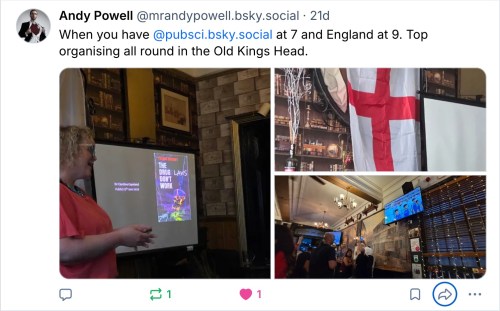
First of all, huge thanks to Caroline Copeland from King’s College London for June’s PubSci when she talked about the problems with how government drugs policy is made in England and Wales (compared to what the science tells us) in The Drugs [laws] Don’t Work. Once again the room was packed and even with a really engaged Q&A session, we managed to get the room turned around in time for England’s first World Cup match (against Croatia) at 9pm, which our hosts at The Old King’s Head really appreciated.
Courtesy of Andy Powell
July’s PubSci is booking fast
As mentioned in my previous blog post, on Wednesday 22nd July, PubSci is delighted to welcome Dr Parry Hashemi from Imperial College London to talk about the “happiness molecule” in The Sound of Serotonin – Listening to Brain Cells.
Serotonin’s relationship with depression is complex, and assessing neurotransmitter levels in living brains remained a challenge for years. Now Dr Hashemi’s team has developed a revolutionary, non-invasive technique for tracking serotonin levels in real time and even turning the results into music.
With 2/3 of tickets already snapped up at the time of writing, this could be one of our most popular talks ever. Don’t miss the chance to reserve a place — head over to the Eventbrite booking page ASAP, where you’ll find full details, ticket info, and a link to reserve your spot.
The venue is PubSci’s regular home, The Old King’s Head near Borough Market, which offers a great range of drinks, has a happy hour before 7pm, and opens the kitchen serving classic pub grub especially for us. Doors open at 6.30 for a 7pm start. Talks generally run for ~45 minutes and are followed by a Q&A session. Full address on the booking page.
As most of you know by now, PubSci talks are pay-what-you-can: You can make a contribution when booking on Eventbrite. We have no other source of funding. There are two ticket options:
Book for one + Support PubSci (max 1 ticket) if you prefer to contribute when booking – this option also reserves you one spot at the event. You may need to scroll down to see this option on Eventbrite.
Book without donating (max 4 tickets) if you prefer to put cash in the pot on the night.
I used this Smiley for last month’s talk on recreational drugs and government policy and it seems appropriate for a talk on serotonin too!
Of Levitating Hamsters and Other Animals
Many thanks to those of you who helped to pack out my humorous-but-fact-filled science talk at London Fortean Society on the final day of June.
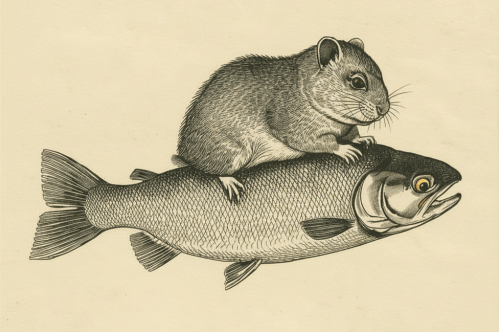
The Levitating Hamster and the Salmon of Doubt went down a storm, it seems – I certainly had a great time, even if the levitation demo didn’t go quite as well as in rehearsal – and somebody picked up a pub quiz-winning animal fact that came in handy the following day at April PubSci speaker, Joanna Bagniewska’s Pint of Knowledge talk about animal butts!
No PubSci in August (but there is an eclipse)
It’s official, there’s no PubSci in August. I’m giving myself a little holiday and going to sSpain to see the total eclipse of the sun on 12th August. The path of totality won’t pass over the UK. It begins in northern Russia, loops round the Arctic circle to pass through Greenland and the west coast of Iceland before touching land again at the northwest corner of Spain where it passes diagonally to the south west and over the Balearic islands before finishing in the Mediterranean sea.
The tip of Cornwall will see around 96% totality (96% of the sun covered by the new moon) but even the remaining 4% of the sun – if visible in a cloudless sky – will remain intensely bright and must not be looked at directly except with special eclipse viewing specs. It’ll be interesting but it won’t be an eclipse. To experience an eclipse, over 99.5% coverage is required. I wrote about some of the experiences of seeing an eclipse in my 2024 blog piece after the four minute long Mexican eclipse.
Those lovely folk at Royal Museums Greenwich (AKA Greenwich Observatory) have put together an eclipse guide for anybody wondering what to expect from a partial eclipse of the sun. Talking of eclipses, perhaps nobody did more to bring them to public consciousness than the late, great, laryngitic Welsh singer Bonnie Tyler who sadly died yesterday. Feel free to indulge in her 5 1/2 minute, Meat Loaf-inspired peak ’80s power ballad (no, I don’t understand the video either, nor do I want to).
Anyhoo…talking of actual eclipses, George Holdaway and I take a deep dive into the science, culture, and history of total eclipses of the sun in…
The Number 1 Science Podcast
The Science Show is a magazine-style miscellany packed with news, interviews, chat and discussions, plus great music and cultural crossovers. This month’s show discusses recent findings about dark energy, looks at the weirdest sourdough ever baked, dives into eclipses and shares some of the best science-related things to do in London this summer, including art and theatre.
I’m particularly chuffed that, within a day of launching Episode 9 of The Science Show, it hit the top spot in MIxcloud’s science chart and zoomed into the Top 20 of the overall Podcast and Talk charts!
And that’s not even the best bit… Our show is currently rated above four top notch, highly professional, and long-established podcasts — including Neil deGrasse Tyson. I knoooow. Consider my mind well and truly blown.
We’d love you to give it a listen and push it even further up the podcast charts before Tuesday when they reset.
I know What You Should Do This Summer
So there’s no PubSci in August, both Wimbledon and the footy and will be finished, and the eclipse is only 2 minutes long at best, so how are you going to spend your free time in London? Fear not, The Science Show podcast is here! I won’t give you the hard sell again, but it really is packed with science news and some brilliant science-related events happening from late July through to September, including a highly creative musical about Laika the first dog in space and some major exhibitions with scientific content.
However, there were a couple of things we couldn’t fit in, so I’ll share those with you here:
A friend recently decided to start his quest for astrobiology by visiting the London Wetlands Centre to go birdwatching, on the basis that he needs to train his eyes and brain to recognise unfamiliar life forms on Earth before turning his attention towards space. I don’t know if that’s how everybody gets into astrobiology, but on Friday 24th July, Astronomer Royal, Michele Dougherty, looks at the icy moons of Jupiter and Saturn and asks whether Ganymede, Callisto or Europa could host life entirely separate from what we find on Earth. Information and booking here.
On Friday 31st July at 6.30 pm join author and astrophotographer Josh Dury for an evening talk exploring the importance of preserving dark skies , hosted by the astronomers of the Royal Observatory Greenwich in the National Maritime Museum.
Copies of Josh’s book, 52 Assignments: Night Photography, will be on sale on the night and available as an optional addition to the event ticket. Tickets are just £10 (students £9), available here.
Centre of the Cell at Queen Mary University, London (Whitechapel) has lots of family-friendly events in July and August. Learn about your body’s largest organ in Skin Deep, step into the past, present, and future of cell biology in CELLebration, or build a brain to understand how AI works in Artificial Intelligence – but where is the intelligence?
And talking of activities to keep any young people in your life busy over the summer, lots of institutions and museum have a programme of activities during the school holidays and you could do worse than checking out the Royal Institution’s summer workshop programme (where you might even bump into me).
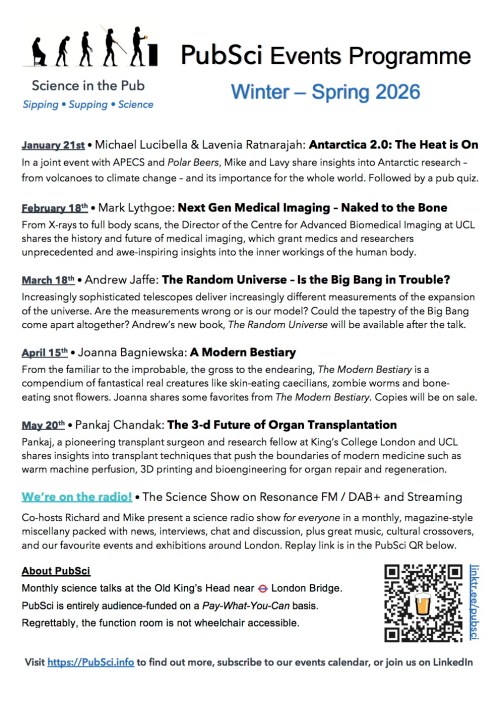
PubSci event programme
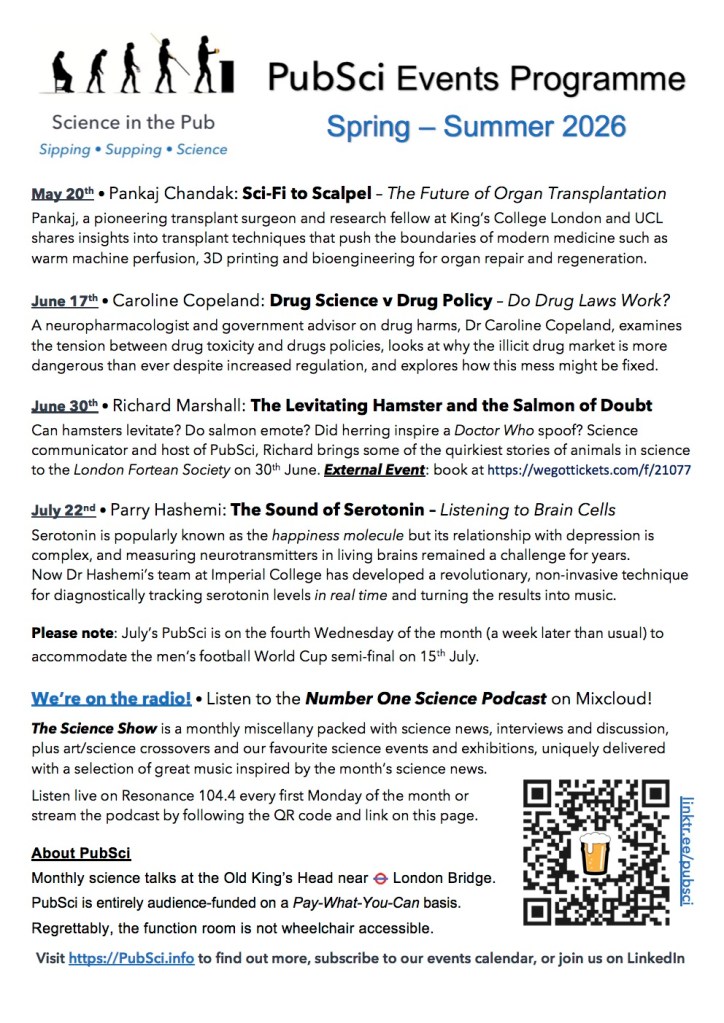
PubSci’s Spring / Summer Programme will soon be replaced by Summer / Autumn covering September to the end of the year. I’m already excited about the programme and can’t wait to share it with you. For now, here’s the current one.
If you’re coming to The Old King’s Head for tonight’s PubSci, here’s an important update:
It’s warm today – which means it’s gonna be even warmer in the upstairs room.
We have to keep windows closed due to noise from outside, so wear light clothes and bring a small fan
We’ll ventilate before the talk and during the break so if you sit by a window please leave it open until the the event starts.
It’s football today, so the pub will be busy and noisy downstairs.
Please be patient with the staff, know what you’re ordering and remember that you can order at the foot of the stairs, but please wait at the open door and don’t enter the bar area.
If you’re eating, order early (there are menus and a Specials board upstairs) and listen out for your name / order.
It’s not just any football, it’s England’s first game of the men’s World Cup
Greg, the landlord, told me he could have filled the pub three-times over with football bookings, and it’s a sign of PubSci’s long relationship with the Old King’s Head that he’s honouring our event booking tonight.
Please be super-lovely to the staff, and spend loads at the bar!
The match kicks off at 9pm, when PubSci usually wraps up and it could get noisy from 8.30
We’ll pack up the screen and projector during the break, and finish the Q&A no later than 8.45
Please keep questions clear and brief, without long statements or pronouncements
We’ll be handing the room back to anybody who wants to watch upstairs
For once, there won’t be lots of time for socialising after the event
As soon as we finish, we need to quickly turn the room around (possibly literally) and open the doors
Please help by returning your glasses to the downstairs bar and your plates to the upstairs bar.
If we need to move chairs, please help us with that too so we can keep musing the pub
Don’t be put off
The side door will be open, so you won’t need to struggle through a sea of footy fans when arriving or leaving
July’s PubSci is back on!
We postponed Marcus du Sautoy’s planned July talk as it clashed with the first semi-final of the World Cup. However, I have arranged a different talk for the following week when the football is all over.
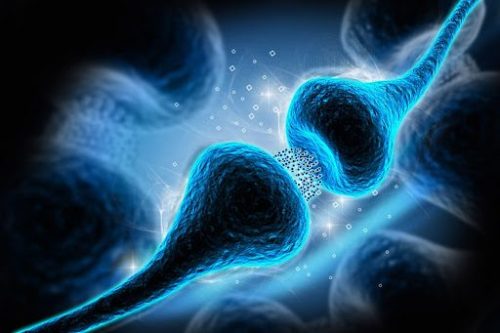
Serotonin is popularly known as the happiness molecule but its relationship with depression is complex, and measuring neurotransmitters in living brains remained a challenge for years.
Now Dr Hashemi’s team at Imperial College has developed a revolutionary, non-invasive technique for diagnostically tracking serotonin levels in real time and turning the results into music.
30th June 2026: Of Doubtful salmon and Hovering Hamsters
Can hamsters levitate? Do salmon emote? Did herring inspire a Doctor Who spoof? Science communicator and host of PubSci, Richard brings some of the quirkiest stories of animals in science to the London Fortean Society in a not-to-be missed event on Tuesday 30th June: The Levitating Hamster and the Salmon of Doubt.
This is not a PubSci event, so you’ll need to book through London Fortean Society at https://wegottickets.com/f/21077. Their venue is The Bell on Middlesex Street, London E1 7EX (Liverpool Street / Aldgate East).
There’s a new event programme
The PubSci Spring / Summer Programme has finally been uploaded. You’ll notice it doesn’t go very far into the future – that’s because the world cup and August’s total solar eclipse have changed a few plans – but it’s still worth looking at and printing out.
A radio show to delight your ears
Episode #8 of The Science Show was broadcast on Monday 1st June and is available to stream now as a podcast. In this show:
• George Holdaway joins me to discuss the latest science news including: How fungi can trigger ice and rain; the perilous state of Antarctic ice; NASA’s moon base plans; Pluto and Plutino; and String Theory emerging from nowhere
• George and I take a Random Walk from Mercury to Murder via Evangelista Torricelli, Toxic Hats, and Tycho Brahe.
• Dr Parry Hashemi from Imperial College London talks neurotransmitters, brain organoids, and turning serotonin into music.
And I’m delighted to say that, within days up release, Show 8 shot to the top of the Science charts and reached number 23 among all podcasts on Mixcloud! A huge Thank You to those who listen in live or stream the podcast. If you haven’t yet, you can find out what you’ve been missing at https://www.mixcloud.com/The_Science_Show/
Anyhoo, I’ll be back with an update soon. Meanwhile, I hope to see you all tonight.
Richard (Science communicator and PubSci organiser/host)
Tickets for June’s PubSci have been available on Eventbrite for a week, and 50% have been snapped up already.
At June’s PubSci, Senior Lecturer in Pharmacology & Toxicology and Director of the National Programme on Substance Use Mortality at King’s College, London, Dr Caroline Copeland will talk about the tensions between the epidemiology, pharmacology and toxicology of recreational drugs and the laws that regulate public access to them.
On Wednesday 17th June, Caroline will examine to what extent drugs policy is really informed by the science, and consider how a truly data-driven policy might differ from the UK’s current laws. Full information is on our Next Event page – or you can just head straight to Eventbrite to book your place ASAP.
Note, England’s first football World Cup [men’s] game takes place the same night, but only kicks off at 9pm, after PubSci finishes. We’ll aim to wrap up by 8.45 so footy fans can be downstairs in time for the kick-off.
Another radio show to delight your ears
Episode #8 of The Science Show was broadcast on Monday 1st June and is available to stream now as a podcast. In this show:
• George Holdaway joins me to discuss the latest science news including: How fungi can trigger ice and rain; the perilous state of Antarctic ice; NASA’s moon base plans; Pluto and Plutino; and String Theory emerging from nowhere
• George and I take a Random Walk from Mercury to Murder via Evangelista Torricelli, Toxic Hats, and Tycho Brahe.
• Dr Parry Hashemi from Imperial College London talks neurotransmitters, brain organoids, and turning serotonin into music.
And I’m delighted to say that, within days up release, Show 8 has shot to the top of the Science charts and is ranked 31 among all podcasts on Mixcloud! A huge Thank You to those who listen in live or stream the podcast. If you haven’t yet, you can find out what you’ve been missing at https://www.mixcloud.com/The_Science_Show/
July’s PubSci
The first World Cup semi-final kicks off on Wednesday 15th July at 8pm – bang in the middle of PubSci. Unfortunately this means there will be no PubSci at the Old King’s Head on 15th July 2026. It’s only fair to our accommodating landlord Greg as he can pack 60 more footy fans into the the upstairs room and they’ll spend even more than PubSci does — especially if England reaches that semi-final.
I’ve been working on a fantastic event at an alternative venue later in July, but comms have gone a bit quiet on that so I can’t promise anything yet. Hopefully I’ll have some good news for you by 17th June though. These changes and uncertainties are the reason I haven’t published a new events programme, but rest assured, I’ll be putting everything in PubSci’s events’s calendar in good time and will get a programme out when I have a moment of time. (In case anybody isn’t aware, running PubSci isn’t a paid role – and there’s no external funding – so me earning a living has to take priority at times!).
Anyhoo, I’ll be back with an update soon. Meanwhile, I hope to see you all on 17th June.
Richard (Science communicator and PubSci organiser/host)
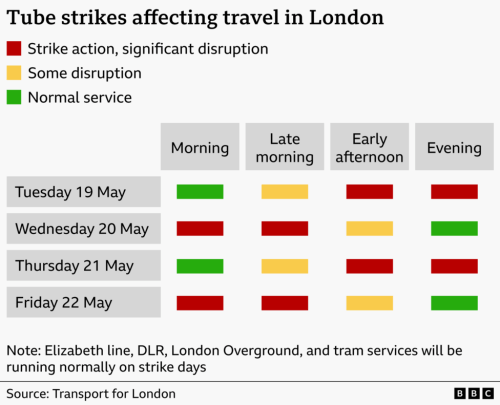
Great news for anyone attending tonight’s PubSci (Weds 20th May): The double tube strikes that had been planned for this week were called off on Monday.
We were already a safe bet for travel, falling on the only midweek evening with no expected disruptions, but with many people opting to work from home due to trouble getting into town, it looked like take-up for tonight’s event was going to be lower than usual.
Fortunately we’ve experienced a flurry of bookings since Monday and only a handful of places now remain. But if you delayed booking a ticket for any reason, now’s your chance to grab one. Free / cash on the door tickets are all gone but you can scroll scroll down a little to see the donation tickets (as always, it’s pay what you want / can).
The Incredible Future of Organ Transplants — tonight at PubSci
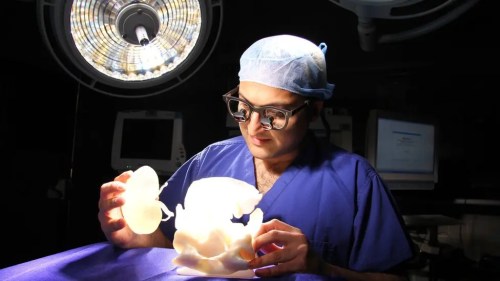
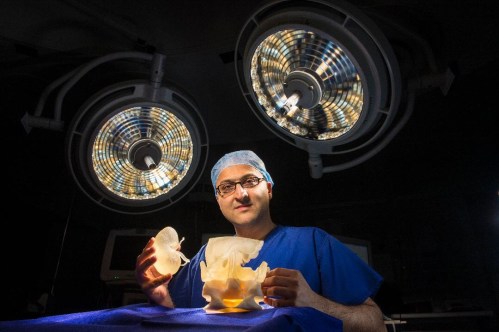
Tonight at the Old King’s Head, pioneering surgeon Mr Pankaj Chandak tells the incredible past, present and future of organ transplantation — from scalpels to SciFi and beyond. Pankaj is a transplant surgeon at Great Ormond Street Hospital (among others) with several medical firsts under his belt. He was also medical advisor and director on the celebrated TV series The Crown, in which he also acted. BOOK NOW
Our speaker, Pankaj Chandak, in the operating theatre
Tune in, check out the science, enjoy the music on The Science Show
April’s speaker, JoannaBagniewska was my interview guest on the latest episode of The Science Show, which was broadcast over the air and streamed live on Bank Holiday Monday 4th May.
We had a great chat about bestiaries, beasts, writing books and how zoologists might be the ones to save us from the great AI robot takeover. If you want to know more, the show is now available to stream as a podcast here on Mixcloud.
As always the show also covers science news and discussion, science and science crossover events in London and beyond, a fabulous Random Walk – this month meandering through the surprisingly long history of drug use (both psychedelic and pharmaceutical) – plus a healthy dose of really good music. This month my guest co-presenter and walking companion was science teacher extraordinaire, Geoff Burgess.
I’m delighted to say that for the second month running, The Science Show is the Number One Science Podcast on Mixcloud.
The Science Show has been running on Resonance 104.4 FM since October 2025, and was presented by myself and Mike Lucibella for the first six episodes. It is independent, unfunded, and written, produced and edited by presenters.
Please do give it a listen. The next episode broadcasts over the air on Resonance 104.4 (DAB and FM) at 3pm on Monday 1st June, and if you’re outside the South East, you can stream it live on RadioPlayer from the Resonance website.
The What’s On section of June’s show includes news of the Great Exhibition Road Festival on 6th & 7th June – so make sure to listen during the first week it’s available – and my interviewee will be a *past PubSci speaker, Parry Hashemi, who will be presenting an interactive science-art project over the festival weekend.
[*July 2019: Not all in your head – “What if a simple skin test could diagnose depression?”]
Coming up in June
As mentioned above, the Great Exhibition Road Festival is the first weekend in June with lots to see and do. It’s a fabulous annual event for all the family, celebrating science, art and culture. Definitely one not to be missed. Note that whilst most events are drop-ins, some require pre-booking so be sure to check out the programme in advance.
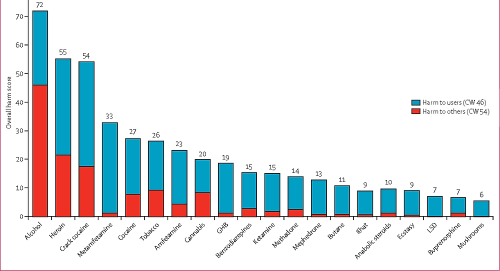
June’s PubSci is on Wednesday 17th when Dr Caroline Copeland from King’s College London picks up the thread of May’s Random Walk on The Science Show to discuss the tension between UK drugs policy and the science of drug toxicity. Caroline is a Senior Lecturer in Pharmacology & Toxicology at King’s College London, and the Director of the National Programme on Substance Use Mortality, and brings a highly informed perspective to the risks presented by recreational drugs, both the legal and the illegal ones.
Recreational drug harms compared (David J Nutt etc al, 2010)
Tickets for that will be available early next week are available on Eventbrite now. We can expect this to be a popular topic, so put the date in your diary nowgrab your ticket ASAP (and subscribe to the PubSci Google Calendar to make sure you can always get your booking in early).
FWIW there’s a big football match the same night, when England take on Croatia in the 2026 FIFA men’s football World Cup – but don’t worry, the game doesn’t kick off until 9pm which is when PubSci finishes, so footy fans can do both in the same evening and non-footy fans can avoid it altogether!
You may have noticed that the new events programme isn’t out yet. This is because I’m negotiating around some dates issues but if you subscribe to our calendar you’ll be the first to know when new talks are scheduled. You can also follow PubSci’s events on Eventbrite to be notified when tickets are available. And sign up to our own mailing list on any page on this site.
Later in June – A Levitating Hamster and a Doubtful Salmon?
On Tuesday 30th June, your very own PubSci organiser and event host, Richard (that’s me!) is giving a humorous but informative talk for the London Fortean Society called the Levitating Hamster and the Salmon of Doubt.
The Levitating Hamster and the Salmon of Doubt
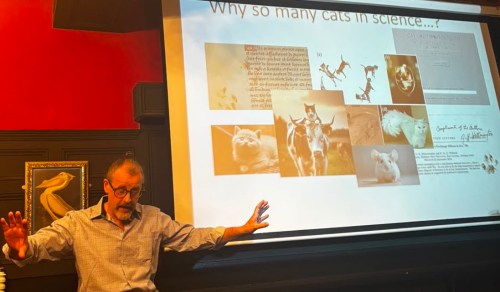
I’ll be looking at the stranger ways animals have contributed to science – including some of the funniest, quirkiest and most bizarre cases – and asking: Can a hamster levitate? Does a salmon emote? Did herring inspire a Doctor Who spoof? And just why are there so many cats in science?
Many thanks to Joanna Bagniewska for a fabulous talk in April about weird and wonderful creatures which inhabit the real world and yet wouldn’t be out of place in a medieval bestiary of curious and fantastical beasts.
Joanna is also my interview guest on the May episode of The Science Show, due to broadcast at 3pm on Bank Holiday Monday 4th May, after which it will be available to stream on Mixcloud, along with science news and discussion, a fabulous Random Walk through science with my guest co-presenter and science teacher extraordinaire, Geoff Burgess, plus a healthy dose of excellent music.
In case you hadn’t noticed, The Science Show has been running on Resonance 104.4 FM since October 2025, and was presented by myself and Mike Lucibella for the first six episodes. Rather wonderfully, our final episode together broadcast as the crew of Artemis II were nearing their furthest point from the Earth.
On the far side of the Moon, the four crew had travelled deeper into space than any humans have ever been, at 406,771 kilometres (252,756 miles) – in fact they were the first humans to leave low Earth orbit since 1972. This official NASA mission patch includes the crew’s surnames.
Episode 6 of The Science Show also features a Random Walk inspired by Charles Darwin (and medieval bestiaries) and an interview with March’s PubSci speaker, Professor Andrew Jaffe.
I’m delighted to report that Episode 6 of The Science Show earned us the accolade of the Number One Science Show on Mixcloud as well as entering the Top 100 of all podcasts on the platform. It’s a tribute to Mike’s knowledge and enthusiasm that we went from zero to Number 1 in six shows, and I want to thank him for saying YES and coming on this journey with me.
Using Mixcloud for hosting allows us to use copyright music in the knowledge that rights holders are compensated (it was originally created for DJs to upload and share mixes without fear of takedown notices for copyright infringement).
This potentially makes The Science Show unique in playing excellent music alongside science content. If you haven’t listened yet, give it a whirl and let me know what you think.
Finally, a reminder that booking for May’s PubSci is live on Eventbrite, and take-up has been brisk (to say the least). I’m keeping this blog post brief and getting it out early in case it books up by the time I do the usual monthly post.
The topic on Wednesday 20th May is “The Incredible Future of Organ Transplants” and our speaker is Mr Pankaj Chandak, a pioneering transplant surgeon at Great Ormond Street Hospital (among others) who was medical advisor and director on the celebrated TV series The Crown, in which he also acted.
You can book directly by going to the Eventbrite booking page HERE, or check out the details and read all about it on PubSci’s Next Event page which is updated each month with the latest event.
Don’t forget that PubSci links are also on our Linktree, including the latest event booking link, links to social media and YouTube, a link to the PubSci LinkedIn group, which everyone is welcome to join, along with our events calendar and latest programme in a format suitable for printing out. Talking of social media, please remember to follow PubSci on Bluesky, which has an excellent science feed in general. Sadly we still have 10x as many followers on the nasty platform which used to be Twitter as we do on Bluesky, which is incredibly easy to join and use.
That’s it for now, though there may be another post before May’s talk. Hope to see you at The Old King’s Head on Wednesday 20th May. Meanwhile, for everyone in the UK, I hope you have a fabulous Bank Holiday Weekend.
In this post I preview this week’s talk by Joanna Bagniewska, look back at March’s event, celebrate something special and look forward to May’s PubSci
Hello and welcome to the April blog. Last month I’d just emerged from UK science week, delivering 17 workshops in 4 days at London primary schools. This month I’ve been supervising some Easter holiday workshops at the Royal Institution, and what a fabulous fortnight it was, with school age kids learning about fractals, programmable self-driving trains, and the mind-boggling scale of the universe. But what’s happening at Science in the Pub?
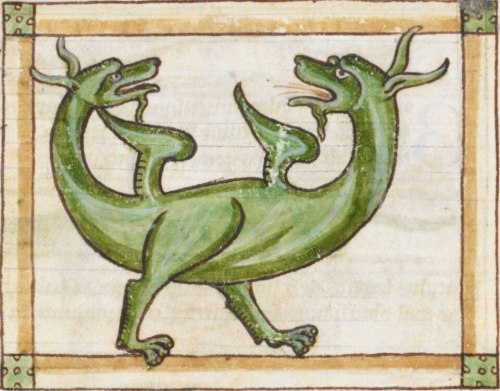
Amphisbene from the Harley Manuscript (Wikimedia Commons)
You’re probably familiar with the idea of a medieval bestiary, those beautifully illustrated collections of fanciful beasts which often incorporated moral lessons about purity of heart and godliness.
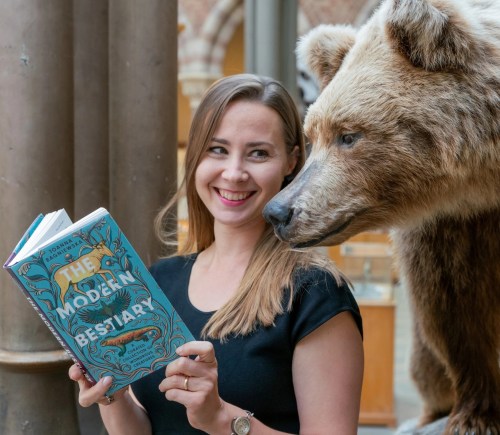
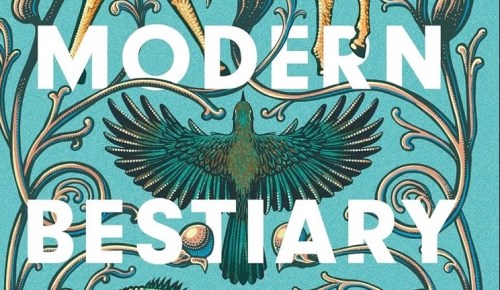
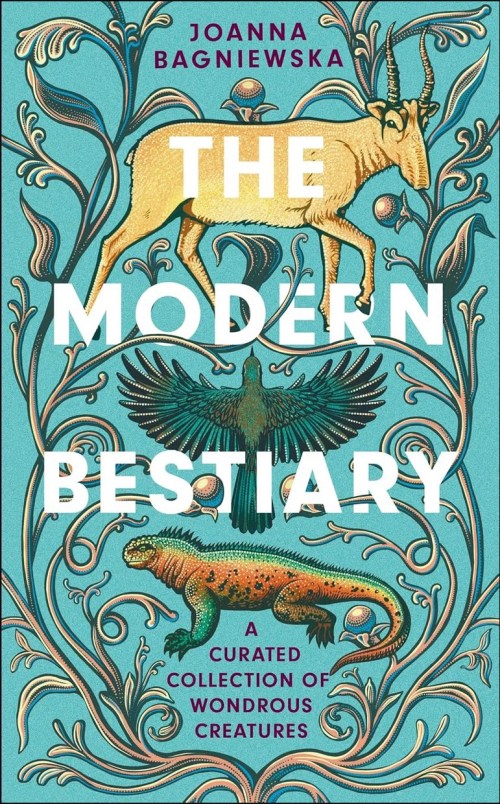
“The Modern Bestiary” takes a rather different approach. In place of mythical, fantastical beasts it features some of the Earth’s most fascinating and extraordinary real wildlife. And instead of moralising, it features animal grossness, butts, and some quite dramatic mating practices!
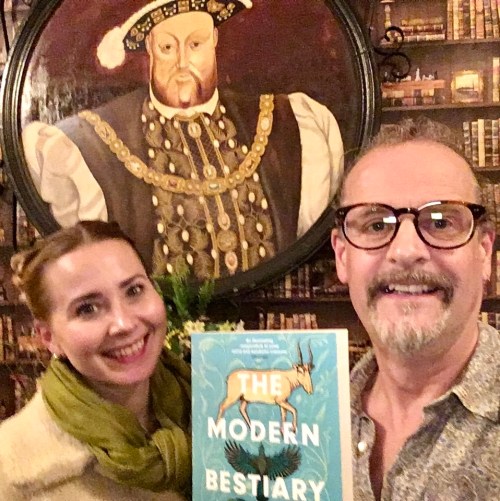
If that sounds like your kind of thing, you’re in luck, because the author, zoologist and award-wining science communicator Joanna Bagniewska, will be talking about her book at the Old King’s Head tonight. There aren’t many tickets left, but if this reaches you in time, grab yourself a ticket and be amazed.
Copies of The Modern Bestiary will be available at tonight’s event.
Book your place at April’s PubSci via this link or head straight to our NEXT EVENT page.
Did you know that Charles Darwin actually fell for a hedgehog myth that originates in a medieval bestiary? To be fair, he wasn’t entirely convinced but nonetheless wrote “I have it on good authority that…”
Mike and I discuss this in our latest Random Walk in the current episode of The Science Show which first broadcast on Resonance FM and is now streaming on Mixcloud. Sadly episode 6 was Mike’s last show as he’s taking a step back due to other commitments, but I’ll be carrying on with guest co-presenters so watch this space. It’s been a delight making the show with Mike, and I want to thank him for jumping at the idea and brining it to fruition with me.
If you don’t yet subscribe to our calendar, now’s a good time to do it so that PubSci events update automatically in your own calendar with the latest information and booking links. Clicking THISlink downloads a small .ics file which will add our calendar to yours once you’ve open it.
Is everything we know about the Big Bang wrong…?
This was the question that Professor Andrew Jaffe addressed at March’s PubSci. While the short answer is No, but we must be ready to revise it, the in depth answer was far more revealing. Andrew argues that in order to understand science in general, and cosmology in particular, we need to come to terms with the fact that everything we know is really just based on models and probability.
Will the cherry trees blossom this spring? Based on past performance, Yes! But that invokes a kind of reasoning that we should be aware of, especially when the questions we apply that reasoning to are more complex and nuanced and the data we have available is less clear.
Andrew develops in his book, The Random Universe, and after March’s PubSci, Andrew came into The Science Show’s virtual studio to talk about these ideas. You can listen to that interview, as well as the Random Walk I mentioned above in episode 6 of The Science Show, along with news of Artemis II and some excellent music.
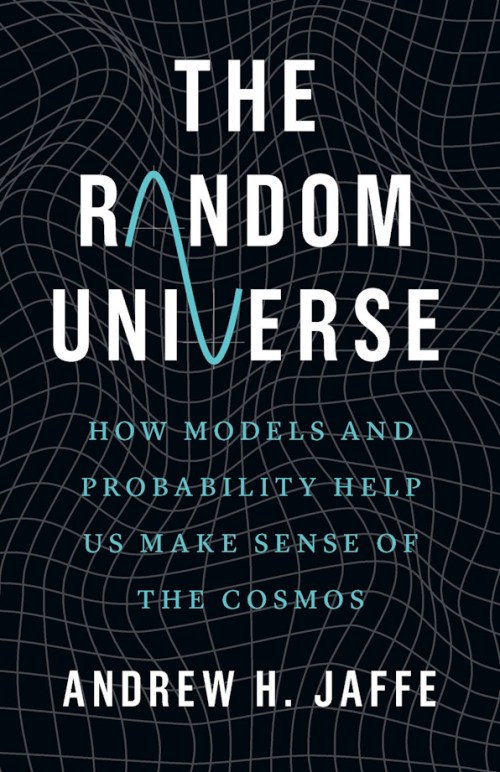
In The Random Universe, Prof. Jaffe explains how scientists create, test, and refine their models by applying those paired concepts, for example to both quantum mechanics and the birth of the universe. It’s a highly readable blend of philosophy, probability theory, and cosmology, that I’m personally happy to recommend.
The limits of knowledge feature quite strongly in the book, and one of the interesting thoughts to emerge from Andrew’s talk came in response to an audience question about alternative hypotheses for the origins and evolution of the universe. Andrew’s replay was “Most ideas that disagree with the dominant scientific paradigm in any field are certainly wrong even though the dominant paradigm is probably also wrong.”
Andrew repeated this in a social media post, so I asked him about it in our interview. Check out his response in The Science Show.
Going out on a high
At the risk of over-egging the radio show and podcast, our latest episode – and Mike’s final one – just reached number 1 in the science charts on our streaming platform. Of course there are bigger platforms with bigger charts, but considering we do this ion our own time, with no backing or monetisation, it’s an achievement we can be truly proud of.
Many thanks to Mike for the hard work and the fun times we’ve had making great – possibly unique – science radio. If you haven’t listened yet, now’s the time to do so. You won’t find a similar mix of science news, events, random discussions and excellent music anywhere else.
We use Mixcloud for podcast hosting as it’s the only platform which automatically pays royalties to copyright holders, allowing us to play the great music we love, which makes our particular scientific miscellany so different from any other science show. Unfortunately this comes with the limitation of streaming only (no downloads) but we consider this a small price to pay for creative freedom and supporting musical artists.
You can listen live on Resonance 104.4 FM at 3pm on the first Monday of every month (also DAB, RadioPlayer, and live-streaming from the Resonance website) or catch up at time from our Mixcloud page.
Not quite lastly (and definitely not leastly), have a look at what else is coming up at PubSci this Spring!
PubSci’s latest events programme (below) covers January to May 2026 and I’m super-excited with what’s in store for PubSci in the coming months. I’ll be publishing the Spring-Summer programme soon.
Our events programme is perfect for printing out and pinning to your work noticeboard or sticking to the fridge. It’s also available on the Current Programme page. I recommend putting the dates in your diary now. Even better, subscribe to our calendar HERE. For example this is what you’ll see for March’s PubSci when you subscribe to our Calendar.
Click the image to open the programme in a new tab.
Finally, a reminder about how you can listen to a rather excellent Science Show
The Science Show on Resonance FM is co-presented by myself and Mike Lucibella. Resonance is the Arts Council-backed radio station for London, broadcastings live on good old FM. It’s also on DAB and you can livestream Resonance anywhere in the world or and on Radioplayer across the UK. Better still, listen any time here.
The Science Show is a monthly, hour long magazine programme (i.e. a show with different segments) that you can listen to in one go or break up into three easy chunks. Our fifth show went out on Monday 2nd March, and our next show goes at at 3pm on Monday 6th April.
It’s not on any podcast server, but our page on Mixcloud effectively works like one – just find the show you like the look of and click PLAY. You can let us know what you think by sending a message at our dedicated email address.
• • •
Don’t forget to grab your last minute ticket to March’s PubSci (or at least get on the waitlist), and remember to follow us on all the socials including LinkedIn to keep up to date with what we’re doing. You can find those on our Linktree.
Thanks for reading. Please feel free to email or comment in response. Hope to see you at The Old King’s Head on Wednesday.
17/03/26 Posted by Richard, PubSci programmer and host
PubSci: Sipping • Supping • Science
• • •
About PubSci talks
PubSci is organised and hosted by science communicator, Richard Marshall, assisted by Mike Lucibella. Events are held upstairs at the Old King’s Head, near London Bridge tube. No specialist knowledge is required, just curiosity. Doors open at 6.30pm for a 7pm start. Talks run for ~45 minutes and are followed by a Q&A session. The Old King’s Head has a happy hour before 7pm, and the kitchen serves excellent pub grub.
Keeping Up With Future Events
To make sure you don’t miss out on future events, subscribe to our Google Calendar to be the first to know when new talks are scheduled, and follow PubSci’s events on Eventbrite to be notified when tickets are available. You can also sign up to our own mailing list on any page on this site.
There is no charge for attending PubSci talks, but we have a cash whip-round to cover expenses on the night – consider it “Pay What You Can Afford”. As few of us carry cash these days, you can make a donation when registering for ticketed events with Eventbrite. Please help us continue putting on events. PubSci has no other source of funding.
We aim to keep PubSci accessible for all, although it is unsuitable for under 18s as we meet in the function room of a pub. Regrettably, there is no wheelchair access.
In this post I preview this week’s talk by Andrew Jaffe, look back at February’s unique event, review a music project celebrating ocean science, and list some of the best talks coming up at PubSci and elsewhere. Plus a scientific solstice celebration in South London.
Hello and welcome to the March blog. UK Science Week has just finished, and what a week it was! Over just four days, I delivered 17 workshops for primary school kids in and around London, on topics from light to the inner workings of the human heart. Possibly the most exhausting four days of my life, delivering show after show, but it was also incredibly rewarding. I lost count of the times kids of all ages came up to me squealing that it was the best lesson ever!
Many of us have been inspired by teachers or speakers who lit a flame for science in us, and I hope I can do the same for some of those kids. I even got a lovely shout-out from Lauren Laverne on BBC 6 Music on Thursday.
All of which is a round about way of saying, Yes, this blog post is very late — but for the best of reasons. Hope you like it.
March’s PubSci talk is here!
Is everything we know about the Big Bang wrong…? That’s the question award-winning astrophysicist Professor Andrew Jaffe will be addressing at the Old King’s Head on Wednesday 18th March. To put it another way, does the Big Bang stand up to scrutiny from ever-better measurements, or do we need to rethink our models?
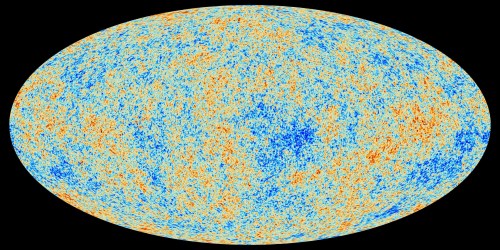
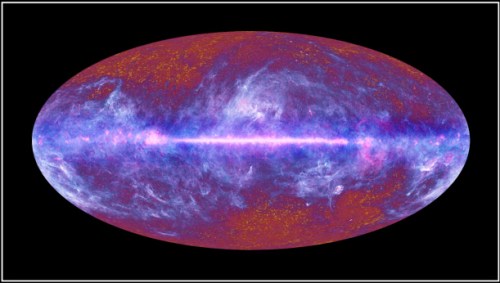
Temperature map of the cosmic microwave background measured by the Planck spacecraft
The Cosmic Microwave Background (CMB) is a low frequency hum left over from the Big Bang itself. It started out as insanely hot, high energy, high frequency gamma radiation at the moment the early universe was just cool enough for matter to form and light to be emitted around 13.8 billion years ago.
As the universe has expanded, those gamma rays cooled and stretched, expanding with the universe until today they exist only as very faint radio waves, so cold, they’re barely above absolute zero. Yet even now they retain very tiny variations (shown in the image above), and this is what we think allowed stars and galaxies to form. It was the discovery of the CMB by Penzias and Wilson in 1964 (after they had ruled out pigeons!) that established the Big Bang as a concrete scientific Theory for the origin of the universe. But the CMB isn’t the only evidence we have for an expanding universe, and that’s where the problems begin… But more of that later.
Scroll down for more on March’s PubSci and details of Andrew’s book or head straight to our NEXT EVENT page.
If you subscribe to PubSci’s calendar, you’ll have got the Eventbrite booking link as it went live. That’s probably a good thing as the event is now fully booked — but don’t worry, there’s a waitlist in case anybody drops out, and further down this blog I’m already previewing April’s PubSci, so you can put that in your diary now.
If you don’t yet subscribe, now’s a good time to do it so that PubSci events update automatically in your own calendar with the latest information and booking links as soon as they’re available. Clicking THISlink downloads a small .ics file which will add our calendar to yours once you’ve open it.
PubSci attracts the best brains
Every PubSci is a unique evening of wonder, amazement and splendid science, but I think it’s fair to say that when Prof. Mark Lythgoe came to the Old King’s Head in February, it was the most PubSci ever.
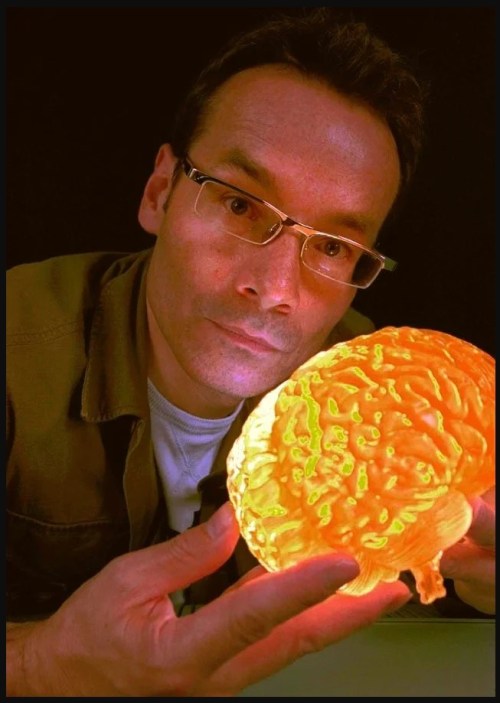
You see, Mark just happens to be the guy who rebuilt Einstein’s brain!
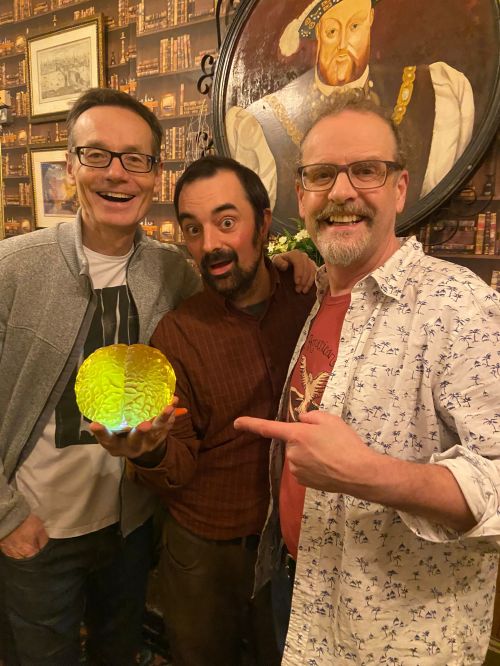
Not his actual, wet, preserved brain of course, but almost. In 2005 Mark and Prof Jim Al-Khalili made a documentary for Channel 4 in which they tracked down all 240 pieces of Albert Einstein’s brain which had been distributed to neuroscientists across the USA in the hope of identifying the source of his genius. As they went, they scanned them all and reassembled them in a computer model which was 3-d printed in translucent plastic resin.
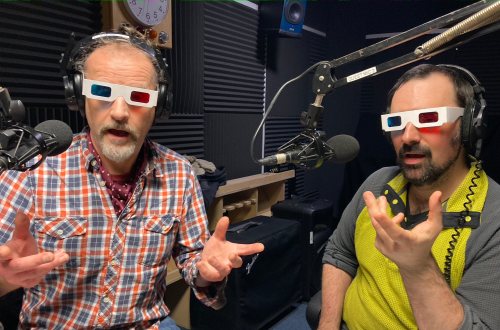
They only made one. And Mark not only brought it to PubSci – yes, the only actual model of Einstein’s brain in the world – he passed it round the whole room, to the delight of the PubSci audience. And yes, that Mark, Mike Lucibella and me holding Einstein’s “actual” brain (illuminated from below by a mobile phone). Even Henry looks intrigued.
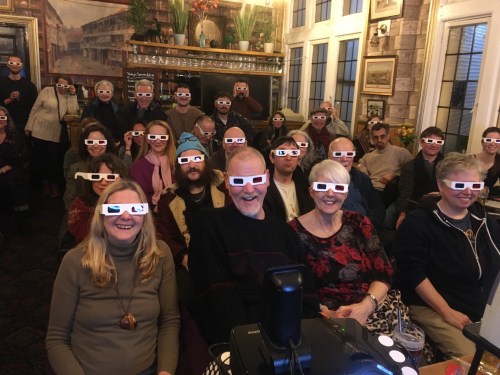
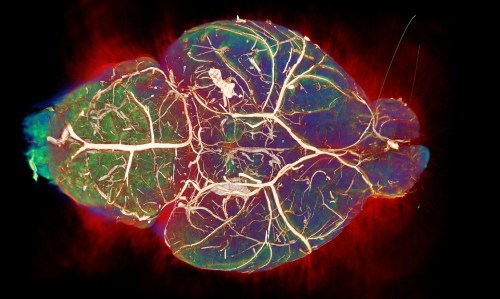
Many thanks to Mark for a truly memorable look at the world of biomedical imaging and its amazing future. In a highly visual talk (complete with a live demonstration of optoacoustics) were treated to some incredible unpublished imaging data that Mark and his team at UCL have gathered recently.
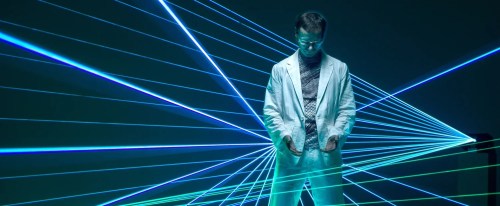
Of course I can’t show you that data, but I can show you evidence that the future of biomedical imaging is truly three dimensional. Those 3-d glasses look so good, they make a second appearance in this blog post.
The Big Bang is a sell-out!
Yes, I’m sorry to say (but also delighted, of course) that March’s event is fully booked — but the good news is that our speaker has a book that you can buy in the shops.
That may be a surprising talk title, given that Andrew is an award-winning astrophysicist, and the evidence for the Big Bang seems strong, but we’ll be in safe hands. The problem is as follows:
In recent years, astronomers have built ever more sophisticated astronomical telescopes, deploying them on ever more ambitious satellites while constructing others in the darkest, quietest, most remote places on earth. These instruments have enabled the most precise measurements yet of the state of the cosmos, fleshing out the details of our Big Bang model which describes the history and evolution of the Universe itself.
But, as different teams – each employing different equipment and even more different methods – characterise key measurement of how the expansion of our Universe changes over time, something seems to be amiss: different teams are getting different results.
Does this mean that our models are wrong? Is it the measurements? And, once we start pulling at one thread, might the whole tapestry of the Big Bang come apart? Or is randomness and uncertainty built in to how we understand the universe?
Full year image of the Cosmic Microwave Background (ESA / Planck)
Andrew Jaffe is professor of astrophysics and cosmology at Imperial College London and director of the Imperial Centre for Inference and Cosmology. He uses powerful statistical techniques on data from the Planck Surveyor Satellite, Euclid, LISA, and The Simons Observatory to understand the evolution of the Cosmos.
In The Random Universe, Prof. Jaffe explains how scientists create, test, and refine their models by applying those paired concepts, for example to both quantum mechanics and the birth of the universe. It’s a highly readable blend of philosophy, probability theory, and cosmology, that I’m personally happy to recommend.
The Random Universe was published by Yale University Press in November 2025 and will be available to buy at PubSci.
But if you can’t get to PubSci this month (or even if you can), what else is going on?
I’m glad you asked because there’s actually rather a lot. This coming weekend will see the spring equinox, and if you want to mark it, get yourself down to Camberwell in South London
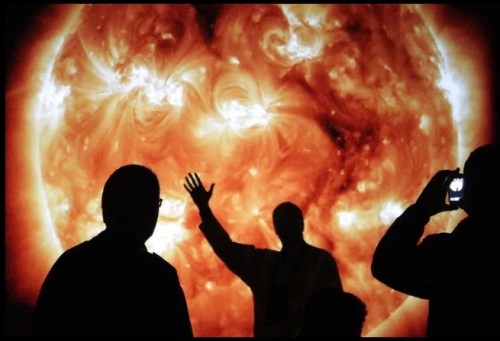
That’s where Live At St Giles presents The Sun at Night, an immersive audio-visual experience exploring our relationship with the Sun and the rhythms of its celestial life.
Created by Camberwell-based artist David Henckel, The Sun at Nighttakes audiences on a journey through one solar year. Using high-definition footage from NASA, this 30-minute floating installation illuminates the Sun’s living movements – from fiery flares to the subtle undulations of its surface – inviting visitors to experience the star that shapes life on Earth in a mesmerising and intimate new way. It’s only open Friday 20th to Sunday 22nd, so get your skates on.
Something else happening on Sunday is the last in the current series of Bach, the Universe, and Everything at King’s Place on York Way near King’s Cross. I mentioned BUE (as it is fondly known by regulars) on the radio show last autumn, and plugged February’s event in last month’s blog, so I won’t say much except that this month’s speaker is Emily Akkermans, Curator of Time at Royal Museums Greenwich, who’ll be talking about John Harrison, the great enlightenment thinker and creator of the first successful maritime chronometer which finally allowed accurate navigation at sea. John Harrison’s story was the topic of Dava Sobel’s best selling 1995 historical novel, Longitude.
You’ll also get some lovely baroque music and a bit of audience participation as I discovered at last month’s BUE where I spent a wonderful hour in the company The Orchestra of the Age of Enlightenment and Simon Brett, Douglas Adam’s producer for the pilot episode of the original Radio 4 series of The Hitchhiker’s Guide to the Galaxy.
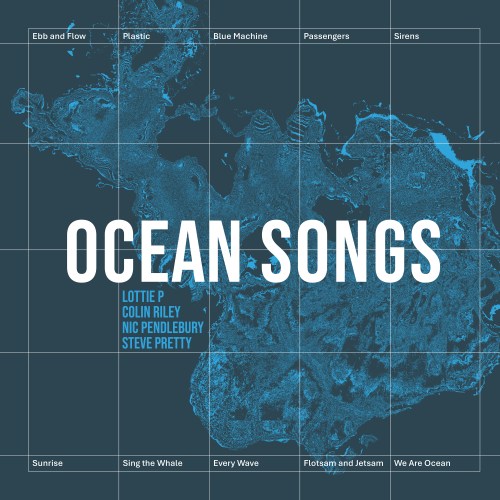
Ocean Songs live – science & music album launch 24th March
A few weeks ago I had the privilege of interviewing two of the four musicians behind a fabulous new music project and album that combines music and ocean science with a wide range of cultural influences.
Featuring viola / violinist Nic Pendlebury, composer Colin Riley, Trumpeter Steve Pretty (Hackney Colliery Band) and Lottie P (Goat Girl), Ocean songs features 10 tracks of gorgeous compositions exploring the ocean through song, science and mythology.
What’s more, ocean scientist Helen Czerski reads extracts from her book Blue Machine and environmentalist George Monbiot talks about trophic cascades (clouds of whale poo!). You can listen to my interview with Colin and Steve on the latest episode of The Science Show, in which Steve also plays conch shells and I play excerpts from four of the tracks on the album. In fact, please do listen to that because it’s a great interview, the music is wonderful and we had great fun in the Resonance FM studio.
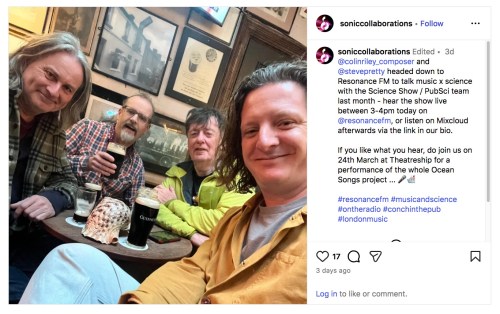
Sonic Collaborations shared this glamorous photo with their fans!
On Tuesday 24th March the band will be playing (and looping) live at Theatreship in Canary Wharf for the official album launch… aboard a ship. I’ll definitely be there. Tickets start at £8.90
Fruit Flies Like A Banana
If you’ve got kids and want something to do over the holidays, you might want look at the Royal Institution’s Easter Workshops programme. But what I’m plugging is a daytime talk by long-time friend of PubSci, Dr Erica McAlister of the Natural History Museum, AKA The Fly Lady.
Metamorphosis: Small flies, big changes is an event for the whole family starting at 2.30pm on Thursday 9th April. Tell Erica hello from PubSci if you go along, but don’t blame me if your kids want to become dipterists after Erica’s talk!
Talking of April…
Seeing as this arrives a little late to book for March’s PubSci, it seems only fair to give you a head start on April’s event when, on Wednesday 15th April, JoannaBagniewska presents A Modern Bestiary.
Remember those medieval bestiaries full of fantastical creatures that couldn’t exist outside the imagination…? It turns out the real world is just as weird, and Joanna Bagniewska has collected them together in a wonderful book!
From the familiar to the improbable, the gross to the endearing, Joanna introduces some of her favourite creatures – such as pyromaniac beetles, the baddest mice in the West, and sea slugs that decapitate themselves – and shares fragments from her book, The Modern Bestiary.
The booking link will go live on Eventbrite soon, so follow us there and don’t forget to subscribe to the PubSci calendar.
Space, Music (and space music) and Rainbows on the radio
My colleague Mike and I have been making a radio show and podcast since October 2025 and we’ve had a whale of a time, but Mike will be stepping down after the April episode (broadcasting on Monday 6th at 3pm). Many thanks to Mike for the hard work and the fun times we’ve had making great – possibly unique – science radio. If you haven’t listened yet, now’s the time to do so. You won’t find a similar mix of science news, events, random discussions and excellent music anywhere else.
The most recent episode of The Science Show came out on 2nd March and I’d love you to give it a listen. Please send your thoughts, comments and suggestions to the email address given out at the end of the show.
We use Mixcloud for podcast hosting as it’s the only platform which automatically pays royalties to copyright holders, allowing us to play the great music we love, which makes our particular scientific miscellany so different from any other science show. Unfortunately this comes with the limitation of streaming only (no downloads) but we consider this a small price to pay for creative freedom and supporting musical artists.
You can listen live on Resonance 104.4 FM at 3pm on the first Monday of every month (also DAB, RadioPlayer, and live-streaming from the Resonance website) or catch up at time from our Mixcloud page.
Not quite lastly (and definitely not leastly), have a look at what else is coming up at PubSci this Spring!
PubSci’s latest events programme (below) covers January to May 2026 and I’m super-excited with what’s in store for PubSci in the coming months. The events programme is perfect for printing out and pinning to your work noticeboard or sticking to the fridge. It’s also available on the Current Programme page. I recommend putting the dates in your diary now. Even better, subscribe to our calendar HERE. For example this is what you’ll see for March’s PubSci when you subscribe to our Calendar.
Click the image to open the programme in a new tab.
Finally, a reminder about how you can listen to a rather excellent Science Show
The Science Show on Resonance FM is co-presented by myself and Mike Lucibella. Resonance is the Arts Council-backed radio station for London, broadcastings live on good old FM. It’s also on DAB and you can livestream Resonance anywhere in the world or and on Radioplayer across the UK. Better still, listen any time here.
The Science Show is a monthly, hour long magazine programme (i.e. a show with different segments) that you can listen to in one go or break up into three easy chunks. Our fifth show went out on Monday 2nd March, and our next show goes at at 3pm on Monday 6th April.
It’s not on any podcast server, but our page on Mixcloud effectively works like one – just find the show you like the look of and click PLAY. You can let us know what you think by sending a message at our dedicated email address.
• • •
Don’t forget to grab your last minute ticket to March’s PubSci (or at least get on the waitlist), and remember to follow us on all the socials including LinkedIn to keep up to date with what we’re doing. You can find those on our Linktree.
Thanks for reading. Please feel free to email or comment in response. Hope to see you at The Old King’s Head on Wednesday.
17/03/26 Posted by Richard, PubSci programmer and host
PubSci: Sipping • Supping • Science
• • •
About PubSci talks
PubSci is organised and hosted by science communicator, Richard Marshall, assisted by Mike Lucibella. Events are held upstairs at the Old King’s Head, near London Bridge tube. No specialist knowledge is required, just curiosity. Doors open at 6.30pm for a 7pm start. Talks run for ~45 minutes and are followed by a Q&A session. The Old King’s Head has a happy hour before 7pm, and the kitchen serves excellent pub grub.
Keeping Up With Future Events
To make sure you don’t miss out on future events, subscribe to our Google Calendar to be the first to know when new talks are scheduled, and follow PubSci’s events on Eventbrite to be notified when tickets are available. You can also sign up to our own mailing list on any page on this site.
There is no charge for attending PubSci talks, but we have a cash whip-round to cover expenses on the night – consider it “Pay What You Can Afford”. As few of us carry cash these days, you can make a donation when registering for ticketed events with Eventbrite. Please help us continue putting on events. PubSci has no other source of funding.
We aim to keep PubSci accessible for all, although it is unsuitable for under 18s as we meet in the function room of a pub. Regrettably, there is no wheelchair access.
In this post I preview next week’s PubSci talk by Mark Lythgoe, look back at January’s Antarctic barnstormer, rediscover a childhood favourite movie, and preview the most unlikely musical ever.
February’s PubSci talk is nearly here!
Just a few tickets are still available for this unique opportunity to catch world-renowned and multiple award-winning scientist and communicator Professor Mark Lythgoe talk about the mid-blowing technology of body imaging. Use the button below to book for “Naked to the Bone – Next Gen. Biomedical Imaging” on Wednesday 18th February.
If you subscribe to PubSci’s calendar, you’ll have got the Eventbrite booking link as it went live.
If you don’t yet subscribe, now’s a good time to do it so PubSci events in your own calendar update automatically with the latest information and booking links as soon as they’re available. Clicking onTHISlink downloads a small .ics file which adds our calendar to yours once you’ve open it.
Scroll down for full details of February’s PubSci on Wednesday 18th or head straight to our NEXT EVENT page.
Polar Volcanoes, Whale Poo, Penguins and Beers – but no Bears!
January’s event was a delightful first for PubSci as we collaborated with Polar Beers and UK Polar Network for a fantastic joint event on Antarctica, featuring two talks on the Antarctic and a polar-themed pub quiz.
In Antarctica 2.0, Lavy Ratnarajah, a lecturer in Climate Science at the Department of Earth Sciences, UCL talked about nutrient and carbon cycling in the Southern Ocean and the effect that warmer ocean waters (due to climate change) are having on this delicate balance.
It turns out that whale poo is a key factor in this cycle, and that ultimately, the whales eat the things that eat the things that eat their poo. Very neat indeed!
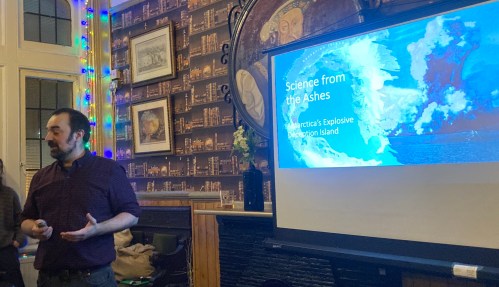
Mike Lucibella shared insights from his recent Masters in the History and Philosophy of Science (also at UCL), focusing on Deception Island, a flooded volcanic caldera off the Antarctic Peninsula which experienced a series of violent eruptions in the 1960s, leading to the evacuation and destruction of three research stations.
The remaining island (including a new landmass) is now a scientifically important area, protected for its rare plant and birdlife. Fun fact: There are hot springs in Antarctica where you can bathe!
Lastly, we were treated to a pub quiz by Megan MalpasandIsabelle Sangha from Polar Beers, an outreach initiative of the British Antarctic Survey in Cambridge and UK Polar Network. The quiz tested general knowledge of both poles, popular culture and general science as well as rewarding those who paid attention during the talks.
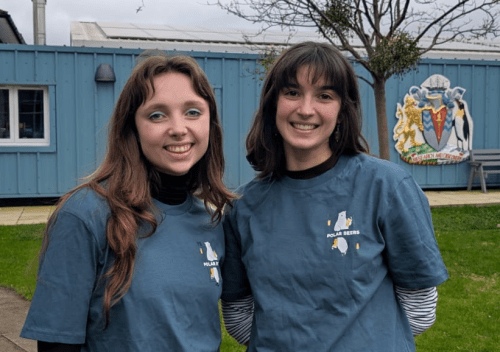
There were even quiz prizes: Polar Beers t-shirts for the top teams (modelled here by Megan and Izzy), and free stickers for everybody else.
Fun fact: Despite the name Arctic deriving from to arctos (Greek for “bear”), the presence of polar bears in the Arctic north is just a happy coincidence. Arctic/arctos refers to two constellations known to us by their latin names, Ursa Major and Ursa Minor (which also includes the pole star which denotes celestial north). Antarctic, therefore, means away from – or opposite to – the region of the bear. Fittingly there are no bears in Antarctica.
Whilst Antarctic researchers are quite safe from polar bear attacks, they are frequently approached by penguins. Not only are these odd birds surprisingly curious about humans, I’m reliably informed that nothing else on Earth smells quite like penguin poo!
Many thanks to all our speakers, and a big thank you to Mike for arranging this one.
On Wednesday 18th February 2026, PubSci is delighted to welcome Professor Mark Lythgoe to the Old King’s Head to share the beauty, wonder, and exciting future of medical imaging. If’s only a few days away now, so grab a ticket while you still can.
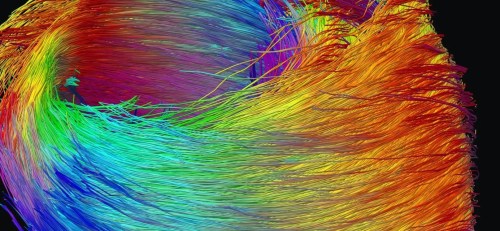
4-d MRI visualisation of blood flow through the heart
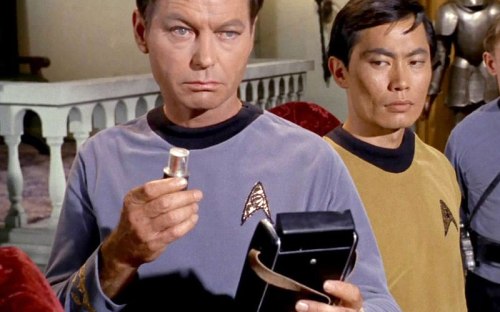
Have you ever wanted to look inside your head, pondered what an MRI is or wondered if Star Trek’s “medical tricorder” could become a reality? Or even marvelled at a medical X-ray…? All these and more are forms of biomedical imaging.
Mr Sulu doesn’t look convinced by Bones McCoy’s medical tricorder
Mark Lythgoe is director of UCL’s Centre for Advanced Biomedical Imaging as well as Director of Biomedical Imaging Research at the Francis Crick Centre, and it’s fair to see we are extremely lucky to be able to host such a busy, and wold renowned, research director at Science in the Pub.
For “Naked to the Bone”, Mark will explore the history and development of imaging before looking to the next generation of biomedical 3-d, full colour, multi-channel imaging that is even today already becoming a reality. Not only is the topic fascinating, the resulting images are truly stunning – and truly life-saving.
Professor Lythgoe’s groundbreaking research has led to him receiving some of the biggest awards in his field, and his science communication has been recognised by three major awards. He’s frequently on TV and radio, was interviewed by Jim Al Khalili for The Life Scientific, made a TV documentary about Einstein’s brain, and wrote and narrated Images That Changed The World for Radio 4.
If that weren’t enough, Mark is passionate about combining science and art, yet, remarkably, he failed his A levels, never got undergraduate degree, and describes his CV as having “more holes than a Tetley teabag”!
You can read more about Mark on PubSci’s Next Event page (until it is updated for the next event), or head straight to the Eventbrite booking page to secure one of the few remaining tickets ASAP.
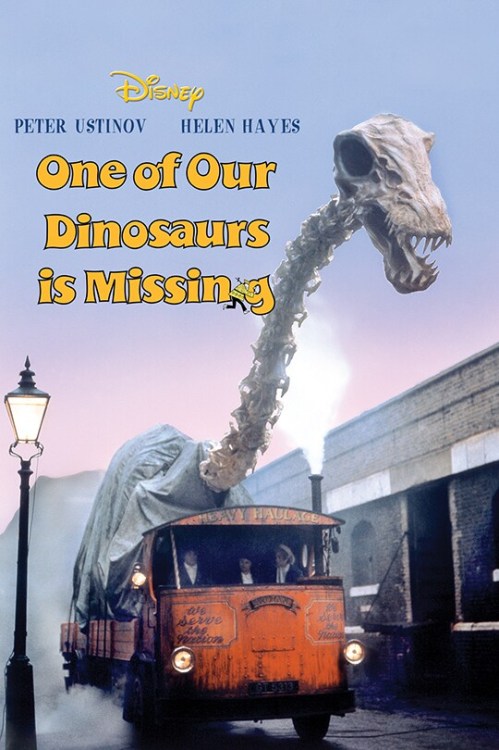
As a kid in the 1970s, one of my favourite films was Disney’s London-based caper, One of Our Dinosaurs is Missing, in which a spy steals a microfilm from China, later hiding it in a dinosaur skeleton at London’s Natural History Museum (clearly meant to be Dippy, the much loved Diplodocus which greeted visitors there). This leads to the dinosaur being kidnapped by rival spies on a too-small lorry while rival factions chase it through the streets of a Disneyfied 1950s London to prevent the secrets on the microfilm falling into the “wrong” hands.
The British contingent is led by “spirited British nannies” as might be expected from Disney Studios, but the cast reads like a Who’s Who of British comedy talent of the era: Peter Ustinov, Helen Hayes, Derek Nimmo, Joan Simms, Roy Kinnear, Dereck Guyler, Bernard Bresslaw.
Regrettably it also includes some crass Chinese stereotypes (sadly typical of their day) but it retains a place in my heart for making me laugh out loud and showing dinosaurs at the cinema long before Jurassic Park.
I mention this film not for nostalgic reasons, but because until very recently we thought one of our dinosaurs really was missing. Not just a dinosaur — a whole clade (morphological taxonomic group): The ceratopsians.
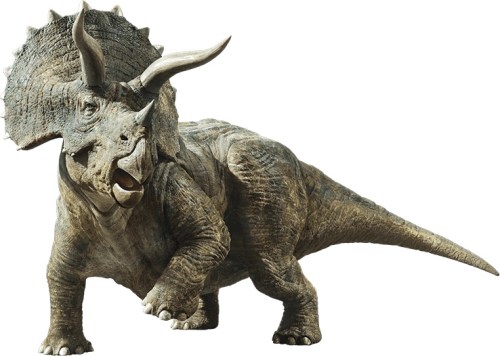
If that doesn’t sound familiar, think of Triceratops, the iconic three horned vegetarian monster that shared the late cretaceous period with T-Rex, right up until a 10-15 km-wide asteroid smashed into waters between the Gulf of Mexico and the Caribbean sea, causing a 15-year winter that ended the age of the dinosaurs and wiped out 75% of all life on Earth.
Triceratops by sonichedgehog2 on Jurassic Park fan wiki
Ceratopsians (meaning face-horn) have been found pretty much the world over – except in Europe, which is strange –and had been considered something of a paleontological mystery. Why did Europe not get any of the Triceratops’ punk-faced cousins? And if ceratopsians were in Europe (or rather, in what became Europe millions of year later, where are their fossils?
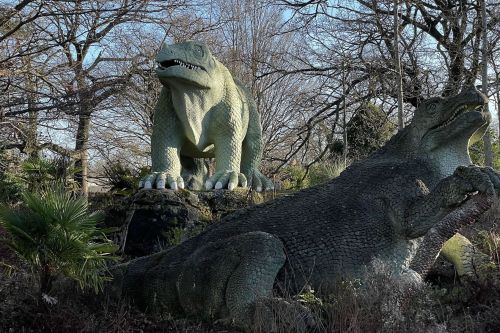
Well, in a roundabout way the answer has been staring us in the face all this time, especially if you’ve ever been to Crystal Palace Park. Amongst the park’s famous concrete dinosaurs (many of which aren’t dinosaurs at all, such as the giant Irish ElkMegaloceros giganteus), are examples of Iguanodons (“iguana-toothed”)… except these aren’t iguanodons at all, and have since been reclassified as Mantellodons after the couple who first described their fossils remains
Concrete Iguanodons (Crystal Palace Park Trust)
But if that sounds confusing, it turns out that the Iguanodons’ close cousins are even more confusing. The rhabdodontids, which are closely related to iguanodons, were a type of dinosaur found exclusively in Europe in the late cretaceous – i.e. right up until that asteroid wiped out all the non-avian dinosaurs [yes, the survivors became the birds of today]. And that matters, because in the rest of the world you have ceratopsians but no rhabdodontids whilst in Europe you have rhabdodontids but noceratopsians.
And guess, what! It turns out the missing European ceratopsians were hiding in plain sight because, according to research published recently in Nature, palaeontologists have now recognised that many rhabdodontids might actually be misidentified ceratopsians. They were there all along — we just thought they were something else. 🤦♂️
If you want to know more about why One of Our Dinosaurs Isn’t Missing, the Natural History Museum has a very readable article on it here.
Space, Dinosaurs & Scooby Doo…
The above science news is one of the topics Mike and I talk about in our monthly radio show and podcast – imaginatively called The Science Show (I think of it as the Ronseal of podcast titles) – along with surgery in space and Antarctica, what’s the appendix for, who’s on Cloud 9, prehistoric poison, and how many blue whales could fit onto Rhode Island, what’s happening in and around London this month aaaand some excellent music.
The most recent episode of The Science Show came out on 2nd Feb and I encourage you to give it a listen and send us your thoughts to the email address given out at the end of the show.
We use Mixcloud for podcast hosting as it’s the only platform which automatically pays royalties to copyright holders, allowing us to play the great music we love, and which make our particular scientific miscellany so different from every other science show. Unfortunately this comes with the limitation of streaming only (no downloads) but we consider this a small price to pay for creative freedom and supporting musical artists. You can listen live on Resonance 104.4 FM at 3pm on the first Monday of every month (also DAB, RadioPlayer, and livestreaming from the Resonance website).
That is how I prefaced announcing, back in November, that the Orchestra of the Age of Enlightenment is running a series of Sunday morning concerts at King’s Place in London called Bach, The Universe and Everything, named for this quote from The Hitch Hiker’s Guide to the Galaxy:
“Beethoven tells you what it’s like to be Beethoven, and Mozart tells you what it’s like to be human. Bach tells you what it’s like to be the universe.”
Douglas Adams
This series of talks and music places Bach’s cantatas in the context of the amazing discoveries of the last 350 years, with each event featuring a cantata and a talk from a guest scientist, writer, artist or broadcaster, alongside choral and instrumental music. Well, the final two events of the series are approaching, and I think you should know, especially as it’s now 25 years since Douglas Adams took his seat at the Restaurant at the End of the Universe.
On Sunday 22nd Feb, the producer of the pilot episode for The Hitchhikers Guide to the Galaxy for Radio 4 talks about how the series came about.
And on Sunday 22nd March, the Curator of Time at Royal Museums Greenwich talks about the life and work of John Harrison, that great Enlightenment mind who made the first reliable marine chronometer, and died 250 years ago. You can book for both concerts (subject to availability) by clicking here.
Is this the weirdest science musical topic ever…?
Not long ago, I featured a science musical about AntiMicrobial Resistance, but I’ve now found something even more brilliantly weird!
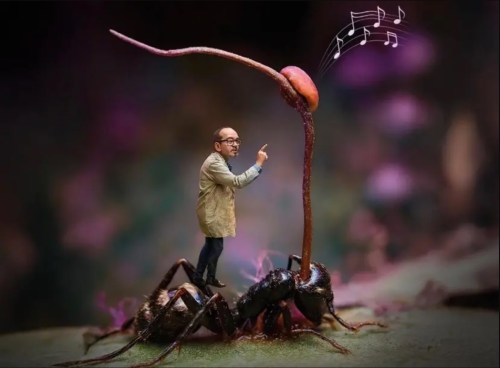
‘Zombie Ant Fungus’ is a specially commissioned work exploring the world of parasitic fungi. And who among us doesn’t love cordyceps…?
On Saturday 9th May, the Royal Institution in Piccadilly premieres this radical new performance which blends neuroscience, mycology, sound and behaviour. Developed by self-styled creators of insect eco–entertainment, Pestival, and a gathering of renowned scientists and musicians, each performance is followed by an expert panel discussing the piece and looking deeper into the science and art behind it. There’s a shortened family performance in the afternoon followed by table-top activities for young people, and a full performance in the evening.
Mind altering, brain-hijacking fungi, science, and music — this sounds like my kind of fun. If it’s your kind of fun, you can book now by following the above links, or see what else is going on at the Ri here.
Not quite lastly (and definitely not leastly), have a look at what’;s coming up at PubSci this Spring!
PubSci’s latest events programme (below) covers January to May 2026 and I’m super-excited with what’s in store for PubSci in the coming months. The events programme is perfect for printing out and pinning to your work noticeboard or sticking to the fridge. It’s also available on the Current Programme page. I recommend putting the dates in your diary now. Even better, subscribe to our calendar HERE. For example this is what you’ll see for March’s PubSci when you subscribe to our Calendar.
Click the image to open the programme in a new tab.
Finally, a reminder about how you can listen to a rather excellent Science Show
The Science Show on Resonance FM is co-presented by myself and Mike Lucibella. Resonance is the Arts Council-backed radio station for London, broadcastings live on good old FM. It’s also on DAB and you can livestream Resonance anywhere in the world or and on Radioplayer across the UK. Better still, listen any time here.
The Science Show is a monthly, hour long magazine programme (i.e. a show with different segments) that you can listen to in one go or break up into three easy chunks. Our fifth show went out on Monday 2nd February 3pm, and our next show goes at on Monday 2nd March in the same regular slot
It’s not on any podcast server, but our page on Mixcloud effectively works like one – just find the show you like the look of and click PLAY. You can let us know what you think by sending a message at our dedicated email address.
• • •
Don’t forget to grab your last minute ticket to February’s PubSci, and remember to follow us on all the socials including LinkedIn to keep up to date with what we’re doing. You can find those on our Linktree.
Thanks for reading. Please feel free to email or comment in response. Hope to see you at The Old King’s Head on Wednesday.
16/02/26 Posted by Richard, PubSci programmer and host
PubSci: Sipping • Supping • Science
• • •
About PubSci talks
PubSci is organised and hosted by science communicator, Richard Marshall, assisted by Mike Lucibella. Events are held upstairs at the Old King’s Head, near London Bridge tube. No specialist knowledge is required, just curiosity. Doors open at 6.30pm for a 7pm start. Talks run for ~45 minutes and are followed by a Q&A session. The Old King’s Head has a happy hour before 7pm, and the kitchen serves excellent pub grub.
Keeping Up With Future Events
To make sure you don’t miss out on future events, subscribe to our Google Calendar to be the first to know when new talks are scheduled, and follow PubSci’s events on Eventbrite to be notified when tickets are available. You can also sign up to our own mailing list on any page on this site.
There is no charge for attending PubSci talks, but we have a cash whip-round to cover expenses on the night – consider it “Pay What You Can Afford”. As few of us carry cash these days, you can make a donation when registering for ticketed events with Eventbrite. Please help us continue putting on events. PubSci has no other source of funding.
We aim to keep PubSci accessible for all, although it is unsuitable for under 18s as we meet in the function room of a pub. Regrettably, there is no wheelchair access.