
Welcome to the first PubSci blog post of 2025.
It seems like an age since we wrapped up 2024’s events with a peek beneath the turf in Archaeologists vs Detectorists back in November, but we come bounding into the new year with the earliest date a third Wednesday could be – so get your diaries out, mark off Wednesday 15th January and read on to find out why you should get along to The Old King’s Head for the first PubSci talk of the year.
How did gaming AI help win the Nobel Prize? Why is ‘protein folding’ important, and why is it so hard to do? PubSci has the answers as we look at one of the most surprising Nobel Prize awards of last year.
On Wednesday 15th January, we are delighted to welcome Professor Rivka Isaacson of Kings College, London, to help us make sense of proteins and understand why the creators of AlphaFold got to share the 2024 prize for Chemistry.
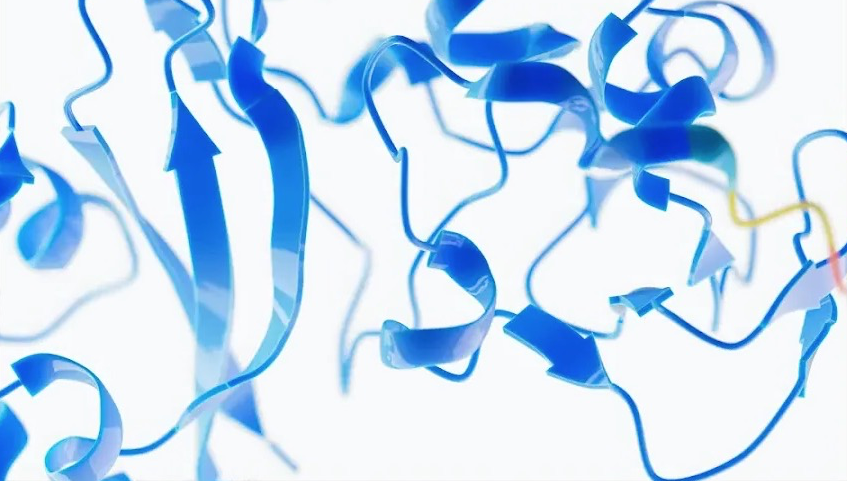
Much of our bodies’ tiny cellular machinery is made of proteins which only function because they take on complex 3-d shapes. Understanding those shapes is essential to developing new medicines.
Proteins are initially formed by connecting amino acids in a straight line as if threading different beads onto a string. That’s the easy bit, but those chains then fold into complex mechanical shapes capable of carrying out the chemical reactions which maintain health. Predicting a protein’s final shape from its linear sequence is an enormous challenge which has plagued scientists for generations.
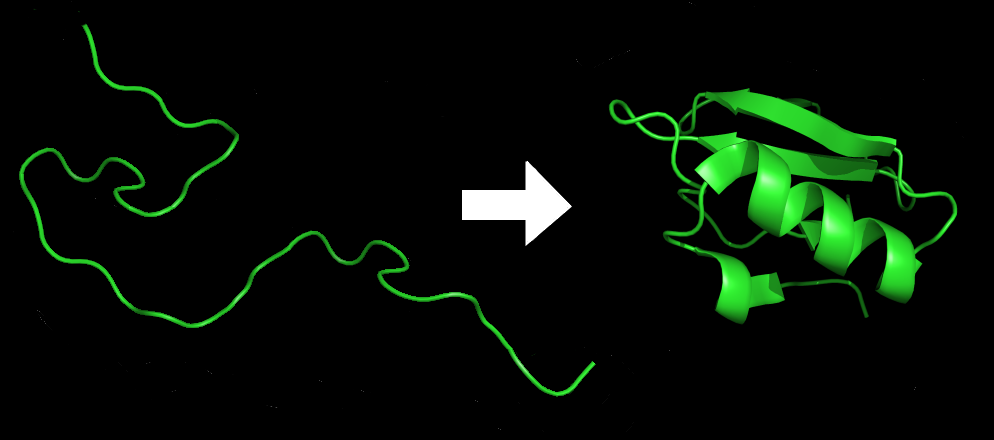
But in 2018 Google DeepMind launched AlphaFold, a powerful AI tool which represents a breakthrough in predicting protein structures, and in 2020 AlphaFold 2’s results were described as ‘astounding’ and ‘transformational’.
The 2024 Nobel Prize in Chemistry was awarded to David Baker for computational protein design and to the team behind AlphaFold for “protein structure prediction’. Our speaker, Rivka Isaacson, has years of experience working on understanding the structure of proteins and with AlphaFold.
On 15th January, Rivka will talk about the history of the protein-folding problem, the different ways experimentalists have solved protein shapes over the years, and her direct experience of being a beta tester for this prize-winning AI tool, AlphaFold.
PubSci is delighted to welcome Rivka as our first speaker of 2025.

• • •
Join us upstairs at the Old King’s Head, near London Bridge tube. Doors open at 6.30pm for a 7pm start. Talks run for ~45 minutes and are followed by a Q&A session. The Old King’s Head has a happy hour before 7pm, and the kitchen serves excellent pub grub.
We use Eventbrite to manage event numbers. Follow us on Eventbrite to be notified when new tickets become available. Reserve your place for this talk now! PubSci is a pay-what-you-can event – please consider making a donation with your reservation to help us cover our costs.
About the speaker
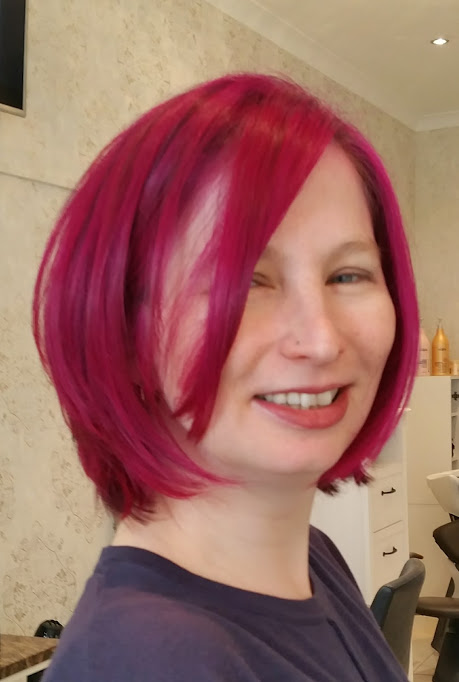
Rivka Isaacson is Professor of Molecular Biophysics in the Department of Chemistry, King’s College London.
She has a B.Sc. in Biochemistry from the University of Manchester and a Ph.D. in Chemistry from the University of Cambridge. She carried out post-doctoral research at Harvard Medical School and at Imperial College, London, subsequently working at the Imperial College Drug Discovery Centre before starting her own research group in 2009.
Rivka serves on the UKRI Physics of Life steering group and the executive committee for the national Collaborative Computing Project, and was the 2021 recipient of the Judith Howard prize from the Biophysical Sciences Institute at Durham University.
Rivka is passionate about interdisciplinarity, conducting projects across the arts-sciences interface, including a multimedia collaboration with London Fine Art Studios. In 2023 Rivka featured in the Royal Institution’s world famous Christmas Lectures.
Don’t miss the chance to join this wonderfully engaging speaker on Wednesday 15h January.
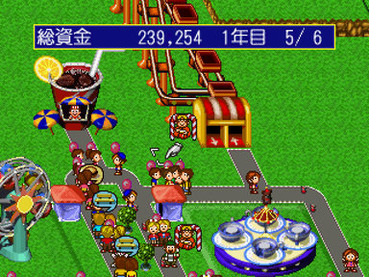
Bonus Fact: One of the creators of AlphaFold also created the classic 1994 computer game, Theme Park.
There is no charge for attending PubSci talks, but we have a traditional whip-round to cover expenses – consider it a “Pay What You Can” event. Very few of us carry cash these days, so you can also make a donation when registering for ticketed events with Eventbrite. Please help PubSci continue putting on events. PubSci has no other source of funding.
We aim to keep PubSci accessible for all, although it is unsuitable for under 18s as we meet in the function room of a pub. Regrettably, there is no wheelchair access.
Check out the Future Events page where you can also subscribe to our Google Calendar so PubSci events automatically appear in your own Calendar. You can find all our links on our LinkTree.
• • •
We meet on the third Wednesday of the month, upstairs at the Old King’s Head near London Bridge Underground (Borough High Street east side exit). Join us every month apart from December for a regular dose of Sipping, Supping & Science.

Address:
The Old King’s Head (upstairs room)
King’s Head Yard
45-49 Borough High Street
London SE1 1NA
 PubSci