

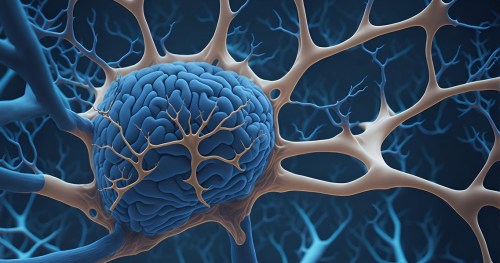
This month PubSci explores the fascinating possibility that cell biology resembles actual problem-solving.
On Wednesday 19th March, PubSci is delighted to welcome Dr. Jenny Poulton to explore the fascinating possibility that cell biology resembles actual problem-solving.
To the uninitiated this may sound like a wild idea but some highly respected names with hundreds of peer-reviewed research papers under their belts are taking the topic very seriously. Decapitated flatworms can regenerate a head complete with apparent ‘memories’ (or at least conditioned responses) from just the surviving tail end, suggesting cognition doesn’t only exist in the brains of very simple creatures. Whilst nobody is seriously talking about consciousness (aka “the c-word”), phrases like conditioning, cognition and cellular-intelligence are increasingly being discussed in some circles of cell-biology.
We know that individual cells perform surprisingly powerful computations as they interact with their environment by means of simple chemical reaction networks, and Pavlovian conditioning only requires four chemicals, which raises the tantalising question whether can cells perform this function too.

We know individual cells can perform surprisingly powerful computations as they interact with their environment by means of simple chemical reaction networks, and Pavlovian conditioning only requires four chemicals, which raises the tantalising question whether can cells perform this function too.
After years of surprisingly fierce debate amongst biologists, powerful computational tools might finally provide the answer…
Researcher and tutor, Dr Jenny Poulton has worked with Professor of Machine Learning, Chris Watkins, on the “Intelligence in Context” grant at Royal Holloway, University of London and believes there is much to be discussed in terms of what cells can and can’t in terms of solving complex problems.
Don’t miss this unique opportunity to hear Jenny challenge what you think you know about cells and problem solving. PubSci is on Wednesday 19th March.

Dr Jenny Poulton is a multidisciplinary science researcher, teacher and tutor with a gift for communicating complex topics, for which she was nominated for a Student Academic Choice award in 2019.
She has a background in Theoretical Biophysics, with research interests in Stochastic Thermodynamics, and Information Theory, working internationally as a postdoctoral researcher and has published peer-reviewed papers in her field.
Jenny received her MPhys in Theoretical Physics from the University of Sheffield in 2015, focussing on spherical bacteria such as Staphylococcus aureus, and her PhD in Thermodynamics of Polymer Copying from Imperial College, London, in 2020.
She worked with Professor of Machine Learning, Chris Watkins, on “Intelligence in Context” at Royal Holloway, University of London and in 2021 Jenny presented to the Santa Fe Institute, the world’s leading research centre for complex systems science.
Keep Up With Future Events
Dd you know PubSci has an online calendar where you can view future events?
Event titles and dates go in the calendar several months in advance, along with a brief outline of the talk. If you subscribe to our calendar, PubSci events will automatically appear in your own calendar.
We also publish a programme of PubSci events three times a year which you can view online or download for printing. Why not put a copy on your work fridge for everyone to see!
Posted by Richard Marshall, PubSci organiser and host.
PubSci: Sipping • Supping • Science
• • •

• • •
About PubSci talks
PubSci meets upstairs at the Old King’s Head, near London Bridge tube. No specialist knowledge is required, just curiosity. Doors open at 6.30pm for a 7pm start. Talks run for ~45 minutes and are followed by a Q&A session. The Old King’s Head has a happy hour before 7pm, and the kitchen serves excellent pub grub.
We use Eventbrite booking to manage numbers. Follow us on Eventbrite to be notified when new tickets become available and reserve your place for February’s PubSci here! PubSci is a pay-what-you-can event – please consider making a donation with your reservation to help us cover our costs.
There is no charge for attending PubSci talks, but we have a cash whip-round to cover expenses on the night – consider it “Pay What You Can Afford”. As few of us carry cash these days, you can make a donation when registering for ticketed events with Eventbrite. Please help us continue putting on events. PubSci has no other source of funding.
We aim to keep PubSci accessible for all, although it is unsuitable for under 18s as we meet in the function room of a pub. Regrettably, there is no wheelchair access.
You can find all our links on our LinkTree.
• • •
We meet on the third Wednesday of the month, upstairs at the Old King’s Head near London Bridge Underground (Borough High Street east side exit). Join us every month apart from December for a regular dose of Sipping, Supping & Science.
Address:
The Old King’s Head (upstairs room)
King’s Head Yard
45-49 Borough High Street
London SE1 1NA


 PubSci