Category Archives: Events

Maths, Murder, and Storytelling | 20th March, Ioanna Georgiou

On Wednesday 20th March, PubSci is delighted to welcome author and maths educator, Ioanna Georgiou, who specialises in bringing mathematical ideas to life through true tales from the times they were first emerging.
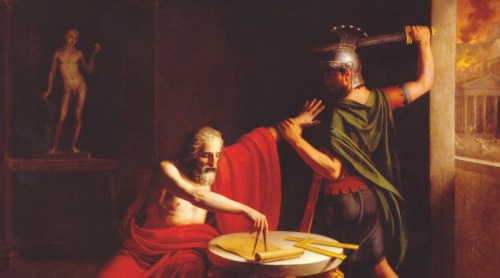
Oil painting ofa roman soldier threatening a mathematician with a sword.

“Do not disturb my circles”

Ioanna will talk about using narrative to make maths enjoyable and accessible for everybody, illustrated with examples from history, and will ask why we still learn Pythagoras’s theorem today.

Have you ever wondered why Archimedes was murdered, how a walk in Kaliningrad might connect to the London Underground, or what ancient bones tell us about counting in the distant past? From the earliest lunar calendars to the maps we know so well, historic narratives bursting with lively characters allow us to glimpse what maths has been doing for human society ever since our ancestors first learnt to count.

• • •

Whether you’re a maths fan or a maths-phobe, this talk will charm and entertain you. Join Ioanna for Maths, Murder, and Storytelling on Wednesday 20th March to find out how true tales from the past make maths meaningful today. [Continues below]
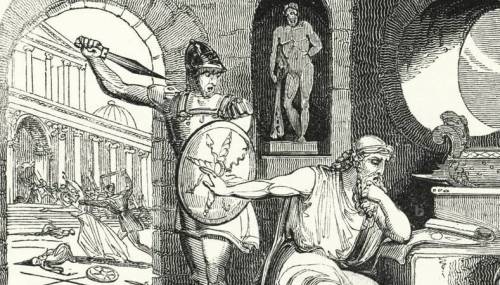
An engraving of a Roman soldier threatening Archimedes with a sword but Archimedes is too busy working

“Not now mate, I’m working…”

Join us on Weds 20th March upstairs at the Old King’s Head (near London Bridge tube). Doors open 6.30pm for a 7pm start. Talks run for ~45 minutes and are followed by a Q&A session. The Old King’s Head has a happy hour before 7pm and the kitchen serves excellent pub grub. 

We use Eventbrite to manage numbers – reserve your place now! PubSci is free to attend but please consider making a donation with your reservation to help us cover our costs.

• • •

About the speaker

Ioanna Georgiou (Ιωάννα Γεωργίου – pronounced Yoana Yeoryiou) specialises in using storytelling to bring mathematics to life, drawing on tales from the times the ideas were first emerging. [Continues]

A young woman holds a book called Adventures in Mathematics

Ioanna has an MPhil in Education, is head of mathematics at a Senior Girls’ School, and has been presenting Masterclasses at the Royal Institution of Great Britain since 2013. She is author of two books (Mathematical Adventures and Peculiar Deaths of Famous Mathematicians), both of which will be available at the talk.

Information about Ioanna’s tutoring and coaching can be found on her website.

PubSci is delighted to welcome Ioanna as our speaker for March. Subscribe to our calendar to be the first to know what’s happening each month.

___

Support PubSci

There is no charge for attending PubSci talks, but we have a traditional whip-round to cover expenses – consider it a “Pay What You Can” event. Very few of us carry cash these days, so you can contribute digitally through our TipJar or make a donation when registering for ticketed events with Eventbrite. Please help PubSci continue putting on events. PubSci has no other source of funding.

We aim to keep PubSci accessible for all, although it is unsuitable for under 18s as we meet in the function room of  a pub. Regrettably, there is no wheelchair access. 

Check out the Future Events page where you can also subscribe to our Google Calendar so PubSci events automatically appear in your own Calendar.  You can find all our links on our LinkTree.

• • •

We used to meet on the first Wednesday of the month but PubSci is now on the third Wednesday. Join us upstairs at the Old King’s Head near London Bridge Underground (Borough High Street east side exit) every month apart from December for a regular dose of Sipping, Supping & Science.

image-third-wednesdays

Address:

The Old King’s Head (upstairs room)
King’s Head Yard
45-49 Borough High Street
London SE1 1NA

Secrets of Sleep | 21st Feb | Dr Anna Joyce

To sleep, perchance to dream… But what is going on when we do (or don’t ) sleep?

Two sleeping figures in a cornfield

Midday Sleep by J.F. Millet

On Wednesday 21st Feb 2024 PubSci is delighted to welcome Dr Anna Joyce of Regents University to speak about the neuroscience and psychology of sleep: What sleep is, why we need it, what happens when it goes wrong, and how we try to fix it.

We’re frequently told we should be sleeping 8 hours every night – meaning we would spend 1/3 of our lives contentedly in the Land of Nod – but for many people this simply isn’t the case.

Fortunately for those who feel they don’t get enough, Anna is Assistant Professor in Psychology at Regents University, specialising in developmental psychology and sleep (see biography further down this page). If anybody knows how to get better sleep, it is Dr Anna Joyce.

Join PubSci and Anna Joyce for Secrets of Sleep on 21st February. Tickets on Eventbrite are moving very fast – book today to avoid disappointment. See below for more details.

• • •

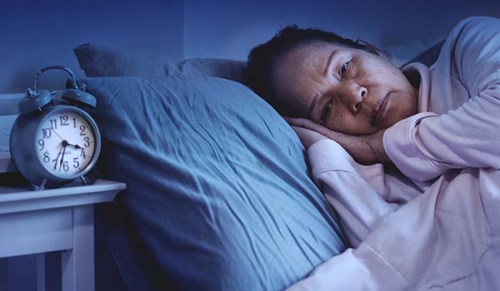
A woman lies awake in bed next to an alarm clock reading half past three

Some find sleep elusive [Image: US National Institutes of Health]

___

Join us upstairs at the Old King’s Head, near London Bridge tube. Doors open at 6.30pm for a 7pm start. Talks run for ~45 minutes and are followed by a Q&A session. The Old King’s Head has a happy hour before 7pm, and the kitchen serves excellent pub grub.

We use Eventbrite to manage numbers. Reserve your spot ASAP each month to avoid disappointment. Reserve your place now!  PubSci is free to attend but please consider making a donation with your reservation to help cover costs.

• • •

About the speaker

Dr Anna Joyce is Assistant Professor in Psychology at Regents University, London, specialising in developmental psychology, atypical development, sleep, and ethics.

A photograph of Dr Anna Joyce

Dr Anna Joyce

Anna has a BSc in Psychology, an MSc in Neuropsychology, and a PhD in Sleep and Cognition. She is a chartered psychologist, an honorary lecturer at UCL, and has written for The Conversation. She previously held research and clinical roles at Coventry University and Evelina London, St Thomas’ Hospital.

Her research centres on sleep and cognition in neurodiverse individuals, and the impact of sleep problems on cognition, behaviour and mental health.

She has led research into sleep and cognition in typical and atypical groups, including ADHD, Down syndrome, and Autism. At Coventry University, Anna investigated sleep problems and early cognitive development in children with Down syndrome, the neural basis of attitudes and beliefs, and the effects on psychological stress of belief in science.

Don’t miss this chance to join Anna Joyce at PubSci this February to learn the Secrets of Sleep.

___

Support PubSci

There is no charge for attending PubSci talks, but we have a traditional whip-round to cover expenses. Very few of us carry cash these days, so you can contribute digitally through our TipJar or make a donation when registering for ticketed events with Eventbrite. Please help PubSci continue putting on events. PubSci receives no funding.

A pre-raphaelite woman with long hair sleeping on a hot day

Perchance to dream? [Flaming June by Frederic Layton (Detail)]

We aim to keep PubSci accessible for all, although it is unsuitable for under 18s as we meet in the function room of  a pub. Regrettably, there is no wheelchair access. 

Check out the Future Events page where you can also subscribe to our Google Calendar so PubSci events automatically appear in your own Calendar.  You can find all our links on our LinkTree.

• • •

We used to meet on the first Wednesday of the month but PubSci is now on the third Wednesday. Join us upstairs at the Old King’s Head near London Bridge Underground (Borough High Street east side exit) every month apart from December for a regular dose of Sipping, Supping & Science.

image-third-wednesdays

Address:

The Old King’s Head (upstairs room)
King’s Head Yard
45-49 Borough High Street
London SE1 1NA
Weds 17th January | “The Ice Man Cometh” – Michael Lucibella talks Antarctic Science

Ice, Ice, Baby! Forget the winter blues… journey to the frozen continent with PubSci this January!

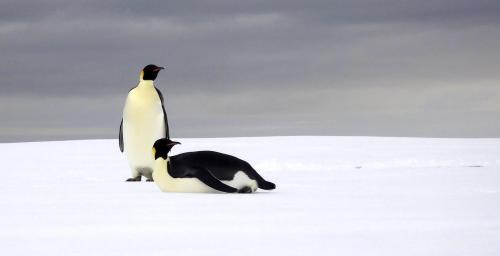
Two penguins look across the ice - one is lying down.

Emperor penguins look across the Antarctic ice. Photo: USAP

On Wednesday 17th January, PubSci is delighted to welcome science journalist and photographer, Michael Lucibella, as our first speaker of 2024. Mike will be talking about conducting science on Earth’s southernmost continent. Tickets are on Eventbrite now, free or for a donation.

• • •

Antarctica holds 90% of the world’s ice and has no permanent residents, yet 5,000 international scientists and support staff are based there. Why is an ice-covered continent — where wind speeds can reach 180 mph, temperatures can drop to −89 Celsius and everything moves 30 ft (9 m) a year — so important to scientific research that 55 countries operate research stations there, in some of the harshest conditions on the planet?

Michael Lucibella, spent five seasons in Antarctica with the United States Antarctic Program, documenting their work and editing their official newspaper, The Antarctic Sun.

___

Join Mike upstairs at the Old King’s Head, near London Bridge tube on Wednesday 17th January. Doors open at 6.30pm for a 7pm start. Talks run for ~45 minutes and are followed by a Q&A session. The Old King’s Head has a happy hour before 7pm, and the kitchen serves excellent pub grub.

Reserve your place now!  PubSci is free to attend but please consider making a donation to help cover costs.

We use Eventbrite to manage numbers. Please reserve your spot ASAP each month to avoid disappointment. 

• • •

About the speaker

MikeScience journalist and photographer, Mike Lucibella, has called London home since 2020. Before crossing the Atlantic eastwards, he went south to Antarctica as journalist, photographer and podcast producer for The Antarctic Sun, official newspaper of the US Antarctic Program. As its editor, he spent six years documenting the life and vital scientific research carried out on the Earth’s icy continent.

Before joining USAP, Mike was staff science writer for the American Physical Society. He produced their newsletter, APS News, and worked with their outreach department to promote science and physics to the general public.

Mike holds a master’s degree in digital journalism and a bachelor’s in print journalism with minors in history, international relations and applied physics from American University. As a science communicator, he’s spoken in schools, comic book conventions, science cafes, scientific society meetings, and has occasionally been known to perform science standup comedy.

An avid photographer, bike rider and hiker, you can often find Mike exploring London. He currently works in Media Relations at UCL where he connects academics with journalists to get the word out about the latest science and research.

Don’t miss this chance to join Mike at PubSci this January for a trip to the frozen continent.

Green aurora over a building at night, lit up red on the ice

Aurora over the IceCube laboratory. Photo: Martin Wolf

Support PubSci

There is no charge for attending PubSci talks, but we have a traditional whip-round to cover expenses. Very few of us carry cash these days, so you can contribute digitally through our TipJar or make a donation when registering for ticketed events with Eventbrite. Please help PubSci continue putting on events. PubSci receives no funding.

We aim to keep PubSci accessible for all, although it is unsuitable for under 18s as we meet in the function room of  a pub. Regrettably, there is no wheelchair access. 

Check out the Future Events page where you can also subscribe to our Google Calendar so PubSci events automatically appear in your own Calendar.  You can find all our links on our LinkTree.

• • •

We used to meet on the first Wednesday of the month but PubSci is now on the third Wednesday. Join us upstairs at the Old King’s Head near London Bridge Underground (Borough High Street east side exit) every month apart from December for a regular dose of Sipping, Supping & Science.

image-third-wednesdays

Address:

The Old King’s Head (upstairs room)
King’s Head Yard
45-49 Borough High Street
London SE1 1NA

‘Art and Science in the Age of Climate Fear’ | 15th November 2023 | Briony Marshall

How can art contribute to a public understanding of science in an era of existential threats?

On Wednesday 15th November PubSci is delighted to welcome award-winning sculptor, Briony Marshallwho draws on a Masters degree in biochemistry to create science-inspired sculptures and installations. In this talk she will explore the role of art in communicating science and the place of science in understanding art.

[Free to attend but donations to running costs are greatly appreciated]

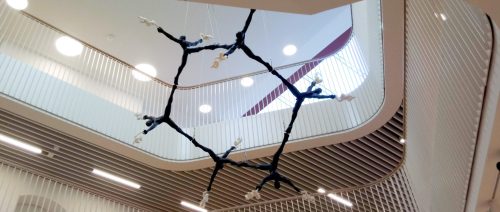
Sculpture of a hexagonal molecule made from human figures cast in bronze

Sculpture of the cyclohexane molecule at Tonbridge School (Credit: Briony Marshall)

Good sci-art goes beyond simply illustrating a topic, it offers insights into the deeper meanings behind (and implications of) its subject matter. Blending an Oxford science background with a fine art training, Briony sees art practice as a form of research and asks what artists can contribute that goes beyond traditional scientific methodology.

So, is “Sci-Art” just science-as-art or can it also be art-as-science? Is it possible to combine art and science without compromising either? Briony believes it is not only possible, it is essential to do so.

Briony’s latest public artwork, Plastic Mountain, was created with schools, volunteers and other members of the community in West Norwood to highlight the persistence of microplastic waste in the environment. It remains on public view outside West Norwood Library and Picture house until mid November. See it if you can – details here.

• • •

A monolithic sculpture, made from layers of compacted earth, resembles a geological section as it stands out against the night sky

Layers of Bournemouth. Briony Marshall

For this talk, Briony will look at neuroaesthetics from an artist’s point of view and consider how art can contribute to the public understanding of, and respect for, science. She will also share her own experiences as an artist deciding what projects to work on in our age of complex and existential threats.

Once again we’ll be using Eventbrite ticketing for this event. Book early to avoid disappointment.

Don’t forget that PubSci doesn’t charge an entry fee as such, but we rely entirely on attendee contributions to cover the cost of running these events.

___

Join us upstairs at the Old King’s Head, near London Bridge station. Doors open at 6.30pm for a 7pm start. The Old King’s Head has a happy hour before 7pm, and the kitchen serves excellent pub grub.

• • •

About the speaker

A female sculptor wearing paint-spattered overalls in her studio

Briony in the sculpture studio at Pangolin London

Briony Marshall MRSS is a professional sculptor and installation artist who finds solace and meaning in science. To quote her heroine, Rachel Carson: “Those who contemplate the beauty of the earth find reserves of strength that will endure [a lifetime].”

She has a Masters in Biochemistry from Oxford University and a diploma in Fine Arts from The Art Academy where she is now Head of Professional Development as well as pursuing her own sculpture practice from her London studio.

While at Oxford she was editor of both The Oxford Student and ISIS.

In 2021 she founded Planet STEAM to help people of all ages and backgrounds understand and appreciate science by creating public artworks which explore today’s world and the complicated threats and opportunities faced by society.

She has been a member of the Royal Society of Sculptors since 2008 and in 2016 she became one of the ‘175 Face of Chemistry’ in celebration of the 175th anniversary of the Royal Society of Chemistry.

Her latest public art commission, Plastic Mountain, juxtaposes society’s addiction to disposable plastics with the geological ages of the Earth. It remains on show outside West Norwood Library until mid-November and has attracted local and national media interest.

Briony is currently campaigning for a public sculpture in honour of Kathleen Lonsdale, the pioneering pacifist, prison reformer and X-ray crystallographer who proved the structure of the Benzene ring and gave the world 3-d molecular models using ping pong balls!

Don’t miss the chance to join Briony at PubSci this November at ‘Art and science in an age of fear’

[Don’t forget to set a featured image to replace the default one (in the “Post” settings on the right), add categories and Tags, and write a brief summary in the Excerpt box]

___

Support PubSci.

There is no charge for attending PubSci talks, but we have a whip-round to cover expenses. Because so few of us carry cash these days, you can contribute digitally too  by putting a few quid in the virtual whip-round. Please help PubSci continue to put on events.

We aim to keep PubSci accessible for all, although it is unsuitable for under 18s as we meet in the function room of  a pub. Regrettably, there is no wheelchair access. 

Please check our Future Events page where you can also subscribe to our iCal feed.  You can find all our links on our LinkTree.

• • •

We used to meet on the first Wednesday of the month but PubSci is now on the third Wednesday.

image-third-wednesdays

Address:

The Old King’s Head (upstairs room)
King’s Head Yard
45-49 Borough High Street
London SE1 1NA

A Hitchhiker’s Guide to the Solar System | Weds 18th October, with Dr Stuart Eves

On Wednesday 18th October PubSci is delighted to welcome Astrophysicist and Satellite engineer, Dr Stuart Eves, to take us on a guided tour through the wonders of the Solar System.

The eight planets lined up to compare their sizes

The eight planets and their moons (Sizes are to scale, interplanetary distances aren’t!). Courtesy of CactiStaccingCrane.

• • •

If you thought Earth was the only body in our solar system worth visiting, think again!

Join Stuart Eves for an interplanetary travellers’ guide to some of the most fascinating, beautiful, and compelling sights any tourist could wish to see in the vicinity of our star.

The colourful surface of Jupiter's Moon Io is covered with volcanoes

Jupiter’s Moon Io (NASA/JPL/UoArizona)

From the first Soviet lunar probe, Luna 1, through NASA’s Mariner and Voyager missions, to the international James Webb Space Telescope, humans have been imaging the planetary bodies of our solar system and their moons in ever-increasing detail.

But if you could hitch a ride on this space hardware, what would you see?

Instead of the barren bodies we once supposed, objects in our solar system have revealed themselves to possess stunning features reminiscent of those that make our home planet so beautiful and awe inspiring, only far, far larger: volcanoes, dust devils, geysers, liquid and frozen oceans, unexpected seasonal features… perhaps evidence of life too.

Even little Pluto turns out to be more interesting than anybody thought possible.

__

Join us upstairs at the Old King’s Head, near London Bridge station. Doors open at 6.30pm for a 7pm start. The Old King’s Head has a happy hour before 7pm, and the kitchen serves excellent pub grub.

We use Eventbrite ticketing. Reserve your place now! PubSci is free to attend but please consider making a donation with your reservation to help cover costs.

__

A photograph of Stuart Eves

Dr Stuart Eves

Dr Stuart Eves has an MSc in Astrophysics and a PhD in satellite constellation design. He has more than 30 years of experience in satellite systems and is a Fellow of both the Royal Astronomical Society and the British Interplanetary Society. In 2018 he founded his own space consultancy, SJE Space Ltd, following 16 years with the MoD and 14 years with Surrey Satellite Technology Limited.

His 2017 book “Space Traffic Control” is the standard text on protecting satellites from natural hazards and man-made threats. He serves on the Advisory Panel for the ESA Space Safety Programme, and is a founder of the GNOSIS network on sustainability in space.

Stuart is passionate about sharing his love of space. He “moonlights” as a GCSE Astronomy teacher and speaks to adults at U3A and Café Scientifique. His outreach work has been rewarded with the Arthur Clarke Award and his satellite technology has been displayed in the Science Museum. He has spoken at the Royal Institution on numerous occasions.

Don’t miss the chance to join Stuart at PubSci this October for a tour through some of the most beautiful, fascinating, and intriguing features of our own Solar System.

Graphic of the solar system produced by the European Space Agency

The Solar System (Credit: ESA)

• • •

Please support PubSci.

There is no charge for attending PubSci talks, but we have a whip-round to cover expenses. Because so few of us carry cash these days, you can contribute digitally too  by putting a few quid in the virtual whip-round. Please help PubSci continue to put on events.

We aim to keep PubSci accessible for all, although it is unsuitable for under 18s as we meet in the function room of  a pub. Regrettably, there is no wheelchair access. 

Please check our Future Events page where you can also subscribe to our iCal feed.  You can find all our links on our LinkTree.

__

We used to meet on the first Wednesday of the month but PubSci is now on the third Wednesday.

image-third-wednesdays

Address:

The Old King’s Head (upstairs room)
King’s Head Yard
45-49 Borough High Street
London SE1 1NA
Weds 20th September | The Weird and Wonderful World of Eels

[Booking via eventbrite. Free to attend but donations to running costs are greatly appreciated]

Eels! Where do they breed? What was ‘eel rent’? And where have all the eels gone?

On Wednesday 20th September PubSci is delighted to welcome Dr Michael Williamson of ZSL Institute of Zoology to talk about the weird and wonderful world of eels.

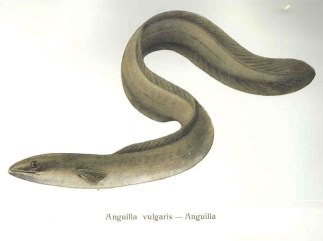
A 1911 picture of an eel

The common European eel (Wikimedia Commons)

Eels are one of the UK’s most mysterious native fish species, so much so that a rich cultural folklore surrounds them. The Mighty Boosh even sang about them.

Eels were once so common that taxes were sometimes paid by the 10,000 eels but a recent environmental DNA survey found absolutely no trace of them in the Somerset Levels – a landscape once famous for eels. So what is going on?

In this talk, Mike will discuss the history of eels in human culture, their bizarre – and still mysterious – lifecycle and migration habits, and the enormous threat that now faces this most curious of fish. He’ll even address a question we’ve all wanted to ask but were too shy to say out loud… “Are eels better than whales?”

Once again, we’re using Eventbrite booking – please follow this link to reserve your spot.

• • •

Mike Williamson is a Post-Doctoral Research Associate at the Institute of Zoology, the research division of the Zoological Society of London (the global conservation organisation best known to children as Regents Park Zoo). He works at the interface of conservation, climate change and biodiversity, seeking to minimise the impact human-activity has on the natural world.

Michael uses tagging technology and remote sensing to investigate the movements and migrations of marine and freshwater fauna, exploring how this is influenced by environmental drivers, anthropogenic disturbance and climate change. He has tagged whales, tracked sharks and is currently knee-deep in eels.

Don’t miss this unique opportunity to hear what he has to say. Booking via Eventbrite is now live!

__

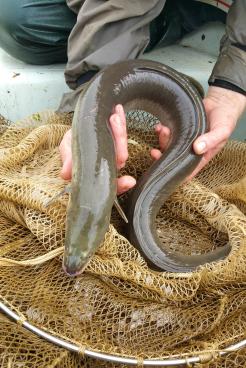
Eels being handled by a biologist

Photo: Michael Williamson

PubSci is grateful to Mike for stepping in at short notice. Erica McAlister’s talk will now take place next year.

Join us upstairs at the Old King’s Head, near London Bridge station. Doors open at 6.30pm for a 7pm start. The Old King’s Head has a happy hour before 7pm, and the kitchen serves excellent pub grub.

• • •

Please support PubSci.

There is no charge for attending PubSci talks, but we have a whip-round to cover expenses. Because so few of us carry cash these days, you can contribute digitally too. Please help PubSci continue to put on events.

We aim to keep PubSci accessible for all, although it is unsuitable for under 18s as we meet in the function room of  a pub. Regrettably, there is no wheelchair access. 

Please check our Future Events page where you can also subscribe to our iCal feed.  You can find all our links on our LinkTree.

__

We used to meet on the first Wednesday of the month but PubSci is now on the third Wednesday.

image-third-wednesdays

Address:

The Old King’s Head (upstairs room)
King’s Head Yard
45-49 Borough High Street
London SE1 1NA
Weds 20th September | The Weird and Wonderful World of Eels! (Dr Mike Williamson)

[Free to attend but donations to running costs are greatly appreciated]

In a change to the published schedule, PubSci is delighted to welcome Dr Michael Williamson of ZSL Institute of Zoology on Wednesday 20th September.

A recent survey of environmental DNA in the Somerset Levels found absolutely no trace of eels in a landscape once famous for its eel population. In this talk, Mike will discuss the history of eels in human culture, their bizarre – and still mysterious – lifecycle and migration habits, and the enormous threat that now faces this most curious of fish.
Michael Williamson works at the interface of conservation, climate change and biodiversity, seeking ways to minimise the impact human activity has on the natural world. He has tagged whales, tracked shark migrations and is currently knee-deep in eels. Don’t miss this unique opportunity to hear what he has to say.

Put the date in your diary! Full details will be published here soon

• • •

Join us upstairs at the Old King’s Head, near London Bridge station. Doors open at 6.30pm for a 7pm start. The Old King’s Head has a happy hour before 7pm, and the kitchen serves excellent pub grub.

PubSci is grateful to Mike for stepping in at short notice. Erica McAlister has had to reschedule her talk due to work commitments and we look forward to hosting her at PubSci next year.

• • •

Please support PubSci.

There is no charge for attending PubSci talks, but we have a whip-round to cover expenses. Because so few of us carry cash these days, you can contribute digitally too. Please help PubSci continue to put on events.

We aim to keep PubSci accessible for all, although it is unsuitable for under 18s as we meet in the function room of  a pub. Regrettably, there is no wheelchair access. 

Please check our Future Events page where you can also subscribe to our iCal feed.  You can find all our links on our LinkTree.

__

We used to meet on the first Wednesday of the month but PubSci is now on the third Wednesday.

image-third-wednesdays

Address:

The Old King’s Head (upstairs room)
King’s Head Yard
45-49 Borough High Street
London SE1 1NA

>> Stop Press! August PubSci… is in August <<

A superluminal neutrino glitch* has occurred at PubSci Towers, resulting in today’s blog post giving the impression that August’s PubSci would take place on 19th July.

This is, of course, impossible as it would require faster-than-light travel to achieve (an idea so proposterous that the infinite monkey typing pool spontaneously all produced “Hahahahaha!” on their keyboards).

James Riordon will, quite naturally, be speaking at PubSci on 16th August 2023. As if further proof were needed, you can read the corrected blog post here.

It’s going to be another popular one, especially as James will be addressing the world-famous Royal Institution the following evening. To ensure you catch him at PubSci first, please book your place via Eventbrite. PubSci is always free to attend, but we can only run events with your support.

We suspect it’s no coincidence this late-night measurement error occurred while writing about James’ talk. Neutrinos were reported to have travelled faster than light in the OPERA experiment in 2011. It was later established that a loose cable was responsible for this anomaly – which is pretty much how I came to leave last month’s date in this month’s blog post!

Hope to see you on the 16th August

Richard

typing-monkeytyping-monkeytyping-monkeytyping-monkeytyping-monkeytyping-monkeytyping-monkeytyping-monkey

*  Superluminal Neutrino Glitch fills the whole B-side of PubSci’s forthcoming prog rock concept album, Parity Symmetry Breakdown, played entirely on Theremin and cowbell.

16th August | James Riordon: “Ghost Particle – How Neutrinos Could Answer The Biggest Question in the Universe”

On Wednesday 16th August PubSci is excited to welcome the celebrated US science writer James Riordon to lead us through the search for the so-called Ghost Particle of physics: the elusive neutrino.

[Eventbrite registration required. Free to attend but donations are very welcome.]

71WGiDIfjWLNeutrinos are the second most abundant particles in the universe, and hundreds of trillions of them stream through your body every second, but you can’t feel them at all. Atomic nuclei produce neutrinos whenever they come together or break apart – even bananas emit them – yet these amazing particles have proved incredibly difficult to detect.
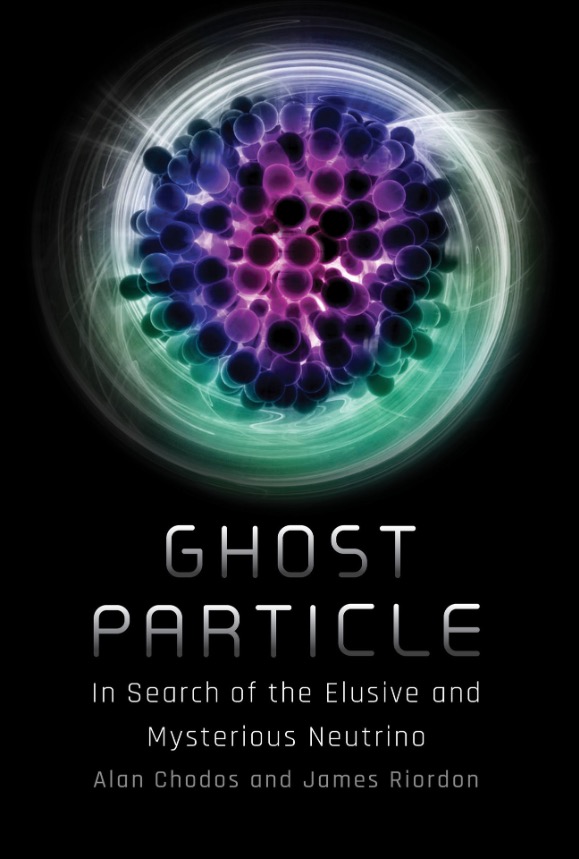
Book jacket of Ghost Particle

At August’s PubSci, James will take us on an extraordinary journey from the heart of the sun to the cold Antarctic ice, and into the universe beyond, as we explore everything from the Big Bang to dark matter, and ask whether neutrinos could even be the reason there is anything in the universe at all.

His newly published book will be available after the talk.

Join us upstairs at the Old King’s Head near London Bridge station. Doors open at 6.30pm for a 7pm start. The Old King’s Head has a happy hour before 7pm, and the kitchen serves excellent pub grub.

We anticipate a large turnout for this event and are using Eventbrite to manage numbers. Please reserve your spot ASAP to avoid disappointment.

• • •

j_riordon_revJames Riordon has written for Science NewsScientific AmericanQuanta MagazineNew ScientistPopular Science, The Washington PostPhysics Today, and Analytical Chemistry. In his spare time, James goes in search of abandoned and decrepit science laboratories (sometimes with his friend Michael Lucibella).

Some of those explorations contributed to research for the book Ghost Particle: In Search of the Elusive and Mysterious Neutrino (MIT Press/Random House, 2023), which he wrote with physicist Alan Chodos, and others will embellish his next book, Crush: A Quest to Uncover the Mysteries of Gravity, due out from MIT Press/Penguin Random House in 2024.

When he’s not skulking about in old labs, James lives in Clarksville, Maryland with his science writer spouse Martha Heil, two daughters, and numerous family dogs, cats, and snakes. 

• • •

Support PubSci.

There is no charge for attending PubSci talks, but we have a whip-round to cover expenses. Because so few of us carry cash these days, you can contribute digitally too. Please help PubSci continue to put on events.

We aim to keep PubSci accessible for all, although it is unsuitable for under 18s as we meet in the function room of  a pub. Regrettably, there is no wheelchair access. 

Please check our Future Events page where you can also subscribe to our iCal feed. You can find all our links on our LinkTree.

__

image-third-wednesdays

Address:

The Old King’s Head (upstairs room)
King’s Head Yard
45-49 Borough High Street
London SE1 1NA

Reminder for PubSci, Weds 19th July

Can humans sense underground water, dream the future, attract metal objects to their bodies, as some believe…? What does science have to say about such claims of extraordinary abilities?

Two men with metal forks and spoons apparently stuck to their bodies
‘Human magnets’ in Vietnam compete to stick metal items to their bodies. (Image © Ryan Hinkson)

This month, PubSci is delighted to welcome the wonderful Professor Chris French.

His day job is exploring psychological explanations for the experiences that people report as paranormal , and Chris is the absolute expert in his field. He’s written books on cognitive and anomalistic psychology, edited collections of articles, appeared on TV and radio, written dozens of articles for the Guardian newspaper and appeared as an expert witness in court.

This Wednesday he’ll not just be talking about that, he’ll explain how claims of paranormal ability, from dowsing to clairvoyance, are tested… and what happened when Chris and his team at Goldsmiths, University of London, tested them under controlled conditions.

Were they sincerely deluded, were they charlatans, or were some able to demonstrate their incredible abilities? Come to this month’s PubSci and find out!

Follow this link to read more and then reserve your place on eventbrite

A Victorian stage magician demonstrating mind reading for money
1900s theatre poster advertising a mind reading act. (Public domain)