
In PubSci’s second blog post of 2025, we look back at January’s event, preview February’s and share news of an exciting talk coming up on 8th February.

A Poetic Way to Look at the Protein Folding Problem
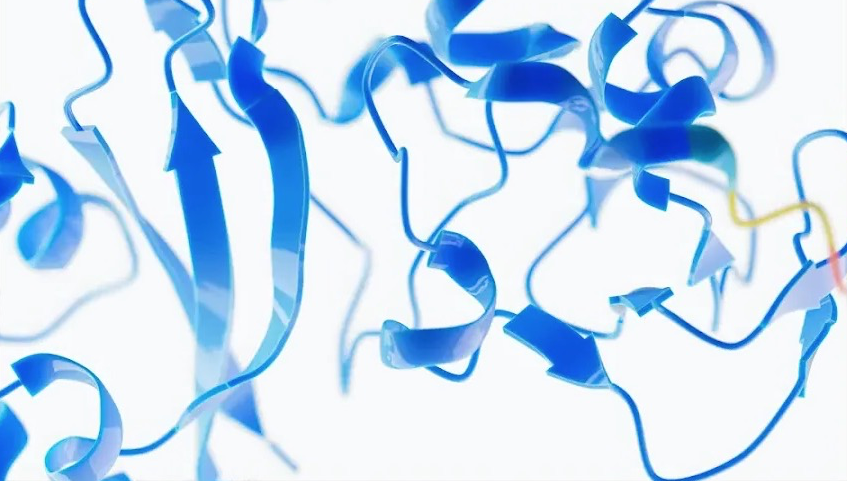
We had a great time exploring protein folding at PubSci last month. Many thanks to Professor Rivka Isaacson for making it so engagingly comprehensible. Who knew that Shakespearean sonnets could be rendered as protein models by feeding their sequence of letters into AlphaFold!
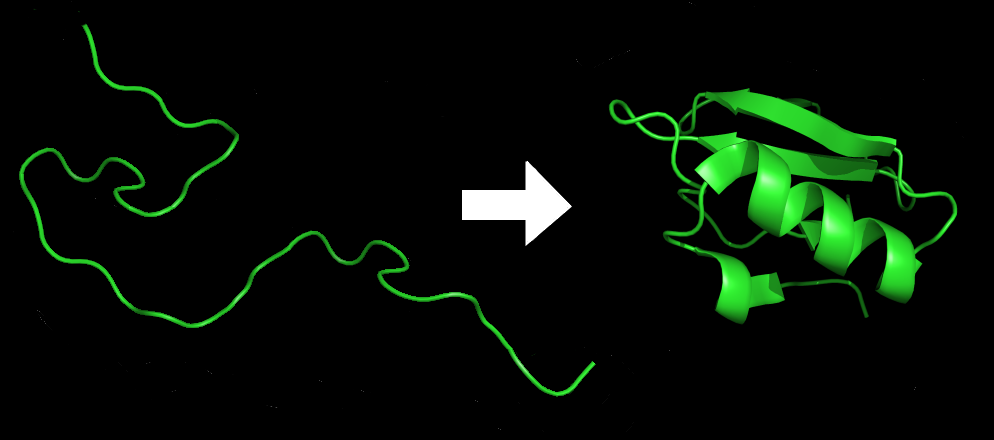
We learnt what ‘protein folding’ is and why it’s vitally important, discovered how protein structures are experimentally determined, and heard how an AI system based on AlphaGo helped Demis Hassabis and John Jumper share the Nobel Prize in Chemistry by radically improving the accuracy with which proteins are modelled. Best of all, we learnt that AlphaFold will model any sequence of amino acids that it’s provided with and predict the protein’s most probable 3-d structure, leading Rivka to take Shakespeare’s Sonnet 18 – “Shall I compare thee to a summer’s day” – and turn that into a protein.
Shall I compare thee to a summer’s day?
Thou art more lovely and more temperate:
Rough winds do shake the darling buds of May,
And summer’s lease hath all too short a date…
Shall I Compare Thee To A string of Amino Acids?
To make a protein, any of 20 amino acids are joined like beads on a string. AlphaFold doesn’t know what a protein is but it is very good at predicting which sequences of “beads” will cause the “string” to bend in which direction, leading to the final 3-d structure that’s so vital to a protein’s function. Working out the relationship between the order of the beads (amino acids) and the shape of the resulting protein is the challenge of the protein folding problem.
The 20 amino different acids that make up proteins are identified by unique letters of the alphabet. The English alphabet has only 6 more, so (by omitting B, J, O, U, X and Z) any sentence could be turned into a string of amino acids and fed into AlphaFold. Rivka is well known for her art-science collaborations, such as Viewing the Invisible, and she delighted us with the first public viewing of what Sonnet 18 would look like if its letters were the amino acid sequence of a protein.
AlphaFold is open access, so anybody can try this at home – but remember where you saw it first!

Gunpowder, Rocket Fuel and Other Things That Go Boom!
February’s PubSci is approaching, and half the tickets have already been snapped up. From gunpowder to Dynamite and beyond, explosive materials have played a huge role in civil and military life for hundreds of years, even driving space exploration. In A Brief History of Big Bangs on Wednesday 19th February, Mark Hardman tells the explosive history of “energetic materials” development, with a particular focus on the role played by Waltham Abbey Gunpowder Mills and the chemists and engineers who drove that progress in peacetime and in wartime. Full details and booking on Eventbrite.

Don’t miss The Search for Quantum Gravity at the Royal Institution.
What is the power of visualisation in scientific exploration? In case you can’t wait two weeks for your science fix – and even if you can – our friends at the Royal Institution have a truly groundbreaking talk coming up on Saturday 8th February when world-renowned physicist Jim Gates discusses the search for quantum gravity in Following Faraday’s hint: The search for quantum gravity.

Michael Faraday pictured magnetic fields around wires like wheels about a spoke, helping him towards understanding electromagnetic induction. Physicists and mathematicians now use computers to translate this powerful way of thinking into images that further our understanding. In theatre where Michael Faraday first presented his theories, Jim Gates will describe his efforts to follow such a path towards a theory of quantum gravity.
Don’t miss this rare opportunity to catch Jim Gates live at the RI. Booking via RI website.
• • •
That rounds off this month’s news. Thanks for reading and thanks for helping us Keep Science Live! Don’t forget to grab your tickets for February’s PubSci ASAP.
Posted by Richard Marshall, PubSci organiser and host.
• • •
About PubSci talks
PubSci meets upstairs at the Old King’s Head, near London Bridge tube. No specialist knowledge is required, just curiosity. Doors open at 6.30pm for a 7pm start. Talks run for ~45 minutes and are followed by a Q&A session. The Old King’s Head has a happy hour before 7pm, and the kitchen serves excellent pub grub.
We use Eventbrite booking to manage numbers. Follow us on Eventbrite to be notified when new tickets become available and reserve your place for February’s PubSci here! PubSci is a pay-what-you-can event – please consider making a donation with your reservation to help us cover our costs.
There is no charge for attending PubSci talks, but we have a traditional whip-round to cover expenses – consider it “Pay What You Can”. Very few of us carry cash these days, so you can also make a donation when registering for ticketed events with Eventbrite. Please help us continue putting on events. PubSci has no other source of funding.
We aim to keep PubSci accessible for all, although it is unsuitable for under 18s as we meet in the function room of a pub. Regrettably, there is no wheelchair access.
Check out the Future Events page where you can also subscribe to our Google Calendar so PubSci events automatically appear in your own Calendar. You can find all our links on our LinkTree.
• • •
We meet on the third Wednesday of the month, upstairs at the Old King’s Head near London Bridge Underground (Borough High Street east side exit). Join us every month apart from December for a regular dose of Sipping, Supping & Science.
Address:
The Old King’s Head (upstairs room)
King’s Head Yard
45-49 Borough High Street
London SE1 1NA



 PubSci