Tag Archives: Biology

19th March 2025 – Jenny Poulton: Can Cells Think?

This month PubSci explores the fascinating possibility that cell biology resembles actual problem-solving.

On Wednesday 19th March, PubSci is delighted to welcome Dr. Jenny Poulton to explore the fascinating possibility that cell biology resembles actual problem-solving.

To the uninitiated this may sound like a wild idea but some highly respected names with hundreds of peer-reviewed research papers under their belts are taking the topic very seriously. Decapitated flatworms can regenerate a head complete with apparent ‘memories’ (or at least conditioned responses) from just the surviving tail end, suggesting cognition doesn’t only exist in the brains of very simple creatures. Whilst nobody is seriously talking about consciousness (aka “the c-word”), phrases like conditioning, cognition and cellular-intelligence are increasingly being discussed in some circles of cell-biology.

We know that individual cells perform surprisingly powerful computations as they interact with their environment by means of simple chemical reaction networks, and Pavlovian conditioning only requires four chemicals, which raises the tantalising question whether can cells perform this function too.

Four stages of Pavlovian Conditioning of a dog
Does the dinner bell make you salivate too…?

We know individual cells can perform surprisingly powerful computations as they interact with their environment by means of simple chemical reaction networks, and Pavlovian conditioning only requires four chemicals, which raises the tantalising question whether can cells perform this function too.

After years of surprisingly fierce debate amongst biologists, powerful computational tools might finally provide the answer…

Researcher and tutor, Dr Jenny Poulton has worked with Professor of Machine Learning, Chris Watkins, on the “Intelligence in Context” grant at Royal Holloway, University of London and believes there is much to be discussed in terms of what cells can and can’t in terms of solving complex problems.

Don’t miss this unique opportunity to hear Jenny challenge what you think you know about cells and problem solving. PubSci is on Wednesday 19th March.

A woman wearing spectacles
Dr. Jenny Poulton

Dr Jenny Poulton is a multidisciplinary science researcher, teacher and tutor with a gift for communicating complex topics, for which she was nominated for a Student Academic Choice award in 2019.

She has a background in Theoretical Biophysics, with research interests in Stochastic Thermodynamics, and Information Theory, working internationally as a postdoctoral researcher and has published peer-reviewed papers in her field.

Jenny received her MPhys in Theoretical Physics from the University of Sheffield in 2015, focussing on spherical bacteria such as Staphylococcus aureus, and her PhD in Thermodynamics of Polymer Copying from Imperial College, London, in 2020.

She worked with Professor of Machine Learning, Chris Watkins, on “Intelligence in Context” at Royal Holloway, University of London and in 2021 Jenny presented to the Santa Fe Institute, the world’s leading research centre for complex systems science.
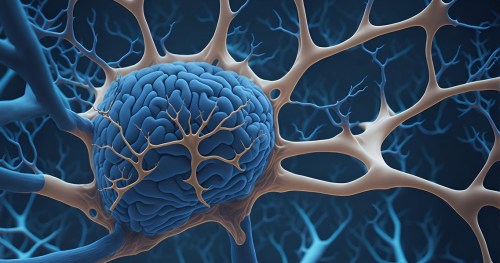
A brain tangled among brain cells
Is there a limit to the complexity of puzzles that cells can solve?

Keep Up With Future Events

Dd you know PubSci has an online calendar where you can view future events?

Event titles and dates go in the calendar several months in advance, along with a brief outline of the talk. If you subscribe to our calendar, PubSci events will automatically appear in your own calendar.

We also publish a programme of PubSci events three times a year which you can view online or download for printing. Why not put a copy on your work fridge for everyone to see!

Posted by Richard Marshall, PubSci organiser and host.

PubSci: Sipping • Supping • Science

• • •

Diagram of pavlovian learning in brain cells

• • •

About PubSci talks

PubSci meets upstairs at the Old King’s Head, near London Bridge tube. No specialist knowledge is required, just curiosity. Doors open at 6.30pm for a 7pm start. Talks run for ~45 minutes and are followed by a Q&A session. The Old King’s Head has a happy hour before 7pm, and the kitchen serves excellent pub grub.

We use Eventbrite booking to manage numbers. Follow us on Eventbrite to be notified when new tickets become available and reserve your place for February’s PubSci here! PubSci is a pay-what-you-can event – please consider making a donation with your reservation to help us cover our costs.

Support PubSci

There is no charge for attending PubSci talks, but we have a cash whip-round to cover expenses on the night – consider it “Pay What You Can Afford”. As few of us carry cash these days, you can make a donation when registering for ticketed events with Eventbrite. Please help us continue putting on events. PubSci has no other source of funding.

We aim to keep PubSci accessible for all, although it is unsuitable for under 18s as we meet in the function room of  a pub. Regrettably, there is no wheelchair access. 

You can find all our links on our LinkTree.

• • •

We meet on the third Wednesday of the month, upstairs at the Old King’s Head near London Bridge Underground (Borough High Street east side exit). Join us every month apart from December for a regular dose of Sipping, Supping & Science.

Address:

The Old King’s Head (upstairs room)
King’s Head Yard
45-49 Borough High Street
London SE1 1NA

Calendars, Flyers and Thinking Cells…?

While we wait for Eventbrite to fix a broken UI update, read about what happened last week, what’s happening soon, and how you can stay on top of everything that matters…

A brain tangled among brain cells
Can cells be trained to “think”?

February’s PubSci was a banger!

Many thanks to Mark Hardman for his talk last week on explosives, propellants, and the history of Waltham Abbey Royal Gunpowder Mills, packing more than 300 years of history into 45 minutes. London’s River Lea got a mention, not only because it used to power the gunpowder mills (and the oil mill that preceded them) but also because transporting explosives by barge was a lot smoother (and so safer) than going by road, especially when moving nitroglycerine.

A man talking to a group of people
King Henry would have been astounded at the Mill’s rocket vault (Photo: Jeremy Rogers)

We also learnt that the Mills produced the very finest black powder in the early 18th century under the ownership of one Philippa Walton who overcame the conventions of her time to thrive as a successful entrepreneur following the death of her husband at the age of just 43

March PubSci: Can Cells Think?

Is there a limit to the complexity of puzzles that cells can solve?

Cells perform surprisingly powerful computations as they interact with their environment using simple chemical reaction networks. But Pavlovian conditioning requires only four chemicals, so can cells perform this function too? After years of fierce debate by biologists, powerful computational tools might provide the answer.

Diagram of pavlovian learning in brain cells

It’s a tantalising thought, and one we’ll be exploring on Wednesday 19th March when Dr Jenny Poulton delves into the topic. Unfortunately Eventbrite made some unannounced changes recently which have prevented me creating this event. I hope to send even invites out on Monday, but in the meanwhile, please put the date in your diaries.

Four stages of Pavlovian Conditioning of a dog
Does the dinner bell make you salivate too…?

Never miss PubSci again…

Talking of diaries, did you know PubSci has an online calendar where you can view future events? You can view it here.

I put PubSci dates in the calendar several months in advance, along with a brief outline of the talk. If you subscribe to our calendar, PubSci events will automatically appear in your own calendar. You’ll be the first to know when I schedule new events and you need never double-book yourself on a PubSci night again.

The calendar subscription link downloads a small .ics file. Open it to add PubSci events to your work or home calendar. Events update automatically as details and ticket links are added.

Finally, how many readers were aware that we publish a programme of PubSci events three times a year? It displays as a jpeg and you can can link to it from your own page, blog etc (as shown below), but you can also download it as a PDF for printing.

Why not put a copy and stick it on your work fridge for everyone to see!

PubSci: Sipping • Supping • Science

• • •

That rounds off this month’s news. Thanks for reading and thanks for helping us Keep Science Live! Don’t forget to grab your tickets for March’s PubSci as soon as they’re released.

Posted by Richard Marshall, PubSci organiser and host.

• • •

About PubSci talks

PubSci meets upstairs at the Old King’s Head, near London Bridge tube. No specialist knowledge is required, just curiosity. Doors open at 6.30pm for a 7pm start. Talks run for ~45 minutes and are followed by a Q&A session. The Old King’s Head has a happy hour before 7pm, and the kitchen serves excellent pub grub.

We use Eventbrite booking to manage numbers. Follow us on Eventbrite to be notified when new tickets become available and reserve your place for February’s PubSci here! PubSci is a pay-what-you-can event – please consider making a donation with your reservation to help us cover our costs.

Support PubSci

There is no charge for attending PubSci talks, but we have a cash whip-round to cover expenses on the night – consider it “Pay What You Can”. Very few of us carry cash these days, so you can also make a donation when registering for ticketed events with Eventbrite. Please help us continue putting on events. PubSci has no other source of funding.

We aim to keep PubSci accessible for all, although it is unsuitable for under 18s as we meet in the function room of  a pub. Regrettably, there is no wheelchair access. 

Check out the Future Events page where you can also subscribe to our Google Calendar so PubSci events automatically appear in your own Calendar.  You can find all our links on our LinkTree.

• • •

We meet on the third Wednesday of the month, upstairs at the Old King’s Head near London Bridge Underground (Borough High Street east side exit). Join us every month apart from December for a regular dose of Sipping, Supping & Science.

Address:

The Old King’s Head (upstairs room)
King’s Head Yard
45-49 Borough High Street
London SE1 1NA

Gunpowder, Sonnets and Quantum Gravity

In PubSci’s second blog post of 2025, we look back at January’s event, preview February’s and share news of an exciting talk coming up on 8th February.

Protein folding: From a string to a complex structure (Dr. Kjaergaard, Wikimedia Commons)

A Poetic Way to Look at the Protein Folding Problem

We had a great time exploring protein folding at PubSci last month. Many thanks to Professor Rivka Isaacson for making it so engagingly comprehensible. Who knew that Shakespearean sonnets could be rendered as protein models by feeding their sequence of letters into AlphaFold!

We learnt what ‘protein folding’ is and why it’s vitally important, discovered how protein structures are experimentally determined, and heard how an AI system based on AlphaGo helped Demis Hassabis and John Jumper share the Nobel Prize in Chemistry by radically improving the accuracy with which proteins are modelled. Best of all, we learnt that AlphaFold will model any sequence of amino acids that it’s provided with and predict the protein’s most probable 3-d structure, leading Rivka to take Shakespeare’s Sonnet 18 – “Shall I compare thee to a summer’s day” – and turn that into a protein.

Shall I compare thee to a summer’s day?
Thou art more lovely and more temperate:
Rough winds do shake the darling buds of May,
And summer’s lease hath all too short a date…

Shall I Compare Thee To A string of Amino Acids?

To make a protein, any of 20 amino acids are joined like beads on a string. AlphaFold doesn’t know what a protein is but it is very good at predicting which sequences of “beads” will cause the “string” to bend in which direction, leading to the final 3-d structure that’s so vital to a protein’s function. Working out the relationship between the order of the beads (amino acids) and the shape of the resulting protein is the challenge of the protein folding problem.

The 20 amino different acids that make up proteins are identified by unique letters of the alphabet. The English alphabet has only 6 more, so (by omitting B, J, O, U, X and Z) any sentence could be turned into a string of amino acids and fed into AlphaFold. Rivka is well known for her art-science collaborations, such as Viewing the Invisible, and she delighted us with the first public viewing of what Sonnet 18 would look like if its letters were the amino acid sequence of a protein.

AlphaFold is open access, so anybody can try this at home – but remember where you saw it first!

Curls of multicoloured ribbon representing the shape of a protein
Sonnet 18 modelled as a protein by AlphaFold (Courtesy of Rivka Isaacson)

Gunpowder, Rocket Fuel and Other Things That Go Boom!

February’s PubSci is approaching, and half the tickets have already been snapped up. From gunpowder to Dynamite and beyond, explosive materials have played a huge role in civil and military life for hundreds of years, even driving space exploration. In A Brief History of Big Bangs on Wednesday 19th February, Mark Hardman tells the explosive history of “energetic materials” development, with a particular focus on the role played by Waltham Abbey Gunpowder Mills and the chemists and engineers who drove that progress in peacetime and in wartime. Full details and booking on Eventbrite.

A large Explosion
Boom! (Image sourced from Vecteezy)

Don’t miss The Search for Quantum Gravity at the Royal Institution.

What is the power of visualisation in scientific exploration? In case you can’t wait two weeks for your science fix – and even if you can – our friends at the Royal Institution have a truly groundbreaking talk coming up on Saturday 8th February when world-renowned physicist Jim Gates discusses the search for quantum gravity in Following Faraday’s hint: The search for quantum gravity.

A shining light surrounded by a mesh or matrix
Source: Geralt via Pixabay

Michael Faraday pictured magnetic fields around wires like wheels about a spoke, helping him towards understanding electromagnetic induction. Physicists and mathematicians now use computers to translate this powerful way of thinking into images that further our understanding. In theatre where Michael Faraday first presented his theories, Jim Gates will describe his efforts to follow such a path towards a theory of quantum gravity.

Don’t miss this rare opportunity to catch Jim Gates live at the RI. Booking via RI website.

• • •

That rounds off this month’s news. Thanks for reading and thanks for helping us Keep Science Live! Don’t forget to grab your tickets for February’s PubSci ASAP.

Posted by Richard Marshall, PubSci organiser and host.

• • •

About PubSci talks

PubSci meets upstairs at the Old King’s Head, near London Bridge tube. No specialist knowledge is required, just curiosity. Doors open at 6.30pm for a 7pm start. Talks run for ~45 minutes and are followed by a Q&A session. The Old King’s Head has a happy hour before 7pm, and the kitchen serves excellent pub grub.

We use Eventbrite booking to manage numbers. Follow us on Eventbrite to be notified when new tickets become available and reserve your place for February’s PubSci here! PubSci is a pay-what-you-can event – please consider making a donation with your reservation to help us cover our costs.

Support PubSci

There is no charge for attending PubSci talks, but we have a traditional whip-round to cover expenses – consider it “Pay What You Can”. Very few of us carry cash these days, so you can also make a donation when registering for ticketed events with Eventbrite. Please help us continue putting on events. PubSci has no other source of funding.

We aim to keep PubSci accessible for all, although it is unsuitable for under 18s as we meet in the function room of  a pub. Regrettably, there is no wheelchair access. 

Check out the Future Events page where you can also subscribe to our Google Calendar so PubSci events automatically appear in your own Calendar.  You can find all our links on our LinkTree.

• • •

We meet on the third Wednesday of the month, upstairs at the Old King’s Head near London Bridge Underground (Borough High Street east side exit). Join us every month apart from December for a regular dose of Sipping, Supping & Science.

Address:

The Old King’s Head (upstairs room)
King’s Head Yard
45-49 Borough High Street
London SE1 1NA

Killer Whales to Killer Heels: Demystifying the Menopause (16th October 2024) with Dr. Diane Keeble-Ramsay

Discover why menopause evolved in humans, how come we share this trait with killer whales, and what policy makers can do to support women at work.

Killerwhales_jumping

Orcas of the coast of Alaska ©Robert Pittman, NOAA

October’s PubSci is on the science and sociology of the climacteric : what it’s for, how to have a better one, and how to support your partners, friends and colleagues in experiencing the best possible climacteric!

Before you get giddy with excitement, let’s remind ourselves that climacteric is the medical term for “the change” – better known as the menopause. Many people’s interest fades at this point in the conversation, which is sad when roughly 50% of humans go through menopause, and most of the other 50% are impacted by it one way or another.

In the UK, around 6 million working women are experiencing menopause at any one time. 80% of them feel unsupported, 70% experience stress as a result, and 1 in 10 quit working altogether. Surely we, as a society, can do better!

On Wednesday 16th October 2024 PubSci is delighted to welcome Dr. Diane Keeble-Ramsay from University of Suffolk to help us demystify the menopause.

This is a talk for everybody, including men, because even if you’re not facing menopause in the next few years yourself, nearly everybody experiences it first or second hand, and we all have a role to play in supporting our colleagues, partners, friends and relatives through this most human of life phases.

After exploring what it is and what it’s for, Diane will discuss how society, employers, policy makers, and medical professionals can support and empower the women who experience it and those around them. That includes you, lads. No excuses now!

PubSci is delighted to welcome Diane to be our October speaker in the week when thousands of employers and workplaces mark World Menopause Day.

Menopause_symbol

So, why should this natural change be taboo? Why do 80% of menopausal women feel unsupported at work, and what can we do about it?

Join Diane for Demystifying the Menopause on Wednesday 18th October. Book your ticket on Evenbrite now before the heat is on!

PubSci is a pay-what-you-can event – please consider making a donation with your reservation to help us cover our costs.

___

Join us upstairs at the Old King’s Head, near London Bridge tube. Doors open at 6.30pm for a 7pm start. Talks run for ~45 minutes and are followed by a Q&A session. The Old King’s Head has a happy hour before 7pm, and the kitchen serves excellent pub grub.

We use Eventbrite to manage numbers. Subscribe to be notified of forthcoming talks

• • •

About the speaker

A woman photographed against a yellow background

Dr Diane Keeble-Ramsay

Diane Keeble-Ramsay is an Associate Professor at UoS, University of Suffolk.

Her research, reviewing organisational and working practices, has a special emphasis on the experiences of employees, focused around post menopausal women and later life working.

She has published in books, texts, journal articles, and presented papers on employee experience and emotional wellbeing, the Global Financial Crisis, High Performance Working, Positive Ageing in the Workplace and related issues.

Diane is qualified in psychology and is a Member of the British Psychological Society. She’s a member of the Chartered Institute of Personnel and Development and a Principal Fellow of the Higher Education Academy.

PubSci is delighted to welcome Diane to the latest in our series of monthly talks.

___

Support PubSci

There is no charge for attending PubSci talks, but we have a traditional whip-round to cover expenses – consider it a “Pay What You Can” event. Very few of us carry cash these days, so you can contribute digitally through our TipJar or make a donation when registering for ticketed events with Eventbrite. Please help PubSci continue putting on events. PubSci has no other source of funding.

We aim to keep PubSci accessible for all, although it is unsuitable for under 18s as we meet in the function room of  a pub. Regrettably, there is no wheelchair access. 

Check out the Future Events page where you can also subscribe to our Google Calendar so PubSci events automatically appear in your own Calendar.  You can find all our links on our LinkTree.

• • •

We used to meet on the first Wednesday of the month but PubSci is now on the third Wednesday. Join us upstairs at the Old King’s Head near London Bridge Underground (Borough High Street east side exit) every month apart from December for a regular dose of Sipping, Supping & Science.

image-third-wednesdays

Address:

The Old King’s Head (upstairs room)
King’s Head Yard
45-49 Borough High Street
London SE1 1NA