Tag Archives: podcast

February blog: The Sci-Fi future of Diagnostics; Antarctic Beers at Old Kings Head; One of Our Dinosaur’s *isn’t* Missing; plus: Zombie Ant Fungus, er – the Musical..?

In this post I preview next week’s PubSci talk by Mark Lythgoe, look back at January’s Antarctic barnstormer, rediscover a childhood favourite movie, and preview the most unlikely musical ever.

February’s PubSci talk is nearly here!

Just a few tickets are still available for this unique opportunity to catch world-renowned and multiple award-winning scientist and communicator Professor Mark Lythgoe talk about the mid-blowing technology of body imaging. Use the button below to book for “Naked to the Bone – Next Gen. Biomedical Imaging” on Wednesday 18th February.

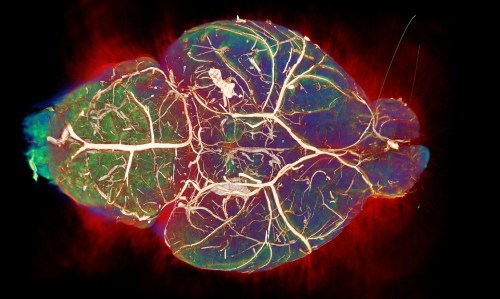
False colour image of a brain
“Vessels of the mind”

If you subscribe to PubSci’s calendar, you’ll have got the Eventbrite booking link as it went live.

If you don’t yet subscribe, now’s a good time to do it so PubSci events in your own calendar update automatically with the latest information and booking links as soon as they’re available. Clicking onTHIS link downloads a small .ics file which adds our calendar to yours once you’ve open it.

Scroll down for full details of February’s PubSci on Wednesday 18th or head straight to our NEXT EVENT page.

Polar Volcanoes, Whale Poo, Penguins and Beers – but no Bears!

January’s event was a delightful first for PubSci as we collaborated with Polar Beers and UK Polar Network for a fantastic joint event on Antarctica, featuring two talks on the Antarctic and a polar-themed pub quiz.

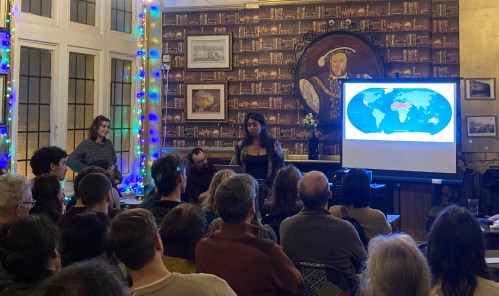
In Antarctica 2.0, Lavy Ratnarajah, a lecturer in Climate Science at the Department of Earth Sciences, UCL talked about nutrient and carbon cycling in the Southern Ocean and the effect that warmer ocean waters (due to climate change) are having on this delicate balance.

A woman in front of a projector screen showing a map of the world

It turns out that whale poo is a key factor in this cycle, and that ultimately, the whales eat the things that eat the things that eat their poo. Very neat indeed!

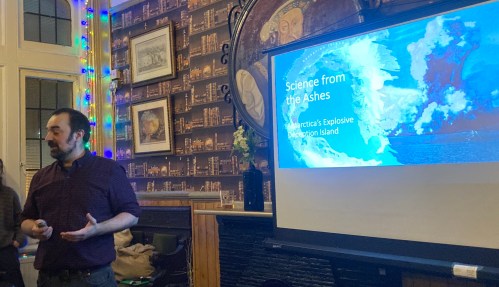
Mike Lucibella shared insights from his recent Masters in the History and Philosophy of Science (also at UCL), focusing on Deception Island, a flooded volcanic caldera off the Antarctic Peninsula which experienced a series of violent eruptions in the 1960s, leading to the evacuation and destruction of three research stations.

A man in front of a projector screen

The remaining island (including a new landmass) is now a scientifically important area, protected for its rare plant and birdlife. Fun fact: There are hot springs in Antarctica where you can bathe!

Lastly, we were treated to a pub quiz by Megan Malpas andIsabelle Sangha from Polar Beers, an outreach initiative of the British Antarctic Survey in Cambridge and UK Polar Network. The quiz tested general knowledge of both poles, popular culture and general science as well as rewarding those who paid attention during the talks.

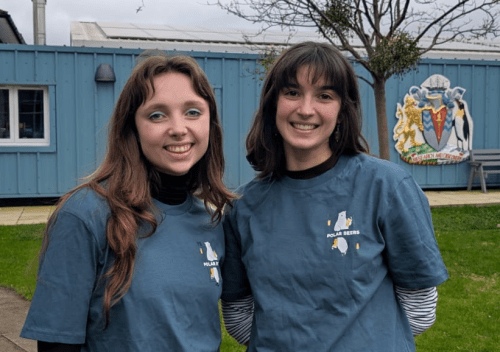
Two women in blue t-shirts

There were even quiz prizes: Polar Beers t-shirts for the top teams (modelled here by Megan and Izzy), and free stickers for everybody else.

Fun fact: Despite the name Arctic deriving from to arctos (Greek for “bear”), the presence of polar bears in the Arctic north is just a happy coincidence. Arctic/arctos refers to two constellations known to us by their latin names, Ursa Major and Ursa Minor (which also includes the pole star which denotes celestial north). Antarctic, therefore, means away from – or opposite to – the region of the bear. Fittingly there are no bears in Antarctica.

A cartoon Polar Bear and Penguin drinking beer with a glacier behind

Whilst Antarctic researchers are quite safe from polar bear attacks, they are frequently approached by penguins. Not only are these odd birds surprisingly curious about humans, I’m reliably informed that nothing else on Earth smells quite like penguin poo!

Many thanks to all our speakers, and a big thank you to Mike for arranging this one.

February’s PubSci: Naked to the Bone – Next Gen. Biomedical Imaging, 18th Feb

On Wednesday 18th February 2026, PubSci is delighted to welcome Professor Mark Lythgoe to the Old King’s Head to share the beauty, wonder, and exciting future of medical imaging. If’s only a few days away now, so grab a ticket while you still can.

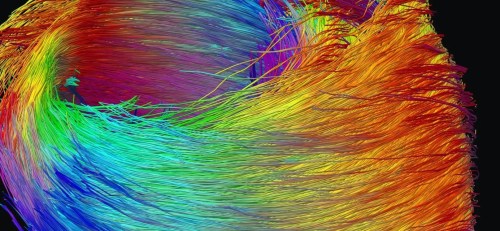
rainbow coloured swirling lines
4-d MRI visualisation of blood flow through the heart

Have you ever wanted to look inside your head, pondered what an MRI is or wondered if Star Trek’s “medical tricorder” could become a reality? Or even marvelled at a medical X-ray…? All these and more are forms of biomedical imaging.

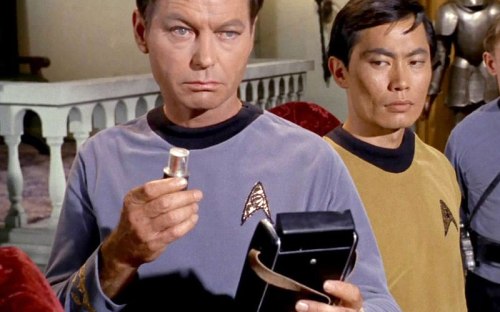
Two Star Trek characters: Bones McCoy and Mr Sulu
Mr Sulu doesn’t look convinced by Bones McCoy’s medical tricorder

Mark Lythgoe is director of UCL’s Centre for Advanced Biomedical Imaging as well as Director of Biomedical Imaging Research at the Francis Crick Centre, and it’s fair to see we are extremely lucky to be able to host such a busy, and wold renowned, research director at Science in the Pub.

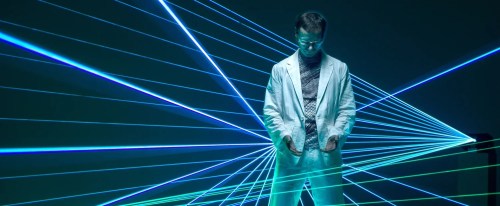
A man in a white suit surrounded by lasers

For “Naked to the Bone”, Mark will explore the history and development of imaging before looking to the next generation of biomedical 3-d, full colour, multi-channel imaging that is even today already becoming a reality. Not only is the topic fascinating, the resulting images are truly stunning – and truly life-saving.

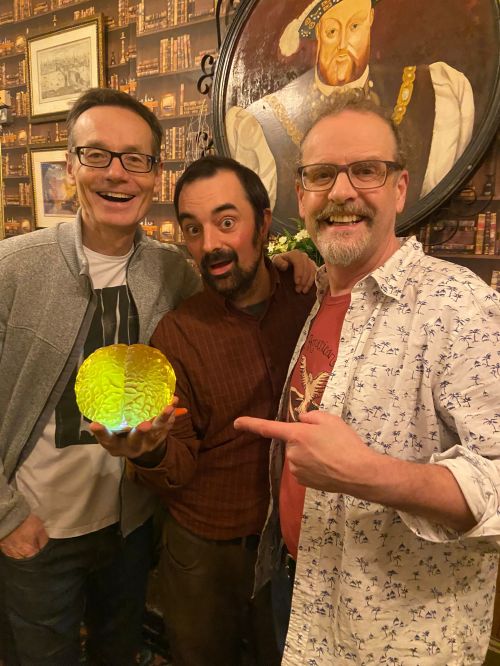
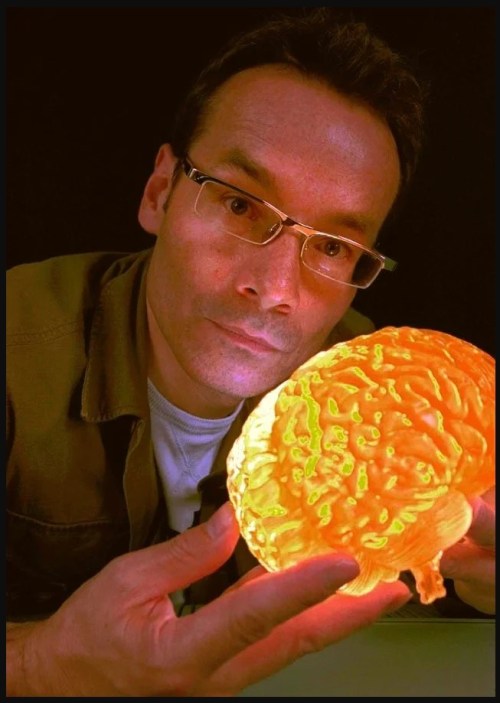
A Man holding a glowing brain

Professor Lythgoe’s groundbreaking research has led to him receiving some of the biggest awards in his field, and his science communication has been recognised by three major awards. He’s frequently on TV and radio, was interviewed by Jim Al Khalili for The Life Scientific, made a TV documentary about Einstein’s brain, and wrote and narrated Images That Changed The World for Radio 4.

If that weren’t enough, Mark is passionate about combining science and art, yet, remarkably, he failed his A levels, never got undergraduate degree, and describes his CV as having “more holes than a Tetley teabag”!

You can read more about Mark on PubSci’s Next Event page (until it is updated for the next event), or head straight to the Eventbrite booking page to secure one of the few remaining tickets ASAP.

One of Our Dinosaurs isn’t Missing…?

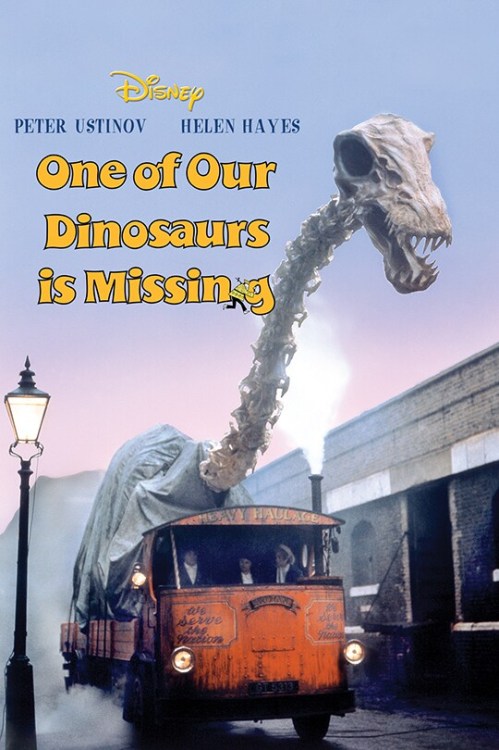
As a kid in the 1970s, one of my favourite films was Disney’s London-based caper, One of Our Dinosaur’s is Missing in which a spy steals a secret microfilm from China and hides it in a dinosaur skeleton at London’s Natural History Museum (clearly meant to be Dippy, the much loved Diplodocus which greeted visitors there). This leads to the dinosaur being kidnapped on a too-small lorry while rival factions chase it through the streets of a Disneyfied 1950s London to prevent the secrets on the microfilm falling into the “wrong” hands.

A dinosaur head and neck sticking out of an old fashioned lorry

The British contingent is led by “spirited British nannies” as might be expected from Disney Studios, but the cast reads like a Who’s Who of British comedy talent of the era: Peter Ustinov, Helen Hayes, Derek Nimmo, Joan Simms, Roy Kinnear, Dereck Guyler, Bernard Bresslaw.

Regrettably it also includes some crass Chinese stereotypes (sadly typical of their day) but it retains a place in my heart for making me laugh out loud and showing dinosaurs at the cinema long before Jurassic Park.

I mention this film, not for nostalgic reasons, but because until very recently we thought one of our dinosaurs really was missing. Not just a dinosaur — a whole clade (morphological taxonomic group): The ceratopsians.

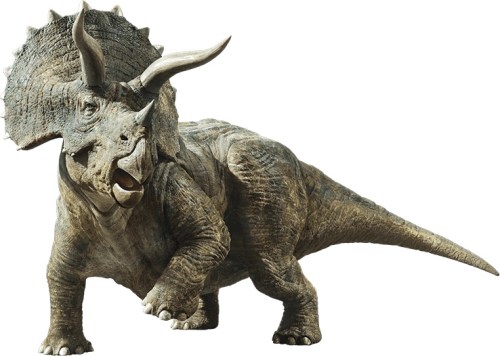
If that doesn’t sound familiar, think of Triceratops, the iconic three horned vegetarian monster that shared the late cretaceous period with T-Rex, right up until a 10-15 km-wide asteroid smashed into waters between the Gulf of Mexico and the Caribbean sea, causing a 15-year winter that ended the age of the dinosaurs and wiped out 75% of all life on Earth.

Four-legged dinosaur with a beaked mouth, fan-shaped crest and three horns and one on its nose and two above the eyes
Triceratops by sonichedgehog2 on Jurassic Park fan wiki

Ceratopsians (meaning face-horn) have been found pretty much the world over — except in Europe, which is strange, and had been considered something of a paleontological mystery. Why did Europe not get any of the Triceratops’ punk-faced cousins? And if ceratopsians were in Europe (or rather, in what became Europe millions of year later, where were their fossils?

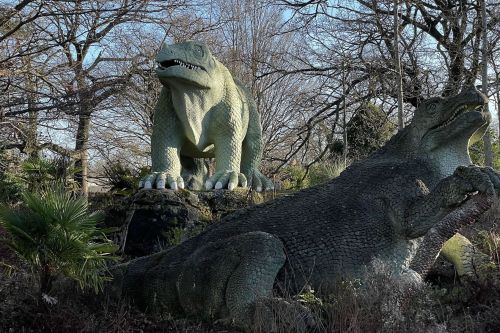
Well, in a roundabout way the answer has been staring us in the face all this time, especially if you’ve ever been to Crystal Palace Park. Amongst the park’s famous concrete dinosaurs (many of which aren’t dinosaurs at all, such as the giant Irish Elk Megaloceros giganteus), are examples of Iguanodons (“iguana-toothed”)… except these aren’t iguanodons at all, and have since been reclassified as Mantellodons after the couple who first described their fossils remains

Two concrete models of dinosaurs in an outdoor setting
Concrete Iguanodons (Crystal Palace Park Trust)

But if that sounds confusing, it turns out that Iguanodons’ close cousins are even more confusing. The rhabdodontids, which are closely related to iguanodons, were a type of dinosaur found exclusively in Europe in the late cretaceous – i.e. right up until that asteroid wiped out all the non-avian dinosaurs [yes, the survivors became the birds of today]. And that matters, because in the rest of the world you have ceratopsians but no rhabdodontids whilst in Europe you have rhabdodontids but no ceratopsians.

And guess, what! It turns out the missing European ceratopsians were hiding in plain sight because, according to research published recently in Nature, palaeontologists have now realised that many rhabdodontids might actually be misidentified ceratopsians. They were there all along — we just thought they were something else. 🤦‍♂️

If you want to know more about why One of Our Dinosaurs Isn’t Missing, the Natural History Museum has a very readable article on it here.

Space, Dinosaurs & Scooby Doo…

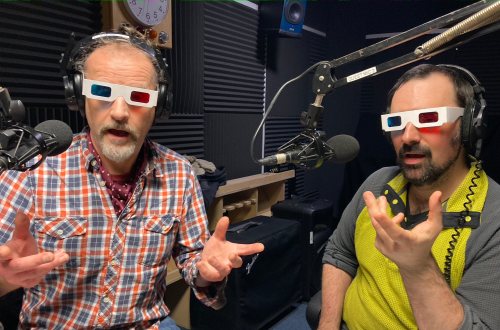
The above science news is one of the topics Mike and I talk about in our monthly radio show and podcast – imaginatively called The Science Show (I think of it as the Ronseal of podcast titles) – along with surgery in space and Antarctica, what’s the appendix for, who’s on Cloud 9, prehistoric poison, and how many blue whales could fit onto Rhode Island, what’s happening in and around London this month aaaand some excellent music.

A man painting a fence with the words "Ronseal does exactly what it says on the tin"

The most recent episode of The Science Show came out on 2nd Feb and I encourage you to give it a listen and send us your thoughts to the email address given out at the end of the show.

We use Mixcloud for podcast hosting as it’s the only platform which automatically pays royalties to copyright holders, allowing us to play the great music we love, and which make our particular scientific miscellany so different from every other science show. Unfortunately this comes with the limitation of streaming only (no downloads) but we consider this a small price to pay for creative freedom and supporting musical artists. You can listen live on Resonance 104.4 FM at 3pm on the first Monday of every month (also DAB, RadioPlayer, and livestreaming from the Resonance website).

DON’T PANIC! It’s the Culture Corner.

As you know, we love a bit of science / art crossover here at PubSci Towers. We’ve hosted an award-winning sculptor who works with molecular and biological forms, leading to an article in Forbes which name-checked PubSci (no relation by the way – we coincidentally share a surname), a world-famous mathematician who is also Scientist In Residence at the School of the Art Institute of Chicago, and have showcased an AI-generated protein decoded from a Shakespearean sonnet. We’ve also celebrated Shakespeare’s surprising love of maths, and poetry as a form of science communication. So, isn’t it about time for some music?

That is how I preceded, news back in November that the Orchestra of the Age of Enlightenment is running a series of Sunday morning concerts at King’s Place in London called Bach, The Universe and Everything, named for this quote from The Hitch Hiker’s Guide to the Galaxy:

“Beethoven tells you what it’s like to be Beethoven, and Mozart tells you what it’s like to be human. Bach tells you what it’s like to be the universe.”

Douglas Adams

This series of talks and music places Bach’s cantatas in the context of the amazing discoveries of the last 350 years, with each event featuring a cantata and a talk from a guest scientist, writer, artist or broadcaster, alongside choral and instrumental music. Well, the final two events of the series are approaching, and I think you should know, especially as it’s now 25 years since Douglas Adams took his seat at the Restaurant at the End of the Universe.

A picture of a cosmic nebula with writing over it

On Sunday 22nd Feb, the producer of the pilot episode for The Hitchhikers Guide to the Galaxy for Radio 4 talks about how the series came about.

And on Sunday 22nd March, the Curator of Time at Royal Museums Greenwich talks about the life and work of John Harrison, that great Enlightenment mind who made the first reliable marine chronometer, and died 250 years ago. You can book for both concerts (subject to availability) by clicking here.

 Is this the weirdest science musical topic ever…?

Not long ago, I featured a science musical about AntiMicrobial Resistance, but I’ve now found something even more brilliantly weird!

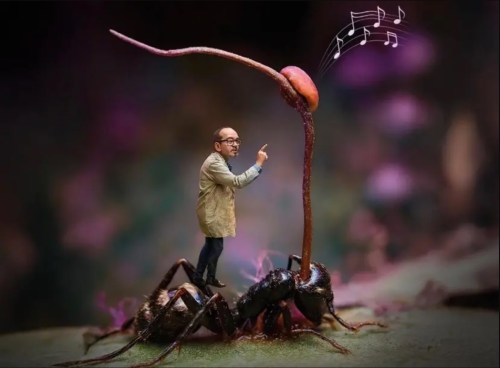
Artwork of a miniature scientist standing on an ant, pointing at the fungus growing from its head with musical notes emanating

‘Zombie Ant Fungus’ is a specially commissioned work exploring the world of parasitic fungi. And who among us doesn’t love cordyceps…?

On Saturday 9th May, the Royal Institution in Piccadilly premieres this radical new performance which blends neuroscience, mycology, sound and behaviour.
Developed by self-styled creators of insect eco–entertainment, Pestival, and a gathering of renowned scientists and musicians, each performance is followed by an expert panel discussing the piece and looking deeper into the science and art behind it. There’s a shortened family performance in the afternoon followed by table-top activities for young people, and a full performance in the evening.

Mind altering, brain-hijacking fungi, science, and music — this sounds like my kind of fun. If it’s your kind of fun, you can book now by following the above links, or see what else is going on at the Ri here.

Not quite lastly (and definitely not leastly), have a look at what’;s coming up at PubSci this Spring!

PubSci’s latest events programme (below) covers January to May 2026 and I’m super-excited with what’s in store for PubSci in the coming months. The events programme is perfect for printing out and pinning to your work noticeboard or sticking to the fridge. It’s also available on the Current Programme page. I recommend putting the dates in your diary now. Even better, subscribe to our calendar HERE. For example this is what you’ll see for March’s PubSci when you subscribe to our Calendar.
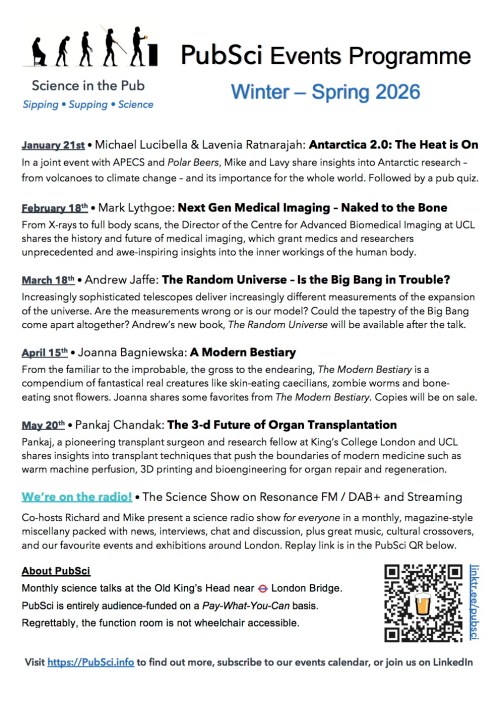
Click the image to open the programme in a new tab.

Finally, a reminder about how you can listen to a rather excellent Science Show

Podcast Symbol

The Science Show on Resonance FM is co-presented by myself and Mike Lucibella. Resonance is the Arts Council-backed radio station for London, broadcastings live on good old FM. It’s also on DAB and you can livestream Resonance anywhere in the world or and on Radioplayer across the UK. Better still, listen any time here.

The Science Show is a monthly, hour long magazine programme (i.e. a show with different segments) that you can listen to in one go or break up into three easy chunks. Our fifth show went out on Monday 2nd February 3pm, and our next show goes at on Monday 2nd March in the same regular slot

It’s not on any podcast server, but our page on Mixcloud effectively works like one – just find the show you like the look of and click PLAY. You can let us know what you think by sending a message at our dedicated email address.

• • •

Don’t forget to grab your last minute ticket to February’s PubSci, and remember to follow us on all the socials including LinkedIn to keep up to date with what we’re doing. You can find those on our Linktree.

Thanks for reading. Please feel free to email or comment in response. Hope to see you at The Old King’s Head on Wednesday.

16/02/26 Posted by Richard, PubSci programmer and host

PubSci: Sipping • Supping • Science

• • •

About PubSci talks

PubSci is organised and hosted by science communicator, Richard Marshall, assisted by Mike LucibellaEvents are held upstairs at the Old King’s Head, near London Bridge tube. No specialist knowledge is required, just curiosity. Doors open at 6.30pm for a 7pm start. Talks run for ~45 minutes and are followed by a Q&A session. The Old King’s Head has a happy hour before 7pm, and the kitchen serves excellent pub grub.

Keeping Up With Future Events

To make sure you don’t miss out on future events, subscribe to our Google Calendar to be the first to know when new talks are scheduled, and follow PubSci’s events on Eventbrite to be notified when tickets are available. You can also sign up to our own mailing list on any page on this site.

Support PubSci

There is no charge for attending PubSci talks, but we have a cash whip-round to cover expenses on the night – consider it “Pay What You Can Afford”. As few of us carry cash these days, you can make a donation when registering for ticketed events with Eventbrite. Please help us continue putting on events. PubSci has no other source of funding.

We aim to keep PubSci accessible for all, although it is unsuitable for under 18s as we meet in the function room of  a pub. Regrettably, there is no wheelchair access.

You can find all our links on our LinkTree.

The evolution of humans from sitting in a chair to talking about science in a pub (after Darwin)

Address:

The Old King’s Head (upstairs room)
King’s Head Yard
45-49 Borough High Street
London SE1 1NA
January Blog: Happy New Year, a Fantastic New Season of Events, and a glance back at 2025.

In this post, I preview the next 5 months of PubSci talks (including January’s PubSci), and celebrate what we’ve achieved at PubSci and beyond.

Hey everybody, happy new year!

Thank you for following PubSci and coming to our events throughout 2025 — and a special welcome to those who joined us recently. As we kick off 2026, I want to glance back over what we’ve been up to in the last 12 months and share what we have to look forward to in the coming season’s programme.

First, I’m pleased to announce that the 2026 Winter-Spring programme went up last month. Click the image on the left to view it full size or head to our Programme page where you can view and download it as a PDF which you can print to stick on your fridge or noticeboard at home and at work.

We’ve got five excellent talks lined up, looking into the Antarctic, the human body, the universe, and the natural world, concluding in May with a look at organ transplantation. I’ve already scheduled much of the rest of the year, and I can’t wait to tell you all about it, but you’ll have to wait until Spring for that.

Stream The Science Show presented by Richard & Mike (more info further down this blog post)


On 21st January we kick off 2026 with a really exciting collaboration between PubSci and Polar Beers.

a man on a steaming mountaintop
© Wai Yin Cheung

Antartica 2.0: The Heat is On sees our very own Mike Lucibella returns to talk about Deception Island, an active volcano off the Antarctic Peninsula that housed three research stations until eruptions forced its evacuation yet remains a centre of vital Antarctic research. Mike will share insights from his recent Masters in History and Philosophy of Science focused on polar regions.

Joining Mike is marine biogeochemist Dr Lavy Ratnarajah, lecturer in Climate Science at the Department of Earth Sciences, UCL, who studies nutrient and carbon cycling in the Southern Ocean. Lavy will share insights from her own research into how ocean organisms – from microbes to zooplankton – interact with each other, their environment and larger, more iconic animals and how those interactions are affected by our changing climate.

As if that weren’t more than enough to get you out of the house on a winter’s evening, the event concludes with a fun Pub Quiz run by our friends at Polar Beers (part of the UK Polar Network). Don’t worry if you don’t know anything about the Earth’s polar regions, this fun quiz will test your general knowledge as well as rewarding those who paid attention during the talks — there will be prizes!

A cartoon of a penguin and a polar bear with beer glasses going Cheers

I can’t think of a better way to kick off the year than celebrating Antarctic Summer / Arctic Winter with actual polar researchers and a polar pub quiz in the comfort of the Old King’s Head.

Booking is live now and tickets are moving fast – in fact only a handful remain – so head to the Event Page for full information, or go straight to Eventbrite to reserve you place.

2025 was a great year for PubSci

We kicked off in January with Prof Rivka Isaacson who delighted us with explanations of proteins and protein folding in How AI Won a Nobel Prize in Chemistry, the highlight of which was seeing William Shakespeare’s Sonnet 18 (Shall I compare thee to a summer’s day) rendered as a protein structure in AlphaFold.

Curls of multicoloured ribbon representing the shape of a protein
Sonnet 18 as a protein by AlphaFold (Rivka Isaacson)

February was an explosive event in which Mark Hardman from Waltham Abbey Royal Gunpowder Mills told the history of “energetic materials” in A Brief History of Big Bangs. Anyone living by the River Lea will be relieved to know unstable nitroglycerine is no longer transported from the mills on barges!

In March, Dr Jenny Poulton posed the challenging question “Can Cells Think?“, which isn’t the trivial question it might first appear to be. We weren’t talking about cells engaging in philosophical discussions of course but examining the complex processing that cells carry out, hearing how they interact with their environment, and understanding how they can be conditioned like Pavlov’s dogs.

April saw PubSci host the London book launch of A Little History of Maths (Yale University Press, 2025) by author and maths communicator Snezana Lawrence who shared her writing process and some highlights from this wonderful little book spanning millennia of maths history in easily digestible chapters with charming illustrations.

The Royal Institution of Great Britain came to PubSci in May – or at least their world famous demonstration team did in the person of Michael Cutts (accompanied by Head of Collections, Charlotte New, and Harvard Innovator in Residence, Prof David Ricketts) – to present some live science demos in Science Goes Pop! celebrating 200 years of Live Science at the *Ri

* Yes that’s the correct abbreviation — not RI but Ri, like a chemical symbol

Silhouette of a man holding a glowing sphere
Mike Cutts with the plasma toroid

June saw the return of our favourite space scientist Dr Stuart Eves who talked about Why the Universe is Trying to Kill Us – and how we can stop it! It turns out there’s a pattern behind the arrival of large asteroids and other major events which have led to global mass extinctions, and astronomers may turn out to be saviours of the human race.

July was another book event when superstar statistician and Professor of Infectious Diseases and Epidemiology, Adam Kucharski, shared highlights from his book, Proof — The Uncertain Science of Certainty (Profile Books, 2025). Does wine-buying budget really predict university grades? Do we really know how scientific opinion is formed? And what does tea-making have to do with the standards for medical trials?

In August we were teated to the inside track on AI – what it is, what it isn’t, and what it can and can’t do – by PubSci regular Dr Ruth Stalker-Firth, in Demystifying AI. Whilst AI is developing all the time, we learnt that it’s important to look behind the curtain and not confuse the appearance of intelligence with actual intelligence, especially when many AI services are augmented by human activity.

There was Much Ado About Numbers in September when author and maths populariser Rob Eastaway came to the Old King’s Head to talk about the maths in Shakespeare’s day – and in his plays – as featured in his latest book (Allen & Unwin, 2024). Of course, our pub is a stone’s throw from Bankside where Shakespeare acted and showed his plays at the Rose and Globe theatres. Rob wins the best/worst pun of the year for ending his highly entertaining talk with one about pencil lead and the Bard’s famous line from Hamlet…

A woman and two bearded men smiling in front of a painting of Henry the eigth
Prof Jenny Rohn with PubSci hosts Richard and Mike (and Henry)

October saw a return to PubSci from cell biologist and author Professor Jenny Rohn in Antimicrobial Resistance – How do we beat the silent pandemic? Jenny gave us the history of modern antibiotics before sharing sobering facts about the rise in antimicrobial resistance and the almost non-existent pipeline for developing new antimicrobials. Fortunately it wasn’t just doom and gloom — new approaches are on the horizon, including the use of machine learning AI and viral bacteriophages (a topic Michael Byford spoke about for us about in 2019).

We ended 2025’s programme in November with a fascinating talk on dementia by Dr Emma Clayton. In Lost in Translation? Why Brain Cells Stop Communicating in Dementia Emma looked at the processes and early indicators of dementia before sharing the work her lab at UK Dementia Research Institute is doing to better understand what causes dementia and how it can be treated or even prevented.

On a show of hands, around 60% of the audience said they were touched by dementia in their family or social circles. and it was truly heartening to hear about the compassionate determination of scientists dedicated to understanding this condition which effects 1 in 3 people over their lifetime.

We even got to see cellular processes modelled as Lego bin men in a possible science communication first. Many thanks to Emma for rounding off our year with a great talk on a difficult topic.

Podcast Symbol

We’re on the Radio!

In October 2025 Mike and Richard started co-hosting a monthly science show that broadcasts on the radio in London and can be streamed all around the world!

The Science Show – why call it anything else? – is a one hour magazine format programme that’s been described as a “joyous miscellany packed with news, interviews, chat and discussions, plus great music, cultural crossovers, and events and exhibitions happening around London”. We’d love it if the PubSci family would give it a listen and share it with your science-loving friends.

Listen live on 104.4 FM at 3pm on the first Monday of the month , or stream it on Mixcloud.

It’s not on any podcast server, but our page on Mixcloud effectively works like one – just find the show you like the look of and click PLAY. You can let us know what you think by sending a message at our dedicated email address.

PubSci went to the IoP

On Wednesday 19th November, Mike and I attended the Institute of Physics Outreach and Communicators Conference. With the theme focused on reaching audiences outside formal settings, I gave a short presentation on PubSci titled “Taking Science to the People”.

Luckily nobody shouted “Scampi and Chips!” in the middle of my talk…

a plate of scampi and chips with tartare sauce and a slice of lemon
Scampi and chips!

• • •

Don’t forget to grab your last minute ticket to January’s PubSci, and remember to follow us on all the socials including LinkedIn to keep up to date with what we’re doing. You can find those on our Linktree.

Thanks for reading. Please feel free to email or comment in response. Hope to see you at The Old King’s Head on Wednesday 21st January

15/01/2026 Posted by Richard Marshall, PubSci programmer and host

PubSci: Sipping • Supping • Science

• • •

About PubSci talks

PubSci is organised and hosted by science communicator, Richard Marshall, assisted by Mike LucibellaEvents are held upstairs at the Old King’s Head, near London Bridge tube. No specialist knowledge is required, just curiosity. Doors open at 6.30pm for a 7pm start. Talks run for ~45 minutes and are followed by a Q&A session. The Old King’s Head has a happy hour before 7pm, and the kitchen serves excellent pub grub.

Keeping Up With Future Events

To make sure you don’t miss out on future events, subscribe to our Google Calendar to be the first to know when new talks are scheduled, and follow PubSci’s events on Eventbrite to be notified when tickets are available. You can also sign up to our own mailing list on any page on this site.

Support PubSci

There is no charge for attending PubSci talks, but we have a cash whip-round to cover expenses on the night – consider it “Pay What You Can Afford”. As few of us carry cash these days, you can make a donation when registering for ticketed events with Eventbrite. Please help us continue putting on events. PubSci has no other source of funding.

We aim to keep PubSci accessible for all, although it is unsuitable for under 18s as we meet in the function room of  a pub. Regrettably, there is no wheelchair access. 

You can find all our links on our LinkTree.

The evolution of humans from sitting in a chair to talking about science in a pub (after Darwin)

Address:

The Old King’s Head (upstairs room)
King’s Head Yard
45-49 Borough High Street
London SE1 1NA
November Blog: Final event of 2025 / New PubSci programme / PubSci at the IoP / Events / AMR takes centre stage / The Science Show podcast

In this post I preview November’s PubSci, look at some interesting events, preview next year’s talks programme and plug our radio show / podcast, and look at two great science-based arts events.

Are fourth Wednesdays the new third Wednesday of the month?

We know Thursday is the new Friday, but has there also been a less widely acknowledged shift in the weeks of the month? Not as far as we are aware – but this November’s PubSci takes place a week later than usual. For November only, we’re on the fourth Wednesday instead of the third (which itself was was the new first Wednesday, but that’s another story altogether).

If you subscribe to PubSci’s calendar, you’ll have been notified automatically that there’s no PubSci this week. If you don’t yet subscribe, now’s a good time to do it so that events in your own calendar update automatically with the latest information and booking links as soon as they’re available. Clicking on that second link downloads a small .ics file which adds our calendar to yours once you’ve open it. Scroll down for details of November’s PubSci on Wednesday 26th or click the link below.

Putting AMR in perspective

As I write this, I’m in the middle of a course of dental treatment triggered by an infection which required a course of antibiotics – and I’m really glad they are available to us. It’s nearly 100 years since Alexander Fleming discovered penicillin in a petri dish he’d left out while he went on holiday in 1928, and this week is World Antimicrobial Resistance Awareness Week which highlights the growing threat of antimicrobial resistance (AMR). As it happens, AMR features twice in this blog post, showing that PubSci leads the way yet again!

First up, many thanks to Jenny Rohn for an excellent talk on AMR last month.

A woman and two bearded men smiling in front of a painting of Henry the eigth
Professor Jenny Rohn with PubSci hosts Richard and Mike (and Henry)

Mouldy bread had been used as a folk remedy for millennia but it was Fleming who understood the antimicrobial properties of Penicillium rubens. It was successfully used to treat an eye infection in 1930 but it wasn’t until the midst of WWII that penicillin itself was isolated by Howard Florey and Ernst Chain and the first successful use of commercially prepared penicillin antibiotic happened in 1942.

Three years later, when Fleming shared the Nobel prize for medicine with his collaborators, he gave this prescient warning in his acceptance speech:

“Penicillin is to all intents and purposes non-poisonous so there is no need to worry about giving an overdose and poisoning the patient. There may be a danger, though, in underdosage. […] Then there is the danger that the ignorant man may easily underdose himself and by exposing his microbes to non-lethal quantities of the drug make them resistant”

Two samples of bacteria, one with inhibited growth
Antibiotic sensitivity vs antibiotic resistance

Overuse, misuse, and unfinished courses of antibiotics have now brought us to the point where antimicrobial resistance is endemic in many settings, and hospital-acquired infections are a major threat to health and a drain on NHS resources. If you missed Jenny’s talk, this recent article goes into the 100-year history of AMR in some detail – but don’t get nightmares, new approaches and new research programmes are delivering the first real boost in novel antibiotics in decades, and long-neglected phage therapy is receiving new interest after being all but abandoned except by the former Soviet state of Georgia. Ever ahead of the curve, PubSci hosted a talk on phages by our old friend Michael Byford back in May 2019.

PubSci goes to the IoP

On Wednesday 19th November, both Mike and I will be at the Institute of Physics Outreach and Communicators Conference. It’s an annual event which allows us to network with fellow science communicators and meet potential speakers as well as deepening skills and hearing what others are up to in the field. This year’s theme focuses on reaching audiences outside formal settings, which is one of PubSci’s foundational aims. We’ll be giving a short presentation on PubSci titled “Taking Science to the People”. I hope nobody shouts “Scampi and Chips!” in the middle of my talk, but you never know.

a plate of scampi and chips with tartare sauce and a slice of lemon
Scampi and chips!

Lost in Translation – Why do brain cells stop communicating in dementia?

Dementia has been in the news a lot lately with hints of possible therapies emerging from mouse studies. Some research even suggest Alzheimers’ memory loss could be reversed, but practical treatments are likely still decades away.

Meanwhile, it’s a tragic reality that one in three people will develop dementia in their lifetime. A key aspect of neurodegenerative disease is a breakdown in the way synapses maintain a healthy brain and nervous system. What does this mean for dementia research, and how could understanding it lead to better treatments?

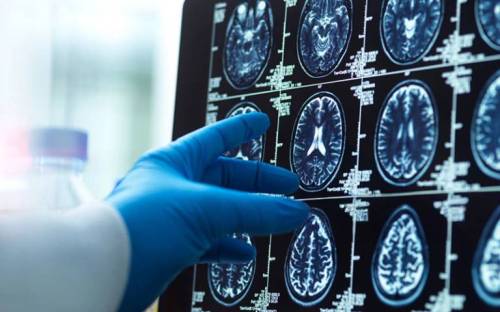
A gloved hand pointing at brain MRI images

On Wednesday 26th November, we’re delighted to welcome Dr Emma Clayton from the UK Dementia Research Institute to explain what we know about dementia and how her lab at UK DRI is researching what causes the synaptic dysfunction which precedes symptoms.

Come to PubSci’s final event of 2025 to hear from a leading dementia researcher what we know about dementia, how the UK DRI is at the forefront of research, and what Dr Clayton’s lab is learning about the cause and role of synapse dysfunction in dementia. Full details are on our Next Event page (until it’s no longer the next event, of course!) or you can read all about it and grab one of the few remaining tickets on Eventbrite.

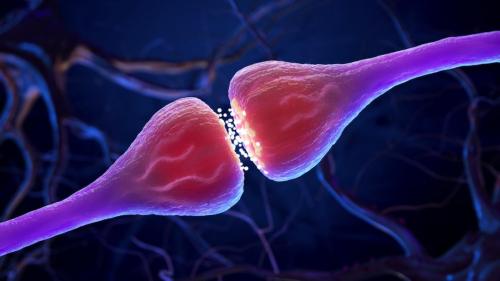
An image of a synapse
Illustration of a synapse (© Shutterstock via UK DRI)

Science, music – and a musical!

As you know, we love a bit of science / art crossover here at PubSci Towers. We’ve hosted an award-winning sculptor who works with molecular and biological forms, leading to an article in Forbes which name-checked PubSci (no relation by the way – we coincidentally share a surname), a world mathematician who is also Scientist In Residence at the School of the Art Institute of Chicago, and have showcased an AI-generated protein decoded from a Shakespearean sonnet. We’ve also celebrated Shakespeare’s surprising love of maths, and poetry as a form of science communication. So, isn’t it about time for some music?

As it happens, the Orchestra of the Age of Enlightenment is running a series of Sunday morning concerts at King’s Place in London called Bach, The Universe and Everything. If you’re wondering why a classical concert series would reference a title from the “increasingly inaccurately named Hitch Hiker’s Guide to the Galaxy trilogy”, it’s for this quote:

“Beethoven tells you what it’s like to be Beethoven and Mozart tells you what it’s like to be human. Bach tells you what it’s like to be the universe.”

Douglas Adams
A picture of a cosmic nebula with writing over it

But that’s only half of it. The series is described as placing “Bach’s cantatas in the context of the amazing cosmic discoveries of the last 350 years” with each one featuring “a Bach cantata and a talk from a guest scientist, writer, artist or broadcaster, alongside choral and instrumental music.” The next convert is on Sunday 30th November and tickets are available at the time of writing.

 AMR again – but with a twist (and a song)

Fresh from an off-Broadway run – and after making history as the first musical to ever perform at the United Nations – LIFELINE comes to Southwark Playhouse theatre in London in spring 2026. Why are we featuring it here…? Because LIFELINE deals with AMR and the health workers who fight against it every day.

A man looking at a petri dish and a nurse singing or shouting

That may sound an odd theme for a musical – it’s hardly Cats or Kinky Boots, is it? – but this show has been a runaway success wherever it played, including selling out the Edinburgh Fringe for two years, so it’s not only important and informative, it’s also a whole lotta fun.

What’s more, you can get involved, because the show’s chorus is made up of real healthcare and science professionals along with animal health professionals, environmentalists – anybody engaged with AMR in any way in fact. If you’re a nurse, vet, microbiologist, dentist, surgeon, policy-maker, pharmacist, lab technician, farmer – among many other options – the producers would love you to join the show’s chorus and perform alongside a cast of West End actors and musicians. Follow this link to learn more and see full details of this extraordinary casting call.

If you’re feeling a little stage-shy, you can book tickets to see it on the Southwark Playhouse website. LIFELINE will run from 28th March to 2nd May 2026.

Not quite lastly (and definitely not leastly), we have a podcast!

Podcast Symbol

Hopefully you’re aware by now that The Science Show on Resonance FM is co-presented by myself and Mike Lucibella. Resonance is the Arts Council-backed radio station for London, broadcastings live on good old FM. It’s also on DAB+ (so you need a modern DAB radio) and you can livestream Resonance anywhere in the world or and on Radioplayer across the UK.

The Science Show is a monthly, hour long magazine programme (i.e. a how with several different segments) that you can listen to in one go or break up into three easy chunks. The second show went out on Monday 3rd November at 3pm, and our next show goes at on Monday 1st December in the same regular slot

We’re very happy with how Show 2 went (having overcome audio issues with the pilot episode). In it we bring you excellent music, a great interview with Rob Eastaway, September’s PubSci speaker, and loads of great chat about space, science history, and even the Bayeaux Tapestry. You can listen to it on Mixcloud HERE.

It’s not on any podcast server, but our page on Mixcloud effectively works like one – just find the show you like the look of and click PLAY. You can let us know what you think by sending a message at our dedicated email address.

• • •

Aaaand finally, PubSci’s new events programme is out, covering January to May 2026 (with a sneak preview of our June talk too) and I’m super-excited with what’s in store for PubSci next year. The events programme is perfect for printing out and pinning to your work noticeboard or sticking to the fridge. It’ll be available on the Current Programme page in a couple of weeks – along with past event programmes – but for now, this is the only place to find it online.

Click the image to open the programme in a new tab.

Don’t forget to grab your last minute ticket to November’s PubSci, and remember to follow us on all the socials including LinkedIn to keep up to date with what we’re doing. You can find those on our Linktree.

Thanks for reading. Please feel free to email or comment in response. Hope to see you at The Old King’s Head on Wednesday 26th November.

18/11/2025 Posted by Richard, PubSci programmer and host

PubSci: Sipping • Supping • Science

• • •

About PubSci talks

PubSci is organised and hosted by science communicator, Richard Marshall, assisted by Mike LucibellaEvents are held upstairs at the Old King’s Head, near London Bridge tube. No specialist knowledge is required, just curiosity. Doors open at 6.30pm for a 7pm start. Talks run for ~45 minutes and are followed by a Q&A session. The Old King’s Head has a happy hour before 7pm, and the kitchen serves excellent pub grub.

Keeping Up With Future Events

To make sure you don’t miss out on future events, subscribe to our Google Calendar to be the first to know when new talks are scheduled, and follow PubSci’s events on Eventbrite to be notified when tickets are available. You can also sign up to our own mailing list on any page on this site.

Support PubSci

There is no charge for attending PubSci talks, but we have a cash whip-round to cover expenses on the night – consider it “Pay What You Can Afford”. As few of us carry cash these days, you can make a donation when registering for ticketed events with Eventbrite. Please help us continue putting on events. PubSci has no other source of funding.

We aim to keep PubSci accessible for all, although it is unsuitable for under 18s as we meet in the function room of  a pub. Regrettably, there is no wheelchair access. 

You can find all our links on our LinkTree.

The evolution of humans from sitting in a chair to talking about science in a pub (after Darwin)

Address:

The Old King’s Head (upstairs room)
King’s Head Yard
45-49 Borough High Street
London SE1 1NA