Tag Archives: science in the pub

Books, Bards, Brilliant Demos and a Blast Off!

In this edition of the PubSci blog: Looking back over April, something to do this weekend, details of May’s PubSci, and something to do at the end of the month.

Spring has sprung, the grass is ris’ – and last month I began our interstitial blog post with the words: “The sun is out, the trees are in blossom, and the PubSci blog is bursting with wonderful things to do…”

I can reuse that for today’s today’s post, although the warmest Mayday on record is of course a cause for concern within the context of shifting climate patterns and rising global average temperature.

On a lighter note, if you came to the Ig Nobel Awards tour on Sunday 6th April you might have seen me dressed as a banana for reasons that made sense at the time but are now difficult to explain. Blame the Annals of Improbable Research. Photos exist but have been hidden to protect the innocent.
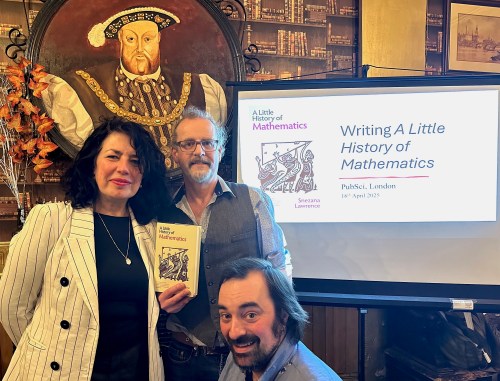
A woman and two men

April’s speaker, Snezana Lawrence (https://x.com/mathshistory) with PubSci Hosts Richard and Mike

We had a wonderful evening in the company of Snezana Lawrence at April’s PubSci, hearing about the writing process and contents of her beautifully illustrated new book A Little History of Mathematics. It was great to see so many new faces among the regulars and the Q&A was really engaged.

William Shakespeare

The Royal Institution gets a double mention in this month’s post, firstly because I’m event managing a brilliant talk there this coming Saturday 3rd May. In the Mathematical Life of Shakespeare, award-winning author Rob Eastaway (Why Do Buses Always Come in Threes?) explores the surprising ways that maths and numbers crop up in Shakespeare’s plays. With historical asides about games, optics, astronomy, music and magic, you’ll never think about maths or Shakespeare the same way again. Suitable for adults and anyone aged 8 and above.

If you stay for the evening event, I’ll also be hosting How Physics Connects Our Universe when theoretical physicist Chris White presents a new hypothesis linking quantum mechanics and general relativity.

But enough about them, what about us…?

Next PubSci: Wednesday 16th April | Science Goes Pop!

From Faraday to Van Tulleken, The Royal Institution of Great Britain – known by its chemical symbol, Ri – has been The Home of Science since 1799 and is famous for its public demonstrations which bring science to life. On Wednesday 21st May we bring the wow of live science to The Old King’s Head for a special event celebrating 200 years of Ri monthly Discourses and annual Christmas Lectures.

Royal Institution Christmas Lectures 2024 (Photo: Paul Wilkinson)

Michael Cutts from the Ri’s renowned demonstration team has designed, built, and showcased science demos at the Ri and around the world. He’ll take us through the history of live science and the importance of showing as well as telling. There may even be a few live demos suitable for a pub setting.

Doors 6.30 for 7pm start. Book your place on Eventbrite ASAP – tickets are going fast. As usual, you can make a contribution to PubSci’s costs via Eventbrite (minimum £1) or in cash on the night. Help PubSci keep science live. Hope to see you there!

• • •

Finally, last weekend I went to Moonwalkers at Lightroom in Kings Cross, and I can’t recommend it enough. I paid full price (£29.50) which feels rather steep, but you can book through TimeOut for £19 if you plan your visit better than we did.
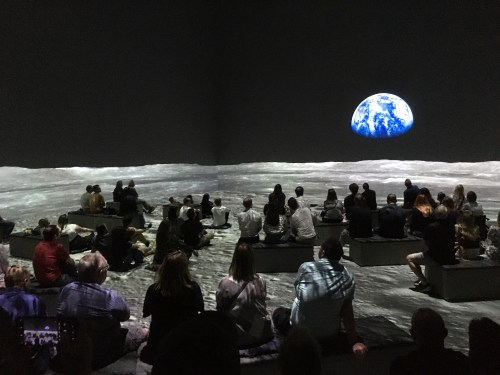
People watching an immersive projection of the moon

Blending archive footage and stills with brilliant graphics and a powerful soundtrack, Moonwalkers tells the story of the Apollo moon landings and looks forward to NASA’s Artemis mission planned for November 2025. It’s movingly narrated by Tom Hanks, who was involved in every stage of its making and shares his personal passion for spaceflight that began with watching Apollo 11 land on the moon in 1969. Highly recommended.

Moonwalkers plays in rotation with other events at Lightroom, next showing over the last week in May.

• • •

Keep Up With Future Events

Dd you know PubSci has an online calendar where you can view future events?

Event titles and dates go in the calendar several months in advance, along with a brief outline of the talk. If you subscribe to our calendar, PubSci events will automatically appear in your own calendar.

We also publish a programme of PubSci events three times a year which you can view online or download for printing. The latest edition has just been uploaded. Why not print it out and put a copy on your work fridge for everyone to see!

Posted by Richard Marshall, PubSci organiser and host.

PubSci: Sipping • Supping • Science

• • •

The evolution of humans from sitting in a chair to talking about science in a pub (after Darwin)

• • •

About PubSci talks

PubSci meets upstairs at the Old King’s Head, near London Bridge tube. No specialist knowledge is required, just curiosity. Doors open at 6.30pm for a 7pm start. Talks run for ~45 minutes and are followed by a Q&A session. The Old King’s Head has a happy hour before 7pm, and the kitchen serves excellent pub grub.

We use Eventbrite booking to manage numbers. Follow us on Eventbrite to be notified when new tickets become available.

Support PubSci

There is no charge for attending PubSci talks, but we have a cash whip-round to cover expenses on the night – consider it “Pay What You Can Afford”. As few of us carry cash these days, you can make a donation when registering for ticketed events with Eventbrite. Please help us continue putting on events. PubSci has no other source of funding.

We aim to keep PubSci accessible for all, although it is unsuitable for under 18s as we meet in the function room of  a pub. Regrettably, there is no wheelchair access. 

You can find all our links on our LinkTree.

• • •

We meet on the third Wednesday of the month, upstairs at the Old King’s Head near London Bridge Underground (Borough High Street east side exit). Join us every month apart from December for a regular dose of Sipping, Supping & Science.

Address:

The Old King’s Head (upstairs room)
King’s Head Yard
45-49 Borough High Street
London SE1 1NA

Weekend update: Ig Nobel awards tour, April’s PubSci, and an exhibition on the science of music

A Greek philosopher on his back with his feet in the air

The Ig Nobels honour research that makes you laugh… then think

The sun is out, the trees are in blossom, and the PubSci blog is bursting with wonderful things to do, starting with a fabulous event this coming Sunday evening (6th April).

One of my greatest delights in freshers week (usual activities notwithstanding) was discovering Annals of Improbable Research *[see note below] amongst the scientific journals in the university library. Packed full of bonkers, sometimes brilliant, and highly improbably research, I couldn’t tell what was genuine and what was pure satire. Every year, the Ig Nobel Prizes honour ten unlikely scientific achievements that make people laugh, then think.

On Sunday 6th April Marc Abrahams, founder of the Ig Nobel Prize ceremony and the Annals, will tell the story of the Igs at the Royal Institution in London’s Piccadilly. He’ll be joined by two Ig Nobel laureates talking about their brilliant, hilarious, thought-provoking research. Learn more about Marc, the igs and the Annals at www.improbable.com – but don’t forget to book for Sunday’s live show!

* Footnote: It was a great show, and I got to dress as a banana for…. well, reasons. After the show Marc told me he founded Annals of Improbable Research in 1995 (after I left university). I had in fact been beguiled by its precursor, the Journal of Irreproducible Results, which was founded way back in 1955. Marc edited the Journal from 1991 to 1994 when he left to found Annals and the glorious Ig Nobel Prize.

Looking back at March’s PubSci

Four stages of Pavlovian Conditioning of a dog
Can cells be conditioned like dogs can?

Many thanks to all who came to March’s PubSci in which Dr Jenny Poulton posed the challenging question Can Cells Think before breaking down exactly how cellular cognition arises in their interactions with the environment. It was a fascinating and well attended event and we’re grateful to Jenny for her whistle-stop tour of cellular interactions. The final question, of course, is left hanging, and largely depends on how we define “thinking” as apposed to “problem-solving”.

Next PubSci: Wednesday 16th April

An illustration of ancient geometers and details of the book


On Wednesday 16th April, PubSci is delighted to welcome author and historian of mathematics Dr. Snezana Lawrence to examine why mathematics is so fundamental to our daily lives and explore just where it comes from.

Snezana addresses these questions and more in her new book, A Little History of Mathematics, which traces the fascinating history of mathematics from ancient Egyptians and the Babylonian empire to Renaissance masters and the enigma codebreakers. This, her latest book is published on 8th April, and April’s PubSci will be the London Book launch. Copies will be on sale on the night at a discounted price.

If you want to know more, head over to PubSci’s Next Event page. Eventually that’ll feature May’s PubSci, of course, but not until after this event. However, don’t hang about: 80% of tickets have already gone. If you want to grab a ticket immediately, head straight to Eventbrite!

As usual, you can choose to make a contribution to PubSci’s costs via Eventbrite (minimum £1) or in cash on the night. Help PubSci keep science live. Hope to see you there!

• • •

Art and Science Combine to create Culture

Colourful Korean designs

Finally, last night I attended the opening of Soundwaves of Science, a new exhibition exploring the science of Korean music.

Staged in collaboration with the National Science Museum of Korea, the exhibition bridges early and modern scientific perspectives to explore the instruments and sounds of Korea, embracing K-pop and traditional culture, it invites audiences to experience Korean music through the science of sound.

Soundwaves of Science: Exploring the Science of Korean Music, is at the Korean Cultural Centre from until 27 June 2025.

• • •

Keep Up With Future Events

Dd you know PubSci has an online calendar where you can view future events?

Event titles and dates go in the calendar several months in advance, along with a brief outline of the talk. If you subscribe to our calendar, PubSci events will automatically appear in your own calendar.

We also publish a programme of PubSci events three times a year which you can view online or download for printing. Why not put a copy on your work fridge for everyone to see!

Posted by Richard Marshall, PubSci organiser and host.

PubSci: Sipping • Supping • Science

• • •

The evolution of humans from sitting in a chair to talking about science in a pub (after Darwin)

• • •

About PubSci talks

PubSci meets upstairs at the Old King’s Head, near London Bridge tube. No specialist knowledge is required, just curiosity. Doors open at 6.30pm for a 7pm start. Talks run for ~45 minutes and are followed by a Q&A session. The Old King’s Head has a happy hour before 7pm, and the kitchen serves excellent pub grub.

We use Eventbrite booking to manage numbers. Follow us on Eventbrite to be notified when new tickets become available and reserve your place for February’s PubSci here! PubSci is a pay-what-you-can event – please consider making a donation with your reservation to help us cover our costs.

Support PubSci

There is no charge for attending PubSci talks, but we have a cash whip-round to cover expenses on the night – consider it “Pay What You Can Afford”. As few of us carry cash these days, you can make a donation when registering for ticketed events with Eventbrite. Please help us continue putting on events. PubSci has no other source of funding.

We aim to keep PubSci accessible for all, although it is unsuitable for under 18s as we meet in the function room of  a pub. Regrettably, there is no wheelchair access. 

You can find all our links on our LinkTree.

• • •

We meet on the third Wednesday of the month, upstairs at the Old King’s Head near London Bridge Underground (Borough High Street east side exit). Join us every month apart from December for a regular dose of Sipping, Supping & Science.

Address:

The Old King’s Head (upstairs room)
King’s Head Yard
45-49 Borough High Street
London SE1 1NA

19th March 2025 – Jenny Poulton: Can Cells Think?

This month PubSci explores the fascinating possibility that cell biology resembles actual problem-solving.

On Wednesday 19th March, PubSci is delighted to welcome Dr. Jenny Poulton to explore the fascinating possibility that cell biology resembles actual problem-solving.

To the uninitiated this may sound like a wild idea but some highly respected names with hundreds of peer-reviewed research papers under their belts are taking the topic very seriously. Decapitated flatworms can regenerate a head complete with apparent ‘memories’ (or at least conditioned responses) from just the surviving tail end, suggesting cognition doesn’t only exist in the brains of very simple creatures. Whilst nobody is seriously talking about consciousness (aka “the c-word”), phrases like conditioning, cognition and cellular-intelligence are increasingly being discussed in some circles of cell-biology.

We know that individual cells perform surprisingly powerful computations as they interact with their environment by means of simple chemical reaction networks, and Pavlovian conditioning only requires four chemicals, which raises the tantalising question whether can cells perform this function too.

Four stages of Pavlovian Conditioning of a dog
Does the dinner bell make you salivate too…?

We know individual cells can perform surprisingly powerful computations as they interact with their environment by means of simple chemical reaction networks, and Pavlovian conditioning only requires four chemicals, which raises the tantalising question whether can cells perform this function too.

After years of surprisingly fierce debate amongst biologists, powerful computational tools might finally provide the answer…

Researcher and tutor, Dr Jenny Poulton has worked with Professor of Machine Learning, Chris Watkins, on the “Intelligence in Context” grant at Royal Holloway, University of London and believes there is much to be discussed in terms of what cells can and can’t in terms of solving complex problems.

Don’t miss this unique opportunity to hear Jenny challenge what you think you know about cells and problem solving. PubSci is on Wednesday 19th March.

A woman wearing spectacles
Dr. Jenny Poulton

Dr Jenny Poulton is a multidisciplinary science researcher, teacher and tutor with a gift for communicating complex topics, for which she was nominated for a Student Academic Choice award in 2019.

She has a background in Theoretical Biophysics, with research interests in Stochastic Thermodynamics, and Information Theory, working internationally as a postdoctoral researcher and has published peer-reviewed papers in her field.

Jenny received her MPhys in Theoretical Physics from the University of Sheffield in 2015, focussing on spherical bacteria such as Staphylococcus aureus, and her PhD in Thermodynamics of Polymer Copying from Imperial College, London, in 2020.

She worked with Professor of Machine Learning, Chris Watkins, on “Intelligence in Context” at Royal Holloway, University of London and in 2021 Jenny presented to the Santa Fe Institute, the world’s leading research centre for complex systems science.

A brain tangled among brain cells
Is there a limit to the complexity of puzzles that cells can solve?

Keep Up With Future Events

Dd you know PubSci has an online calendar where you can view future events?

Event titles and dates go in the calendar several months in advance, along with a brief outline of the talk. If you subscribe to our calendar, PubSci events will automatically appear in your own calendar.

We also publish a programme of PubSci events three times a year which you can view online or download for printing. Why not put a copy on your work fridge for everyone to see!

Posted by Richard Marshall, PubSci organiser and host.

PubSci: Sipping • Supping • Science

• • •

Diagram of pavlovian learning in brain cells

• • •

About PubSci talks

PubSci meets upstairs at the Old King’s Head, near London Bridge tube. No specialist knowledge is required, just curiosity. Doors open at 6.30pm for a 7pm start. Talks run for ~45 minutes and are followed by a Q&A session. The Old King’s Head has a happy hour before 7pm, and the kitchen serves excellent pub grub.

We use Eventbrite booking to manage numbers. Follow us on Eventbrite to be notified when new tickets become available and reserve your place for February’s PubSci here! PubSci is a pay-what-you-can event – please consider making a donation with your reservation to help us cover our costs.

Support PubSci

There is no charge for attending PubSci talks, but we have a cash whip-round to cover expenses on the night – consider it “Pay What You Can Afford”. As few of us carry cash these days, you can make a donation when registering for ticketed events with Eventbrite. Please help us continue putting on events. PubSci has no other source of funding.

We aim to keep PubSci accessible for all, although it is unsuitable for under 18s as we meet in the function room of  a pub. Regrettably, there is no wheelchair access. 

You can find all our links on our LinkTree.

• • •

We meet on the third Wednesday of the month, upstairs at the Old King’s Head near London Bridge Underground (Borough High Street east side exit). Join us every month apart from December for a regular dose of Sipping, Supping & Science.

Address:

The Old King’s Head (upstairs room)
King’s Head Yard
45-49 Borough High Street
London SE1 1NA

Calendars, Flyers and Thinking Cells…?

While we wait for Eventbrite to fix a broken UI update, read about what happened last week, what’s happening soon, and how you can stay on top of everything that matters…

A brain tangled among brain cells
Can cells be trained to “think”?

February’s PubSci was a banger!

Many thanks to Mark Hardman for his talk last week on explosives, propellants, and the history of Waltham Abbey Royal Gunpowder Mills, packing more than 300 years of history into 45 minutes. London’s River Lea got a mention, not only because it used to power the gunpowder mills (and the oil mill that preceded them) but also because transporting explosives by barge was a lot smoother (and so safer) than going by road, especially when moving nitroglycerine.

A man talking to a group of people
King Henry would have been astounded at the Mill’s rocket vault (Photo: Jeremy Rogers)

We also learnt that the Mills produced the very finest black powder in the early 18th century under the ownership of one Philippa Walton who overcame the conventions of her time to thrive as a successful entrepreneur following the death of her husband at the age of just 43

March PubSci: Can Cells Think?

Is there a limit to the complexity of puzzles that cells can solve?

Cells perform surprisingly powerful computations as they interact with their environment using simple chemical reaction networks. But Pavlovian conditioning requires only four chemicals, so can cells perform this function too? After years of fierce debate by biologists, powerful computational tools might provide the answer.

Diagram of pavlovian learning in brain cells

It’s a tantalising thought, and one we’ll be exploring on Wednesday 19th March when Dr Jenny Poulton delves into the topic. Unfortunately Eventbrite made some unannounced changes recently which have prevented me creating this event. I hope to send even invites out on Monday, but in the meanwhile, please put the date in your diaries.

Four stages of Pavlovian Conditioning of a dog
Does the dinner bell make you salivate too…?

Never miss PubSci again…

Talking of diaries, did you know PubSci has an online calendar where you can view future events? You can view it here.

I put PubSci dates in the calendar several months in advance, along with a brief outline of the talk. If you subscribe to our calendar, PubSci events will automatically appear in your own calendar. You’ll be the first to know when I schedule new events and you need never double-book yourself on a PubSci night again.

The calendar subscription link downloads a small .ics file. Open it to add PubSci events to your work or home calendar. Events update automatically as details and ticket links are added.

Finally, how many readers were aware that we publish a programme of PubSci events three times a year? It displays as a jpeg and you can can link to it from your own page, blog etc (as shown below), but you can also download it as a PDF for printing.

Why not put a copy and stick it on your work fridge for everyone to see!

PubSci: Sipping • Supping • Science

• • •

That rounds off this month’s news. Thanks for reading and thanks for helping us Keep Science Live! Don’t forget to grab your tickets for March’s PubSci as soon as they’re released.

Posted by Richard Marshall, PubSci organiser and host.

• • •

About PubSci talks

PubSci meets upstairs at the Old King’s Head, near London Bridge tube. No specialist knowledge is required, just curiosity. Doors open at 6.30pm for a 7pm start. Talks run for ~45 minutes and are followed by a Q&A session. The Old King’s Head has a happy hour before 7pm, and the kitchen serves excellent pub grub.

We use Eventbrite booking to manage numbers. Follow us on Eventbrite to be notified when new tickets become available and reserve your place for February’s PubSci here! PubSci is a pay-what-you-can event – please consider making a donation with your reservation to help us cover our costs.

Support PubSci

There is no charge for attending PubSci talks, but we have a cash whip-round to cover expenses on the night – consider it “Pay What You Can”. Very few of us carry cash these days, so you can also make a donation when registering for ticketed events with Eventbrite. Please help us continue putting on events. PubSci has no other source of funding.

We aim to keep PubSci accessible for all, although it is unsuitable for under 18s as we meet in the function room of  a pub. Regrettably, there is no wheelchair access. 

Check out the Future Events page where you can also subscribe to our Google Calendar so PubSci events automatically appear in your own Calendar.  You can find all our links on our LinkTree.

• • •

We meet on the third Wednesday of the month, upstairs at the Old King’s Head near London Bridge Underground (Borough High Street east side exit). Join us every month apart from December for a regular dose of Sipping, Supping & Science.

Address:

The Old King’s Head (upstairs room)
King’s Head Yard
45-49 Borough High Street
London SE1 1NA

Next Event: 19th February 2025 | A Brief History of Big Bangs with Mark Hardman

With our Winter – Spring programme in full swing (and available to view, download or print here) I thought it’s time I blog about this week’s talk. With only a handful of tickets remaining, I’d hate anybody to miss out, so do grab yours ASAP if you’d like to come.

I hope you already had a chance to read up on it after the brief preview in my previous post – you may even have looked up the details on our Next Event page (where full information about the next talk is generally posted first) – but in case you haven’t or you rely on emails, blogs, RSS etc here’s what you need to know about February’s PubSci:

Why is London’s River Lea important in the history of explosives, how was Britain’s first satellite launched, and what was Barnes Wallis up to in Waltham Abbey? From 17th century gunpowder to 20th century government secrets, Mark Hardman tells the explosive history of “energetic materials” in Britain through the lens of Waltham Abbey Royal Gunpowder Mills.

A large Explosion
Boom! (Image sourced from Vecteezy)

On Wednesday 19th February, PubSci is delighted to welcome Mark Hardman to take us through the discovery of explosive materials and how they developed from simple gunpowder to modern day chemical compounds with uses from mining to munitions and from sparklers to space rockets.

Book now, or read on to learn more. Full details and booking on Eventbrite.

Since the 17th Century, Waltham Abbey Royal Gunpowder Mills has been at the heart of that story, involving some of the UK’s notable chemists and engineers – including, memorably, Sir Barnes Wallis of Dambusters fame – and it later became a top secret government research facility. As a volunteer at the Mills, as well as a an explosives engineer, Mark is ideally placed to take us on this fascinating journey through chemistry, industry, heritage and spaceflight.

An old picture the Guy Fawkes and his fellow plotters
Guy Fawkes and his alleged accomplices (National Archive)

Join us at the Old King’s Head when Mark takes us through the development of “energetic materials” such as explosives and propellants, introduces us to some of the key scientists and engineers who drove that progress, and explains the role Waltham Abbey Mills played in this story, including improving worker safety in a notoriously dangerous industry.

• • •
Today the Mills are a National Heritage visitor attraction and a Site of Special Scientific Interest (SSSI) open to the public, and Mark will finish his talk by introducing us to the Mills as they are now.

A small rocket or missile on a luncher

300 years of explosive history (Image courtesy of Waltham Abbey Gunpowder Mills)

PubSci talks are pay-what-you-can, and you can make your contribution when booking on eventbrite or in cash on the night. We are delighted to welcome Mark as the second speaker in our 2025 programme for another round of Sipping, Supping Science… in the pub.

• • •

Join us upstairs at the Old King’s Head, near London Bridge tube. Doors open at 6.30pm for a 7pm start. Talks run for ~45 minutes and are followed by a Q&A session. The Old King’s Head has a happy hour before 7pm, and the kitchen serves excellent pub grub.

We use Eventbrite to manage event numbers. Follow us on Eventbrite to be notified when new tickets become available. Reserve your place for this talk now!  PubSci is a pay-what-you-can event – please consider making a donation with your reservation to help us cover our costs.

About the speaker

A smiling man with grey hair and glasses
Mark Hardman

Mark Hardman is a volunteer at Waltham Abbey Royal Gunpowder Mills (WARGM) – a 170-acre heritage site with over 300 years of making explosives, propellants, and space rocket technology.

In his professional life, he is Secretary General of the European Association for the Safety in production and use of Propellants (EASSP) and board member of the Institute of Explosives Engineers (IExpE).

Prior to early retirement in 2022, Mark spent 8 years with a rocket motor company as UK Managing Director at Roxel and Programmes Director at Roxel Group.

Mark has a BSc in Physics and an MSc in Systems Engineering.

Don’t miss your chance to hear Mark’s talk on Wednesday 19th February.

• • •

To make sure you don’t miss out on future events, subscribe to our Google Calendar to be the first to know when new talks are scheduled and follow PubSci’s events on Eventbrite to be notified when tickets are available. You can also sign up to our own mailing list on any page on this site.

Support PubSci

There is no charge for attending PubSci talks, but we have a traditional whip-round to cover expenses – consider it a “Pay What You Can” event. Very few of us carry cash these days, so you can also make a donation when registering for ticketed events with Eventbrite. Please help PubSci continue putting on events. PubSci has no other source of funding.

We aim to keep PubSci accessible for all, although it is unsuitable for under 18s as we meet in the function room of  a pub. Regrettably, there is no wheelchair access. 

Check out the Future Events page where you can also subscribe to our Google Calendar so PubSci events automatically appear in your own Calendar.  You can find all our links on our LinkTree.

• • •

We meet on the third Wednesday of the month, upstairs at the Old King’s Head near London Bridge Underground (Borough High Street east side exit). Join us every month apart from December for a regular dose of Sipping, Supping & Science.

Address:

The Old King’s Head (upstairs room)
King’s Head Yard
45-49 Borough High Street
London SE1 1NA

Gunpowder, Sonnets and Quantum Gravity

In PubSci’s second blog post of 2025, we look back at January’s event, preview February’s and share news of an exciting talk coming up on 8th February.

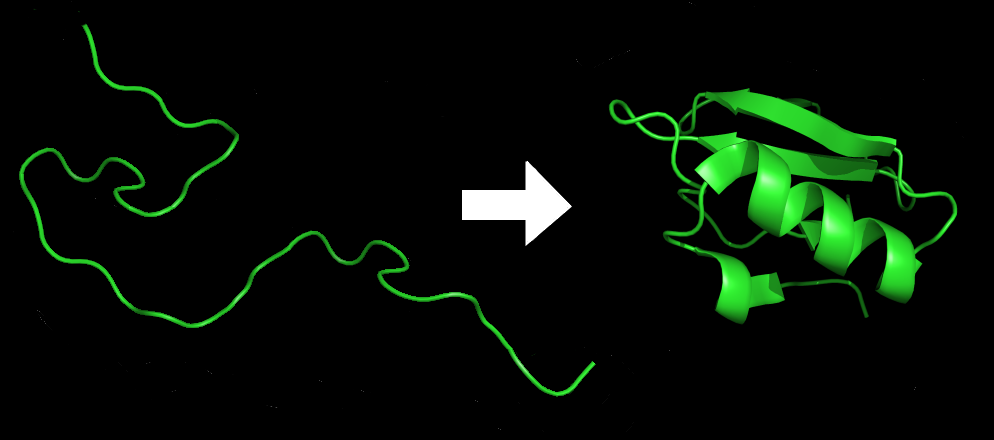
Protein folding: From a string to a complex structure (Dr. Kjaergaard, Wikimedia Commons)

A Poetic Way to Look at the Protein Folding Problem

We had a great time exploring protein folding at PubSci last month. Many thanks to Professor Rivka Isaacson for making it so engagingly comprehensible. Who knew that Shakespearean sonnets could be rendered as protein models by feeding their sequence of letters into AlphaFold!

We learnt what ‘protein folding’ is and why it’s vitally important, discovered how protein structures are experimentally determined, and heard how an AI system based on AlphaGo helped Demis Hassabis and John Jumper share the Nobel Prize in Chemistry by radically improving the accuracy with which proteins are modelled. Best of all, we learnt that AlphaFold will model any sequence of amino acids that it’s provided with and predict the protein’s most probable 3-d structure, leading Rivka to take Shakespeare’s Sonnet 18 – “Shall I compare thee to a summer’s day” – and turn that into a protein.

Shall I compare thee to a summer’s day?
Thou art more lovely and more temperate:
Rough winds do shake the darling buds of May,
And summer’s lease hath all too short a date…

Shall I Compare Thee To A string of Amino Acids?

To make a protein, any of 20 amino acids are joined like beads on a string. AlphaFold doesn’t know what a protein is but it is very good at predicting which sequences of “beads” will cause the “string” to bend in which direction, leading to the final 3-d structure that’s so vital to a protein’s function. Working out the relationship between the order of the beads (amino acids) and the shape of the resulting protein is the challenge of the protein folding problem.

The 20 amino different acids that make up proteins are identified by unique letters of the alphabet. The English alphabet has only 6 more, so (by omitting B, J, O, U, X and Z) any sentence could be turned into a string of amino acids and fed into AlphaFold. Rivka is well known for her art-science collaborations, such as Viewing the Invisible, and she delighted us with the first public viewing of what Sonnet 18 would look like if its letters were the amino acid sequence of a protein.

AlphaFold is open access, so anybody can try this at home – but remember where you saw it first!

Curls of multicoloured ribbon representing the shape of a protein
Sonnet 18 modelled as a protein by AlphaFold (Courtesy of Rivka Isaacson)

Gunpowder, Rocket Fuel and Other Things That Go Boom!

February’s PubSci is approaching, and half the tickets have already been snapped up. From gunpowder to Dynamite and beyond, explosive materials have played a huge role in civil and military life for hundreds of years, even driving space exploration. In A Brief History of Big Bangs on Wednesday 19th February, Mark Hardman tells the explosive history of “energetic materials” development, with a particular focus on the role played by Waltham Abbey Gunpowder Mills and the chemists and engineers who drove that progress in peacetime and in wartime. Full details and booking on Eventbrite.

A large Explosion
Boom! (Image sourced from Vecteezy)

Don’t miss The Search for Quantum Gravity at the Royal Institution.

What is the power of visualisation in scientific exploration? In case you can’t wait two weeks for your science fix – and even if you can – our friends at the Royal Institution have a truly groundbreaking talk coming up on Saturday 8th February when world-renowned physicist Jim Gates discusses the search for quantum gravity in Following Faraday’s hint: The search for quantum gravity.

A shining light surrounded by a mesh or matrix
Source: Geralt via Pixabay

Michael Faraday pictured magnetic fields around wires like wheels about a spoke, helping him towards understanding electromagnetic induction. Physicists and mathematicians now use computers to translate this powerful way of thinking into images that further our understanding. In theatre where Michael Faraday first presented his theories, Jim Gates will describe his efforts to follow such a path towards a theory of quantum gravity.

Don’t miss this rare opportunity to catch Jim Gates live at the RI. Booking via RI website.

• • •

That rounds off this month’s news. Thanks for reading and thanks for helping us Keep Science Live! Don’t forget to grab your tickets for February’s PubSci ASAP.

Posted by Richard Marshall, PubSci organiser and host.

• • •

About PubSci talks

PubSci meets upstairs at the Old King’s Head, near London Bridge tube. No specialist knowledge is required, just curiosity. Doors open at 6.30pm for a 7pm start. Talks run for ~45 minutes and are followed by a Q&A session. The Old King’s Head has a happy hour before 7pm, and the kitchen serves excellent pub grub.

We use Eventbrite booking to manage numbers. Follow us on Eventbrite to be notified when new tickets become available and reserve your place for February’s PubSci here! PubSci is a pay-what-you-can event – please consider making a donation with your reservation to help us cover our costs.

Support PubSci

There is no charge for attending PubSci talks, but we have a traditional whip-round to cover expenses – consider it “Pay What You Can”. Very few of us carry cash these days, so you can also make a donation when registering for ticketed events with Eventbrite. Please help us continue putting on events. PubSci has no other source of funding.

We aim to keep PubSci accessible for all, although it is unsuitable for under 18s as we meet in the function room of  a pub. Regrettably, there is no wheelchair access. 

Check out the Future Events page where you can also subscribe to our Google Calendar so PubSci events automatically appear in your own Calendar.  You can find all our links on our LinkTree.

• • •

We meet on the third Wednesday of the month, upstairs at the Old King’s Head near London Bridge Underground (Borough High Street east side exit). Join us every month apart from December for a regular dose of Sipping, Supping & Science.

Address:

The Old King’s Head (upstairs room)
King’s Head Yard
45-49 Borough High Street
London SE1 1NA

New Year, New Programme, New Blog: PubSci returns on Wednesday 15th January with “How AI Won a Nobel Prize in Chemistry” (Rivka Isaacson)

Welcome to the first PubSci blog post of 2025.

It seems like an age since we wrapped up 2024’s events with a peek beneath the turf in Archaeologists vs Detectorists back in November, but we come bounding into the new year with the earliest date a third Wednesday could be – so get your diaries out, mark off Wednesday 15th January and read on to find out why you should get along to The Old King’s Head for the first PubSci talk of the year.

How did gaming AI help win the Nobel Prize? Why is ‘protein folding’ important, and why is it so hard to do? PubSci has the answers as we look at one of the most surprising Nobel Prize awards of last year.

On Wednesday 15th January, we are delighted to welcome Professor Rivka Isaacson of Kings College, London, to help us make sense of proteins and understand why the creators of AlphaFold got to share the 2024 prize for Chemistry.

A tangle of lines and arrows showing the structure of a protein
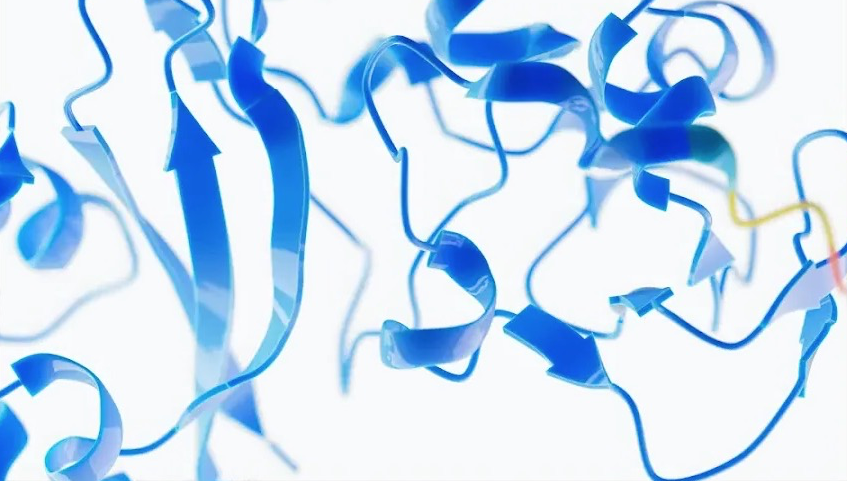
Section of a potential plant disease resistance protein (Source: AlphaFold)

Much of our bodies’ tiny cellular machinery is made of proteins which only function because they take on complex 3-d shapes. Understanding those shapes is essential to developing new medicines.

Proteins are initially formed by connecting amino acids in a straight line as if threading different beads onto a string. That’s the easy bit, but those chains then fold into complex mechanical shapes capable of carrying out the chemical reactions which maintain health. Predicting a protein’s final shape from its linear sequence is an enormous challenge which has plagued scientists for generations.

Protein_folding (Wikipedia)
Protein folding: from a string of beads to a complex 3-d structure

But in 2018 Google DeepMind launched AlphaFold, a powerful AI tool which represents a breakthrough in predicting protein structures, and in 2020 AlphaFold 2’s results were described as ‘astounding’ and ‘transformational’.

The 2024 Nobel Prize in Chemistry was awarded to David Baker for computational protein design and to the team behind AlphaFold for “protein structure prediction’. Our speaker, Rivka Isaacson, has years of experience working on understanding the structure of proteins and with AlphaFold.

On 15th January, Rivka will talk about the history of the protein-folding problem, the different ways experimentalists have solved protein shapes over the years, and her direct experience of being a beta tester for this prize-winning AI tool, AlphaFold.

PubSci is delighted to welcome Rivka as our first speaker of 2025. 


A male scientist looking at a computer display of protein structure.
Exploring protein structure with AlphaFold

• • •

Join us upstairs at the Old King’s Head, near London Bridge tube. Doors open at 6.30pm for a 7pm start. Talks run for ~45 minutes and are followed by a Q&A session. The Old King’s Head has a happy hour before 7pm, and the kitchen serves excellent pub grub.

We use Eventbrite to manage event numbers. Follow us on Eventbrite to be notified when new tickets become available. Reserve your place for this talk now!  PubSci is a pay-what-you-can event – please consider making a donation with your reservation to help us cover our costs.

About the speaker

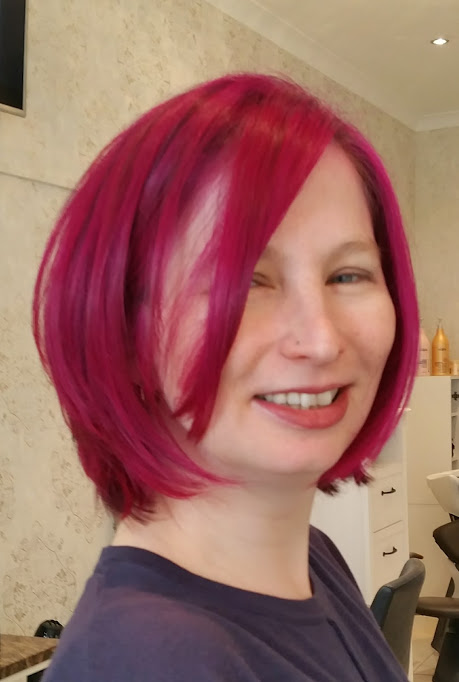
A woman with pink hair
Professor Rivka Isaacson

Rivka Isaacson is Professor of Molecular Biophysics in the Department of Chemistry, King’s College London.

She has a B.Sc. in Biochemistry from the University of Manchester and a Ph.D. in Chemistry from the University of Cambridge. She carried out post-doctoral research at Harvard Medical School and at Imperial College, London, subsequently working at the Imperial College Drug Discovery Centre before starting her own research group in 2009.

Rivka serves on the UKRI Physics of Life steering group and the executive committee for the national Collaborative Computing Project, and was the 2021 recipient of the Judith Howard prize from the Biophysical Sciences Institute at Durham University.

Rivka is passionate about interdisciplinarity, conducting projects across the arts-sciences interface, including a multimedia collaboration with London Fine Art Studios. In 2023 Rivka featured in the Royal Institution’s world famous Christmas Lectures.

Don’t miss the chance to join this wonderfully engaging speaker on Wednesday 15h January.

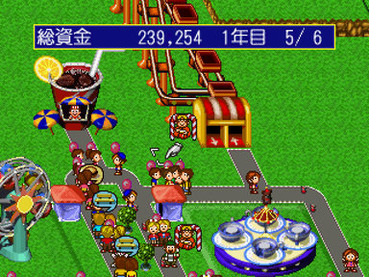
Bonus Fact: One of the creators of AlphaFold also created the classic 1994 computer game, Theme Park.

Support PubSci

There is no charge for attending PubSci talks, but we have a traditional whip-round to cover expenses – consider it a “Pay What You Can” event. Very few of us carry cash these days, so you can also make a donation when registering for ticketed events with Eventbrite. Please help PubSci continue putting on events. PubSci has no other source of funding.

We aim to keep PubSci accessible for all, although it is unsuitable for under 18s as we meet in the function room of  a pub. Regrettably, there is no wheelchair access. 

Check out the Future Events page where you can also subscribe to our Google Calendar so PubSci events automatically appear in your own Calendar.  You can find all our links on our LinkTree.

• • •

We meet on the third Wednesday of the month, upstairs at the Old King’s Head near London Bridge Underground (Borough High Street east side exit). Join us every month apart from December for a regular dose of Sipping, Supping & Science.

image-third-wednesdays

Address:

The Old King’s Head (upstairs room)
King’s Head Yard
45-49 Borough High Street
London SE1 1NA
Killer Whales to Killer Heels: Demystifying the Menopause (16th October 2024) with Dr. Diane Keeble-Ramsay

Discover why menopause evolved in humans, how come we share this trait with killer whales, and what policy makers can do to support women at work.

Killerwhales_jumping

Orcas of the coast of Alaska ©Robert Pittman, NOAA

October’s PubSci is on the science and sociology of the climacteric : what it’s for, how to have a better one, and how to support your partners, friends and colleagues in experiencing the best possible climacteric!

Before you get giddy with excitement, let’s remind ourselves that climacteric is the medical term for “the change” – better known as the menopause. Many people’s interest fades at this point in the conversation, which is sad when roughly 50% of humans go through menopause, and most of the other 50% are impacted by it one way or another.

In the UK, around 6 million working women are experiencing menopause at any one time. 80% of them feel unsupported, 70% experience stress as a result, and 1 in 10 quit working altogether. Surely we, as a society, can do better!

On Wednesday 16th October 2024 PubSci is delighted to welcome Dr. Diane Keeble-Ramsay from University of Suffolk to help us demystify the menopause.

This is a talk for everybody, including men, because even if you’re not facing menopause in the next few years yourself, nearly everybody experiences it first or second hand, and we all have a role to play in supporting our colleagues, partners, friends and relatives through this most human of life phases.

After exploring what it is and what it’s for, Diane will discuss how society, employers, policy makers, and medical professionals can support and empower the women who experience it and those around them. That includes you, lads. No excuses now!

PubSci is delighted to welcome Diane to be our October speaker in the week when thousands of employers and workplaces mark World Menopause Day.

Menopause_symbol

So, why should this natural change be taboo? Why do 80% of menopausal women feel unsupported at work, and what can we do about it?

Join Diane for Demystifying the Menopause on Wednesday 18th October. Book your ticket on Evenbrite now before the heat is on!

PubSci is a pay-what-you-can event – please consider making a donation with your reservation to help us cover our costs.

___

Join us upstairs at the Old King’s Head, near London Bridge tube. Doors open at 6.30pm for a 7pm start. Talks run for ~45 minutes and are followed by a Q&A session. The Old King’s Head has a happy hour before 7pm, and the kitchen serves excellent pub grub.

We use Eventbrite to manage numbers. Subscribe to be notified of forthcoming talks

• • •

About the speaker

A woman photographed against a yellow background

Dr Diane Keeble-Ramsay

Diane Keeble-Ramsay is an Associate Professor at UoS, University of Suffolk.

Her research, reviewing organisational and working practices, has a special emphasis on the experiences of employees, focused around post menopausal women and later life working.

She has published in books, texts, journal articles, and presented papers on employee experience and emotional wellbeing, the Global Financial Crisis, High Performance Working, Positive Ageing in the Workplace and related issues.

Diane is qualified in psychology and is a Member of the British Psychological Society. She’s a member of the Chartered Institute of Personnel and Development and a Principal Fellow of the Higher Education Academy.

PubSci is delighted to welcome Diane to the latest in our series of monthly talks.

___

Support PubSci

There is no charge for attending PubSci talks, but we have a traditional whip-round to cover expenses – consider it a “Pay What You Can” event. Very few of us carry cash these days, so you can contribute digitally through our TipJar or make a donation when registering for ticketed events with Eventbrite. Please help PubSci continue putting on events. PubSci has no other source of funding.

We aim to keep PubSci accessible for all, although it is unsuitable for under 18s as we meet in the function room of  a pub. Regrettably, there is no wheelchair access. 

Check out the Future Events page where you can also subscribe to our Google Calendar so PubSci events automatically appear in your own Calendar.  You can find all our links on our LinkTree.

• • •

We used to meet on the first Wednesday of the month but PubSci is now on the third Wednesday. Join us upstairs at the Old King’s Head near London Bridge Underground (Borough High Street east side exit) every month apart from December for a regular dose of Sipping, Supping & Science.

image-third-wednesdays

Address:

The Old King’s Head (upstairs room)
King’s Head Yard
45-49 Borough High Street
London SE1 1NA

News, ‘Thank You’s, and Things for You to Do

Greetings from rainy South London.

26/09/2024 [Updated 03/10/2024]

Many thanks to Deborah Hyde for September’s PubSci talk on A Natural History of Vampires. It turns out everything we knew about folkloric Vampires was wrong… but we knew a lot about Vampire movies, which is something. Unsurprisingly, the truth comes down to poverty, disease, and a desperate need to understand and explain a world in which you have little control of your life and even less understanding of science and medicine.

A woman and a man

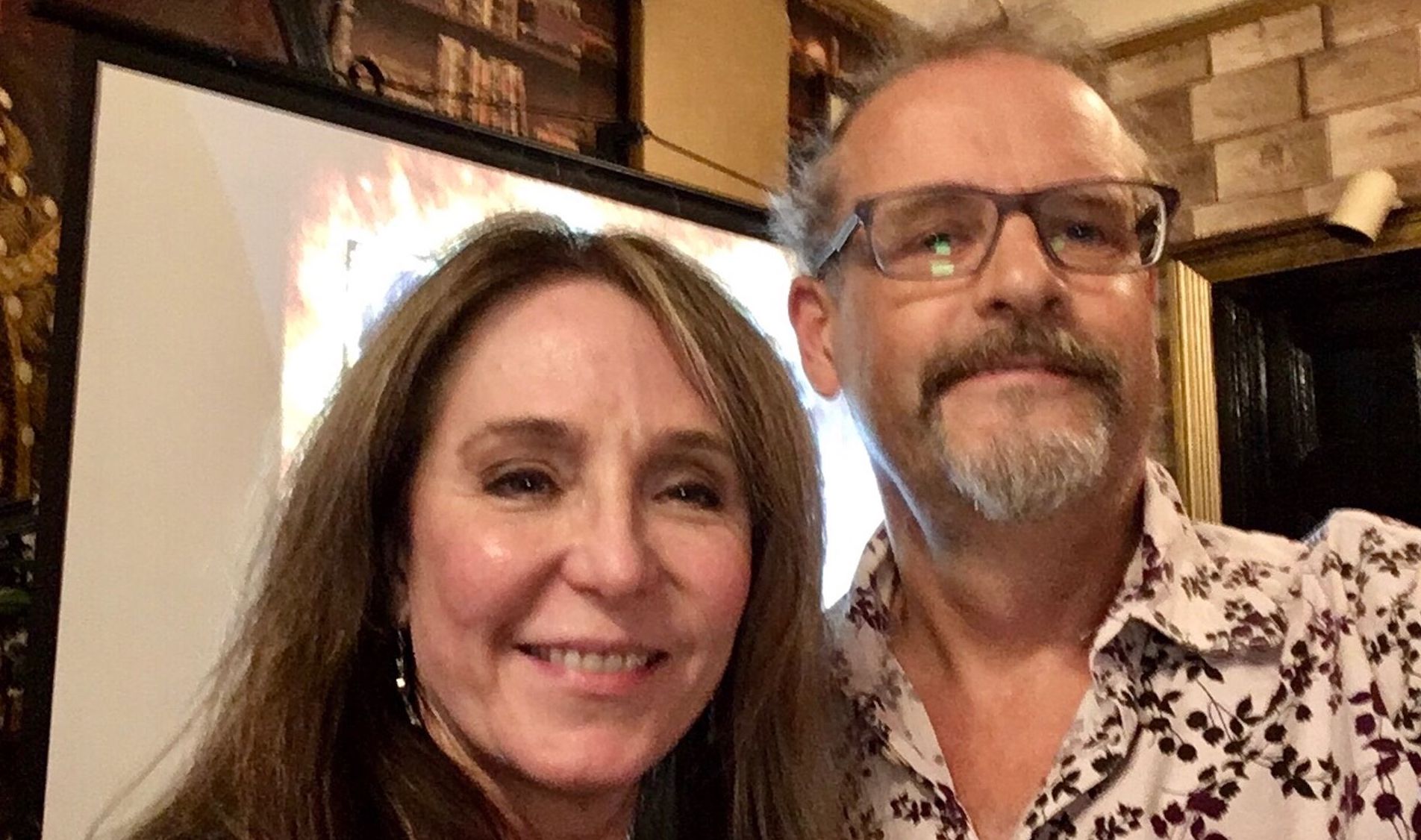
Deborah and Richard at the King’s Head

I was in Athens just the day before, where I finally saw the Antikythera Mechanism, an incredibly complex astronomical computer from a shipwreck dated to at least 60BCE. Coming face-to-face with this ancient scientific instrument – the likes of which wouldn’t be seen again for 1,300 years – was a surprisingly profound and moving experience for me. If any readers find themselves in Athens, I strongly encourage a visit to the stunning National Archaeological Museum as well as the Acropolis museum.

A rusted brass cog wheel found in an ancient shipwreck

The Antikythera Mechanism: a 2,100 year old mechanical computer.

Talking of mechanical computers, our friends at the Ri (AKA The Royal Institution of Great Britain) have asked me to share a fantastic event with you. On Tuesday 8th October 2024, we celebrate Ada Lovelace Day  in honour of the world’s first computer programmer (and daughter of the “mad, bad, dangerous to know” Lord Byron). Ada Lovelace Day Live is a cabaret-style evening of science and entertainment presenting seven truly inspiring STEM practitioners and communicators, all hosted by the wonderful Dr Sally Le Page. Check the lineup and get your tickets from the Ri website to attend live or watch online.

And if you’re free and in reach of London on Friday 27th September, do come to The Scientist and the Forger presented by Professor Jehane Ragai of Cairo University. You don’t have to dress up for Friday discourses any more, but it’s quite fun if you want to do so. I’ll be stewarding at the event so come and say hello if you’re there.

October’s PubSci

We have a great talk lined up for Wednesday 16th October. In Killer Whales to Killer Heels, we’ll be Demystifying the Menopause with Dr. Diane Keeble Ramsay from University of Suffolk. Get your tickets on Eventbrite now to learn about a topic that’s directly relevant to at least 50% of people alive today.

Full details of PubSci events are published in a new blog post soon after tickets go live on Eventbrite, but you can always see a brief preview in the PubSci calendar and on our regular Next Event page. Read on for more ways to stay informed of forthcoming PubSci events.

• • •

Good news

Summer-Autumn 2024PubSci’s programme is still available to download or print. If you didn’t realise we even had one, follow this link for a preview of events to the end of the year.

Of course, you may prefer PubSci events to appear in your calendar app automatically rather than looking at a flyer pinned to your fridge. Fear not! You can view or subscribe to our Google calendar feed here. Or just click this link to subscribe in one step by downloading the .ics file.

Get with the programme

Since we’ve got an events programme, why not share it with friends and colleagues? It takes me a while to plan and produce every quarter and I’d hate it to go unused! How about printing off a copy and pinning it on your staff noticeboard? Everybody is welcome at PubSci.

• • •

Screenshot

Follow PubSci wherever you are…

Did you know PubSci is on Facebook and Bluesky (and Twitter though I’m trying to move off that). We even have a LinkedIn group, which I’d really love you to join.

And if you want to find all the links in just one place, then you need to head to our Linktree. What’s linktree, you ask? It’s a kind of mini website that’s optimised for mobile viewing and hosts links to all your stuff. Basically it’s like an index to everything you want to put online – and it’s free. Nope, we don’t have a “partner link” or get a kickback for recommendations, I just really like it.

• • •

Support PubSci

There is no charge for attending PubSci talks, but we have a traditional whip-round to cover expenses – consider it a “Pay What You Can” event. Very few of us carry cash these days, so you can contribute digitally through our TipJar [awaiting link update] or make a donation when registering for ticketed events with Eventbrite. Please help PubSci continue putting on events. PubSci has no other source of funding.

We aim to keep PubSci accessible for all, although it is unsuitable for under 18s as we meet in the function room of  a pub. Regrettably, there is no wheelchair access. 

Check out the Future Events page where you can also subscribe to our Google Calendar so PubSci events automatically appear in your own Calendar.  You can find all our links on our LinkTree.

• • •

We used to meet on the first Wednesday of the month but PubSci is now on the third Wednesday. Join us upstairs at the Old King’s Head near London Bridge Underground (Borough High Street east side exit) every month apart from December for a regular dose of Sipping, Supping & Science.

Address:

The Old King’s Head (upstairs room)
King’s Head Yard
45-49 Borough High Street
London SE1 1NA

A Natural History of Vampires | 18th September with Deborah Hyde

On Wednesday 18th September PubSci is excited to welcome writer, folklorist, and celebrated skeptic Deborah Hyde to talk about A Natural History of Vampires.

Actor Peter Cushing as Dracula

Peter Cushing as Hammer House of Horror’s Count Dracula

We know Halloween is next month, but PubSci is beating the rush by getting our spook on early this year with a September Special looking at the natural history of vampires.

Long before charming-but-terrifying vampires fuelled the plot of numerous Hammer Horror films, even before FW Murnau made the groundbreaking Nosferatu in 1922, itself inspired by Bram Stoker’s Dracula, the idea of the vampire has fascinated Western Europe since the early 1700s.

But this tradition was a real part of Eastern European lives for centuries before that. On Wednesday 18th September PubSci welcomes folklorist, writer and skeptic, Deborah Hyde, to take us through the natural history of vampires.

The vampire archetype has been taken up by art of all kinds, as both fascinated and scandalised Victorian society, but what is the reality behind the tales of the predatory, living dead, and how did belief in vampires make its way to nineteenth century New England?

Could there be some truth behind vampire myths…? Science, even? Come to PubSci to find out.

Book now – only the brave will learn the answers!

PubSci is delighted to welcome Deborah to our spooky September special.

More information below

• • •

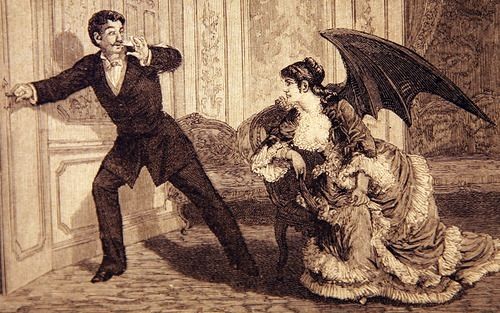
Max Ernst, 1930's - A man fleeing a vampire woman who has wings. Both are very well dressed

A gentleman fleeing a vampiric winged seductress.

___

Join us upstairs at the Old King’s Head, near London Bridge tube. Doors open at 6.30pm for a 7pm start. Talks run for ~45 minutes and are followed by a Q&A session. The Old King’s Head has a happy hour before 7pm, and the kitchen serves excellent pub grub.

Reserve your place on Eventbrite now! PubSci is a pay-what-you-can event – please consider making a donation with your reservation to help us cover our costs.

We use Eventbrite to manage numbers. Subscribe to be notified of forthcoming talks

• • •

About the speaker

Picture of a woman

CSICon 2018: ‘Interview with the Vampire Expert’

Deborah Hyde is a writer,  folklorist and cultural anthropologist. She was editor of the ‘Skeptic Magazine’  for ten years and is an elected fellow of the Committee for Skeptical Enquiry.

She writes and lectures extensively about superstition, cryptozoology, religion and belief in the paranormal, with special regard to the folklore, psychology and sociology behind these phenomena.

Deborah has appeared on TV and at conferences as an expert on Vampires and the sociology of supernatural beliefs, and is one of the resident experts on the  BBC podcast and live-tour ‘Uncanny’ where she offers a rational, historical perspective on peculiar events.

PubSci is delighted to welcome Deborah to talk about A Natural History of Vampires.

The shadow of Count Orlok from the 1922 film Nosferatu

Count Orlok in F.W. Murnau’s 1922 “Nosferatu”

___

Please Support PubSci

There is no charge for attending PubSci talks, but we have a traditional whip-round to cover expenses – consider it a “Pay What You Can” event. Very few of us carry cash these days, so you can contribute digitally through our TipJar or make a donation when registering for ticketed events with Eventbrite. Please help PubSci continue putting on events. PubSci has no other source of funding.

We aim to keep PubSci accessible for all, although it is unsuitable for under 18s as we meet in the function room of  a pub. Regrettably, there is no wheelchair access. 

Check out the Future Events page where you can also subscribe to our Google Calendar so PubSci events automatically appear in your own Calendar.  You can find all our links on our LinkTree.

• • •

We used to meet on the first Wednesday of the month but PubSci is now on the third Wednesday. Join us upstairs at the Old King’s Head near London Bridge Underground (Borough High Street east side exit) every month apart from December for a regular dose of Sipping, Supping & Science.

image-third-wednesdays

Address:

The Old King’s Head (upstairs room)
King’s Head Yard
45-49 Borough High Street
London SE1 1NA