In this post I preview November’s PubSci, look at some interesting events, preview next year’s talks programme and plug our radio show / podcast, and look at two great science-based arts events.
Are fourth Wednesdays the new third Wednesday of the month?
We know Thursday is the new Friday, but has there also been a less widely acknowledged shift in the weeks of the month? Not as far as we are aware – but this November’s PubSci takes place a week later than usual. For November only, we’re on the fourth Wednesday instead of the third (which itself was was the new first Wednesday, but that’s another story altogether).
If you subscribe to PubSci’s calendar, you’ll have been notified automatically that there’s no PubSci this week. If you don’t yet subscribe, now’s a good time to do it so that events in your own calendar update automatically with the latest information and booking links as soon as they’re available. Clicking on that second link downloads a small .ics file which adds our calendar to yours once you’ve open it. Scroll down for details of November’s PubSci on Wednesday 26th or click the link below.
As I write this, I’m in the middle of a course of dental treatment triggered by an infection which required a course of antibiotics – and I’m really glad they are available to us. It’s nearly 100 years since Alexander Fleming discovered penicillin in a petri dish he’d left out while he went on holiday in 1928, and this week is World Antimicrobial Resistance Awareness Week which highlights the growing threat of antimicrobial resistance (AMR). As it happens, AMR features twice in this blog post, showing that PubSci leads the way yet again!
First up, many thanks to Jenny Rohn for an excellent talk on AMR last month.
Professor Jenny Rohn with PubSci hosts Richard and Mike (and Henry)
Mouldy bread had been used as a folk remedy for millennia but it was Fleming who understood the antimicrobial properties of Penicillium rubens. It was successfully used to treat an eye infection in 1930 but it wasn’t until the midst of WWII that penicillin itself was isolated by Howard Florey and Ernst Chain and the first successful use of commercially prepared penicillin antibiotic happened in 1942.
Three years later, when Fleming shared the Nobel prize for medicine with his collaborators, he gave this prescient warning in his acceptance speech:
“Penicillin is to all intents and purposes non-poisonous so there is no need to worry about giving an overdose and poisoning the patient. There may be a danger, though, in underdosage. […] Then there is the danger that the ignorant man may easily underdose himself and by exposing his microbes to non-lethal quantities of the drug make them resistant”
Antibiotic sensitivity vs antibiotic resistance
Overuse, misuse, and unfinished courses of antibiotics have now brought us to the point where antimicrobial resistance is endemic in many settings, and hospital-acquired infections are a major threat to health and a drain on NHS resources. If you missed Jenny’s talk, this recent article goes into the 100-year history of AMR in some detail – but don’t get nightmares, new approaches and new research programmes are delivering the first real boost in novel antibiotics in decades, and long-neglected phage therapy is receiving new interest after being all but abandoned except by the former Soviet state of Georgia. Ever ahead of the curve, PubSci hosted a talk on phages by our old friend Michael Byford back in May 2019.
PubSci goes to the IoP
On Wednesday 19th November, both Mike and I will be at the Institute of Physics Outreach and Communicators Conference. It’s an annual event which allows us to network with fellow science communicators and meet potential speakers as well as deepening skills and hearing what others are up to in the field. This year’s theme focuses on reaching audiences outside formal settings, which is one of PubSci’s foundational aims. We’ll be giving a short presentation on PubSci titled “Taking Science to the People”. I hope nobody shouts “Scampi and Chips!” in the middle of my talk, but you never know.
Scampi and chips!
Lost in Translation – Why do brain cells stop communicating in dementia?
Dementia has been in the news a lot lately with hints of possible therapies emerging from mouse studies. Some research even suggest Alzheimers’ memory loss could be reversed, but practical treatments are likely still decades away.
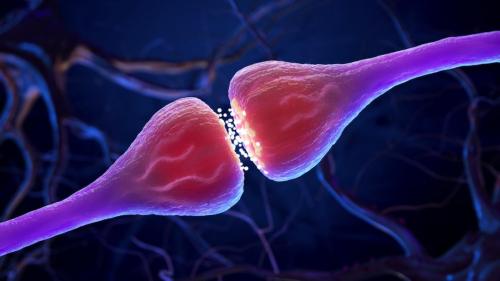
Meanwhile, it’s a tragic reality that one in three people will develop dementia in their lifetime. A key aspect of neurodegenerative disease is a breakdown in the way synapses maintain a healthy brain and nervous system. What does this mean for dementia research, and how could understanding it lead to better treatments?
On Wednesday 26th November, we’re delighted to welcome Dr Emma Clayton from the UK Dementia Research Institute to explain what we know about dementia and how her lab at UK DRI is researching what causes the synaptic dysfunction which precedes symptoms.
Come to PubSci’s final event of 2025 to hear from a leading dementia researcher what we know about dementia, how the UK DRI is at the forefront of research, and what Dr Clayton’s lab is learning about the cause and role of synapse dysfunction in dementia. Full details are on our Next Event page (until it’s no longer the next event, of course!) or you can read all about it and grab one of the few remaining tickets on Eventbrite.
As it happens, the Orchestra of the Age of Enlightenment is running a series of Sunday morning concerts at King’s Place in London called Bach, The Universe and Everything. If you’re wondering why a classical concert series would reference a title from the “increasingly inaccurately named Hitch Hiker’s Guide to the Galaxy trilogy”, it’s for this quote:
“Beethoven tells you what it’s like to be Beethoven and Mozart tells you what it’s like to be human. Bach tells you what it’s like to be the universe.”
Douglas Adams
But that’s only half of it. The series is described as placing “Bach’s cantatas in the context of the amazing cosmic discoveries of the last 350 years” with each one featuring “a Bach cantata and a talk from a guest scientist, writer, artist or broadcaster, alongside choral and instrumental music.” The next convert is on Sunday 30th November and tickets are available at the time of writing.
AMR again – but with a twist (and a song)
Fresh from an off-Broadway run – and after making history as the first musical to ever perform at the United Nations – LIFELINE comes to Southwark Playhouse theatre in London in spring 2026. Why are we featuring it here…? Because LIFELINE deals with AMR and the health workers who fight against it every day.
That may sound an odd theme for a musical – it’s hardly Cats or Kinky Boots, is it? – but this show has been a runaway success wherever it played, including selling out the Edinburgh Fringe for two years, so it’s not only important and informative, it’s also a whole lotta fun.
What’s more, you can get involved, because the show’s chorus is made up of real healthcare and science professionals along with animal health professionals, environmentalists – anybody engaged with AMR in any way in fact. If you’re a nurse, vet, microbiologist, dentist, surgeon, policy-maker, pharmacist, lab technician, farmer – among many other options – the producers would love you to join the show’s chorus and perform alongside a cast of West End actors and musicians. Follow this link to learn more and see full details of this extraordinary casting call.
If you’re feeling a little stage-shy, you can book tickets to see it on the Southwark Playhouse website. LIFELINE will run from 28th March to 2nd May 2026.
Not quite lastly (and definitely not leastly), we have a podcast!
Hopefully you’re aware by now that The Science Show on Resonance FM is co-presented by myself and Mike Lucibella. Resonance is the Arts Council-backed radio station for London, broadcastings live on good old FM. It’s also on DAB+ (so you need a modern DAB radio) and you can livestream Resonance anywhere in the world or and on Radioplayer across the UK.
The Science Show is a monthly, hour long magazine programme (i.e. a how with several different segments) that you can listen to in one go or break up into three easy chunks. The second show went out on Monday 3rd November at 3pm, and our next show goes at on Monday 1st December in the same regular slot
We’re very happy with how Show 2 went (having overcome audio issues with the pilot episode). In it we bring you excellent music, a great interview with Rob Eastaway, September’s PubSci speaker, and loads of great chat about space, science history, and even the Bayeaux Tapestry. You can listen to it on Mixcloud HERE.
It’s not on any podcast server, but our page on Mixcloud effectively works like one – just find the show you like the look of and click PLAY. You can let us know what you think by sending a message at our dedicated email address.
• • •
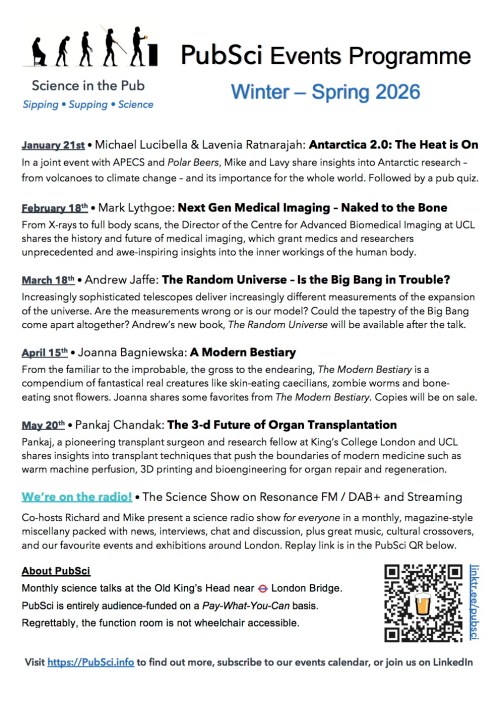
Aaaand finally, PubSci’s new events programme is out, covering January to May 2026 (with a sneak preview of our June talk too) and I’m super-excited with what’s in store for PubSci next year. The events programme is perfect for printing out and pinning to your work noticeboard or sticking to the fridge. It’ll be available on the Current Programme page in a couple of weeks – along with past event programmes – but for now, this is the only place to find it online.
Click the image to open the programme in a new tab.
Don’t forget to grab your last minute ticket to November’s PubSci, and remember to follow us on all the socials including LinkedIn to keep up to date with what we’re doing. You can find those on our Linktree.
Thanks for reading. Please feel free to email or comment in response. Hope to see you at The Old King’s Head on Wednesday 26th November.
18/11/2025 Posted by Richard, PubSci programmer and host
PubSci: Sipping • Supping • Science
• • •
About PubSci talks
PubSci is organised and hosted by science communicator, Richard Marshall, assisted by Mike Lucibella. Events are held upstairs at the Old King’s Head, near London Bridge tube. No specialist knowledge is required, just curiosity. Doors open at 6.30pm for a 7pm start. Talks run for ~45 minutes and are followed by a Q&A session. The Old King’s Head has a happy hour before 7pm, and the kitchen serves excellent pub grub.
Keeping Up With Future Events
To make sure you don’t miss out on future events, subscribe to our Google Calendar to be the first to know when new talks are scheduled, and follow PubSci’s events on Eventbrite to be notified when tickets are available. You can also sign up to our own mailing list on any page on this site.
There is no charge for attending PubSci talks, but we have a cash whip-round to cover expenses on the night – consider it “Pay What You Can Afford”. As few of us carry cash these days, you can make a donation when registering for ticketed events with Eventbrite. Please help us continue putting on events. PubSci has no other source of funding.
We aim to keep PubSci accessible for all, although it is unsuitable for under 18s as we meet in the function room of a pub. Regrettably, there is no wheelchair access.
In this post I preview October’s PubSci (Wednesday 15th!), celebrate maths and poetry, promote a science radio show close to my heart and mark the passing of two very different legends.
Apologies for the extreme tardiness of this blog post. If you rely on my blog for event updates you’ll be biting your nails by now. Head to the Next Event page and grab you ticket ASAP. As I explain later, I’ve had my head in a rather wonderful project, that I hope you’ll enjoy. Remember, if you subscribe to PubSci’s calendar, events in your calendar will update automatically.
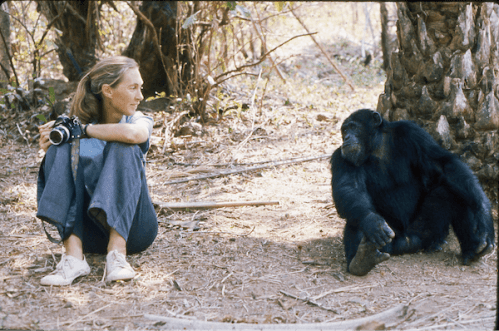
It would be absurd to begin this blog with anything other than the death of conservation and primatology legend, Dr Jane Goodall — and it would be almost impossible to overstate her impact.
To quote the BBC: “Goodall discovered that chimps used tools, created complex societies and could be so aggressive they could even kill one another. This suggested that chimps and humans are likely to have common ancestors – and was ground-breaking information. Her work made waves amongst her fellow researchers, and the public enthusiastically responded to her revelations.
The idea that chimps and humans were related spurred debates about what it means to be human, inspiring a rethink on animal rights. Her books were so widely read that when one of Jane’s subjects Flo died in 1972, The Sunday Times ran an obituary.“
Not only was Jane Goodall a pioneering primatologist and powerful advocate for conservation and habitat protection, she was also an inspirational humanitarian and a role model for young women — so much so that she was immortalised as a Barbie in their Inspiring Women series and as a Lego Minifigure, in both cases accompanied by chimps.
Tireless Goodall died at the age of 91 in the middle of a US speaking tour and left behind a final message for the world, a message of personal and environmental hope for these times:
“I want you to understand that we are part of the natural world. And even today, when the planet is dark, there still is hope...”
You can read the full text here and watch the video of Dr Goodall delivering her final message to the world here.
October’s PubSci is upon us – book now on Eventbrite!
October’s PubSci is on Wednesday 15th October, which means it’s today if you’re reading this the same day it appears in you mailbox, so I’ll keep this brief.
Have you ever wondered what the world would be like without antibiotics…? 100 years ago, infections we consider almost trivial today frequently led to lasting illness or death until penicillin was commercialised. The shocking reality, however, is that bacteria and other microbes are developing resistance to antimicrobial drugs faster than we are developing new antimicrobials.
What will we do when the drugs don’t work?
With drug resistant infections costing the NHS £180 million a year, it’s more important than ever to understand how microbes become resistant, what we can do about it, and what options are out there if antibiotics fail us altogether. This month at PubSci, Professor Jenny Rohn from UCL explores what happens when the antibiotics stop working, why antimicrobial resistance matters, and what scientists are doing to stop us returning to the days when even a scratch could be fatal.
Last month’s PubSci was all about the clever ways William Shakespeare used maths in his plays, and the speaker, Rob Eastaway, is involved with the launch of Maths World, only a stone’s throw from Shakespeare’s Globe. Maths World is new discovery centre for London which aims to do for mathematics what the Science Museum and Natural History Museums do for their fields; think immersive and interactive exhibits, puzzles, AI, code-breaking etc. Wonderfully it’s located in Bankside, part of the historic Liberty of Southwark, as it was known in Shakespeare’s day.
Get hands-on with maths in London’s Bankside
Maths World is located at 6 Burrell St, SE1 0UN, near the Tate Modern. Expect much ado about numberphiles when it officially opens on 13th November.
Rob’s talk on Shakespeare’s Maths was such a great hit that he ran out of books to sell. Apologies to those who didn’t manage to get a signed copy of Much Ado About Numbers. You can always grab a copy in the shops or via the link on Rob’s website and bring it to one of his events to be signed at a later date. I once took a copy of Connections [the book of the 1978 BBC TV series] to a talk by James Burke to get it signed by him some 30 years after it was published — which he most graciously did!
Talking of Connections…
Looking further back to Augusts’ PubSci, I was delighted to discover that August’s speaker, Ruth Stalker-Firth had written a super blog post about PubSci ahead of her talk. You can read it (and find the rest of Ruth’s website) here where there’s also a follow up post with event photos. She’s even kindly linked back to last month’s PubSci blog. If you’re a blogger, vlogger, influencer, broadcaster, or whatever, please let us know if you happen to mention PubSci so I can add it to our archive.
Tune in to science radio
And on the Subject of Broadcasting…
What kept me rather busy of late was recording, producing and editing my first ever radio show! The Science Show is co-presented by myself and Mike Lucibella on Resonance FM, the Arts Council funded community radio station for London. Yes it broadcasts live on FM in London, and you can livestream it anywhere in the world or get it on Radioplayer across the UK.
The show is a monthly one hour magazine programme (ie with several different segments) that you can listen to in one go, or break up into three easy chunks. So far we’ve made a pilot show (with some technical limitations) but the station was so excited by the early test recordings that they’ve given us a regular slot: 5pm on the fourth Tuesday of the month, beginning 28th October, with a repeat at 10am the following Sunday.
The pilot episode went out live on Thursday 9th October and you can listen to it here:
Listen to The Science Show pilot episode on Mixcloud
With the 2025 Nobel Awards announced over the past week or so, it’s easy to forget their lighthearted counterparts. The Ig Nobels recognise research that makes you laugh and then makes you think – much as good comedy does. Last year I was dressed as a banana as part of the Royal Institution‘s Ig Nobels Live night. This year I’m event managing the evening so I might get away without skinning up as a banana — but then again, I might not!
This year’s special event on Friday 31st October is called IgNobels Face-To-Face at which prize winners and some of the leading minds in science will explore how research on the unlikeliest of subjects can have real world implications. Expect a night of hilarious and enlightening stories from some of the strangest and most intriguing scientific research in recent years! And if you enjoy a Halloween party, you’ll still have time to go out and do something spooktacular afterwards. Book with the Ri at https://www.eventbrite.com/e/ig-nobels-face-to-face-tickets-1489016060119
Shall I Compare Thee to a Synaptic Junction?
No, I’m not trying to wax poetical about neurones (although the neuroscience of dementia is the topic of our November talk by Dr Emma Clayton)*, nor am I alluding to Rob’s Shakespeare talk. Science is traditionally communicated in precise language but there are times when evocative imagery is the most powerful medium for scientific ideas. Prof Sam Illingworth’s CPD course on Science Communication through Poetry sets out to do exactly that, and it’s back for the third year.
Four interactive sessions explore how poetry can bring science to life and connect with audiences in fresh, creative ways. It doesn’t matter whether you’re a scientist, a poet, or an enthusiastic amateur. I participated a couple of years ago and enjoyed it greatly. Sessions take place online over consecutive Tuesday lunchtimes, beginning 21st October and there are a few paces left.
Another great mind left us last week: American Philosopher John Searle died at the age of 93.
Searle contributed to the philosophy of language, philosophy of mind, and social philosophy, and he is best known for philosophy concerning Artificial Intelligence. Searle’s most celebrated contribution is the 1980 thought experiment known as The Chinese Room which holds that a computer executing a program cannot have a mind, understanding, or consciousness, regardless of how intelligently or human-like the program may make the computer behave. ChatGPT users take note! In 2015 Searle was invited to address Google in a talk titled “Consciousness in Artificial Intelligence”.
John Searle speaking at Google in 2015 (Photo: FranksValli)
Searle called his philosophical position “biological naturalism” which insists that consciousness and understanding require a specific biological machinery found in brains: “Brains cause minds”. I won’t go into it here, but the Wikipedia page (linked above) gives a good account of the Chinese Room and what Searle inferred from it.
The next few decades may show Searle to be right in insisting consciousness and understanding are biological phenomena, or they may show his opponents in the Strong AI camp to be right (which is what the loud tech bros tell investors) — but a third possibility is that John Searle’s famous thought experiment presents an opportunity to reassess how we understand ourselves first and foremost, just as profoundly as meeting a “conscious AI” would do. Or indeed looking into the eyes of a great ape and recognising an ancient shared lineage which tells us we are more connected than we dare admit in this fragile world.
Don’t forget to grab your last minute ticket to October’s PubSci, and remember to follow us on all the socials including LinkedIn to keep up to date with what we’re doing. You can find those on our Linktree.
* Please note that our November 2025 talk is on Wednesday 26th November, which is the fourth Wednesday. We had to move it from the previous week because Mike and I will both be at the IoP Communicators and Outreach conference on 19th and will be giving a short talk about PubSci.
Thanks for reading. Please feel free to email or comment in response. Hope to see you at The Old King’s Head on Wednesday 15th October.
15/10/2025 Posted by Richard, PubSci programmer and host
PubSci: Sipping • Supping • Science
• • •
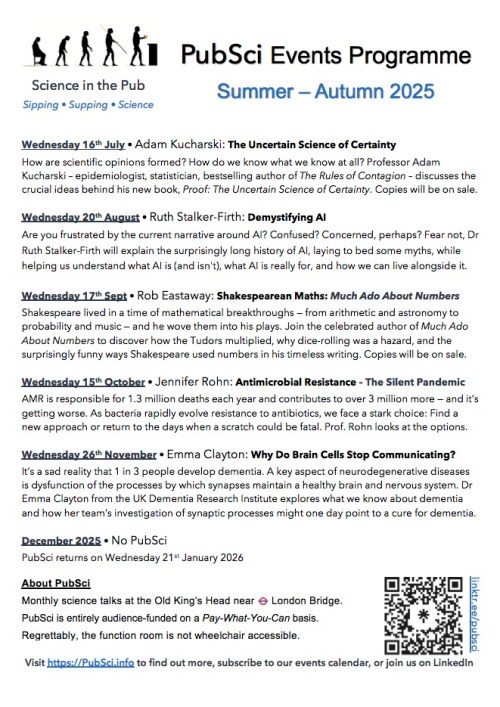
The Summer / Autumn Programme
PubSci’s latest programme runs from July to November (there’s no event in December) and is perfect for printing out and pinning to your work noticeboard or sticking to the fridge, It’s always available on the Current Programme page, along with past event programmes, and you can link to the image below on your own website.
Click the image to open the programme in a new tab.
• • •
Keeping Up With Future Events
To make sure you don’t miss out on future events, subscribe to our Google Calendar to be the first to know when new talks are scheduled, and follow PubSci’s events on Eventbrite to be notified when tickets are available. You can also sign up to our own mailing list on any page on this site.
PubSci is organised and hosted by science communicator, Richard Marshall, assisted by Mike Lucibella. Events are held upstairs at the Old King’s Head, near London Bridge tube. No specialist knowledge is required, just curiosity. Doors open at 6.30pm for a 7pm start. Talks run for ~45 minutes and are followed by a Q&A session. The Old King’s Head has a happy hour before 7pm, and the kitchen serves excellent pub grub.
There is no charge for attending PubSci talks, but we have a cash whip-round to cover expenses on the night – consider it “Pay What You Can Afford”. As few of us carry cash these days, you can make a donation when registering for ticketed events with Eventbrite. Please help us continue putting on events. PubSci has no other source of funding.
We aim to keep PubSci accessible for all, although it is unsuitable for under 18s as we meet in the function room of a pub. Regrettably, there is no wheelchair access.









 PubSci