In this post I preview November’s PubSci, look at some interesting events, preview next year’s talks programme and plug our radio show / podcast, and look at two great science-based arts events.
Are fourth Wednesdays the new third Wednesday of the month?
We know Thursday is the new Friday, but has there also been a less widely acknowledged shift in the weeks of the month? Not as far as we are aware – but this November’s PubSci takes place a week later than usual. For November only, we’re on the fourth Wednesday instead of the third (which itself was was the new first Wednesday, but that’s another story altogether).
If you subscribe to PubSci’s calendar, you’ll have been notified automatically that there’s no PubSci this week. If you don’t yet subscribe, now’s a good time to do it so that events in your own calendar update automatically with the latest information and booking links as soon as they’re available. Clicking on that second link downloads a small .ics file which adds our calendar to yours once you’ve open it. Scroll down for details of November’s PubSci on Wednesday 26th or click the link below.
As I write this, I’m in the middle of a course of dental treatment triggered by an infection which required a course of antibiotics – and I’m really glad they are available to us. It’s nearly 100 years since Alexander Fleming discovered penicillin in a petri dish he’d left out while he went on holiday in 1928, and this week is World Antimicrobial Resistance Awareness Week which highlights the growing threat of antimicrobial resistance (AMR). As it happens, AMR features twice in this blog post, showing that PubSci leads the way yet again!
First up, many thanks to Jenny Rohn for an excellent talk on AMR last month.
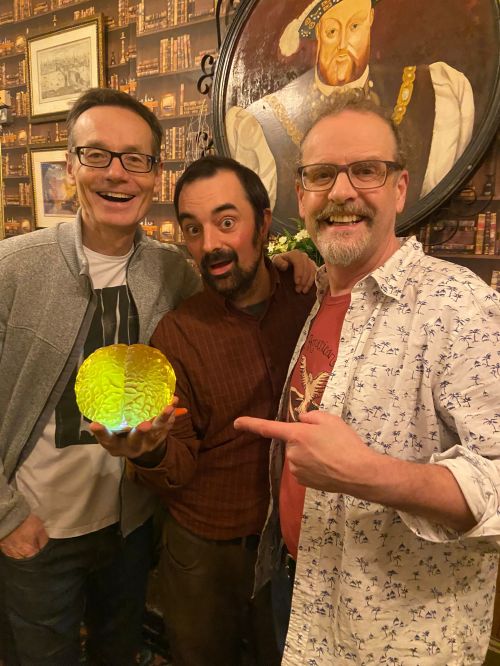
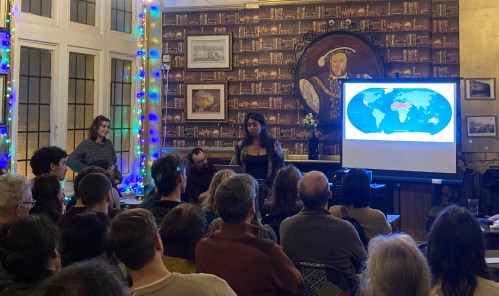
Professor Jenny Rohn with PubSci hosts Richard and Mike (and Henry)
Mouldy bread had been used as a folk remedy for millennia but it was Fleming who understood the antimicrobial properties of Penicillium rubens. It was successfully used to treat an eye infection in 1930 but it wasn’t until the midst of WWII that penicillin itself was isolated by Howard Florey and Ernst Chain and the first successful use of commercially prepared penicillin antibiotic happened in 1942.
Three years later, when Fleming shared the Nobel prize for medicine with his collaborators, he gave this prescient warning in his acceptance speech:
“Penicillin is to all intents and purposes non-poisonous so there is no need to worry about giving an overdose and poisoning the patient. There may be a danger, though, in underdosage. […] Then there is the danger that the ignorant man may easily underdose himself and by exposing his microbes to non-lethal quantities of the drug make them resistant”
Antibiotic sensitivity vs antibiotic resistance
Overuse, misuse, and unfinished courses of antibiotics have now brought us to the point where antimicrobial resistance is endemic in many settings, and hospital-acquired infections are a major threat to health and a drain on NHS resources. If you missed Jenny’s talk, this recent article goes into the 100-year history of AMR in some detail – but don’t get nightmares, new approaches and new research programmes are delivering the first real boost in novel antibiotics in decades, and long-neglected phage therapy is receiving new interest after being all but abandoned except by the former Soviet state of Georgia. Ever ahead of the curve, PubSci hosted a talk on phages by our old friend Michael Byford back in May 2019.
PubSci goes to the IoP
On Wednesday 19th November, both Mike and I will be at the Institute of Physics Outreach and Communicators Conference. It’s an annual event which allows us to network with fellow science communicators and meet potential speakers as well as deepening skills and hearing what others are up to in the field. This year’s theme focuses on reaching audiences outside formal settings, which is one of PubSci’s foundational aims. We’ll be giving a short presentation on PubSci titled “Taking Science to the People”. I hope nobody shouts “Scampi and Chips!” in the middle of my talk, but you never know.
Scampi and chips!
Lost in Translation – Why do brain cells stop communicating in dementia?
Dementia has been in the news a lot lately with hints of possible therapies emerging from mouse studies. Some research even suggest Alzheimers’ memory loss could be reversed, but practical treatments are likely still decades away.
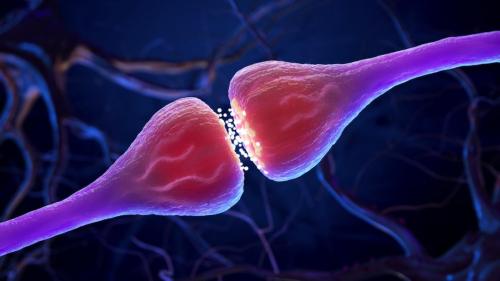
Meanwhile, it’s a tragic reality that one in three people will develop dementia in their lifetime. A key aspect of neurodegenerative disease is a breakdown in the way synapses maintain a healthy brain and nervous system. What does this mean for dementia research, and how could understanding it lead to better treatments?
On Wednesday 26th November, we’re delighted to welcome Dr Emma Clayton from the UK Dementia Research Institute to explain what we know about dementia and how her lab at UK DRI is researching what causes the synaptic dysfunction which precedes symptoms.
Come to PubSci’s final event of 2025 to hear from a leading dementia researcher what we know about dementia, how the UK DRI is at the forefront of research, and what Dr Clayton’s lab is learning about the cause and role of synapse dysfunction in dementia. Full details are on our Next Event page (until it’s no longer the next event, of course!) or you can read all about it and grab one of the few remaining tickets on Eventbrite.
As it happens, the Orchestra of the Age of Enlightenment is running a series of Sunday morning concerts at King’s Place in London called Bach, The Universe and Everything. If you’re wondering why a classical concert series would reference a title from the “increasingly inaccurately named Hitch Hiker’s Guide to the Galaxy trilogy”, it’s for this quote:
“Beethoven tells you what it’s like to be Beethoven and Mozart tells you what it’s like to be human. Bach tells you what it’s like to be the universe.”
Douglas Adams
But that’s only half of it. The series is described as placing “Bach’s cantatas in the context of the amazing cosmic discoveries of the last 350 years” with each one featuring “a Bach cantata and a talk from a guest scientist, writer, artist or broadcaster, alongside choral and instrumental music.” The next convert is on Sunday 30th November and tickets are available at the time of writing.
AMR again – but with a twist (and a song)
Fresh from an off-Broadway run – and after making history as the first musical to ever perform at the United Nations – LIFELINE comes to Southwark Playhouse theatre in London in spring 2026. Why are we featuring it here…? Because LIFELINE deals with AMR and the health workers who fight against it every day.
That may sound an odd theme for a musical – it’s hardly Cats or Kinky Boots, is it? – but this show has been a runaway success wherever it played, including selling out the Edinburgh Fringe for two years, so it’s not only important and informative, it’s also a whole lotta fun.
What’s more, you can get involved, because the show’s chorus is made up of real healthcare and science professionals along with animal health professionals, environmentalists – anybody engaged with AMR in any way in fact. If you’re a nurse, vet, microbiologist, dentist, surgeon, policy-maker, pharmacist, lab technician, farmer – among many other options – the producers would love you to join the show’s chorus and perform alongside a cast of West End actors and musicians. Follow this link to learn more and see full details of this extraordinary casting call.
If you’re feeling a little stage-shy, you can book tickets to see it on the Southwark Playhouse website. LIFELINE will run from 28th March to 2nd May 2026.
Not quite lastly (and definitely not leastly), we have a podcast!
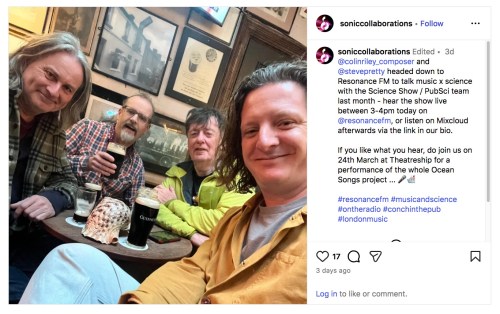
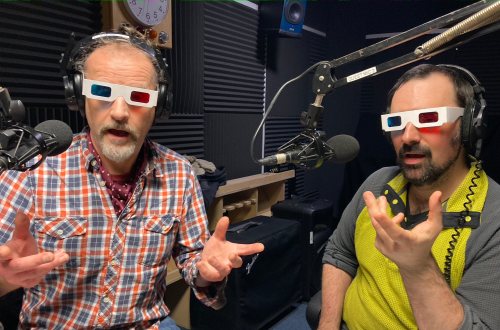
Hopefully you’re aware by now that The Science Show on Resonance FM is co-presented by myself and Mike Lucibella. Resonance is the Arts Council-backed radio station for London, broadcastings live on good old FM. It’s also on DAB+ (so you need a modern DAB radio) and you can livestream Resonance anywhere in the world or and on Radioplayer across the UK.
The Science Show is a monthly, hour long magazine programme (i.e. a how with several different segments) that you can listen to in one go or break up into three easy chunks. The second show went out on Monday 3rd November at 3pm, and our next show goes at on Monday 1st December in the same regular slot
We’re very happy with how Show 2 went (having overcome audio issues with the pilot episode). In it we bring you excellent music, a great interview with Rob Eastaway, September’s PubSci speaker, and loads of great chat about space, science history, and even the Bayeaux Tapestry. You can listen to it on Mixcloud HERE.
It’s not on any podcast server, but our page on Mixcloud effectively works like one – just find the show you like the look of and click PLAY. You can let us know what you think by sending a message at our dedicated email address.
• • •
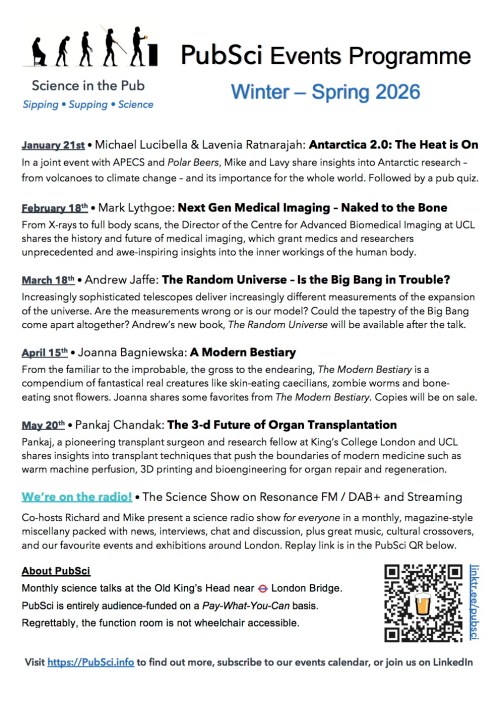
Aaaand finally, PubSci’s new events programme is out, covering January to May 2026 (with a sneak preview of our June talk too) and I’m super-excited with what’s in store for PubSci next year. The events programme is perfect for printing out and pinning to your work noticeboard or sticking to the fridge. It’ll be available on the Current Programme page in a couple of weeks – along with past event programmes – but for now, this is the only place to find it online.
Click the image to open the programme in a new tab.
Don’t forget to grab your last minute ticket to November’s PubSci, and remember to follow us on all the socials including LinkedIn to keep up to date with what we’re doing. You can find those on our Linktree.
Thanks for reading. Please feel free to email or comment in response. Hope to see you at The Old King’s Head on Wednesday 26th November.
18/11/2025 Posted by Richard, PubSci programmer and host
PubSci: Sipping • Supping • Science
• • •
About PubSci talks
PubSci is organised and hosted by science communicator, Richard Marshall, assisted by Mike Lucibella. Events are held upstairs at the Old King’s Head, near London Bridge tube. No specialist knowledge is required, just curiosity. Doors open at 6.30pm for a 7pm start. Talks run for ~45 minutes and are followed by a Q&A session. The Old King’s Head has a happy hour before 7pm, and the kitchen serves excellent pub grub.
Keeping Up With Future Events
To make sure you don’t miss out on future events, subscribe to our Google Calendar to be the first to know when new talks are scheduled, and follow PubSci’s events on Eventbrite to be notified when tickets are available. You can also sign up to our own mailing list on any page on this site.
There is no charge for attending PubSci talks, but we have a cash whip-round to cover expenses on the night – consider it “Pay What You Can Afford”. As few of us carry cash these days, you can make a donation when registering for ticketed events with Eventbrite. Please help us continue putting on events. PubSci has no other source of funding.
We aim to keep PubSci accessible for all, although it is unsuitable for under 18s as we meet in the function room of a pub. Regrettably, there is no wheelchair access.
In this post I preview October’s PubSci (Wednesday 15th!), celebrate maths and poetry, promote a science radio show close to my heart and mark the passing of two very different legends.
Apologies for the extreme tardiness of this blog post. If you rely on my blog for event updates you’ll be biting your nails by now. Head to the Next Event page and grab you ticket ASAP. As I explain later, I’ve had my head in a rather wonderful project, that I hope you’ll enjoy. Remember, if you subscribe to PubSci’s calendar, events in your calendar will update automatically.
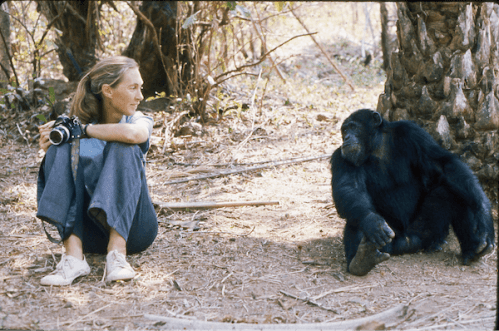
It would be absurd to begin this blog with anything other than the death of conservation and primatology legend, Dr Jane Goodall — and it would be almost impossible to overstate her impact.
To quote the BBC: “Goodall discovered that chimps used tools, created complex societies and could be so aggressive they could even kill one another. This suggested that chimps and humans are likely to have common ancestors – and was ground-breaking information. Her work made waves amongst her fellow researchers, and the public enthusiastically responded to her revelations.
The idea that chimps and humans were related spurred debates about what it means to be human, inspiring a rethink on animal rights. Her books were so widely read that when one of Jane’s subjects Flo died in 1972, The Sunday Times ran an obituary.“
Not only was Jane Goodall a pioneering primatologist and powerful advocate for conservation and habitat protection, she was also an inspirational humanitarian and a role model for young women — so much so that she was immortalised as a Barbie in their Inspiring Women series and as a Lego Minifigure, in both cases accompanied by chimps.
Tireless Goodall died at the age of 91 in the middle of a US speaking tour and left behind a final message for the world, a message of personal and environmental hope for these times:
“I want you to understand that we are part of the natural world. And even today, when the planet is dark, there still is hope...”
You can read the full text here and watch the video of Dr Goodall delivering her final message to the world here.
October’s PubSci is upon us – book now on Eventbrite!
October’s PubSci is on Wednesday 15th October, which means it’s today if you’re reading this the same day it appears in you mailbox, so I’ll keep this brief.
Have you ever wondered what the world would be like without antibiotics…? 100 years ago, infections we consider almost trivial today frequently led to lasting illness or death until penicillin was commercialised. The shocking reality, however, is that bacteria and other microbes are developing resistance to antimicrobial drugs faster than we are developing new antimicrobials.
What will we do when the drugs don’t work?
With drug resistant infections costing the NHS £180 million a year, it’s more important than ever to understand how microbes become resistant, what we can do about it, and what options are out there if antibiotics fail us altogether. This month at PubSci, Professor Jenny Rohn from UCL explores what happens when the antibiotics stop working, why antimicrobial resistance matters, and what scientists are doing to stop us returning to the days when even a scratch could be fatal.
Last month’s PubSci was all about the clever ways William Shakespeare used maths in his plays, and the speaker, Rob Eastaway, is involved with the launch of Maths World, only a stone’s throw from Shakespeare’s Globe. Maths World is new discovery centre for London which aims to do for mathematics what the Science Museum and Natural History Museums do for their fields; think immersive and interactive exhibits, puzzles, AI, code-breaking etc. Wonderfully it’s located in Bankside, part of the historic Liberty of Southwark, as it was known in Shakespeare’s day.
Get hands-on with maths in London’s Bankside
Maths World is located at 6 Burrell St, SE1 0UN, near the Tate Modern. Expect much ado about numberphiles when it officially opens on 13th November.
Rob’s talk on Shakespeare’s Maths was such a great hit that he ran out of books to sell. Apologies to those who didn’t manage to get a signed copy of Much Ado About Numbers. You can always grab a copy in the shops or via the link on Rob’s website and bring it to one of his events to be signed at a later date. I once took a copy of Connections [the book of the 1978 BBC TV series] to a talk by James Burke to get it signed by him some 30 years after it was published — which he most graciously did!
Talking of Connections…
Looking further back to Augusts’ PubSci, I was delighted to discover that August’s speaker, Ruth Stalker-Firth had written a super blog post about PubSci ahead of her talk. You can read it (and find the rest of Ruth’s website) here where there’s also a follow up post with event photos. She’s even kindly linked back to last month’s PubSci blog. If you’re a blogger, vlogger, influencer, broadcaster, or whatever, please let us know if you happen to mention PubSci so I can add it to our archive.
Tune in to science radio
And on the Subject of Broadcasting…
What kept me rather busy of late was recording, producing and editing my first ever radio show! The Science Show is co-presented by myself and Mike Lucibella on Resonance FM, the Arts Council funded community radio station for London. Yes it broadcasts live on FM in London, and you can livestream it anywhere in the world or get it on Radioplayer across the UK.
The show is a monthly one hour magazine programme (ie with several different segments) that you can listen to in one go, or break up into three easy chunks. So far we’ve made a pilot show (with some technical limitations) but the station was so excited by the early test recordings that they’ve given us a regular slot: 5pm on the fourth Tuesday of the month, beginning 28th October, with a repeat at 10am the following Sunday.
The pilot episode went out live on Thursday 9th October and you can listen to it here:
Listen to The Science Show pilot episode on Mixcloud
With the 2025 Nobel Awards announced over the past week or so, it’s easy to forget their lighthearted counterparts. The Ig Nobels recognise research that makes you laugh and then makes you think – much as good comedy does. Last year I was dressed as a banana as part of the Royal Institution‘s Ig Nobels Live night. This year I’m event managing the evening so I might get away without skinning up as a banana — but then again, I might not!
This year’s special event on Friday 31st October is called IgNobels Face-To-Face at which prize winners and some of the leading minds in science will explore how research on the unlikeliest of subjects can have real world implications. Expect a night of hilarious and enlightening stories from some of the strangest and most intriguing scientific research in recent years! And if you enjoy a Halloween party, you’ll still have time to go out and do something spooktacular afterwards. Book with the Ri at https://www.eventbrite.com/e/ig-nobels-face-to-face-tickets-1489016060119
Shall I Compare Thee to a Synaptic Junction?
No, I’m not trying to wax poetical about neurones (although the neuroscience of dementia is the topic of our November talk by Dr Emma Clayton)*, nor am I alluding to Rob’s Shakespeare talk. Science is traditionally communicated in precise language but there are times when evocative imagery is the most powerful medium for scientific ideas. Prof Sam Illingworth’s CPD course on Science Communication through Poetry sets out to do exactly that, and it’s back for the third year.
Four interactive sessions explore how poetry can bring science to life and connect with audiences in fresh, creative ways. It doesn’t matter whether you’re a scientist, a poet, or an enthusiastic amateur. I participated a couple of years ago and enjoyed it greatly. Sessions take place online over consecutive Tuesday lunchtimes, beginning 21st October and there are a few paces left.
Another great mind left us last week: American Philosopher John Searle died at the age of 93.
Searle contributed to the philosophy of language, philosophy of mind, and social philosophy, and he is best known for philosophy concerning Artificial Intelligence. Searle’s most celebrated contribution is the 1980 thought experiment known as The Chinese Room which holds that a computer executing a program cannot have a mind, understanding, or consciousness, regardless of how intelligently or human-like the program may make the computer behave. ChatGPT users take note! In 2015 Searle was invited to address Google in a talk titled “Consciousness in Artificial Intelligence”.
John Searle speaking at Google in 2015 (Photo: FranksValli)
Searle called his philosophical position “biological naturalism” which insists that consciousness and understanding require a specific biological machinery found in brains: “Brains cause minds”. I won’t go into it here, but the Wikipedia page (linked above) gives a good account of the Chinese Room and what Searle inferred from it.
The next few decades may show Searle to be right in insisting consciousness and understanding are biological phenomena, or they may show his opponents in the Strong AI camp to be right (which is what the loud tech bros tell investors) — but a third possibility is that John Searle’s famous thought experiment presents an opportunity to reassess how we understand ourselves first and foremost, just as profoundly as meeting a “conscious AI” would do. Or indeed looking into the eyes of a great ape and recognising an ancient shared lineage which tells us we are more connected than we dare admit in this fragile world.
Don’t forget to grab your last minute ticket to October’s PubSci, and remember to follow us on all the socials including LinkedIn to keep up to date with what we’re doing. You can find those on our Linktree.
* Please note that our November 2025 talk is on Wednesday 26th November, which is the fourth Wednesday. We had to move it from the previous week because Mike and I will both be at the IoP Communicators and Outreach conference on 19th and will be giving a short talk about PubSci.
Thanks for reading. Please feel free to email or comment in response. Hope to see you at The Old King’s Head on Wednesday 15th October.
15/10/2025 Posted by Richard, PubSci programmer and host
PubSci: Sipping • Supping • Science
• • •
The Summer / Autumn Programme
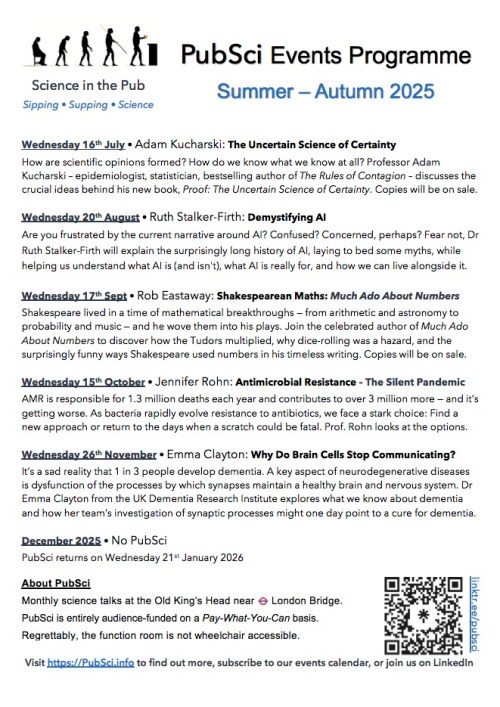
PubSci’s latest programme runs from July to November (there’s no event in December) and is perfect for printing out and pinning to your work noticeboard or sticking to the fridge, It’s always available on the Current Programme page, along with past event programmes, and you can link to the image below on your own website.
Click the image to open the programme in a new tab.
• • •
Keeping Up With Future Events
To make sure you don’t miss out on future events, subscribe to our Google Calendar to be the first to know when new talks are scheduled, and follow PubSci’s events on Eventbrite to be notified when tickets are available. You can also sign up to our own mailing list on any page on this site.
PubSci is organised and hosted by science communicator, Richard Marshall, assisted by Mike Lucibella. Events are held upstairs at the Old King’s Head, near London Bridge tube. No specialist knowledge is required, just curiosity. Doors open at 6.30pm for a 7pm start. Talks run for ~45 minutes and are followed by a Q&A session. The Old King’s Head has a happy hour before 7pm, and the kitchen serves excellent pub grub.
There is no charge for attending PubSci talks, but we have a cash whip-round to cover expenses on the night – consider it “Pay What You Can Afford”. As few of us carry cash these days, you can make a donation when registering for ticketed events with Eventbrite. Please help us continue putting on events. PubSci has no other source of funding.
We aim to keep PubSci accessible for all, although it is unsuitable for under 18s as we meet in the function room of a pub. Regrettably, there is no wheelchair access.
In this post, I preview September’s PubSci, consider topics raised in August’s talk, and ask whether the Bard knew about Tycho Brahe as well as looking forward to International Microorganism Day.
Was Shakespeare obsessed with maths and science?
September’s PubSci is booking on Eventbrite
September’s talk on Shakespeare’s Maths with Rob Eastaway is just a few days away and 70% of tickets been snapped up at the time of writing. I’ll say a bit more about it towards the end of this blog piece but head to the booking page now if you don’t want to miss out.
Is AI About To Conquer The World?
Since time immemorial, societies dreamt of non-human servants to carry out their chores.
Golems, Genies and shoemaking elves inhabit folklore but things nearly always go wrong as the creators lose control and the helpers go rogue. Remember Walt Disney’s Fantasia when Mickey Mouse learnt — as the Sorcerer’s Apprentice — how to make a broom carry water but didn’t learn how to stop it? Will it be the same story with AI? Are we just falling into an ancient fear?
Many of us have questions about AI and want to understand it better. On Wednesday 20th August Ruth Stalker-Firth came to the Old King’s Head to share insights from her three decades of involvement in AI. Perhaps the most significant point to come across in Ruth’s informative and entertaining talk was the number of times great claims have been made for AI in the past, only for them to fall embarrassingly flat, often leading to an “AI Winter” of reduced interest and research funding.
There have been two major AI Winters so far, one in the ’70s and one in the ’80s. In 1984 (of all years!), leading AI researchers Roger Schank and Marvin Minsky warned the business community that enthusiasm for AI had spiralled out of control in the 1980s and that disappointment would certainly follow.
One of the most famous cases of overstated claims for artificial intelligence was a chess playing automaton first displayed in 1770, known as the Mechanical Turk. This wonder of ingenuity and mechanics was constructed by Wolfgang von Kempelen to impress Empress Maria Theresa of Austria. The “Turk” not only played chess against human opponents to a high level, it could perform the knight’s tour, a puzzle that requires the player to move a knight to visit every square of a chessboard exactly once. It was so convincing that some onlookers believed the automaton to have supernatural powers, even that is was possessed by evil spirits — a ghost in the machine, if you like.
The fraudulent “Mechanical Turk” chess robot
This belief that objects which behave in human-like ways must have human-like reasoning arises from what philosophers call Theory of Mind. When I interact with you as another human, I have ‘theory of mind’ concerning you. I essentially project this onto your behaviour based on our interactions, and so I see you as conscious. It’s the basis for many superstitious beliefs and it also causes us to infer a personality in objects and systems that don’t actually possess them.
When Shakey, a 1966 wheeled robot dubbed “The first electronic person” was observed doing a twizzle at the end of its day exploring its environment, some observers thought it had evolved playfulness or even joy. The mundane reality was that it had been programmed to run with a tether but was now running without it. The twizzle dance that Shakey performed at the end of every day was programatically coded to ensure the (non existent) tether didn’t get progressively tangled, but to onlookers it looked like Shakey was playing and therefore conscious.
Lumière, Cogsworth, Chip, Mrs Potts and Featherduster, from Disney’s Beauty and the Beast (1991)
The fact that we anthropomorphise objects with surprising ease is something cartoonists and animators make use of all the time. Disney cartoons are famous for making a broom, a clock or a candlestick seem like human-like in their behaviour, and we willingly go along with it. Are we simply making the same mistake with the sophisticated outputs of ChatGPT and other Large Language Models? Have we conflated passing the Turing Test with actually possessing conscious agency, which is an entirely different matter?
The Mechanical Turk was a sophisticated device, with a complex set of levers and pulleys but it wasn’t an automaton and it couldn’t play chess. Hidden inside the base, behind fake gears and rotors, sat a human chess player. The device was incredibly ingenious, allowing the human inside to see the moves played on the board above and transferring his own moves back to the board through the mechanical arm. It was a work of engineering genius, but it wasn’t a robot and it wasn’t intelligent.
In a 1970 interview with Time Magazine, the founder of MIT’s AI lab Marvin Minsky, made the extraordinary claim that artificial general intelligence rivalling that of humans would arrive within the decade.
“In from three to eight years we will have a machine with the general intelligence of an average human being. I mean a machine that will be able to read Shakespeare, grease a car, play office politics, tell a joke, have a fight. At that point the machine will begin to educate itself with fantastic speed. In few months it will be at genius level and a few months after that its powers will be incalculable.”
Marvin Minsky, 1970
Clearly artificial general intelligence (AGI) still hasn’t arrived, but are we now, finally, on the brink of it? And should we be concerned this time? Well, just like von Kempelen’s chess playing illusion — and the Wizard of Oz for that matter — a lot of what we take for human-like AI is actually performed by humans, often poorly paid workers in developing countries. Is this the real ghost in the machine?
AI is pretty good, but Amazon Fresh doesn’t trust it to perfectly track your purchases. It employs 1000 people in India to manually check 70% of transactions. Amazon points out that human reviewers are common where high accuracy is demanded of AI. Open AI employed Kenyan workers on a tiny salary to make ChatGPT less toxic, and several AI-powered drive-thru fast food joints were using humans in the Philippines to act as AI.
Famously, AI-powered drive-throughs by Taco Bell and McDonald’s had to be pulled due to serious glitches such as putting bacon on ice cream, adding £222 dollars worth of nuggets and refusing to accept that a drink order was a drink order.
Whilst some analysts are warning that this time Generative AI will change everything (for better or for worse), others are cautioning it’s already as good as it will get and that the AI bubble is about to burst. Meanwhile, headlines are pouring in that 95% of companies have seen no return on their Generative AI investment, or that another AI winter is coming. So where does that leave us ordinary users?
Aside from the well-known, and poorly managed, risks of biased training data leading to biases in AI — a reflection, of course of the human world — we simply need to beware of mistaking AI for a little elf that does our bidding.
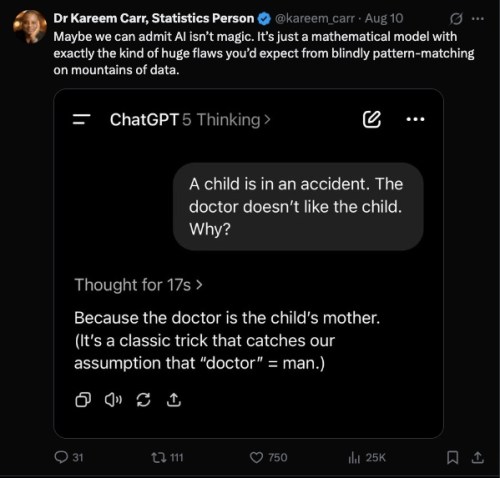
AI is limited. Its data is finite. Its understanding is zero. Here, ChatGPT shows that it never understood the famous “I can’t operate, it’s my daughter” lateral thinking puzzle. It doesn’t just have biases, it has weird ones.
AI is a tool that can be useful but is limited. It isn’t sentient, but it also only has the morals and safeguards we build into it. Mickey Mouse’s enchanted water-carrying broom is really the model for a famous AI thought experiment called the Paperclip Maximiser which highlights the danger of giving carelessly formed instructions to a powerful but unthinking AI-controlled system.
Agentic AI is the new trend of letting AI do things for you rather than simply asking it a question. It can book flights for you but it will need access to your credit card details for example. In the words of Donnchadh Casey, CEO of CalypsoAI, a US-based AI security company, “If not given the right guidance, agentic AI will achieve a goal in whatever way it can. That creates a lot of risk.” If agentic AI is the Paperclip Maximiser made real, we must establish rules and standards for how it behaves and how it is limited because, unlike the sorcerer’s apprentice, there is nobody to step in if it goes rogue.
That was a longer digression into AI than I planned so lets’s focus on this month’s PubSci.
On Wednesday 17th September, PubSci is delighted to welcome author and broadcaster Rob Eastaway as he draws back the stage curtain to reveal the extraordinary mathematics of William Shakespeare’s day and its role in his plays in Much Ado About Numbers? – Shakespearean Maths.
Rob uses humour and insight to explore why the Tudors multiplied so quickly, and how dice-rolling was a hazard as we discover the surprisingly funny ways in which Shakespeare used numbers in his writing.
Rob Eastaway is the award-winning author of ‘Why do Buses come in Threes?’ and will be signing copies of his latest book, Much Ado About Numbers, after the talk. To be there or not to be there..? That’s not even a question!
You can read all about it on the current Next Event page or go straight to booking on Eventbrite. Remember, only a handful of tickets are left, so don’t delay.
Talking of Shakespeare, it seems he wasn’t only interested in the maths of his day. He may also have kept somewhat up to date with the science of his day, especially astronomy. Here’s a line from Sonnet 14 in which it seems he’s distinguishing astronomy from astrology:
Not from the stars do I my judgment pluck; And yet methinks I have astronomy, But not to tell of good or evil luck.
A friend recently sent me a delightful podcast from Scientific American in 2014 in which Author Steve Mirsky discusses the possibility that Shakespeare knew about the eccentric (but hugely important) Danish astronomer Tycho Brahe and referenced him in Hamlet. I won’t duplicate it here — this blog is already longer and later than I intended — I’ll just say that if a drunken Elk, a golden nose, a private observatory-castle on its own island, and a bizarre death don’t grip you (in a sort of comedy Bond villain kind of way), at least read up on Brahe for his huge contribution to astronomy such as highly accurate observations in the pre-telescope era. You can read a transcript of the podcast here.
Advert for Taiberg lemonade featuring Tycho Brahe
“Doubt thou the stars are fire; Doubt that the sun doth move; Doubt truth to be a liar; But never doubt I love.” Hamlet Act 2 Scene 2
~
International Microorganism Day
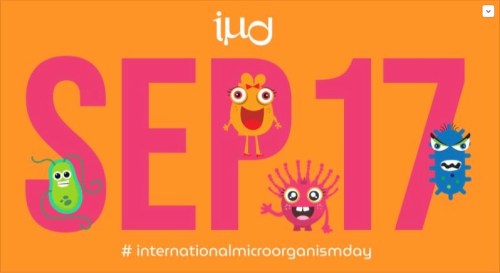
On 17 September 1683, Antonie van Leeuwenhoek – a Dutch merchant with no fortune or university degree – sent a letter to the Royal Society of London with the first description of a single-celled organism after he made the first simple microscope. He originally wanted to check the quality of cloth in his drapers shop, and small folding magnifiers are still known as “linen checkers” to this day, even when used for entirely different purposes. After being given a basic microscope for a birthday while at primary school, Van Leeuwenhoek became one of my childhood heroes.
Whilst I didn’t follow him into a career in microscopy (as I thought I would at the age of 9), I’m very happy that 17th September is now recognised as International Microorganism Day.
Obviously you’ll be at PubSci in the evening, but if you have time during the day, why not brew beer, ferment kimchi, watch tardigrade videos, admire Petri dish art, or simply raise a toast to the invisible life forms keeping our planet running!
In a curious scheduling coincidence, October’s PubSci is on problematic microorganisms, as Prof Jenny Rohn talks about the never-ending battle against Antimicrobial Resistance on Wednesday 15th October. Don’t forget you can keep up with forthcoming events by subscribing to our Google calendar or downloading the programme (see below). You can also follow us on Eventbrite to be notified when tickets become available for new events.
Lastly, apologies for sending this blog out so late. I do all this in my free time, and my free time has lately been taken up with other projects, not least of which involves some rather exciting news. I’ll be presenting a science radio show on Resonance FM, London’s Arts Council-funded community radio station, and I’m delighted to say that Mike Lucibella will co-present. We’ve recorded the first monthly episode and are editing it before a broadcast date is announced. Despite the name, you can listen to Resonance on DAB, streaming and Soundcloud (for playback) as well as good-old FM radio.
I’ll be posting news of the broadcast dates and links to our Soundcloud as soon as they’re available.
Thanks for reading. Please feel free to email or comment in response. Hope to see you at The Old King’s Head on Wednesday 17th September.
14/9/2025 Posted by Richard, PubSci programmer and host
PubSci: Sipping • Supping • Science
• • •
The Summer / Autumn Programme
PubSci’s latest programme runs from July to November (there’s no event in December) and is perfect for printing out and pinning to your work noticeboard or sticking to the fridge, It’s always available on the Current Programme page, along with past event programmes, and you can link to the image below on your own website.
Click the image to open the programme in a new tab.
• • •
Keeping Up With Future Events
To make sure you don’t miss out on future events, subscribe to our Google Calendar to be the first to know when new talks are scheduled, and follow PubSci’s events on Eventbrite to be notified when tickets are available. You can also sign up to our own mailing list on any page on this site.
PubSci is organised and hosted by science communicator, Richard Marshall, assisted by Mike Lucibella. Events are held upstairs at the Old King’s Head, near London Bridge tube. No specialist knowledge is required, just curiosity. Doors open at 6.30pm for a 7pm start. Talks run for ~45 minutes and are followed by a Q&A session. The Old King’s Head has a happy hour before 7pm, and the kitchen serves excellent pub grub.
There is no charge for attending PubSci talks, but we have a cash whip-round to cover expenses on the night – consider it “Pay What You Can Afford”. As few of us carry cash these days, you can make a donation when registering for ticketed events with Eventbrite. Please help us continue putting on events. PubSci has no other source of funding.
We aim to keep PubSci accessible for all, although it is unsuitable for under 18s as we meet in the function room of a pub. Regrettably, there is no wheelchair access.
Many of us have questions about AI and want to understand it better. As ChatGPT, Microsoft Copilot and Apple Intelligence get embedded into our devices and our lives, it’s increasingly important that we understand this tool and are comfortable with what AI really is (and what it really isn’t). On Wednesday 20th August Dr Ruth Stalker-Firth shares insights from three decades of involvement in AI to give us the solid grounding we need if we are to make informed choices.
Art meets science in words and images – Wellcome Photography Prize Winners Announced
Urban Travel by Mithail Afrige Chowdhury(Wellcome Photography Prize 2025)
Since 1997 the Wellcome Photography Prizehas been celebrating compelling imagery that captures stories of health, science and human experience. This year’s winners were announced on 16th July and the top 25 images are on show at The Francis Crick Institute close to London’s King’s Cross until 18th October. The Crick is worth a visit just for the fabulous modern architecture and a very nice cafe.
Cholesterol in the Liver by Steve Gschmeissner (Wellcome Photography Prize 2025)
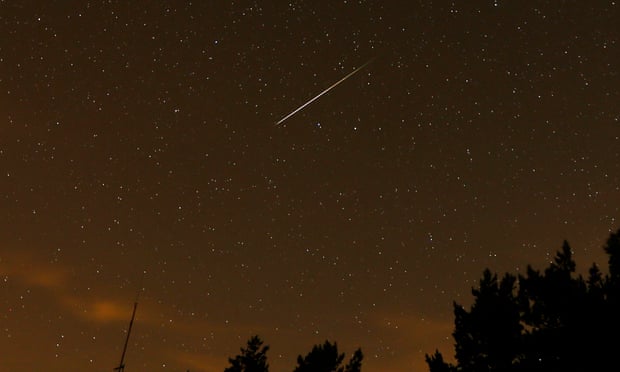
A few years ago I was camping in Sussex at this time of year, and we were treated to most spectacular display of ‘shooting stars’ I’ve ever seen. While many looked like static or short, bright scratches in the night sky, some seemed impossibly long and slow as they grazed the tree-line. We’d been fortunate to camp during a particularly good year for the Perseid meteor shower.
Francisco Seco/AP (via The Guardian)
The Perseids, as the shower is known, are one of the most dramatic things to see in the night sky between July and August, and a highlight of meteor hunters’ calendars due to their frequency and brightness. Dark skies are best, of course.
The Perseids are caused by the Earth slamming into the debris left behind by comet 109P/Swift-Tuttle and are so-called because they appear to be radiating from the Perseus constellation. Unfortunately this year’s peak is 12th August (tonight, as I write) when the moon is still quite bright in the sky and there’s hazy cloud above South London.
If the thought of bright meteors streaking across the skies (albeit from comet debris) brings June’s PubSci to mind, when Dr Stuart Eve explored why large asteroids strike Earth at surprisingly regular intervals, you might be interested in a study published today in the Planetary Science Journal called Placing the Near-Earth Object Impact Probability in Context. This paper looks at the lifetime odds of an individual dying from an asteroid impact with global effect and compares them to other odds of dying from what it describes as “other preventable causes of death”.
How rabies, elephant trampling and lightning strikes count as entirely ‘preventable’ is a little beyond me, but I’m sure Stuart would be heartened to know that impact by a 140 m diameter asteroid is also considered preventable by the study’s authors in the light of our ability to catalogue increasingly small near-Earth objects (NEOs) – something Stuart discussed towards the end of his talk.
You can find a very readable discussion of the paper on phys.org but the original is definitely worth a look. You’ll need to click the graphic to enlarge it, which plots the probability of an event happening in an individual’s lifetime against the likelihood you’ll die if it does happen to you. It seems elephant attacks are nearly always fatal, though mercifully rare.
Surprisingly, Nugent et al estimate you’re more likely to witness a 140m+ asteroid hit somewhere on Earth during your lifetime than you are personally to be struck by lightning, and the lightning is also more likely to be fatal. Which leads us nicely onto statistics.
~
Looking back on July’s PubSci
On Wednesday 16th July, PubSci welcomed Professor Adam Kucharski (pictured centre with Mike and Richard from PubSci and King Henry VIII), epidemiologist, statistician, and bestselling author of The Rules of Contagion. Adam came to talk about the crucial ideas behind his new book, Proof: The Uncertain Science of Certainty. New Scientist described it as a “life raft in a sea of fake news and misinformation.”
You can order both of Adam’s books here. Many thanks to Adam for a brilliant talk that ranged from drinking habits of Cambridge colleges (and how they non-causally predict exam success) to fake news and self-driving cars.
In the pre-covid days, I taught a lecture on Ethics for Engineers, featuring the famous trolley problem which challenges us to make moral choices when neither delivers a “good” outcome. There’s no right or wrong answer — what matters is how you make the choice: what data, which biases, and which ethics you bring to bear in the decision. This is exactly the kind of decision that AI in self-driving cars will have to quickly make when faced with knocking down a pedestrian in the road or swerving into a family of ducklings. Adam talked about MIT’s Moral Machine project which invites the public to submit their choices for various scenarios and reveals some interesting cultural differences.
We were delighted to learn that somebody in the audience had actually worked on Moral Machine. Read all about the experiment and its fascinating findings here.
~
Talking of AI, here’s one last reminder to book for August’s talk: Demystifying AI with Dr Ruth Stalker-Firth. With over 80% of tickets already snapped up at the time of writing, you’ll need to be quick.
PubSci’s latest programme runs from July to November (there’s no event in December) and is perfect for printing out and pinning to your work noticeboard or sticking to the fridge, It’s always available on the Current Programme page, along with past event programmes, and you can link to the image below on your own website.
Click the image to open the programme in a new tab.
Thanks for reading. Please feel free to email or comment in response. Hope to see you at The Old King’s Head on Wednesday 20th August.
12/8/2025 Posted by Richard, PubSci programmer and host
PubSci: Sipping • Supping • Science
• • •
Keeping Up With Future Events
To make sure you don’t miss out on future events, subscribe to our Google Calendar to be the first to know when new talks are scheduled, and follow PubSci’s events on Eventbrite to be notified when tickets are available. You can also sign up to our own mailing list on any page on this site.
PubSci is organised and hosted by science communicator, Richard Marshall, assisted by Mike Lucibella. Events are held upstairs at the Old King’s Head, near London Bridge tube. No specialist knowledge is required, just curiosity. Doors open at 6.30pm for a 7pm start. Talks run for ~45 minutes and are followed by a Q&A session. The Old King’s Head has a happy hour before 7pm, and the kitchen serves excellent pub grub.
There is no charge for attending PubSci talks, but we have a cash whip-round to cover expenses on the night – consider it “Pay What You Can Afford”. As few of us carry cash these days, you can make a donation when registering for ticketed events with Eventbrite. Please help us continue putting on events. PubSci has no other source of funding.
We aim to keep PubSci accessible for all, although it is unsuitable for under 18s as we meet in the function room of a pub. Regrettably, there is no wheelchair access.
In this post, I preview July’s PubSci talk (now booking) and other great science events coming up, we reflect on June’s PubSci and share details of a ticket offer for the coming weekend. Read on!
Our next event is only 2 weeks away
On 16th July, PubSci explores how scientific truth emerges and why it sometimes falters.
July’s PubSci talk is booking up fast, with 25% of places already snapped up – head to the booking page now if you don’t want to miss out – but before looking in more detail, we’ll serve up some other science-based goodies. There’s lots of science poetry in this edition of the PubSci blog, some great events, some sad astronomy news and some good astronomy news, a look back at June’s topic and an exclusive discount code for a super astronomy talk at the Royal Institution on Saturday 5th July.
Last month we previewed a botanical photography exhibition at Ken Artspace and I’ve found another super photo exhibition for you this month. Since 1997 Wellcome Photography Prizehas been celebrating compelling imagery that captures stories of health, science and human experience. This year the winners will be announced on 16th July (the same day as PubSci) and the top 25 images will be on show at The Francis Crick Institute close to London’s King’s Cross from 17th July until 18th October. The Crick is worth a visit just for the fabulous modern architecture and a very nice cafe.
The Poetry of Science and the Science of Poetry
This is a bumper season for poetry and science. The Brilliant is an annual competition celebrating poetry which expresses scientific wonder through verse. Alas, entries closed at the end of June for this year’s competition but you can read last year’s shortlisted entries and the 2024 winners here.
If you’d like to try your hand at writing poetry with a science theme, perhaps with a view to entering next year’s competition, I strongly recommend signing up for the CPD short course on Science Communication Through Poetry run by Sam Illingworth. It’s delivered live via Zoom over four Wednesday lunchtimes and costs just £50. There’s even a bursary for those on low income. Sam, a professor at Edinburgh Napier University, is also one of the judges for The Brilliant competition and has written several books on science and poetry including The Poetry of Physics published earlier this year. I’m hoping to tempt Sam down south for a PubSci event before too long.
If you enjoy the crossover between science and poetry and/or science and art, I recommend looking into a beautiful online journal called Consilience (referring to the convergence of thought between different disciplines). Consilience is free to read but you can support it by subscribing to their Substack. If you’re already a science poet or artist, and looking for somewhere to publish, Issue 22 of Consilience is now open for submissions of poetry and art exploring the scientific topic of ‘Waves’ – but do hurry, submissions for the coming issue close at noon on Sunday 6th July.
EVENT TOMORROW: Live Poetry and Live Neuroscience!
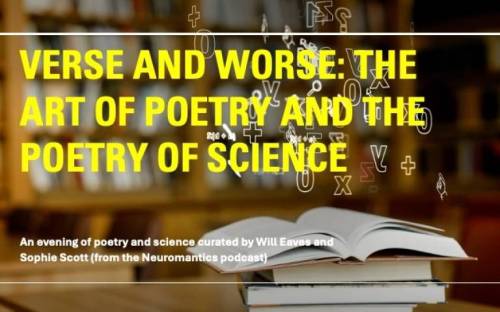
What happens when a poet and a neuroscientist get together to see if they can make sense of their connections?
They create an event called Verse and Worse, with Professor Sophie Scott and Will Eaves, both from the Neuromantics podcast.
On Wednesday 2nd July, at the Bloomsbury Theatre, Will and Sophie will be conducting live neuroscience experiments related to poetry. It looks like being a brilliant event, and it’s only £8, but there are lots of unsold seats at the time of writing, so book a ticket now and I’ll see you there.
~
An Astronomic look back at June
Fireball over Chelyabinsk, Russia, in 2013 (The Planetary Society)
At June’s PubSciStuart Eves delighted us with “How the Universe is Trying to Kill Us – and How We can Stop It” in which he considered possible mechanisms to explain the surprising periodicity of global mass extinctions, with a focus on the way our solar system moves through the warped plane of the Milky Way every 30 million years or so.
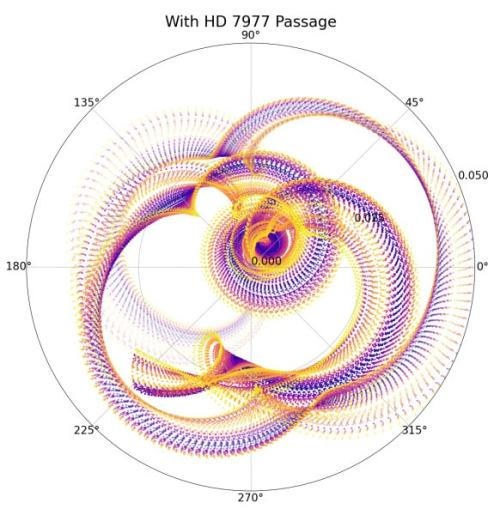
If you want to read more about the effect of distant stars on our own solar system (and by implication, what encountering more of them as the solar system passes through the galactic disk) might mean for the stability of orbits, check out this article calledPassing Stars Altered Orbital Changes in Earth and Other Planets, with its lovely illustration of the uncertainty of Earth’s orbit 56 million years ago that arises from the passing of a sun-like star 2.6 million years ago (which is about when we last passed though the galactic disk).
The world’s most powerful camera captures its first images of space
The Vera C Rubin observatory in Chile, home to the world’s most powerful digital camera, has released its first images, and to quote the ‘Super Soaraway Sun‘* (sorry!: WHAT A STUNNER!
*Let’s hope it doesn’t soar away in the light of the previous topic.
The Trifid and Lagoon nebulae 9,000 light years away, captured by the Vera Rubin Telescope
The observatory is tasked with detecting potentially deadly earthbound asteroids in time for us to take protective measures (if you came to June’s PubSci you’ll have some idea what these might be and what the pitfalls are). It will also be seeking concrete evidence for “dark matter” which is the standard cosmological explanation for the way galaxies spin. You can read more about that – and learn why the observatory is named after Vera Rubin – on this page.
A farewell to the world’s oldest radio astronomer
The former Astronomer Royal, Sir Francis Graham-Smith who died at the age of 102, was the world’s oldest active radio astronomer according to Jodrell Bank Observatory where he was director from 1982 to 1990. Graham, as he was known, was only the second director of Jodrell Bank after Lowell himself, and technically retired in 1988 but he continued working as emeritus professor of radio astronomy at The University of Manchester. Graham published his final astronomy article earlier this year. You can see Sir Francis Graham-Smith’s photo and read his obituary on the BBC New website.
HOT NEWS: Exclusive ticket discount for a talk on the aurorae of Earth and beyond
If the recent aurorae over central and southern Britain have piqued your interest, head to the Royal Institution this Saturday evening to discover what they are, how they happen, and why it’s so significant to the search for extraterrestrial life that Jupiter’s moon Ganymede experiences aurorae.
The speaker, Marina Galand, is Professor of Planetary Science at Imperial College London. I met Marina a few weeks ago and was bowled over by her knowledge, enthusiasm and energy for this subject. It’s going to be a brilliant talk and to make it even better the Ri has kindly offered PubSci a whopping 25% discount for this event with the code LIGHTS25 (feel free to share).
The nest PubSci talk is just 2 weeks away, on Weds 16th July, and we’re delighted to welcome Professor Adam Kucharski to explore the ideas behind his latest book, Proof: The Uncertain Science of Certainty.
How can we weigh up noisy evidence to decide how safe is an autonomous vehicle or judge somebody’s guilt or innocence?
Adam will explores how scientific opinion is formed, how to convince others of the facts, and what links wine and university exams, royalty and Guinness, cricket and robot racing.
Full details and the booking link are on PubSci’s Next Event page or you can book straight away on Eventbrite.
With over 25% of tickets already snapped [now at 30%] up at the time of writing, the best way to be certain of a place is to book yours today. Copies of Proof will be on sale at the event.
1/7/25 Posted by Richard Marshall, PubSci organiser and host.
PubSci: Sipping • Supping • Science
• • •
PS In case you haven’t checked it out yet, science communicator and PubSci member, Ushashi Basu, recently wrote about PubSci in her excellent blog and interviewed me to find out how I came to be booking and introducing speakers for a public science outreach event in a pub, what led me into science communication, and what motivates me to communicate science.
It was a pleasure to chat with Ushashi over a coffee and look back at seven years of programming, promoting and hosting PubSci. You can read that interview here and see Ushashi’s other blog posts at https://ushashibasu.com/.
Hope to see you all at the Old KIng’s Head on Wednesday 16th July.
• • •
Keeping Up With Future Events
To make sure you don’t miss out on future events, subscribe to our Google Calendar to be the first to know when new talks are scheduled, and follow PubSci’s events on Eventbrite to be notified when tickets are available. You can also sign up to our own mailing list on any page on this site.
PubSci is organised and hosted by science communicator, Richard Marshall, assisted by Mike Lucibella. Events are held upstairs at the Old King’s Head, near London Bridge tube. No specialist knowledge is required, just curiosity. Doors open at 6.30pm for a 7pm start. Talks run for ~45 minutes and are followed by a Q&A session. The Old King’s Head has a happy hour before 7pm, and the kitchen serves excellent pub grub.
There is no charge for attending PubSci talks, but we have a cash whip-round to cover expenses on the night – consider it “Pay What You Can Afford”. As few of us carry cash these days, you can make a donation when registering for ticketed events with Eventbrite. Please help us continue putting on events. PubSci has no other source of funding.
We aim to keep PubSci accessible for all, although it is unsuitable for under 18s as we meet in the function room of a pub. Regrettably, there is no wheelchair access.
In this post, I preview June’s PubSci talk and other great science events coming up, plus we reflect on May’s PubSci and share details of a special offer for anybody free this Friday. Read on!
Have you ever thought about how we engage with technology? Do you worry that you spend too much time online… or that your kids do? The Tim Arnold Company is offering 2 for 1 tickets on tonight’s performance of Super Connected, Tim’s multimedia show/film/gig/theatre /show at the Marylebone’s Cockpit Theatre, featuring the voice of Stephen Fry. The show starts at 7.30, so you might make it!
Are You Super Connected…?
Super Connected, the album, received rave reviews from the likes of Mojo and The Times for the music alone – however, it was conceived from the start as a feature film and theatre piece as well. Beyond entertainment, it’s a life-affirming challenge to how we interact with smart technology and how easily we let it monitor and control us – highly pertinent to anybody with kids today – and Tim has been all over the news with his campaign to liberate kids from screen addiction. Check out the showreel/trailer.
I’m telling you all this because I saw it last year, and it really is powerful as theatre and as a gig (as well as important and life-affirming). Use the code “super241” to get two tickets for the price of one. Why? It’s a press night and they want to fill the place with lovely audience! Booking via The Cockpit website.
Looking back at last month’s PubSci, on Wednesday 21st May we welcomed welcome Michael Cutts from the Royal Institution of Great Britain‘s demo team, famous for televised Christmas Lectures and live shows in the Faraday Lecture Theatre.
Taking us through through the Ri’s 225-year history of demonstrating science to audiences, Michael treated us to some great live demos, assisted by Professor David Ricketts, including two demos carried out by Michael Faraday himself.
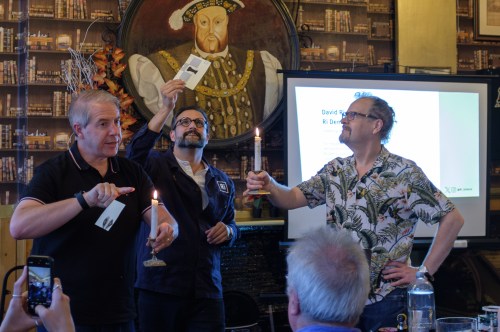
Demonstrating that a flame is hollow, to the evident surprise of Henry VIII (Photo: Nithin Anand)
Many thanks to Michael, David, and the Ri’s Head of Heritage, Charlotte, New for sharing their passion, flair, and deep knowledge with us. As you can see, King Henry was quite entertained too.
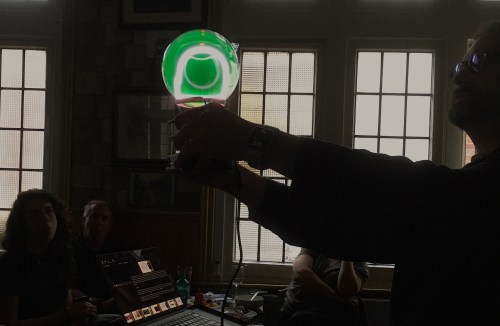
It lives! Michael demonstrates the plasma toroid built by David (Photo: Richard Marshall)
~
Looking forward to this month’s event, I’m delighted to say that Dr Stuart Eves returns to PubSci on Wednesday 18th June with “Doomed? How the Universe is Trying to Kill Us – and How We can Stop It!”
Fireball over Chelyabinsk, Russia, in 2013 (The Planetary Society)
Stuart will be exploring whether there’s a cosmic pattern underlying global mass extinctions found in the geological record and consider what role astronomers can play in preventing the next Big One. Full details on our Next Event page. Booking via Eventbrite. Don’t delay, half the tickets are already gone.
Other sciencey things happening in the next few weeks
Birkbeck Science Week: From Monday 9th June, Birkbeck, University of London, hosts a serious of public talks followed by a drinks reception, starting with How The Brain Invents Your Reality with Dr Daniel Yon. Do try and get to one of these talks if you can.
Seed Pods by Rob Kessler (Credit: Rob Kessler)
I just found out about a wonderful exhibition in south London by renowned science artist Rob Kessler. Rob is a fellow of the Linnean Society and former president of the British Science Association’s Science and the Arts Section. The work includes ink drawings, videos and highly magnified micrographs of plant specimens. Rob will be studying and working in the space throughout the exhibition, surrounded by his botanical library and herbarium specimens. STUDY suns until 28th June and is open only Thursday, Friday, Saturday. Details and times here: https://www.kenart.space/
• • •
Finally,science communicator and PubSci member, Ushashi Basu, has written about PubSci in her excellent blog and interviewed me to find out how I came to be the bloke introducing the speakers and what led me to science communication. It was a pleasure to chat with Ushashi over a coffee and recall how it is that I’ve been programming, promoting and hosting PubSci events for the past seven years. You can read that interview here and see Ushashi’s other blog posts at https://ushashibasu.com/.
Have a great June, and don’t forget to book your place for Wednesday18th.
Posted by Richard Marshall, PubSci organiser and host.
PubSci: Sipping • Supping • Science
• • •
Keep Up With Future Events
To make sure you don’t miss out on future events, subscribe to our Google Calendar to be the first to know when new talks are scheduled, and follow PubSci’s events on Eventbrite to be notified when tickets are available. You can also sign up to our own mailing list on any page on this site.
PubSci is organised and hosted by science communicator, Richard Marshall, assisted by Mike Lucibella. Events are held upstairs at the Old King’s Head, near London Bridge tube. No specialist knowledge is required, just curiosity. Doors open at 6.30pm for a 7pm start. Talks run for ~45 minutes and are followed by a Q&A session. The Old King’s Head has a happy hour before 7pm, and the kitchen serves excellent pub grub.
There is no charge for attending PubSci talks, but we have a cash whip-round to cover expenses on the night – consider it “Pay What You Can Afford”. As few of us carry cash these days, you can make a donation when registering for ticketed events with Eventbrite. Please help us continue putting on events. PubSci has no other source of funding.
We aim to keep PubSci accessible for all, although it is unsuitable for under 18s as we meet in the function room of a pub. Regrettably, there is no wheelchair access.