Tag Archives: talks

Anne Gare -Death, Dying, and Death Awareness in Our Culture & Society

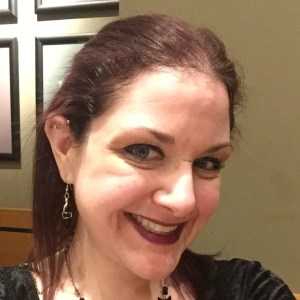
On Wednesday 1st February, Anne Gare, who is an embalmer and funeral director at Midcounties Co-operative Funeralcare will be joining us to discuss the topic of death and how we consider it. She has the unique experience of the funeral industry across two countries, with a particular interest in alternative burial such as green burials.
9frcr2r

Anne Gare

Society isn’t keen to talk about the most inevitable part of life – death. Anne wishes to address this and answer your questions on death and mortuary science. Mortuary Science isn’t often thought about, but it covers a wide range of topics from art (such as reconstruction), chemistry and biology of embalming down to some psychological aspects of grieving.

Join us upstairs at the Old King’s Head, near London Bridge station. Doors open at 6pm for a 7pm start and as usual the event is free, but we will have a whip-round to cover costs – we hope to see you there!
Katrina van Grouw – A Very Fine Swan Indeed: Art, Science & The Unfeathered Bird

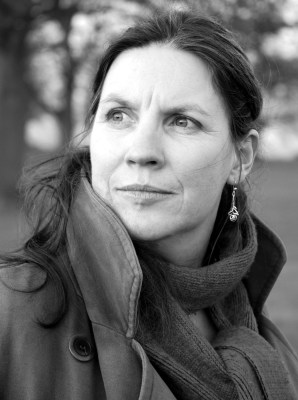
On Wednesday 1st June we’re very pleased to have Katrina van Grouw speaking at PubSci.

KvG-Katrina van Grouw low res

Katrina inhabits that no-man’s land, slap bang between art and science. A graduate of the Royal College of Art, her formal education was in Printmaking and Natural History Illustration, but she’s also a dedicated ornithologist, a former Natural History Museum curator, a qualified bird ringer, and an experienced preparator of natural history specimens.

KvG-book cover

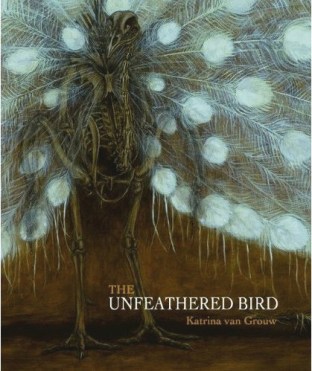
The book, The Unfeathered Bird, is a magnum opus twenty five years in the
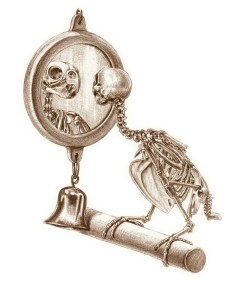
making, and was originally intended as a manual for bird artists. It was only much later that it blossomed into something far more ambitious. A world away from textbooks and diagrams, this is a work equally intended for scientists and artists, indeed anyone with an appreciation of birds or an interest in their adaptations and behaviour. It includes no fewer than 385 illustrations of 200 species, all made from actual specimens, many of which are shown in lifelike positions. Virtually all the complete skeletons were prepared and reconstructed at home from specimens donated from zoos, wildlife hospitals and conservation charities.

KvG-budgie skeletonKvG-great hornbill skeleton small

Join Katrina as she explains her aims and inspirations, shares her insights about birds beneath their feathers, and relates how her home was turned upside down as more and more specimens joined the queue.

Doors open at 6pm for a 7pm start upstairs at the Old King’s Head, near London Bridge station. As usual, the event is free, but we will have a whip-round to cover costs – we hope to see you there!
Gail Austen – Citizen Science: What Makes An Expert?

On Wednesday 2nd March we’re pleased to have Gail Austen speaking about the important and evolving  role of citizen science.

Gail is studying towards a PhD in Biodiversity Management at the Durrell Institute of Conservation and Ecology (DICE), University of Kent. She has an MSc in Taxonomy and Biodiversity from Imperial College, having been swayed by the course being hosted at the Natural History Museum, where she also volunteered. Prior to this (overlooking a stint in finance), she worked for a Local Records Centre and become involved in local conversation, including spending the last six years as Chair of the Kent Reptile & Amphibian Group (KRAG). Gail has a passion for UK wildlife and is an advocate of amateur naturalists and citizen science.

Gail_Austen-Price

It is generally accepted that there has been a decline in field biology skills, with some drawing a parallel between the ability to identify flora and fauna with ‘traditional country skills’. There are a number of specialists concerned with the naming and cataloguing of live, dead, extant and extinct specimens, both as part of their job and in a recreational capacity. However, there have been questions raised over the accuracy of the data collected in a ‘non-scientific’ manner, but in order to answer questions about the natural world, the reliance on citizen science and volunteer collected data is increasing.  Using established methods used in face recognition studies in psychology, my research investigates accuracy in visual species identification, what makes an expert, and whether we can improve these skill sets as a legacy for generations to come.

Join us from 6pm for a 7pm start at the Old King’s Head, near London Bridge station. As usual, the event is free, but we will have a whip-round to cover costs – we hope to see you there!