
November’s PubSci with Professor Marcus du Sautoy
Next week’s event with Marcus du Sautoy is fully booked. In fact it was the fastest-booking event in the history of PubSci with all places booked within 3 days. There is, of course, a waiting list in case anybody drops out so do get onto that by heading to Eventbrite.
We do get a significant number of no-shows for free tickets (and the standard level of drop-outs from tickets booked with a contribution to PubSci) but these are always accounted for in the number of places I make available. Life can be unpredictable, especially in the winter months, and it’s not an exact science but we have a hard limit of 60 people in the room (and it’s gets pretty tight over 55 to be honest).
If you reserved a spot but are unable to come, please remember to cancel your booking on Eventbrite.
How to hear Marcus even if you didn’t secure a ticket for next Wednesday
Our speaker of course is Oxford Professor of mathematics and holder of the Simonyi Chair for the Public Understanding of Science, Marcus du Sautoy. Marcus is a regular guest on BBC Radio 4’s In Our Time, and anybody listening to the Today Programme on Radio 4 on Monday 19th October will have heard him give his response to the huge AI backlash from some leading mathematicians.
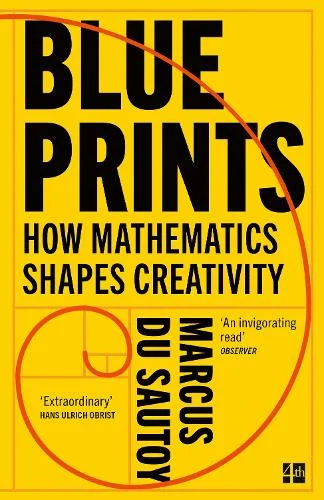
He’s the author of nine popular science books, and his latest book, Blueprints: How Mathematics Shapes Creativity, was published by Fourth Estate in 2025.
On Wednesday 18th November 2026, Marcus will be exploring the amazing maths that subtly underpins much of art and creativity.
After the talk, Marcus will be signing copies of Blueprints – now out in paperback.
What’s more, Marcus was my interview guest on Episode 12 of The Science Show which you can stream or download here (originally broadcast on Monday 2nd November).
We talked about how science is communicated in the modern era and his popular science & maths books, before discussing at length the risks and benefits of AI in maths research. And in the final part of this extended interview we explore the amazing maths that subtly underpins much of art and creativity. This is, of course, the topic of his PubSci talk on 18th November, so you can get a good idea of the content even if you can’t be there in person.
You can catch this and all previous episodes of The Science Show on Mixcloud.
What else to do in November…
Some of you may be missing your monthly science fix – especially if you were unable to book for PubSci – so here are three fantastic alternative events you could go to instead, plus a bunch of other stuff happening this month, which we couldn’t fit into The Science Show because it was so packed with other things.
Monday 16th: An Introduction to Deep Time. A Zoom livestream event presented by the Geological Society.
How old is the Earth, and what is “deep time”? Bishop Usher counted the generations of who begat whom in the Bible to get a creation date of October 23rd 4004 BC. He was at least systematic, but his “clock” was utter nonsense. It took Marie Curie’s discovery of radioactivity to give us a tool to measure the Earth’s age with genuine accuracy.
Start time is 17:30 and tickets are £15 https://www.geolsoc.org.uk/events/an-introduction-to-deep-time/
Thursday 19th: Join Lost Women of Science at the Royal Society (Carlton House Terrace) for a live recording of their podcast about remarkable – and often overlooked – female scientists throughout history. This special event celebrates Hertha Ayrton: inventor, engineer, suffragette, trailblazer and firefighter. Host Claudia Hammond will be joined by Professor Dame Polina Bayvel and Helen Arney (writer of the musical The Cambridge First All-Ladies Fire Brigade, which features Hertha’s story). Starts 7pm and it’s free.
Register at https://royalsociety.org/science-events-and-lectures/2026/11/lost-women-of-science-conversations/
Alternatively on Thursday 19th at The Actors Club in Covent Garden:
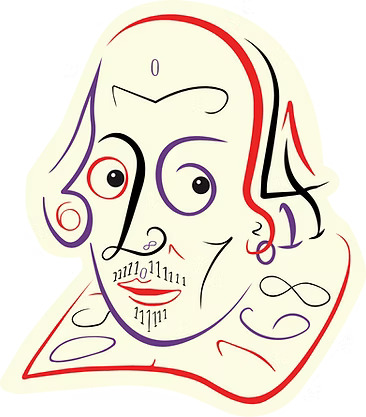
Join past PubSci speaker (and prior guest on The Science Show), Rob Eastaway, for his acclaimed one-man show, Much Ado About Numbers in which the award-winning author humorously reveals how numbers shaped Shakespeare’s world and work.
Drawing on the Bard’s plays, Rob explores how Tudors calculated, why playing dice was risky, and just why Shakespeare made much ado about nothing.
Starts 7pm, tickets are £5 – £12 from https://www.eventbrite.com/e/much-ado-about-numbers
Later in the month
Monday 23rd: Stephen Hawking, His life and work – How To Academy and the Royal Institution
This live In Conversation event explores how Hawking’s life influenced his revolutionary ideas, and what they mean for the future of physics.
Hawking’s biographer, physicist Graham Farmelo, is joined by Daniel Baumann (Stephen W. Hawking Professor of Cosmology at the University of Cambridge), Marika Taylor (Executive Dean at UCL) who completed her PhD with Prof Hawking, and Stephen’s son Tim Hawking. The chair is Roger Highfield, Director of Science at the Science Museum Group, previously Editor of New Scientist.
Tickets from £7.90 https://www.rigb.org/whats-on/stephen-hawking-his-life-and-work
Wednesday 25th: The Universe in A Pancake (Institute of Physics, Caledonian Road). In this cooking-show style adventure, Dr Victoria Yankelevich recreates the history of the Universe in a kitchen. By asking what pancakes have in common with the Universe, she uncovers the cosmic secrets hidden in everyday ingredients.
Talk starts at 7pm (Tea / coffee from 6.30). Free, register at https://www.iop.org/events/universe-pancake
Bonus event: The Real World Maths of Fantasy Universes (MathsWorld Lates)
This one came in too late for the blog mail-out, but it looks fun, so I’m adding it in. On Friday 27th November at MathsWorld in Bankside (not far from the Tate Modern), Dr Tom Crawford takes a tour through the real- world maths behind science fiction and fantasy.
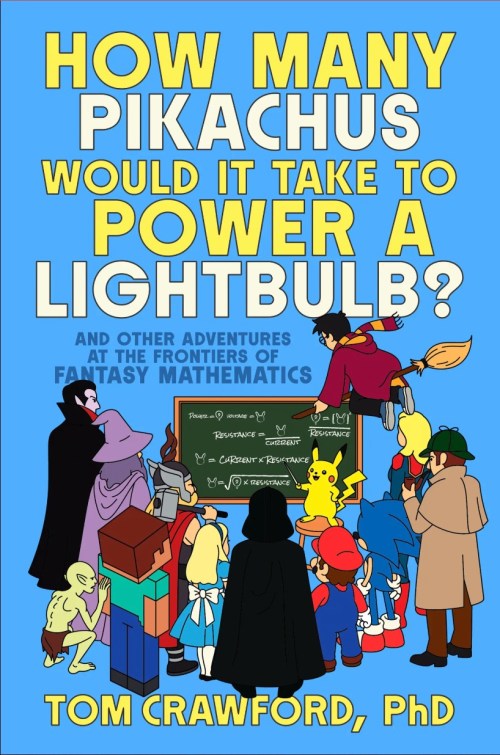
Tom answers all the questions that have been keeping you awake at night, like What would Frodo Baggins’ life insurance premium be if he declared his journey to Mount Doom, How many Pikachus would it take to power a lightbulb, and Just how “super” rich Mario would be after collecting all the coins..?
Doors 6.15 for 7pm start.
Tickets from £5 at https://mathsworld.com/events/FantasyMaths
December and beyond
There’s no PubSci in December (too close to Christmas holidays) so our next event at the Old King’s Head will be 20th January 2027. 2027… how did that happen? After a well-deserved break (at least I think so) I’m really looking forward to kicking off the year with some absolutely fabulous talks about birds, dinosaurs and diets.
I’ll send out a post when the programme is scheduled but remember that you can catch a sneak peek of forthcoming events by subscribing to the PubSci calendar. You’ll find that and all our links on the website or by visiting our Linktree.
The Number 1 Science Podcast – again!
The Science Show is a magazine-style miscellany packed with news, interviews, chat and discussions, plus great music. Episode 12 was broadcast on Monday 2nd November and is available to stream or download on Mixcloud.
It’s a labour of love to make but the finished product brings me great joy — and I hope it’s something PubSci followers will enjoy too. Show 12 looks at three recent Nobel prizes (Physics, Chemistry, Medicine/Physiology), new evidence for Planet 9, two stunning milestones in space exploration, mysteriously missing penguins, the so-called mathpocalypse and OpenAI’s response to the formation of the Association for Human Mathematics, a dearth of female scientist role models in UK education, how Star Trek‘s franchise owners chose to celebrate its 60th anniversary, and the life, times and achievements of Margaret Hamilton.
As if that weren’t enough to cram into 59 minute podcast, we play some brilliant tunes to break it into 3 easy chunks, and of course there’s the interview with Professor Marcus du Sautoy. I’m delighted to say, Danielle Green joined me as co-presenter for the show and together we also take a Random Walk™ from quinine to the clouds (and beyond).
Yet again the show hit the top spot in Mixcloud’s science chart and broke into the Top 15 of Mixcloud’s Podcast charts for the third time in a row. I’m delighted by this unexpected success but what matters more is what you think of it.
Please give it a listen and follow the show. Mixcloud is a relatively small platform, so the show doesn’t get much exposure, but it allows us to include music which none of the major platforms do so I think it’s worth it.
If you like it, do please tell your friends!
And Finally…
What will you be doing at 10.16 am on Wednesday 18th November 2026? Some will be working, and some will be counting down the minutes to the last PubSci of the year. Others might even be listening to The Science Show podcast. But whatever you are doing, stop it!
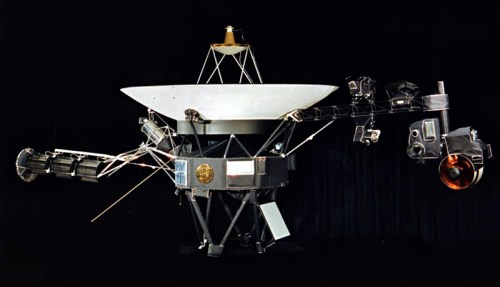
At approximately 10:16:07 GMT deep space probe Voyager 1 will become the first physical object made by humans to be one light day from Earth. Yup, that plucky little spacecraft – still more-or-less functioning despite many setbacks over the 49 and a bit years since launch in November 1977 – will be so far from Earth that a radio signal from Earth will take precisely 24 hours to reach it, and responses will take a further day to come back.
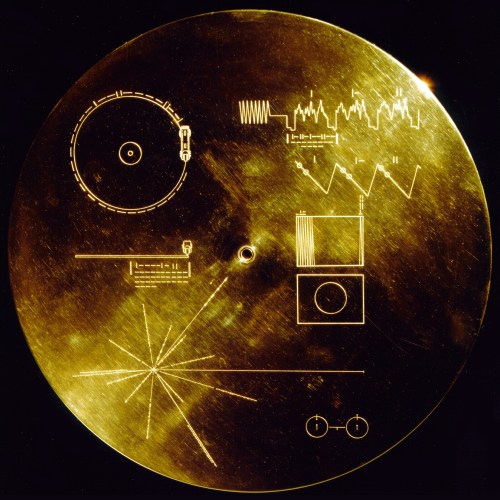
Voyager 1 and its twin Voyager 2 carry identical gold-plated records on board with sounds and data to portray the diversity of life and culture on Earth. They are a time capsule for any intelligent extraterrestrial life form that may one day find them — and even guide them back to Earth! However, we probably won’t be here as even the nearest star, Proxima Centuri, is around 70,000 years away at 35,000 mph.
The contents of the disk (with engravings on one side and a phonographic recording on the other) include natural sounds, birds, whales, 55 spoken greetings in ancient and modern languages, and music by Mozart, Luis Armstrong, and Chuck Berry’s “Johnny B. Goode”. Chief curator of the disk’s contents was none other than Carl Sagan, and when he got pushback from ethnomusicologist Alan Lomax who though Chuck Berry was too “adolescent” to be included, Sagan replied, “There are a lot of adolescents on the planet.”
Update: You can now track Voyagers’ 1 & 2 distances rom the Earth and watch the One-Way Light Time for Voyager 1 tick to exactly 24:00:00 (hh:mm:ss) on NASA’s dedicated Voyager Mission Status webpage. Go Voyager, go!
Well that’s it for this post. Hope to see you at the Old King’s Head on 18th November.
Richard Marshall (Science communicator and PubSci organiser/host)
13th November 2026

