
Here’s a bonus post on science-y things to do in London (and online) which includes an event I only learnt about after I’d sent yesterday’s blog post, and a special event I promised to share but forgot (because I put the info in the wrong folder). Additionally, I’ve added a link to the post about Voyager 1 going a full light day from Earth because it turns out NASA has a website where you can follow to the second its estimated distance and the resulting signal time.
For more complete details on everything else, please refer to the main blog post here.
What to do in November that isn’t PubSci…
Monday 16th: An Introduction to Deep Time. A Zoom livestream event presented by the Geological Society.
5.30pm, tickets £15 https://www.geolsoc.org.uk/events/an-introduction-to-deep-time/
Thursday 19th at The Actors Club in Covent Garden Rob Eastaway presents Much Ado About Numbers in which the award-winning author humorously reveals how numbers shaped Shakespeare’s world and work.
7pm, tickets £5 to £12 https://www.eventbrite.com/e/much-ado-about-numbers
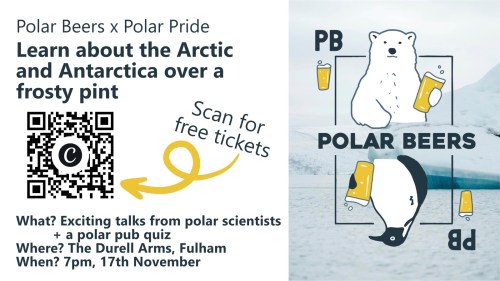
Tuesday 17th: Polar Beers x Polar Pride
Interested in the Arctic and Antarctic? Our friends at Polar Beers – who co-hosted last January’s PubSci, bringing their signature Polar Quiz – are back in London with a special night to celebrate Polar Pride.
Interested in the Arctic and Antarctic? Our friends at Polar Beers – who co-hosted last January’s PubSci, bringing their signature Polar Quiz – are back in London with a special night to celebrate Polar Pride.
Join them at the The Durell Arms in Fulham for an evening of talks on Arctic and Antarctic science, a polar-themed quiz (with great prizes!), cold beer and warm company. They’ll be celebrating Polar Pride, an annual celebration recognising members of the LGBTQ+ community working in or supporting polar science.
Everyone is welcome – bring friends, family, colleagues, and anyone curious about Earth’s icy poles!
Talks begin at 7:00pm and it’s free but space is limited, so register on Eventbrite [link] or scan the QR code. Don’t get left out in the cold!
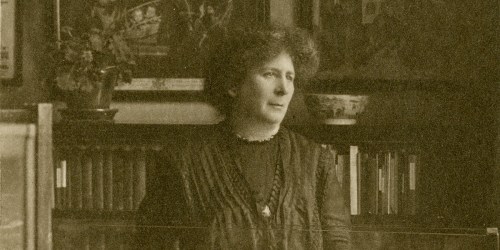
Thursday 19th: The Lost Women of Science podcast hosts a live recording in honour of Hertha Ayrton, for whom the word trailblazer seems insufficient. Claudia Hammond hosts this podcast about the inventor, engineer, suffragette, and firefighter at the Royal Society on Carlton House Terrace.
7pm, free. Register at https://royalsociety.org/science-events-and-lectures/2026/11/lost-women-of-science-conversations/
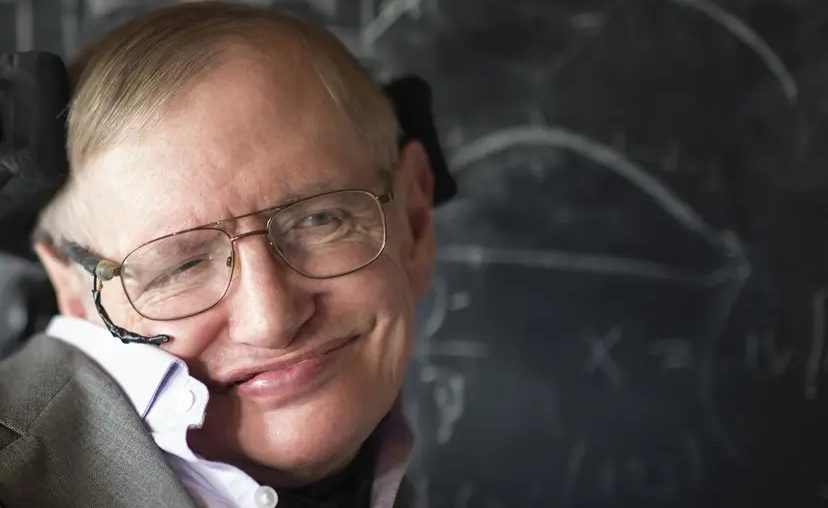
Monday 23rd: Stephen Hawking, His life and work – How To Academy and the Royal Institution
This live In Conversation event explores how Hawking’s life influenced his revolutionary ideas, and what they mean for the future of physics.
Tickets from £7.90 https://www.rigb.org/whats-on/stephen-hawking-his-life-and-work
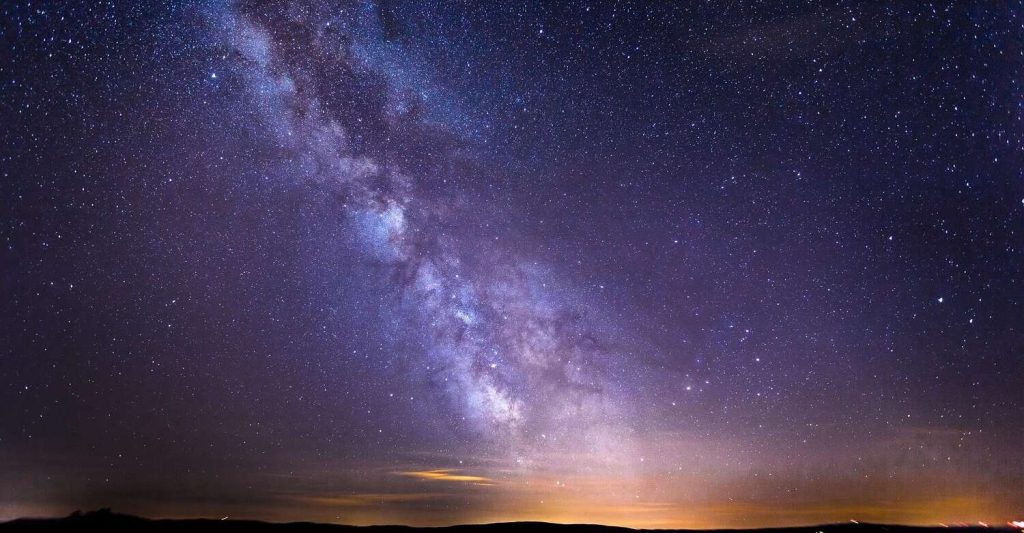
Wednesday 25th: The Universe in A Pancake (Institute of Physics, Caledonian Road). Dr Victoria Yankelevich recreates the history of the Universe in a kitchen.
Talk starts at 6.30pm (Tea / coffee from 6pm). Free, register at https://www.iop.org/events/universe-pancake

Friday 27th November: The Real World Maths of Fantasy Universes.
Dr Tom Crawford takes a tour through the real-world maths behind science fiction and fantasy at MathsWorld in Bankside. Get answers to the questions that keep you awake at night, such as: How would you calculate Frodo Baggins’ life insurance premium? How many Pikachus would it take to power a lightbulb? How “super” rich would Mario be after collecting all the coins..?
Doors 6.15 for 7pm start.
Tickets from £5 at https://mathsworld.com/events/FantasyMaths
And Finally… Follow live as Voyager 1 becomes the first human object to go a full light day from Earth
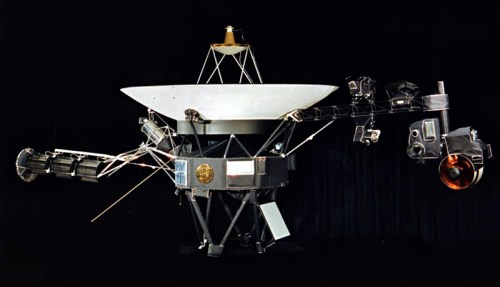
What will you be doing at 10.16 am on Wednesday 18th November 2026? Some will be working, and some will be counting down the minutes to the last PubSci of the year. Others might even be listening to The Science Show podcast. But whatever you are doing, stop it!
At approximately 10:16:07 GMT deep space probe Voyager 1 will become the first physical object made by humans to be one light day from Earth. Yup, that plucky little spacecraft – still more-or-less functioning despite many setbacks over the 49 and a bit years since launch in November 1977 – will be so far from Earth that a radio signal from Earth will take precisely 24 hours to reach it, and responses will take a further day to come back.
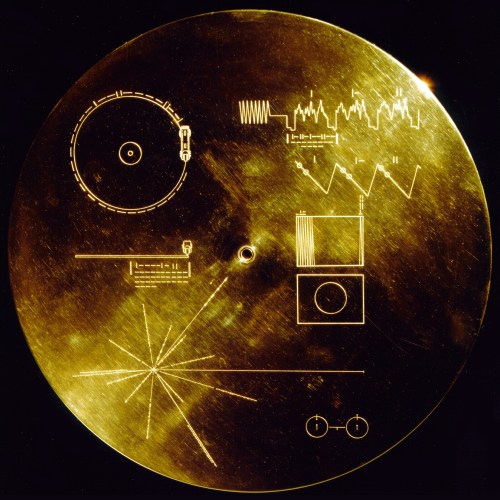
Voyager 1 and its twin Voyager 2 carry identical gold-plated records on board with sounds and data to portray the diversity of life and culture on Earth. They are a time capsule for any intelligent extraterrestrial life form that may one day find them — and even guide them back to Earth! However, we probably won’t be here as even the nearest star, Proxima Centuri, is around 70,000 years away at 35,000 mph.
The contents of the disk (with engravings on one side and a phonographic recording on the other) include natural sounds, birds, whales, 55 spoken greetings in ancient and modern languages, and music by Mozart, Luis Armstrong, and Chuck Berry’s “Johnny B. Goode”. Chief curator of the disk’s contents was none other than Carl Sagan, and when he got pushback from ethnomusicologist Alan Lomax who though Chuck Berry was too “adolescent” to be included, Sagan replied, “There are a lot of adolescents on the planet.”
You can now track Voyagers’ 1 & 2 distances rom the Earth and watch the One-Way Light Time for Voyager 1 tick to exactly 24:00:00 (hh:mm:ss) on NASA’s dedicated Voyager Mission Status webpage. Go Voyager, go!
Well that’s it for this post. Hope to see you at the Old King’s Head on 18th November.
Richard Marshall (Science communicator and PubSci organiser/host)
14th November 2026
Discover more from PubSci
Subscribe to get the latest posts sent to your email.

