Category Archives: Space Flight

Books, Bards, Brilliant Demos and a Blast Off!

In this edition of the PubSci blog: Looking back over April, something to do this weekend, details of May’s PubSci, and something to do at the end of the month.

Spring has sprung, the grass is ris’ – and last month I began our interstitial blog post with the words: “The sun is out, the trees are in blossom, and the PubSci blog is bursting with wonderful things to do…”

I can reuse that for today’s today’s post, although the warmest Mayday on record is of course a cause for concern within the context of shifting climate patterns and rising global average temperature.

On a lighter note, if you came to the Ig Nobel Awards tour on Sunday 6th April you might have seen me dressed as a banana for reasons that made sense at the time but are now difficult to explain. Blame the Annals of Improbable Research. Photos exist but have been hidden to protect the innocent.
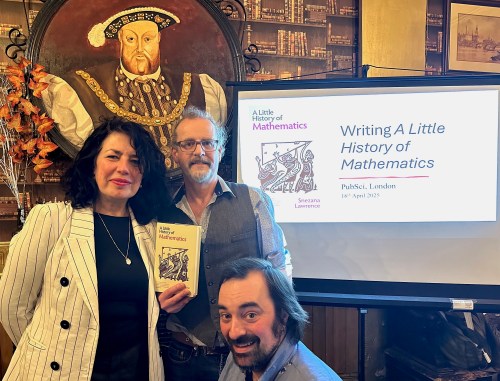
A woman and two men

April’s speaker, Snezana Lawrence (https://x.com/mathshistory) with PubSci Hosts Richard and Mike

We had a wonderful evening in the company of Snezana Lawrence at April’s PubSci, hearing about the writing process and contents of her beautifully illustrated new book A Little History of Mathematics. It was great to see so many new faces among the regulars and the Q&A was really engaged.

William Shakespeare

The Royal Institution gets a double mention in this month’s post, firstly because I’m event managing a brilliant talk there this coming Saturday 3rd May. In the Mathematical Life of Shakespeare, award-winning author Rob Eastaway (Why Do Buses Always Come in Threes?) explores the surprising ways that maths and numbers crop up in Shakespeare’s plays. With historical asides about games, optics, astronomy, music and magic, you’ll never think about maths or Shakespeare the same way again. Suitable for adults and anyone aged 8 and above.

If you stay for the evening event, I’ll also be hosting How Physics Connects Our Universe when theoretical physicist Chris White presents a new hypothesis linking quantum mechanics and general relativity.

But enough about them, what about us…?

Next PubSci: Wednesday 16th April | Science Goes Pop!

From Faraday to Van Tulleken, The Royal Institution of Great Britain – known by its chemical symbol, Ri – has been The Home of Science since 1799 and is famous for its public demonstrations which bring science to life. On Wednesday 21st May we bring the wow of live science to The Old King’s Head for a special event celebrating 200 years of Ri monthly Discourses and annual Christmas Lectures.

Royal Institution Christmas Lectures 2024 (Photo: Paul Wilkinson)

Michael Cutts from the Ri’s renowned demonstration team has designed, built, and showcased science demos at the Ri and around the world. He’ll take us through the history of live science and the importance of showing as well as telling. There may even be a few live demos suitable for a pub setting.

Doors 6.30 for 7pm start. Book your place on Eventbrite ASAP – tickets are going fast. As usual, you can make a contribution to PubSci’s costs via Eventbrite (minimum £1) or in cash on the night. Help PubSci keep science live. Hope to see you there!

• • •

Finally, last weekend I went to Moonwalkers at Lightroom in Kings Cross, and I can’t recommend it enough. I paid full price (£29.50) which feels rather steep, but you can book through TimeOut for £19 if you plan your visit better than we did.
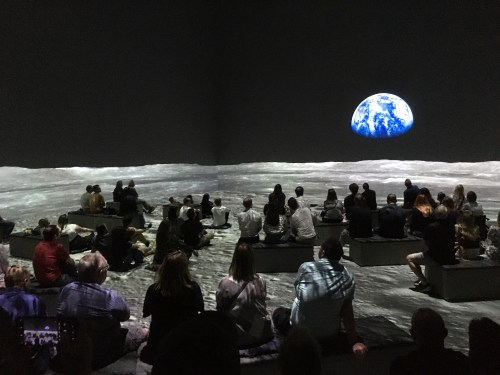
People watching an immersive projection of the moon

Blending archive footage and stills with brilliant graphics and a powerful soundtrack, Moonwalkers tells the story of the Apollo moon landings and looks forward to NASA’s Artemis mission planned for November 2025. It’s movingly narrated by Tom Hanks, who was involved in every stage of its making and shares his personal passion for spaceflight that began with watching Apollo 11 land on the moon in 1969. Highly recommended.

Moonwalkers plays in rotation with other events at Lightroom, next showing over the last week in May.

• • •

Keep Up With Future Events

Dd you know PubSci has an online calendar where you can view future events?

Event titles and dates go in the calendar several months in advance, along with a brief outline of the talk. If you subscribe to our calendar, PubSci events will automatically appear in your own calendar.

We also publish a programme of PubSci events three times a year which you can view online or download for printing. The latest edition has just been uploaded. Why not print it out and put a copy on your work fridge for everyone to see!

Posted by Richard Marshall, PubSci organiser and host.

PubSci: Sipping • Supping • Science

• • •

The evolution of humans from sitting in a chair to talking about science in a pub (after Darwin)

• • •

About PubSci talks

PubSci meets upstairs at the Old King’s Head, near London Bridge tube. No specialist knowledge is required, just curiosity. Doors open at 6.30pm for a 7pm start. Talks run for ~45 minutes and are followed by a Q&A session. The Old King’s Head has a happy hour before 7pm, and the kitchen serves excellent pub grub.

We use Eventbrite booking to manage numbers. Follow us on Eventbrite to be notified when new tickets become available.

Support PubSci

There is no charge for attending PubSci talks, but we have a cash whip-round to cover expenses on the night – consider it “Pay What You Can Afford”. As few of us carry cash these days, you can make a donation when registering for ticketed events with Eventbrite. Please help us continue putting on events. PubSci has no other source of funding.

We aim to keep PubSci accessible for all, although it is unsuitable for under 18s as we meet in the function room of  a pub. Regrettably, there is no wheelchair access. 

You can find all our links on our LinkTree.

• • •

We meet on the third Wednesday of the month, upstairs at the Old King’s Head near London Bridge Underground (Borough High Street east side exit). Join us every month apart from December for a regular dose of Sipping, Supping & Science.

Address:

The Old King’s Head (upstairs room)
King’s Head Yard
45-49 Borough High Street
London SE1 1NA

Next Event: 19th February 2025 | A Brief History of Big Bangs with Mark Hardman

With our Winter – Spring programme in full swing (and available to view, download or print here) I thought it’s time I blog about this week’s talk. With only a handful of tickets remaining, I’d hate anybody to miss out, so do grab yours ASAP if you’d like to come.

I hope you already had a chance to read up on it after the brief preview in my previous post – you may even have looked up the details on our Next Event page (where full information about the next talk is generally posted first) – but in case you haven’t or you rely on emails, blogs, RSS etc here’s what you need to know about February’s PubSci:

Why is London’s River Lea important in the history of explosives, how was Britain’s first satellite launched, and what was Barnes Wallis up to in Waltham Abbey? From 17th century gunpowder to 20th century government secrets, Mark Hardman tells the explosive history of “energetic materials” in Britain through the lens of Waltham Abbey Royal Gunpowder Mills.

A large Explosion
Boom! (Image sourced from Vecteezy)

On Wednesday 19th February, PubSci is delighted to welcome Mark Hardman to take us through the discovery of explosive materials and how they developed from simple gunpowder to modern day chemical compounds with uses from mining to munitions and from sparklers to space rockets.

Book now, or read on to learn more. Full details and booking on Eventbrite.

Since the 17th Century, Waltham Abbey Royal Gunpowder Mills has been at the heart of that story, involving some of the UK’s notable chemists and engineers – including, memorably, Sir Barnes Wallis of Dambusters fame – and it later became a top secret government research facility. As a volunteer at the Mills, as well as a an explosives engineer, Mark is ideally placed to take us on this fascinating journey through chemistry, industry, heritage and spaceflight.

An old picture the Guy Fawkes and his fellow plotters
Guy Fawkes and his alleged accomplices (National Archive)

Join us at the Old King’s Head when Mark takes us through the development of “energetic materials” such as explosives and propellants, introduces us to some of the key scientists and engineers who drove that progress, and explains the role Waltham Abbey Mills played in this story, including improving worker safety in a notoriously dangerous industry.

• • •
Today the Mills are a National Heritage visitor attraction and a Site of Special Scientific Interest (SSSI) open to the public, and Mark will finish his talk by introducing us to the Mills as they are now.

A small rocket or missile on a luncher

300 years of explosive history (Image courtesy of Waltham Abbey Gunpowder Mills)

PubSci talks are pay-what-you-can, and you can make your contribution when booking on eventbrite or in cash on the night. We are delighted to welcome Mark as the second speaker in our 2025 programme for another round of Sipping, Supping Science… in the pub.

• • •

Join us upstairs at the Old King’s Head, near London Bridge tube. Doors open at 6.30pm for a 7pm start. Talks run for ~45 minutes and are followed by a Q&A session. The Old King’s Head has a happy hour before 7pm, and the kitchen serves excellent pub grub.

We use Eventbrite to manage event numbers. Follow us on Eventbrite to be notified when new tickets become available. Reserve your place for this talk now!  PubSci is a pay-what-you-can event – please consider making a donation with your reservation to help us cover our costs.

About the speaker

A smiling man with grey hair and glasses
Mark Hardman

Mark Hardman is a volunteer at Waltham Abbey Royal Gunpowder Mills (WARGM) – a 170-acre heritage site with over 300 years of making explosives, propellants, and space rocket technology.

In his professional life, he is Secretary General of the European Association for the Safety in production and use of Propellants (EASSP) and board member of the Institute of Explosives Engineers (IExpE).

Prior to early retirement in 2022, Mark spent 8 years with a rocket motor company as UK Managing Director at Roxel and Programmes Director at Roxel Group.

Mark has a BSc in Physics and an MSc in Systems Engineering.

Don’t miss your chance to hear Mark’s talk on Wednesday 19th February.

• • •

To make sure you don’t miss out on future events, subscribe to our Google Calendar to be the first to know when new talks are scheduled and follow PubSci’s events on Eventbrite to be notified when tickets are available. You can also sign up to our own mailing list on any page on this site.

Support PubSci

There is no charge for attending PubSci talks, but we have a traditional whip-round to cover expenses – consider it a “Pay What You Can” event. Very few of us carry cash these days, so you can also make a donation when registering for ticketed events with Eventbrite. Please help PubSci continue putting on events. PubSci has no other source of funding.

We aim to keep PubSci accessible for all, although it is unsuitable for under 18s as we meet in the function room of  a pub. Regrettably, there is no wheelchair access. 

Check out the Future Events page where you can also subscribe to our Google Calendar so PubSci events automatically appear in your own Calendar.  You can find all our links on our LinkTree.

• • •

We meet on the third Wednesday of the month, upstairs at the Old King’s Head near London Bridge Underground (Borough High Street east side exit). Join us every month apart from December for a regular dose of Sipping, Supping & Science.

Address:

The Old King’s Head (upstairs room)
King’s Head Yard
45-49 Borough High Street
London SE1 1NA

PubSci Online | Naomi Rowe-Gurney – They Might Be [Ice] Giants!

 (Solar System Science and the James Webb Space Telescope)

On Friday 28th May we’re delighted to welcome astrophysicist Naomi Rowe-Gurney, our fourth speaker of the 2021 programme, for a talk titled They Might be [Ice]Giants! 

Naomi will talk about Solar System Science, the James Webb Space Telescope, and the “ice giant “planets, Neptune and Uranus. [Tickets are available now – booking and joining information follows the description below]

Neptune Uranus_PA_and_NASA

Neptune and Uranus © NASA

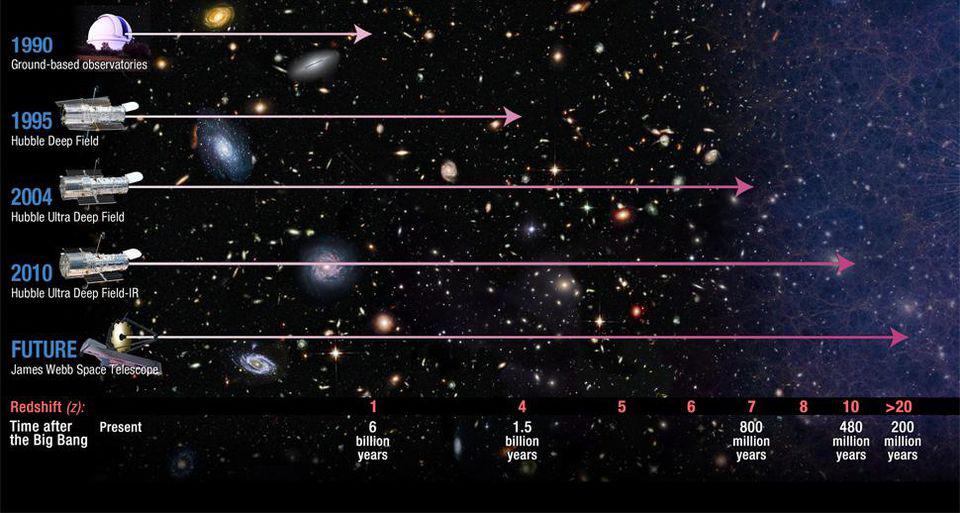
The James Webb Space Telescope is the scientific successor to the Hubble Space Telescope and is scheduled to be launched later this year.

Not many people realise that this huge infrared telescope – capable of seeing deeper into space and further back in time than anything before it – will be used to look at objects in our own solar-system with groundbreaking resolution, as well as probing the farthest reaches of the universe.

In her own research, Naomi looks at the ice giants with data from Spitzer Space Telescope, which has now been decommissioned. The JWST replaces Spitzer but has been much delayed. In her talk, Naomi will explain what the Webb is, why we need it, and will give the latest updates on its revised schedule. She will explain how it will help scientists look at our own solar-system.

From planetary atmospheres to Kuiper Belt Objects and Comets, Webb is equipped to observe them all. So, what is the Webb and what big science questions could it help to answer?

[Event booking and joining information follows the description below]

• • •

Naomi Rowe-Gurney

Naomi Rowe-Gurney

Naomi Rowe Gurney is completing a PhD at the University of Leicester, focusing on the atmospheres of the ice giants, Uranus and Neptune. She specialises in Planetary atmospheres, Spectral Inversion and Radiative Transfer. Her research uses data from the Spitzer Space Telescope to characterise the stratospheres of the two planets in preparation for the forthcoming launch of the James Webb Space Telescope (JWST).

Naomi is an active member of the JWST UK outreach community and, as a former teacher, she is a passionate communicator of astronomy and astrophysics, and an advocate for women in science.

In recent years she has worked with NASA and was featured on the BBC’s flagship astronomy programme, The Sky at Night.

 __

Viewing the talk: Virtual PubSci is hosted live online via Zoom. We also stream events live on our YouTube channel where they remain available for at least 28 days.

Like all our events, this talk is free to attend, but you will need to register with eventbrite to access Zoom. We have included the option to donate a small amount when you register to help cover web hosting fees etc.

Ticket sales go live at 12:05 on Friday 12th March. You’ll receive a confirmation email; the Zoom link is emailed on the day of the talk and available in the eventbrite online event page.

More details on the event registration page.


JWST


Important Note: We aim to make our events accessible to all. You don’t have to pay, and you don’t need to install Zoom – Zoom can be run in a browser and events are streamed on the PubSci YouTube channel. Anybody wishing to support PubSci in our science communication can choose to make a donation when registering with eventbrite or contribute to our PayPal money pool, which goes directly to keeping PubSci online.

Please check our Future Events page where you can also subscribe to our iCal feed and don’t forget to check out our downloadable PDF schedule, which includes confirmed speakers with dates TBC.

Space telescopes (Forbes)

Reminder: Book now for PubSci on Friday 30th April with Dr Brock Craft

Apologies for the extra email, but we’re aware that the previous PubSci email went out before tickets were available on eventbrite. Mea culpa!

So here’s a gentle reminder that tickets are available to book right now for the next PubSci online, Friday 30th April at 7pm BST.

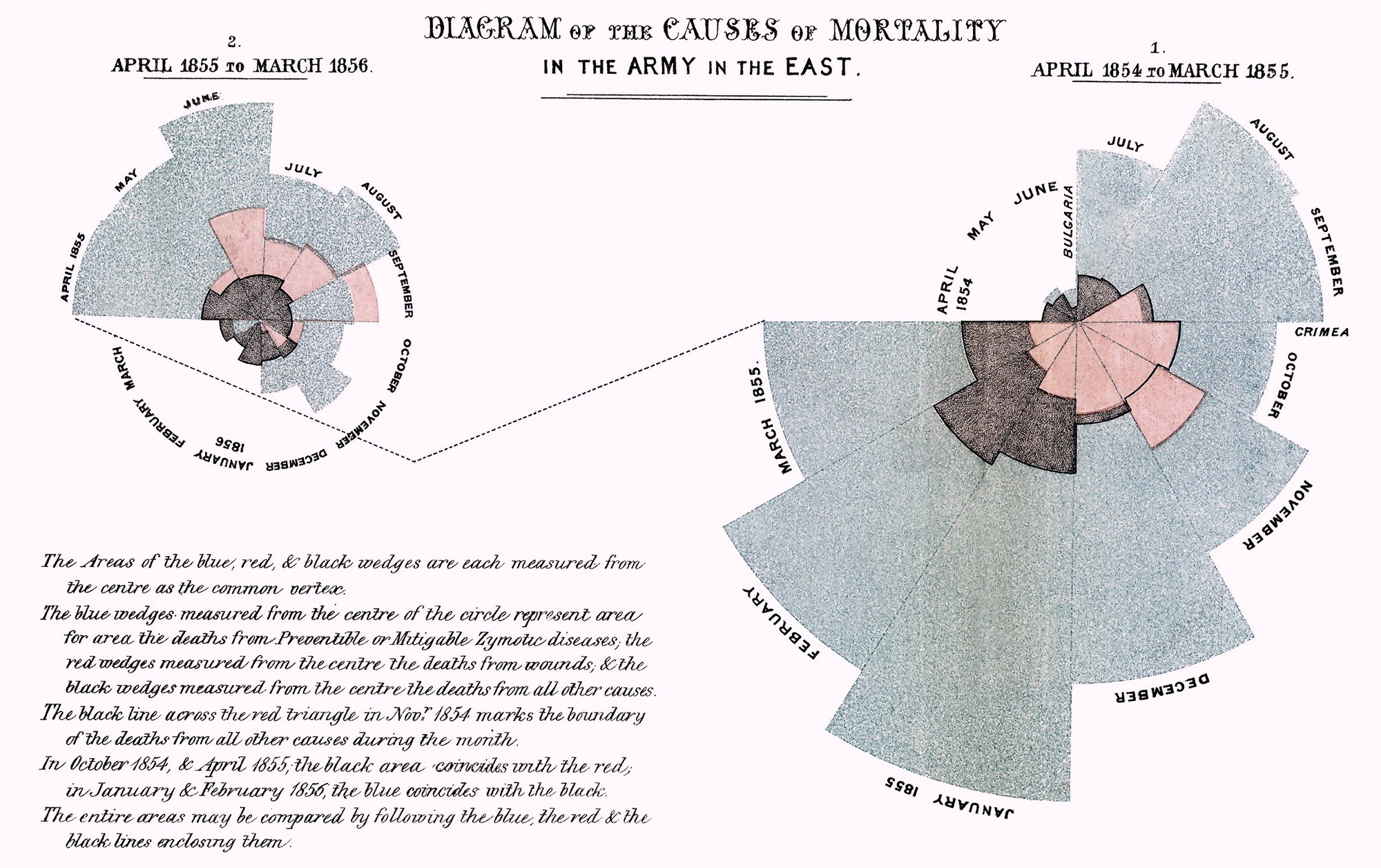
Forget about going to the actual pub – it will be cold and damp outside! Come to the virtual pub for some real science – like the vital lesson that NASA should have learnt from Florence Nightingale.

Follow the link for a fascinating look at the beautiful, terrible, powerful role of data visualisation in the modern world with Dr Brock Craft – it could literally save your life!

PubSci Online | Dr Brock Craft: Picture This – Why Data Visualisation Matters

On 28th Jan 1986 the space shuttle Challenger exploded shortly after lifting off from the Kennedy Space Center. Could better data visualisation have prevented this disaster? (AP Photo/Bruce Weaver, File)

PubSci Online | Dr Brock Craft: Picture This – Why Data Visualisation Matters

On 30th April, PubSci is delighted to welcome Dr Brock Craft, our third speaker of the 2021 programme, for a talk titled Picture This – Why Data Visualisation Matters in which Brock explains how data visualisation can be powerful, beautiful, and a matter of life and death.

space-shuttle-challenger

On 28th Jan 1986 the space shuttle Challenger exploded shortly after lifting off from the Kennedy Space Center. Could better data visualisation have prevented this disaster? (AP Photo/Bruce Weaver, File)

Talk Details

Data is all around us – now more than ever as we navigate a pandemic in daily charts, and we struggle urgently to weigh covid-19 fatalities against the lesser risk from vaccination. But data is more than tables of figures; how we present and visualise data can have literally life-or-death consequences for how we understand it, how we interpret it, and what patterns we discern in it.

Dr. Brock Craft is an Associate Teaching Professor in the Department of Human Centered Design & Engineering at the University of Washington. He specialises in Information Visualisation, Human-Computer Interaction, Physical Computing, and Learning Design.

In this talk he will demonstrate why data visualisation matters to everybody, how there is genuine beauty to be found in data, and how a simple data visualisation could have prevented the Challenger Space Shuttle Disaster.

• • •

brock-caft-hcdeDr Craft has spent much of his career finding innovative ways to represent data in appealing, accessible, or aesthetically pleasing ways. Associate Professor at the University of Washington since 2015, Brock was previously Lecturer in Physical Computing, at Goldsmiths, University of London and programme founder/Senior Tutor on the MA in Information Experience Design at Royal College of Art, London.
He has a Master’s in Human-Computer Interaction (HCI) from DePaul University, Chicago, and a PhD in Data Visualisation from University College of London Interaction Centre (UCLIC)

In 2007 Brock helped form Tinker London, a design consultancy focused on creating products that bridge the digital and the physical worlds. As a partner at Tinker, Brock designed products and experiences for high-profile clients including Sony, Nokia, The Evening Standard and the BBC, often using data visualisation techniques to create appealing visual representations.

Bridging his industry work with teaching and learning, Brock served as a research fellow at the London Knowledge Lab, where he focused on Learning Design, tools for pedagogy design, technology-enhanced learning, and interactive learning objects. “I have been investigating how people interact with technology and working to make it better for my entire career.”

Brock is the author of Arduino Projects for Dummies (2013) and co-author of Raspberry Pi Projects for Dummies (2015), both published by John Wiley & Sons

He is also creator of the Brockenspiel – a musical instrument that turns bar codes and magnetic swipe cards into music played on tubular bells, as featured on the BBC.

3_nightingale-mortality

Florence Nightingale’s famous Rose (or “Wedge”) Diagram of the Causes of Mortality in the Army of the East”

 __

Viewing the talk: Virtual PubSci is hosted live online via Zoom. We also stream events live on our YouTube channel where they remain available for at least 28 days.

Like all our events, this talk is free to attend, but you will need to register with Eventbrite to access Zoom. We have included the option to donate a small amount when you register to help cover web hosting fees etc.

Ticket sales go live at noon on Saturday 10th April. You’ll receive a confirmation email; the Zoom link is emailed on the day of the talk and available in the eventbrite online event page at the event start time.

More details on the event registration page.


Important Note: We aim to make our events accessible to all. You don’t have to pay, and you don’t need to install Zoom – Zoom can be run in a browser and events are streamed on the PubSci YouTube channel. Anybody wishing to support PubSci in our science communication can choose to make a donation when registering with eventbrite or contribute to our PayPal money pool, which goes directly to keeping PubSci online.

Please check our Future Events page where you can also subscribe to our iCal feed and don’t forget to check out our downloadable PDF schedule, which includes confirmed speakers with dates TBC.