Tag Archives: Zoology

Booking for May’s PubSci is live (and selling fast!)

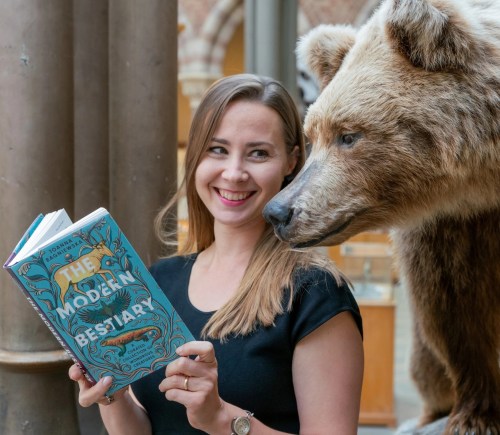
Many thanks to Joanna Bagniewska for a fabulous talk in April about weird and wonderful creatures which inhabit the real world and yet wouldn’t be out of place in a medieval bestiary of curious and fantastical beasts.

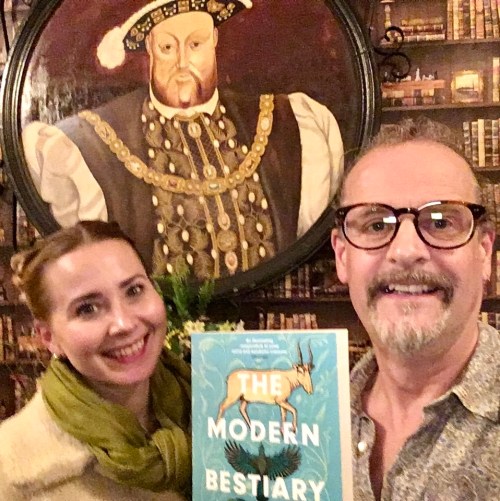
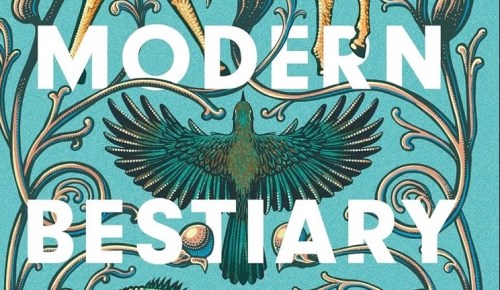
Her book, The Modern Bestiary, published by Wildfire, is available from all good booksellers (see links).

Joanna is also my interview guest on the May episode of The Science Show, due to broadcast at 3pm on Bank Holiday Monday 4th May, after which it will be available to stream on Mixcloud, along with science news and discussion, a fabulous Random Walk through science with my guest co-presenter and science teacher extraordinaire, Geoff Burgess, plus a healthy dose of excellent music.

In case you hadn’t noticed, The Science Show has been running on Resonance 104.4 FM since October 2025, and was presented by myself and Mike Lucibella for the first six episodes. Rather wonderfully, our final episode together broadcast as the crew of Artemis II were nearing their furthest point from the Earth.

Artemis II mission logo showing the Moon and the names of the crew

On the far side of the Moon, the four crew had travelled deeper into space than any humans have ever been, at 406,771 kilometres (252,756 miles) – in fact they were the first humans to leave low Earth orbit since 1972. This official NASA mission patch includes the crew’s surnames.

Episode 6 of The Science Show also features a Random Walk inspired by Charles Darwin (and medieval bestiaries) and an interview with March’s PubSci speaker, Professor Andrew Jaffe.

I’m delighted to report that Episode 6 of The Science Show earned us the accolade of the Number One Science Show on Mixcloud as well as entering the Top 100 of all podcasts on the platform. It’s a tribute to Mike’s knowledge and enthusiasm that we went from zero to Number 1 in six shows, and I want to thank him for saying YES and coming on this journey with me.

A badge from mixcloud saying number 1 in the science chart

Using Mixcloud for hosting allows us to use copyright music in the knowledge that rights holders are compensated (it was originally created for DJs to upload and share mixes without fear of takedown notices for copyright infringement).

This potentially makes The Science Show unique in playing excellent music alongside science content. If you haven’t listened yet, give it a whirl and let me know what you think.

Finally, a reminder that booking for May’s PubSci is live on Eventbrite, and take-up has been brisk (to say the least). I’m keeping this blog post brief and getting it out early in case it books up by the time I do the usual monthly post.

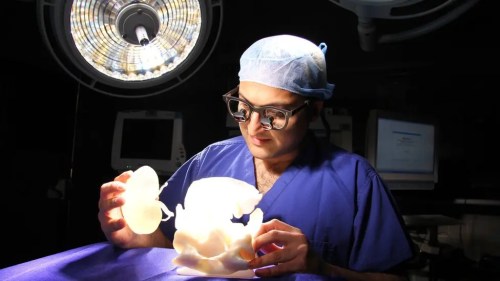
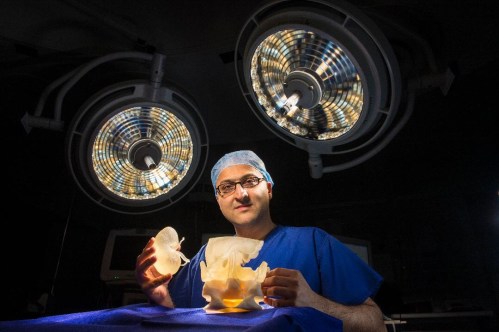
The topic on Wednesday 20th May is “The Future of Transplant Surgery” and our speaker is Mr Pankaj Chandak, a pioneering transplant surgeon at Great Ormond Street Hospital (among others) who was medical advisor and director on the celebrated TV series The Crown, in which he also acted.

A gowned surgeon looking at a 3D model in the operating theatre

You can book directly by going to the Eventbrite booking page HERE, or check out the details and read all about it on PubSci’s Next Event page which is updated each month with the latest event.

Don’t forget that PubSci links are also on our Linktree, including the latest event booking link, links to social media and YouTube, a link to the PubSci LinkedIn group, which everyone is welcome to join, along with our events calendar and latest programme in a format suitable for printing out. Talking of social media, please remember to follow PubSci on Bluesky, which has an excellent science feed in general. Sadly we still have 10x as many followers on the nasty platform which used to be Twitter as we do on Bluesky, which is incredibly easy to join and use.

That’s it for now, though there may be another post before May’s talk. Hope to see you at The Old King’s Head on Wednesday 20th May. Meanwhile, for everyone in the UK, I hope you have a fabulous Bank Holiday Weekend.

Richard, PubSci organiser and host. x

April blog: Of Hedgehogs and Hippogriffs; Radio Show reaches #1 spot; and Why Most Alternative Hypotheses Are Wrong

In this post I preview this week’s talk by Joanna Bagniewska, look back at March’s event, celebrate something special and look forward to May’s PubSci

Hello and welcome to the April blog. Last month I’d just emerged from UK science week, delivering 17 workshops in 4 days at London primary schools. This month I’ve been supervising some Easter holiday workshops at the Royal Institution, and what a fabulous fortnight it was, with school age kids learning about fractals, programmable self-driving trains, and the mind-boggling scale of the universe. But what’s happening at Science in the Pub?

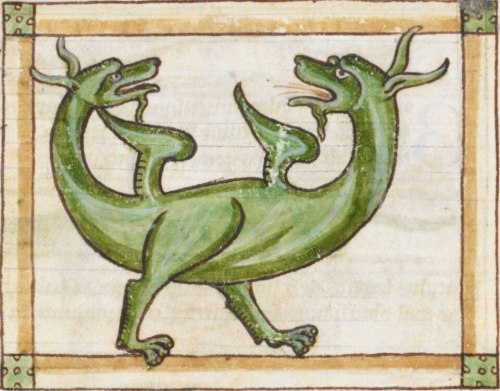
A green dragon with two heads
Amphisbene from the Harley Manuscript (Wikimedia Commons)

April’s PubSci talk is here!

You’re probably familiar with the idea of a medieval bestiary, those beautifully illustrated collections of fanciful beasts which often incorporated moral lessons about purity of heart and godliness.

The Modern Bestiary” takes a rather different approach. In place of mythical, fantastical beasts it features some of the Earth’s most fascinating and extraordinary real wildlife. And instead of moralising, it features animal grossness, butts, and some quite dramatic mating practices!

A beautiful bird

If that sounds like your kind of thing, you’re in luck, because the author, zoologist and award-wining science communicator Joanna Bagniewska, will be talking about her book at the Old King’s Head tonight. There aren’t many tickets left, but if this reaches you in time, grab yourself a ticket and be amazed.

Copies of The Modern Bestiary will be available at tonight’s event.

Book your place at April’s PubSci via this link or head straight to our NEXT EVENT page.

Did you know that Charles Darwin actually fell for a hedgehog myth that originates in a medieval bestiary? To be fair, he wasn’t entirely convinced but nonetheless wrote “I have it on good authority that…”

Mike and I discuss this in our latest Random Walk in the current episode of The Science Show which first broadcast on Resonance FM and is now streaming on Mixcloud. Sadly episode 6 was Mike’s last show as he’s taking a step back due to other commitments, but I’ll be carrying on with guest co-presenters so watch this space. It’s been a delight making the show with Mike, and I want to thank him for jumping at the idea and brining it to fruition with me.

Next Month at PubSci

If you subscribe to PubSci’s calendar, you get Eventbrite booking links as they go live. If you don’t make sure to put the third Wednesday of every month in your diary (apart from December), starting with Wednesday 20th May when leading transplant surgeon Pankaj Chandak talks about the incredible future of transplant surgery and the techniques he has been pioneering.

A surgeon in scrubs holding 3-d models of transplant organs
Pankaj Chandak

If you don’t yet subscribe to our calendar, now’s a good time to do it so that PubSci events update automatically in your own calendar with the latest information and booking links. Clicking THIS link downloads a small .ics file which will add our calendar to yours once you’ve open it.

Is everything we know about the Big Bang wrong…?

This was the question that Professor Andrew Jaffe addressed at March’s PubSci. While the short answer is No, but we must be ready to revise it, the in depth answer was far more revealing. Andrew argues that in order to understand science in general, and cosmology in particular, we need to come to terms with the fact that everything we know is really just based on models and probability.

Will the cherry trees blossom this spring? Based on past performance, Yes! But that invokes a kind of reasoning that we should be aware of, especially when the questions we apply that reasoning to are more complex and nuanced and the data we have available is less clear.

Andrew develops in his book, The Random Universe, and after March’s PubSci, Andrew came into The Science Show’s virtual studio to talk about these ideas. You can listen to that interview, as well as the Random Walk I mentioned above in episode 6 of The Science Show, along with news of Artemis II and some excellent music.

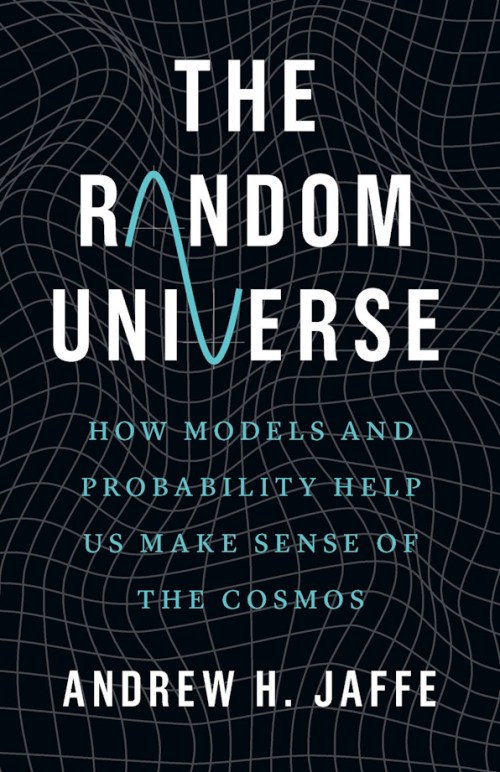
Book cover for The Random Universe by Andrew Jaffe

In The Random Universe, Prof. Jaffe explains how scientists create, test, and refine their models by applying those paired concepts, for example to both quantum mechanics and the birth of the universe. It’s a highly readable blend of philosophy, probability theory, and cosmology, that I’m personally happy to recommend.

The limits of knowledge feature quite strongly in the book, and one of the interesting thoughts to emerge from Andrew’s talk came in response to an audience question about alternative hypotheses for the origins and evolution of the universe. Andrew’s replay was “Most ideas that disagree with the dominant scientific paradigm in any field are certainly wrong even though the dominant paradigm is probably also wrong.”

Andrew repeated this in a social media post, so I asked him about it in our interview. Check out his response in The Science Show.

Going out on a high

At the risk of over-egging the radio show and podcast, our latest episode – and Mike’s final one – just reached number 1 in the science charts on our streaming platform. Of course there are bigger platforms with bigger charts, but considering we do this ion our own time, with no backing or monetisation, it’s an achievement we can be truly proud of.

Many thanks to Mike for the hard work and the fun times we’ve had making great – possibly unique – science radio. If you haven’t listened yet, now’s the time to do so. You won’t find a similar mix of science news, events, random discussions and excellent music anywhere else.

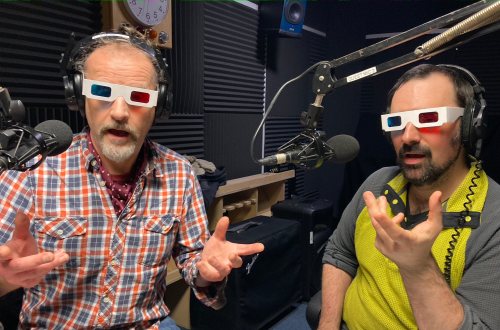
Two guys in a radio studio wearing 3-d glasses

We use Mixcloud for podcast hosting as it’s the only platform which automatically pays royalties to copyright holders, allowing us to play the great music we love, which makes our particular scientific miscellany so different from any other science show. Unfortunately this comes with the limitation of streaming only (no downloads) but we consider this a small price to pay for creative freedom and supporting musical artists.

You can listen live on Resonance 104.4 FM at 3pm on the first Monday of every month (also DAB, RadioPlayer, and live-streaming from the Resonance website) or catch up at time from our Mixcloud page.

Not quite lastly (and definitely not leastly), have a look at what else is coming up at PubSci this Spring!

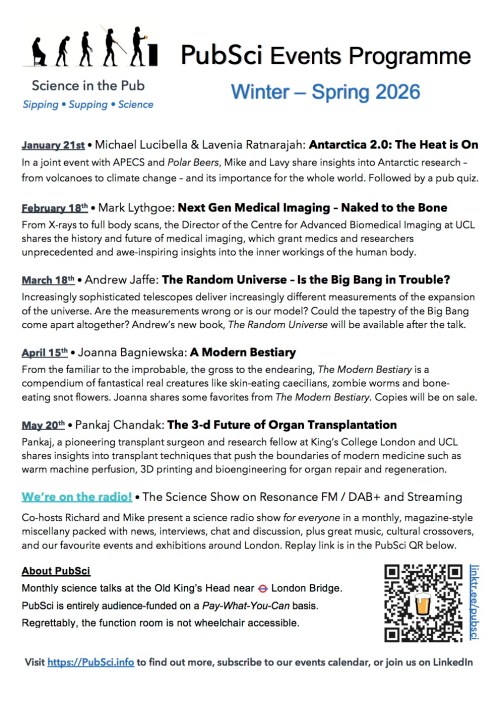
PubSci’s latest events programme (below) covers January to May 2026 and I’m super-excited with what’s in store for PubSci in the coming months. I’ll be publishing the Spring-Summer programme soon.

Our events programme is perfect for printing out and pinning to your work noticeboard or sticking to the fridge. It’s also available on the Current Programme page. I recommend putting the dates in your diary now. Even better, subscribe to our calendar HERE. For example this is what you’ll see for March’s PubSci when you subscribe to our Calendar.

Click the image to open the programme in a new tab.

Finally, a reminder about how you can listen to a rather excellent Science Show

Podcast Symbol

The Science Show on Resonance FM is co-presented by myself and Mike Lucibella. Resonance is the Arts Council-backed radio station for London, broadcastings live on good old FM. It’s also on DAB and you can livestream Resonance anywhere in the world or and on Radioplayer across the UK. Better still, listen any time here.

The Science Show is a monthly, hour long magazine programme (i.e. a show with different segments) that you can listen to in one go or break up into three easy chunks. Our fifth show went out on Monday 2nd March, and our next show goes at at 3pm on Monday 6th April.

It’s not on any podcast server, but our page on Mixcloud effectively works like one – just find the show you like the look of and click PLAY. You can let us know what you think by sending a message at our dedicated email address.

• • •

Don’t forget to grab your last minute ticket to March’s PubSci (or at least get on the waitlist), and remember to follow us on all the socials including LinkedIn to keep up to date with what we’re doing. You can find those on our Linktree.

Thanks for reading. Please feel free to email or comment in response. Hope to see you at The Old King’s Head on Wednesday.

17/03/26 Posted by Richard, PubSci programmer and host

PubSci: Sipping • Supping • Science

• • •

About PubSci talks

PubSci is organised and hosted by science communicator, Richard Marshall, assisted by Mike LucibellaEvents are held upstairs at the Old King’s Head, near London Bridge tube. No specialist knowledge is required, just curiosity. Doors open at 6.30pm for a 7pm start. Talks run for ~45 minutes and are followed by a Q&A session. The Old King’s Head has a happy hour before 7pm, and the kitchen serves excellent pub grub.

Keeping Up With Future Events

To make sure you don’t miss out on future events, subscribe to our Google Calendar to be the first to know when new talks are scheduled, and follow PubSci’s events on Eventbrite to be notified when tickets are available. You can also sign up to our own mailing list on any page on this site.

Support PubSci

There is no charge for attending PubSci talks, but we have a cash whip-round to cover expenses on the night – consider it “Pay What You Can Afford”. As few of us carry cash these days, you can make a donation when registering for ticketed events with Eventbrite. Please help us continue putting on events. PubSci has no other source of funding.

We aim to keep PubSci accessible for all, although it is unsuitable for under 18s as we meet in the function room of  a pub. Regrettably, there is no wheelchair access.

You can find all our links on our LinkTree.

The evolution of humans from sitting in a chair to talking about science in a pub (after Darwin)

Address:

The Old King’s Head (upstairs room)
King’s Head Yard
45-49 Borough High Street
London SE1 1NA

Paolo Viscardi – Dismantling the ‘Dead Zoo’ | Friday 26th Feb 2021

On Friday 26th Feb we’re delighted to be kicking off a new season with an online talk by Paolo Viscardi, one of the founders of PubSci. Paolo, now based at the National Museum of Ireland in Dublin, will present Dismantling the Dead Zoo, streamed live on Zoom and YouTube.

Dead Zoo

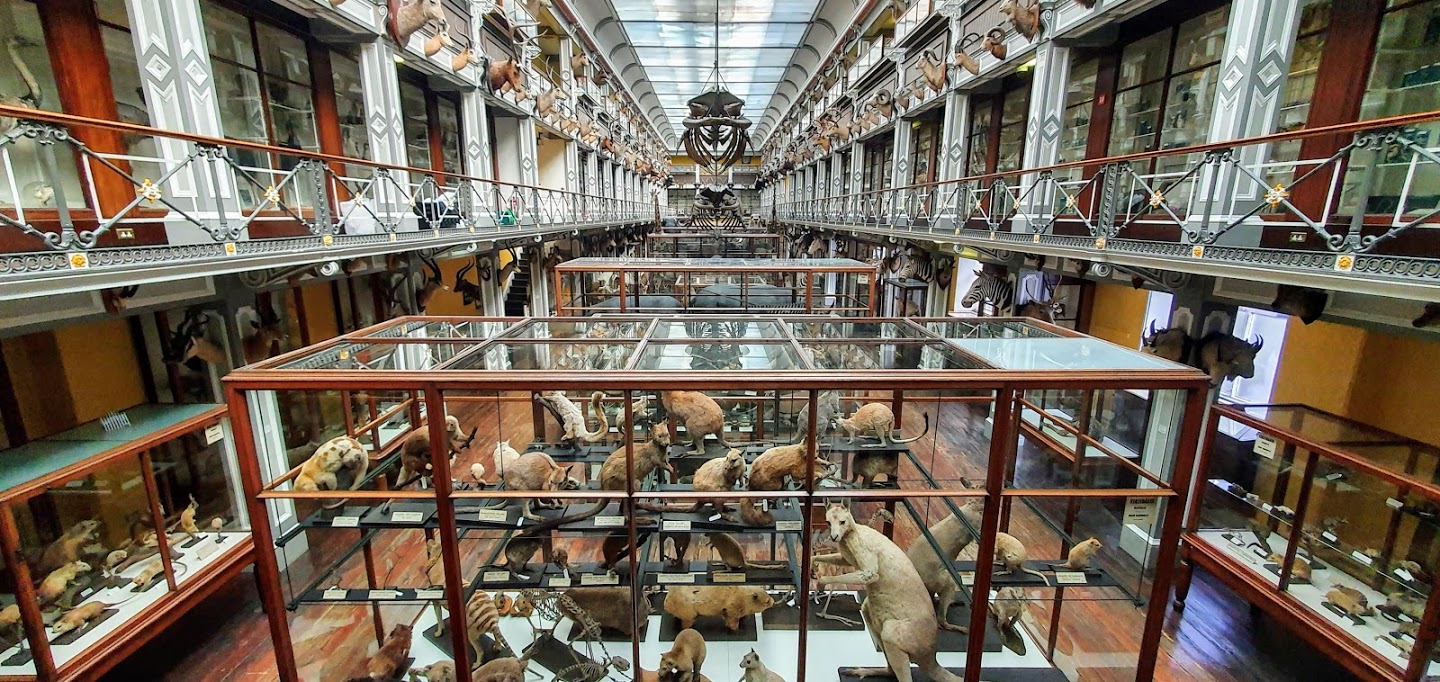
Dublin’s Dead Zoo in June 2020 © Paolo Viscardi, National Museum of Ireland


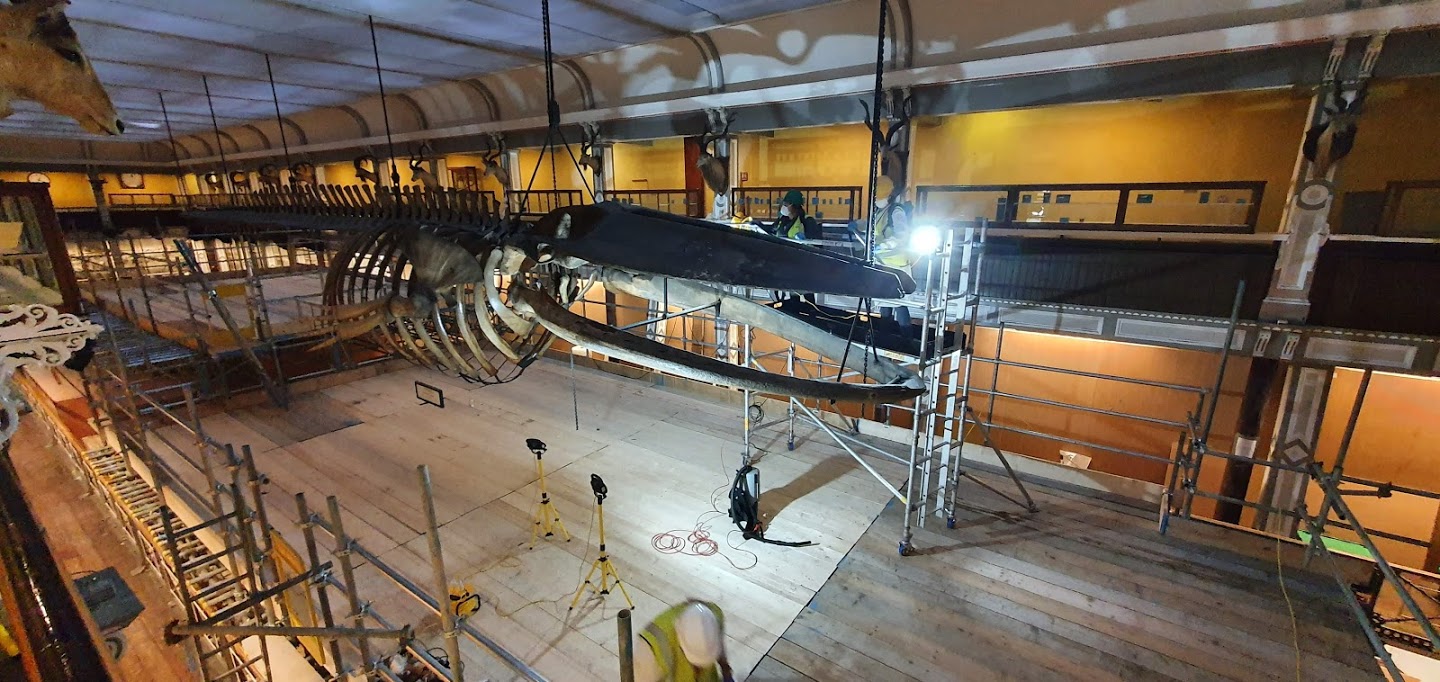
In Dismantling the Dead Zoo, Paolo will talk about decanting the scientifically important natural history collections in Dublin’s delightfully named Dead Zoo during the coronavirus pandemic to allow building renovations to take place.

Safely moving large, historic museum specimens, such as whales, requires an understanding of biomechanics, engineering and even chemistry. It also requires a head for heights, a strong back, and very careful planning – especially in a 164 year old building where floor-loading is theelephant in the room’. And, in this case, there are actual elephants in the room.

Paolo will answer audience questions after the talk.

____

Paolo in Dead Museum Crop 16x9

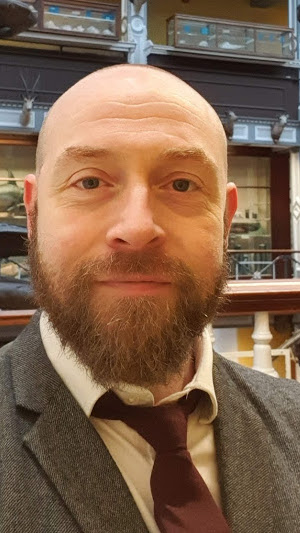
Paolo Viscardi

Paolo Viscardi is a Zoology Curator at the National Museum of Ireland and a trustee of the Natural Sciences Collections Association (NatSCA). His background is in biomechanics and he is particularly interested in bones. He is a keen science communicator and has worked as consultant and script editor on several TV documentaries. Paolo, now based in Dublin, is co-founder of PubSci.


Viewing the talk: Virtual PubSci is hosted live online via Zoom. We also stream events live on our YouTube channel where they remain available for at least 28 days.

Like all our events, this talk is free to attend, but you will need to register with Eventbrite to access Zoom. We have included the option to donate a small amount when you register to help cover web hosting fees etc.

Ticket sales go live at 1pm on Friday 12th February. You’ll receive a confirmation email; the Zoom link is emailed on the day of the talk.

More details on the event registration page.


Important Note: We aim to make our events accessible to all. You don’t have to pay, and you don’t need to install Zoom – Zoom can be run in a browser and events are streamed on the PubSci YouTube channel.

Please check our Future Events page where you can also subscribe to our iCal feed.

Whale skeleton

Preparing to dismantle the fin whale ©Paolo Viscardi, National Museum of Ireland