Category Archives: Archaeology

What Has Engineering Ever Done For Us?

In this blog post: September’s PubSci, The Science Show podcast returns, and what’s the big fuss about eclipses anyway?

First of all, huge thanks to Parry Hashemi from Imperial College for July’s PubSci when she talked about serotonin’s role in depression and the incredible potential of measuring serotonin in brain organoids cultured from a patient’s own stem cells. And than she shared some music created from the electrical signals made by neurons in those organoids!

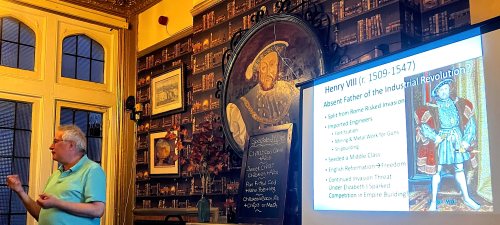
A woman standing in front of a screen with the word SEROTONIN on it. A portrait of Henry 8th hangs on the wall behind
Parry Hashemi (Photo: Andy Powell)

What Has Engineering Ever Done For Us?

Quite a lot, as it happens, and on Wednesday 16th September, PubSci is putting the E back into STEM when scientific tour guide Laurence Scales will take us on a virtual tour through 3,000 years of engineering advances, in Great Engineering Leaps – Archimedes to Brunel and Beyond.
From Ancient Egypt and Greece to the Victorian age of steam and iron bridges, Laurence will highlight the some of the great leaps in imagination and engineering achievement and the people who made such things possible, all in justv 45 minutes! Expect some surprises.

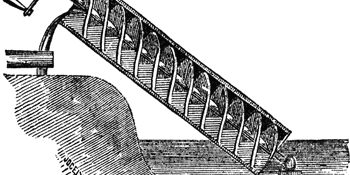
Line drawing of Archimedes, Screw Water Pump
Archimedes famous screw for raising water

Laurence is a long time friend of PubSci and an established London tour guide who has spent years digging up historical nuggets in scientific archives and libraries, so we’re really looking forward to this one over at PubSci Towers.

If you’d like to know more, jump over to our Next Event page, otherwise head straight to the Eventbrite booking page ASAP, where you’ll find full details, ticket info, and a link to reserve your spot.

The venue is PubSci’s regular home, The Old King’s Head near Borough Market, which offers a great range of drinks, has a happy hour before 7pm, and opens the kitchen serving classic pub grub especially for us. Doors open at 6.30 for a 7pm start. Talks generally run for ~45 minutes and are followed by a Q&A session. Full address on the booking page.

As most of you know by now, PubSci talks are pay-what-you-can: You can make a contribution when booking on Eventbrite. We have no other source of funding. There are two ticket options:

Book for one + Support PubSci (max 1 ticket) if you prefer to contribute when booking – this option also reserves you one spot at the event. You may need to scroll down to see this option on Eventbrite.

Book without donating (max 4 tickets) if you prefer to put cash in the pot on the night.

How was the eclipse for you…?

I hear many who watched August’s partial solar eclipse in the UK were rather underwhelmed. I’d put it on a par with a lunar eclipse (which always accompanies a solar eclipse two weeks before or afterwards on what would otherwise be a full moon). Lunar eclipses are great to look at, but they don’t rock your world.

As I mentioned lat time, the tip of Cornwall saw around 96% totality (96% of the sun covered by the new moon) but even the remaining 4% of the sun remains intensely bright and shouldn’t be looked at directly without special eclipse viewing specs. Most of England saw little more than 90% coverage, but even at 96% you don’t get the dramatically darkened sky and animals behaving strangely. To experience an eclipse, over 99.5% coverage is required. I wrote about some of the experiences of seeing an eclipse in my 2024 blog piece after the four minute long Mexican eclipse.

Significantly, the sky is not black during a total eclipse because the atmosphere scatters the shorter wavelengths of light coming from the sun, making the sky a deep blue. This is known as Rayleigh scattering and is the very reason the sky is blue in general but we see red sunsets — all the blue light has been scattered out so only read can reach our eyes eyes.

Nearly every eclipse photo you see will have been underexposed to make the sky look black and turn the sun’s hot corona into a crisp halo around the moon. It’s not really like that. More to the point, the reason people become eclipse chasers isn’t generally scientific study, it’s the experience. It’s simply uncanny — but for that, you need genuine totality.

So how was my eclipse in northen Spain…? In a word: cloudy. A beautiful, bright, clear and sunny day turned into full cloud as the eclipse approached. Sounds like a huge disappointment, right? Actually no. With tick clouds between us and the deep blue of the eclipsed sky, that Rayleigh scattered light mostly couldn’t reach our eyes, so it was much darker than a normal eclipse. Dramatically, even apocalyptically so, I think it’s fair to say, and it happened so unfathomably quickly in the final phase, made all the stranger by not even being able to see the sun that is being eclipsed. I imagine this kind of occluded eclipse would be even more terrifying for ancient cultures than the ones we generally think of, where you can at least see the moon covering the sun.

And talking of actual eclipses, George Holdaway and I covered them in July’s podcast, the latest edition of which was just uploaded to Mixcloud.

The Number 1 Science Podcast

The Science Show is a magazine-style miscellany packed with news, interviews, chat and discussions, plus great music and cultural crossovers. Episode 10 looks into space mirrors, the growing super-El Niño, and the potential of catnip – as a mozzie repellant. We also talk a wander through the beauty, impossibility and cult-inspiring possibilities of maths (with a couple of unusual deaths), and there’s an interview with science poet, and founder of Slow AI, Sam Illingworth. Plus, as ever, some great music choices.

IN addition to his substack, The Slow AI which helps over 21,000 followers consider how they can engage mindfully with AI and LLMs, Sam founded and co-edits a science-meets-art-meets-literature journal (peer reviewed, of course!) call Consilience. In case you’re unfamiliar with the term, consilience means the linking together of facts, theories, and principles from different academic disciplines to form a unified, comprehensive explanation, or the way evidence from independent, unrelated sources can “converge” on strong conclusions.

sam also runs the Science Communication Through Poetry short CPD course at Edinburgh Napier University. An online course run at lunchtime so anybody can join. Check it out here if you’re curious to know more.

July’s episode of the Science Show hit the top spot in Mixcloud’s science chart and zoomed into the Top 20 of the overall Podcast and Talk charts, which was a genuine surprise. I’d be honoured if you’d give Episode 10 a play too.

Also please like and share it at https://tinyurl.com/TheScienceShow-Episode-10

Well that’s it for this post. Hope to see you at the Old King’s Head on 16th September for
Great Engineering Leaps – Archimedes to Brunel and Beyond.

Richard (Science communicator and PubSci organiser/host)

10th July 2026

All that Glisters is not gold… ‘Archaeologists vs Detectorists’ (Line Ravnsgaard | 20th November)

It’s time for the final PubSci talk of the year (we take a break in December) – and we have a great one for you… especially if you enjoyed the TV show ‘Detectorists.

On Wednesday 20th November PubSci is delighted to welcome archaeologist Line Ravnsgaard, who is travelling from Aarhus in Denmark to talk about citizen science in archaeology, and the relationship between detectorists and archaeologists.

BBC Detectorists

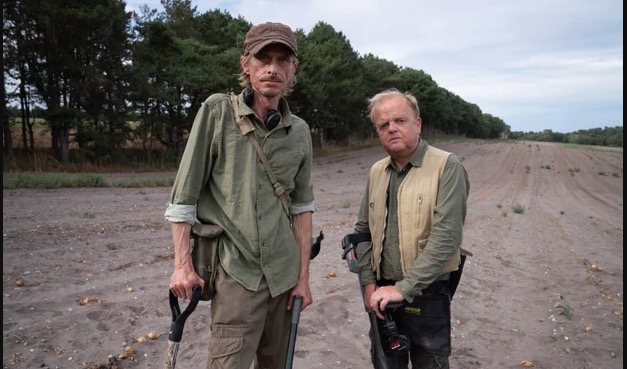
Mackenzie Crook and Toby Jones as Andy and Lance in Detectorists © BBC

BBC TV’s Detectorists’ is now ten years old, and metal detecting is more popular than ever, but is it a danger to our undiscovered past? At November’s PubSci we address this vital question. So, can detectorists and archaeologists work together? Are there other ways to be a citizen archaeologist? And how does modern technology help anyone get involved?

Line Ravnsgaard is a Danish archaeologist specialising in community engagement, and she argues that detecting is valid citizen science. At PubSci, Line will talk about citizen archaeology, discussing how detectorists work with scientists to further our understanding of the past.

She’ll also look at other examples of citizen science in archaeology and propose ways that you, the audience, can become active citizen archaeologists, without even leaving home.

Tickets, as ever, on Eventbrite for no fixed charge. Book now to avoid missing out.

 More information on the talk and speaker details below.

Old silver coins with a king's head on

Part of a Norman coin hoard found by detectorists in 2019. (© Pippa Pearce)

• • •

What if your hobby had the potential to make you rich, add to the body of human knowledge, or even rewrite history?

Ten years ago the gentle comedy-drama Detectorists launched on British TV, quickly becoming a UK favourite as it followed two middle aged men and their shared passion for metal detecting in the Suffolk countryside while discussing the previous evening’s University Challenge.

Citizen science can take many forms but few of us would think to include metal detectorists and mudlarkers in the category. Nonetheless, many stunning archaeological discoveries only come to light thanks to the professionalism and integrity of such hobbyists. For example, a 22-year old archaeology student recently discovered seven stunning silver bracelets from the early Viking age, now on display in Mosegaard Museum.

In the UK metal detecting has grown rapidly in popularity, both as a result of the TV show and Covid lockdown. The National Council for Metal Detecting has around 40,000 members in England and Wales, while a 2023 a UK government report suggested almost 70,000 people had been metal detecting in the past year. In 2022, a staggering 53,000 finds were reported to the Portable Antiquities Scheme run by the British Museum. 94% of these were made by detectorists, with the vast majority being reported voluntarily.

This suggests both a very active population of metal detectorists and a healthy relationship between those hobbyists and the archaeologists. However, just as in Detectorists, the TV series, there will always be Nighthawks: those who care little for archaeology, history or recording of artefacts, regarding their finds only as a source of self-enrichment, and depriving the nation of its rich archaeological heritage.

So how do detectorists and archaeologists work together and how do we ensure vital cultural heritage is not lost, while engaging the interested public in this tangible scientific endeavour? Danish archaeologist Line Ravnsgaard specialises in the cultural meeting point between scientists and the public in ways that encourage both active citizen science and wider public engagement with archaeology.

At November’s PubSci, Line will talk about citizen archaeology in the UK and Denmark, discussing how Detectorists work with scientists to further our understanding of the past. She’ll also look at other examples of citizen science in archaeology and propose ways that the audience can get involved as citizen archaeologists.

Seven Viking Bracelets

1,200 year old Viking Bracelets (© Mosegaard Museum)

___

Join us upstairs at the Old King’s Head, near London Bridge tube. Doors open at 6.30pm for a 7pm start. Talks run for ~45 minutes and are followed by a Q&A session. The Old King’s Head has a happy hour before 7pm, and the kitchen serves excellent pub grub.

Reserve your place now! PubSci is a pay-what-you-can event – please consider making a donation with your reservation to help us cover our costs.

We use Eventbrite to manage numbers. Subscribe to be notified of forthcoming talks

• • •

About the speaker

A smiling woman wearing glasses.

Line Ravnsgaard

Line E. Ravnsgaard is an archaeologist, citizen science activist, and alumnus of Aarhus University in Denmark who takes an active interest in involving local people in the preservation and study of their heritage.

She takes a data-driven and politically aware approach to promoting public engagement practices and ideals within archaeology and the resulting public initiatives.

Line has worked closely with metal detector hobbyists to understand the role of detectorists in Danish archaeology and the potential that population represents for citizen science as a core part of archaeology.

Her practice focuses on finding the cracks in the policy foundation and proposing solutions. This recently took Line to the UK to study the political and social differences that fostered such a wealth of public engagement initiatives here. The resulting comparative study of archaeological public engagement practices in the UK and Denmark became Line’s Masters thesis with the title:

“Citizen science as a cultural heritage innovator – treasure troves and detector archaeology as collaborative research and source for new knowledge”  (translated from Danish).

Line recently discovered the joys of BBC TV’s Detectorists and now considers herself a fan!

Don’t miss the chance to join Line at PubSci this November for a Treasure Trove of citizen science.

BOOK NOW

___

Support PubSci

There is no charge for attending PubSci talks, but we have a traditional whip-round to cover expenses – consider it a “Pay What You Can” event. Very few of us carry cash these days, so you can contribute digitally through our TipJar or make a donation when registering for ticketed events with Eventbrite. Please help PubSci continue putting on events. PubSci has no other source of funding.

We aim to keep PubSci accessible for all, although it is unsuitable for under 18s as we meet in the function room of  a pub. Regrettably, there is no wheelchair access. 

Check out the Future Events page where you can also subscribe to our Google Calendar so PubSci events automatically appear in your own Calendar.  You can find all our links on our LinkTree.

• • •

We used to meet on the first Wednesday of the month but PubSci is now on the third Wednesday. Join us upstairs at the Old King’s Head near London Bridge Underground (Borough High Street east side exit) every month apart from December for a regular dose of Sipping, Supping & Science.

image-third-wednesdays

Address:

The Old King’s Head (upstairs room)
King’s Head Yard
45-49 Borough High Street
London SE1 1NA