Category Archives: Science

All that Glisters is not gold… ‘Archaeologists vs Detectorists’ (Line Ravnsgaard | 20th November)

It’s time for the final PubSci talk of the year (we take a break in December) – and we have a great one for you… especially if you enjoyed the TV show ‘Detectorists.

On Wednesday 20th November PubSci is delighted to welcome archaeologist Line Ravnsgaard, who is travelling from Aarhus in Denmark to talk about citizen science in archaeology, and the relationship between detectorists and archaeologists.

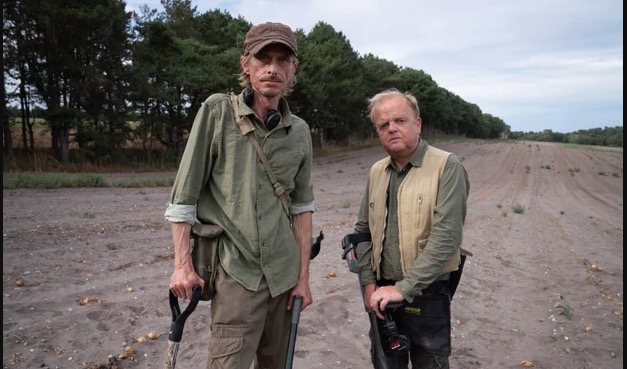
BBC Detectorists

Mackenzie Crook and Toby Jones as Andy and Lance in Detectorists © BBC

BBC TV’s Detectorists’ is now ten years old, and metal detecting is more popular than ever, but is it a danger to our undiscovered past? At November’s PubSci we address this vital question. So, can detectorists and archaeologists work together? Are there other ways to be a citizen archaeologist? And how does modern technology help anyone get involved?

Line Ravnsgaard is a Danish archaeologist specialising in community engagement, and she argues that detecting is valid citizen science. At PubSci, Line will talk about citizen archaeology, discussing how detectorists work with scientists to further our understanding of the past.

She’ll also look at other examples of citizen science in archaeology and propose ways that you, the audience, can become active citizen archaeologists, without even leaving home.

Tickets, as ever, on Eventbrite for no fixed charge. Book now to avoid missing out.

 More information on the talk and speaker details below.

Old silver coins with a king's head on

Part of a Norman coin hoard found by detectorists in 2019. (© Pippa Pearce)

• • •

What if your hobby had the potential to make you rich, add to the body of human knowledge, or even rewrite history?

Ten years ago the gentle comedy-drama Detectorists launched on British TV, quickly becoming a UK favourite as it followed two middle aged men and their shared passion for metal detecting in the Suffolk countryside while discussing the previous evening’s University Challenge.

Citizen science can take many forms but few of us would think to include metal detectorists and mudlarkers in the category. Nonetheless, many stunning archaeological discoveries only come to light thanks to the professionalism and integrity of such hobbyists. For example, a 22-year old archaeology student recently discovered seven stunning silver bracelets from the early Viking age, now on display in Mosegaard Museum.

In the UK metal detecting has grown rapidly in popularity, both as a result of the TV show and Covid lockdown. The National Council for Metal Detecting has around 40,000 members in England and Wales, while a 2023 a UK government report suggested almost 70,000 people had been metal detecting in the past year. In 2022, a staggering 53,000 finds were reported to the Portable Antiquities Scheme run by the British Museum. 94% of these were made by detectorists, with the vast majority being reported voluntarily.

This suggests both a very active population of metal detectorists and a healthy relationship between those hobbyists and the archaeologists. However, just as in Detectorists, the TV series, there will always be Nighthawks: those who care little for archaeology, history or recording of artefacts, regarding their finds only as a source of self-enrichment, and depriving the nation of its rich archaeological heritage.

So how do detectorists and archaeologists work together and how do we ensure vital cultural heritage is not lost, while engaging the interested public in this tangible scientific endeavour? Danish archaeologist Line Ravnsgaard specialises in the cultural meeting point between scientists and the public in ways that encourage both active citizen science and wider public engagement with archaeology.

At November’s PubSci, Line will talk about citizen archaeology in the UK and Denmark, discussing how Detectorists work with scientists to further our understanding of the past. She’ll also look at other examples of citizen science in archaeology and propose ways that the audience can get involved as citizen archaeologists.

Seven Viking Bracelets

1,200 year old Viking Bracelets (© Mosegaard Museum)

___

Join us upstairs at the Old King’s Head, near London Bridge tube. Doors open at 6.30pm for a 7pm start. Talks run for ~45 minutes and are followed by a Q&A session. The Old King’s Head has a happy hour before 7pm, and the kitchen serves excellent pub grub.

Reserve your place now! PubSci is a pay-what-you-can event – please consider making a donation with your reservation to help us cover our costs.

We use Eventbrite to manage numbers. Subscribe to be notified of forthcoming talks

• • •

About the speaker

A smiling woman wearing glasses.

Line Ravnsgaard

Line E. Ravnsgaard is an archaeologist, citizen science activist, and alumnus of Aarhus University in Denmark who takes an active interest in involving local people in the preservation and study of their heritage.

She takes a data-driven and politically aware approach to promoting public engagement practices and ideals within archaeology and the resulting public initiatives.

Line has worked closely with metal detector hobbyists to understand the role of detectorists in Danish archaeology and the potential that population represents for citizen science as a core part of archaeology.

Her practice focuses on finding the cracks in the policy foundation and proposing solutions. This recently took Line to the UK to study the political and social differences that fostered such a wealth of public engagement initiatives here. The resulting comparative study of archaeological public engagement practices in the UK and Denmark became Line’s Masters thesis with the title:

“Citizen science as a cultural heritage innovator – treasure troves and detector archaeology as collaborative research and source for new knowledge”  (translated from Danish).

Line recently discovered the joys of BBC TV’s Detectorists and now considers herself a fan!

Don’t miss the chance to join Line at PubSci this November for a Treasure Trove of citizen science.

BOOK NOW

___

Support PubSci

There is no charge for attending PubSci talks, but we have a traditional whip-round to cover expenses – consider it a “Pay What You Can” event. Very few of us carry cash these days, so you can contribute digitally through our TipJar or make a donation when registering for ticketed events with Eventbrite. Please help PubSci continue putting on events. PubSci has no other source of funding.

We aim to keep PubSci accessible for all, although it is unsuitable for under 18s as we meet in the function room of  a pub. Regrettably, there is no wheelchair access. 

Check out the Future Events page where you can also subscribe to our Google Calendar so PubSci events automatically appear in your own Calendar.  You can find all our links on our LinkTree.

• • •

We used to meet on the first Wednesday of the month but PubSci is now on the third Wednesday. Join us upstairs at the Old King’s Head near London Bridge Underground (Borough High Street east side exit) every month apart from December for a regular dose of Sipping, Supping & Science.

image-third-wednesdays

Address:

The Old King’s Head (upstairs room)
King’s Head Yard
45-49 Borough High Street
London SE1 1NA
Killer Whales to Killer Heels: Demystifying the Menopause (16th October 2024) with Dr. Diane Keeble-Ramsay

Discover why menopause evolved in humans, how come we share this trait with killer whales, and what policy makers can do to support women at work.

Killerwhales_jumping

Orcas of the coast of Alaska ©Robert Pittman, NOAA

October’s PubSci is on the science and sociology of the climacteric : what it’s for, how to have a better one, and how to support your partners, friends and colleagues in experiencing the best possible climacteric!

Before you get giddy with excitement, let’s remind ourselves that climacteric is the medical term for “the change” – better known as the menopause. Many people’s interest fades at this point in the conversation, which is sad when roughly 50% of humans go through menopause, and most of the other 50% are impacted by it one way or another.

In the UK, around 6 million working women are experiencing menopause at any one time. 80% of them feel unsupported, 70% experience stress as a result, and 1 in 10 quit working altogether. Surely we, as a society, can do better!

On Wednesday 16th October 2024 PubSci is delighted to welcome Dr. Diane Keeble-Ramsay from University of Suffolk to help us demystify the menopause.

This is a talk for everybody, including men, because even if you’re not facing menopause in the next few years yourself, nearly everybody experiences it first or second hand, and we all have a role to play in supporting our colleagues, partners, friends and relatives through this most human of life phases.

After exploring what it is and what it’s for, Diane will discuss how society, employers, policy makers, and medical professionals can support and empower the women who experience it and those around them. That includes you, lads. No excuses now!

PubSci is delighted to welcome Diane to be our October speaker in the week when thousands of employers and workplaces mark World Menopause Day.

Menopause_symbol

So, why should this natural change be taboo? Why do 80% of menopausal women feel unsupported at work, and what can we do about it?

Join Diane for Demystifying the Menopause on Wednesday 18th October. Book your ticket on Evenbrite now before the heat is on!

PubSci is a pay-what-you-can event – please consider making a donation with your reservation to help us cover our costs.

___

Join us upstairs at the Old King’s Head, near London Bridge tube. Doors open at 6.30pm for a 7pm start. Talks run for ~45 minutes and are followed by a Q&A session. The Old King’s Head has a happy hour before 7pm, and the kitchen serves excellent pub grub.

We use Eventbrite to manage numbers. Subscribe to be notified of forthcoming talks

• • •

About the speaker

A woman photographed against a yellow background

Dr Diane Keeble-Ramsay

Diane Keeble-Ramsay is an Associate Professor at UoS, University of Suffolk.

Her research, reviewing organisational and working practices, has a special emphasis on the experiences of employees, focused around post menopausal women and later life working.

She has published in books, texts, journal articles, and presented papers on employee experience and emotional wellbeing, the Global Financial Crisis, High Performance Working, Positive Ageing in the Workplace and related issues.

Diane is qualified in psychology and is a Member of the British Psychological Society. She’s a member of the Chartered Institute of Personnel and Development and a Principal Fellow of the Higher Education Academy.

PubSci is delighted to welcome Diane to the latest in our series of monthly talks.

___

Support PubSci

There is no charge for attending PubSci talks, but we have a traditional whip-round to cover expenses – consider it a “Pay What You Can” event. Very few of us carry cash these days, so you can contribute digitally through our TipJar or make a donation when registering for ticketed events with Eventbrite. Please help PubSci continue putting on events. PubSci has no other source of funding.

We aim to keep PubSci accessible for all, although it is unsuitable for under 18s as we meet in the function room of  a pub. Regrettably, there is no wheelchair access. 

Check out the Future Events page where you can also subscribe to our Google Calendar so PubSci events automatically appear in your own Calendar.  You can find all our links on our LinkTree.

• • •

We used to meet on the first Wednesday of the month but PubSci is now on the third Wednesday. Join us upstairs at the Old King’s Head near London Bridge Underground (Borough High Street east side exit) every month apart from December for a regular dose of Sipping, Supping & Science.

image-third-wednesdays

Address:

The Old King’s Head (upstairs room)
King’s Head Yard
45-49 Borough High Street
London SE1 1NA

News, ‘Thank You’s, and Things for You to Do

Greetings from rainy South London.

26/09/2024 [Updated 03/10/2024]

Many thanks to Deborah Hyde for September’s PubSci talk on A Natural History of Vampires. It turns out everything we knew about folkloric Vampires was wrong… but we knew a lot about Vampire movies, which is something. Unsurprisingly, the truth comes down to poverty, disease, and a desperate need to understand and explain a world in which you have little control of your life and even less understanding of science and medicine.

A woman and a man

Deborah and Richard at the King’s Head

I was in Athens just the day before, where I finally saw the Antikythera Mechanism, an incredibly complex astronomical computer from a shipwreck dated to at least 60BCE. Coming face-to-face with this ancient scientific instrument – the likes of which wouldn’t be seen again for 1,300 years – was a surprisingly profound and moving experience for me. If any readers find themselves in Athens, I strongly encourage a visit to the stunning National Archaeological Museum as well as the Acropolis museum.

A rusted brass cog wheel found in an ancient shipwreck

The Antikythera Mechanism: a 2,100 year old mechanical computer.

Talking of mechanical computers, our friends at the Ri (AKA The Royal Institution of Great Britain) have asked me to share a fantastic event with you. On Tuesday 8th October 2024, we celebrate Ada Lovelace Day  in honour of the world’s first computer programmer (and daughter of the “mad, bad, dangerous to know” Lord Byron). Ada Lovelace Day Live is a cabaret-style evening of science and entertainment presenting seven truly inspiring STEM practitioners and communicators, all hosted by the wonderful Dr Sally Le Page. Check the lineup and get your tickets from the Ri website to attend live or watch online.

And if you’re free and in reach of London on Friday 27th September, do come to The Scientist and the Forger presented by Professor Jehane Ragai of Cairo University. You don’t have to dress up for Friday discourses any more, but it’s quite fun if you want to do so. I’ll be stewarding at the event so come and say hello if you’re there.

October’s PubSci

We have a great talk lined up for Wednesday 16th October. In Killer Whales to Killer Heels, we’ll be Demystifying the Menopause with Dr. Diane Keeble Ramsay from University of Suffolk. Get your tickets on Eventbrite now to learn about a topic that’s directly relevant to at least 50% of people alive today.

Full details of PubSci events are published in a new blog post soon after tickets go live on Eventbrite, but you can always see a brief preview in the PubSci calendar and on our regular Next Event page. Read on for more ways to stay informed of forthcoming PubSci events.

• • •

Good news

Summer-Autumn 2024PubSci’s programme is still available to download or print. If you didn’t realise we even had one, follow this link for a preview of events to the end of the year.

Of course, you may prefer PubSci events to appear in your calendar app automatically rather than looking at a flyer pinned to your fridge. Fear not! You can view or subscribe to our Google calendar feed here. Or just click this link to subscribe in one step by downloading the .ics file.

Get with the programme

Since we’ve got an events programme, why not share it with friends and colleagues? It takes me a while to plan and produce every quarter and I’d hate it to go unused! How about printing off a copy and pinning it on your staff noticeboard? Everybody is welcome at PubSci.

• • •

Screenshot

Follow PubSci wherever you are…

Did you know PubSci is on Facebook and Bluesky (and Twitter though I’m trying to move off that). We even have a LinkedIn group, which I’d really love you to join.

And if you want to find all the links in just one place, then you need to head to our Linktree. What’s linktree, you ask? It’s a kind of mini website that’s optimised for mobile viewing and hosts links to all your stuff. Basically it’s like an index to everything you want to put online – and it’s free. Nope, we don’t have a “partner link” or get a kickback for recommendations, I just really like it.

• • •

Support PubSci

There is no charge for attending PubSci talks, but we have a traditional whip-round to cover expenses – consider it a “Pay What You Can” event. Very few of us carry cash these days, so you can contribute digitally through our TipJar [awaiting link update] or make a donation when registering for ticketed events with Eventbrite. Please help PubSci continue putting on events. PubSci has no other source of funding.

We aim to keep PubSci accessible for all, although it is unsuitable for under 18s as we meet in the function room of  a pub. Regrettably, there is no wheelchair access. 

Check out the Future Events page where you can also subscribe to our Google Calendar so PubSci events automatically appear in your own Calendar.  You can find all our links on our LinkTree.

• • •

We used to meet on the first Wednesday of the month but PubSci is now on the third Wednesday. Join us upstairs at the Old King’s Head near London Bridge Underground (Borough High Street east side exit) every month apart from December for a regular dose of Sipping, Supping & Science.

Address:

The Old King’s Head (upstairs room)
King’s Head Yard
45-49 Borough High Street
London SE1 1NA

A Natural History of Vampires | 18th September with Deborah Hyde

On Wednesday 18th September PubSci is excited to welcome writer, folklorist, and celebrated skeptic Deborah Hyde to talk about A Natural History of Vampires.

Actor Peter Cushing as Dracula

Peter Cushing as Hammer House of Horror’s Count Dracula

We know Halloween is next month, but PubSci is beating the rush by getting our spook on early this year with a September Special looking at the natural history of vampires.

Long before charming-but-terrifying vampires fuelled the plot of numerous Hammer Horror films, even before FW Murnau made the groundbreaking Nosferatu in 1922, itself inspired by Bram Stoker’s Dracula, the idea of the vampire has fascinated Western Europe since the early 1700s.

But this tradition was a real part of Eastern European lives for centuries before that. On Wednesday 18th September PubSci welcomes folklorist, writer and skeptic, Deborah Hyde, to take us through the natural history of vampires.

The vampire archetype has been taken up by art of all kinds, as both fascinated and scandalised Victorian society, but what is the reality behind the tales of the predatory, living dead, and how did belief in vampires make its way to nineteenth century New England?

Could there be some truth behind vampire myths…? Science, even? Come to PubSci to find out.

Book now – only the brave will learn the answers!

PubSci is delighted to welcome Deborah to our spooky September special.

More information below

• • •

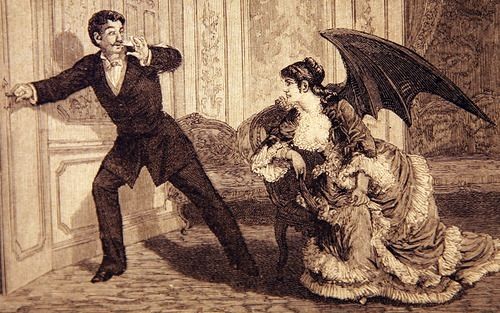
Max Ernst, 1930's - A man fleeing a vampire woman who has wings. Both are very well dressed

A gentleman fleeing a vampiric winged seductress.

___

Join us upstairs at the Old King’s Head, near London Bridge tube. Doors open at 6.30pm for a 7pm start. Talks run for ~45 minutes and are followed by a Q&A session. The Old King’s Head has a happy hour before 7pm, and the kitchen serves excellent pub grub.

Reserve your place on Eventbrite now! PubSci is a pay-what-you-can event – please consider making a donation with your reservation to help us cover our costs.

We use Eventbrite to manage numbers. Subscribe to be notified of forthcoming talks

• • •

About the speaker

Picture of a woman

CSICon 2018: ‘Interview with the Vampire Expert’

Deborah Hyde is a writer,  folklorist and cultural anthropologist. She was editor of the ‘Skeptic Magazine’  for ten years and is an elected fellow of the Committee for Skeptical Enquiry.

She writes and lectures extensively about superstition, cryptozoology, religion and belief in the paranormal, with special regard to the folklore, psychology and sociology behind these phenomena.

Deborah has appeared on TV and at conferences as an expert on Vampires and the sociology of supernatural beliefs, and is one of the resident experts on the  BBC podcast and live-tour ‘Uncanny’ where she offers a rational, historical perspective on peculiar events.

PubSci is delighted to welcome Deborah to talk about A Natural History of Vampires.

The shadow of Count Orlok from the 1922 film Nosferatu

Count Orlok in F.W. Murnau’s 1922 “Nosferatu”

___

Please Support PubSci

There is no charge for attending PubSci talks, but we have a traditional whip-round to cover expenses – consider it a “Pay What You Can” event. Very few of us carry cash these days, so you can contribute digitally through our TipJar or make a donation when registering for ticketed events with Eventbrite. Please help PubSci continue putting on events. PubSci has no other source of funding.

We aim to keep PubSci accessible for all, although it is unsuitable for under 18s as we meet in the function room of  a pub. Regrettably, there is no wheelchair access. 

Check out the Future Events page where you can also subscribe to our Google Calendar so PubSci events automatically appear in your own Calendar.  You can find all our links on our LinkTree.

• • •

We used to meet on the first Wednesday of the month but PubSci is now on the third Wednesday. Join us upstairs at the Old King’s Head near London Bridge Underground (Borough High Street east side exit) every month apart from December for a regular dose of Sipping, Supping & Science.

image-third-wednesdays

Address:

The Old King’s Head (upstairs room)
King’s Head Yard
45-49 Borough High Street
London SE1 1NA

September’s Event, More News and ‘Thank You’s

The shadow of Count Orlok from the 1922 film Nosferatu

Count Orlok in F.W. Murnau’s 1922 “Nosferatu”

Greetings from windy South London.

First of all, many thanks to Steph Holt for August’s PubSci talk on Gilbert White. A special shout-out to the Goth WI posse who took advantage of their month off to come to the Old King’s Head. Sorry you can’t make the next one because it’s right up your street.

You see, we’re beating the October rush by getting our spook on early this year with a September Halloween Special looking at the natural history of vampires. If you think that doesn’t sound like it would contain much science, you’ve obviously never met September’s speaker, Deborah Hyde.

Full details of the event will be published in this blog once it’s been created on Eventbrite, but you can see a preview on our regular Next Event page (or click the image above). Read on for more ways to stay informed of forthcoming PubSci events. In the meantime, put 18th September in your diary.

• • •

Good news!

Summer-Autumn 2024PubSci’s Summer and Autumn programme is now available to download or print. If you didn’t realise we even had a programme, follow that link for a preview of scheduled events to the end of the year.

Of course, you may just want PubSci events to appear in your calendar app automatically, rather than looking at a flyer pinned to your fridge. Fear not! You can view or subscribe to our Google calendar feed here. Or just click this link to subscribe in one step by downloading the .ics file.

• • •

Get with the programme!

Since we’ve got an events programme, why not share it with friends and colleagues? It takes me a while to plan and produce every quarter and I’d hate it to go unused! How about printing off a copy and pinning it on your staff noticeboard? Everybody is welcome at PubSci.

• • •

Screenshot

Follow PubSci wherever you are…

Did you know PubSci is on Facebook and Bluesky (and Twitter though I’m trying to move off that). We even have a LinkedIn group, which I’d really love you to join.

And if you want to find all the links in just one place, then you need to head to our Linktree. What’s linktree, you ask? It’s a kind of mini website that’s optimised for mobile viewing and hosts links to all your stuff. Basically it’s like an index to everything you want to put online – and it’s free. Nope, we don’t have a “partner link” or get a kickback for recommendations, I just really like it.

• • •

And finally

Roughly half of all humans experience menopause but it’s rarely talked about in public, and both policy and education are shamefully inadequate despite the efforts of a few notable voices. Research by the Fawcett Society found 80% of menopausal women feel unsupported in the workplace. Our friends at the Vagina Museum want to help set this right with an exhibition called Menopause: What’s Changed?

It’s due to open on 18th October 2024 – World Menopause Day – but over a dozen arts and heritage funders have declined to support it, so they’re running a fundraiser instead. If you want to support it, or know an organisation who would, just follow this GoFundMe link.

…aaand October’s PubSci falls just two days earlier, so we’re hosting a special talk for everybody called Menopause Demystified. Yup, that includes the blokes too.

See you in the pub!

• • •

Support PubSci

There is no charge for attending PubSci talks, but we have a traditional whip-round to cover expenses – consider it a “Pay What You Can” event. Very few of us carry cash these days, so you can contribute digitally through our TipJar [awaiting link update] or make a donation when registering for ticketed events with Eventbrite. Please help PubSci continue putting on events. PubSci has no other source of funding.

We aim to keep PubSci accessible for all, although it is unsuitable for under 18s as we meet in the function room of  a pub. Regrettably, there is no wheelchair access. 

Check out the Future Events page where you can also subscribe to our Google Calendar so PubSci events automatically appear in your own Calendar.  You can find all our links on our LinkTree.

• • •

We used to meet on the first Wednesday of the month but PubSci is now on the third Wednesday. Join us upstairs at the Old King’s Head near London Bridge Underground (Borough High Street east side exit) every month apart from December for a regular dose of Sipping, Supping & Science.

image-third-wednesdays

Address:

The Old King’s Head (upstairs room)
King’s Head Yard
45-49 Borough High Street
London SE1 1NA

August PubSci: “Gilbert White, The Once and Future Ecologist” with Steph Holt, 21/8/24

On Wednesday 21st August PubSci is delighted to welcome Steph Holt from London’s Natural History museum to talk about a pioneering 18th century naturalist now regarded as the first ecologist.

a man with animals

Illustration courtesy of Gilbert White House and Gardens

Gilbert White was a country parson with a fascination for nature. In 1789 he published The Natural History and Antiquities of Selborne, a groundbreaking work whose importance is difficult to overstate.

Charles Darwin credited it with sparking his own fascination for nature, and White’s work paved the way for Darwin to develop his Theory of Evolution by Natural Selection.

White’s understanding that humans, nature and the environment are all inextricably linked have led to him being celebrated as the first ecologist.

White was frequently referenced by veteran ecologist Richard Maybe, author of over 30 books (including Food For Free which kicked off the 1970s “self sufficiency” movement and inspired The Good Life TV sitcom).  Gilbert White also inspired the author of The Once And Future King – known by many through the Disney classic, The Sword In the Stone – who has Merlin the Magician quote Gilbert White on the topic of birds. Curiously the novelist’s name was T.H. White.

Our talk title, “The Once and Future Ecologist“, not only honours Gilbert White’s novelist namesake but reminds us that he was the first to truly understand how important the link is between living things, including humans, and our physical environment – a message which becomes increasingly urgent as we look to the future of this planet.

• • •

PubSci is delighted to welcome Steph Holt from London’s Natural History Museum to talk about this fascinating and truly inspirational figure. Book now on Eventbrite.

More information below

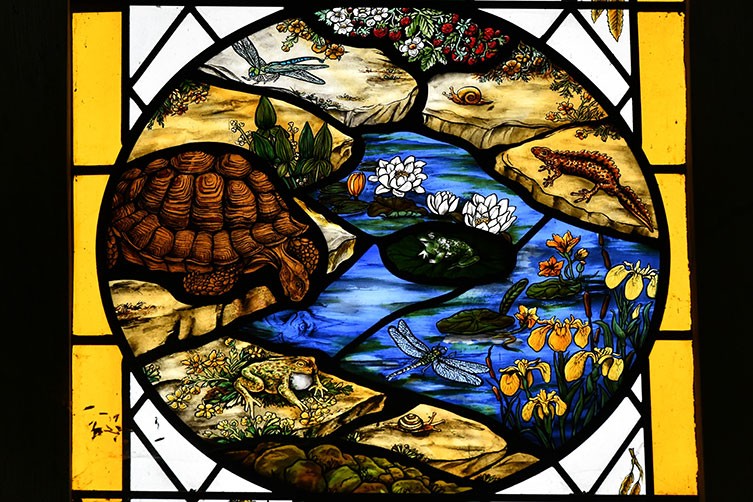
A stained glass window depicting a tortoise, frog and dragonfly

Stained glass commemorating White, St. Mary’s church, Selborne

___

Join us upstairs at the Old King’s Head, near London Bridge tube. Doors open at 6.30pm for a 7pm start. Talks run for ~45 minutes and are followed by a Q&A session. The Old King’s Head has a happy hour before 7pm, and the kitchen serves excellent pub grub.

Reserve your place now!  PubSci is a pay-what-you-can event – please consider making a donation with your reservation to help us cover our costs.

We use Eventbrite to manage event numbers. Subscribe to be notified of our forthcoming talks.

• • •

About the speaker

Steph HoltNatural Historian and ecologist Steph Holt has been fascinated by the wildlife of the British Isles for as long as she can remember.

She is passionate about the intersection of ecology and history, and is an accomplished communicator of her field. After working in ecology in local government, consultancy, NGOs, and academia, Steph Joined the Centre for UK Nature at London’s Natural History Museum in 2014. As UK Biodiversity Training Manager at NHM, she now helps ecologists develop careers with organisations such as Wildlife Trusts, Natural England and RSPB.

Steph is a Fellow and trustee of the British Naturalists Association, Associate Editor of Archives of Natural History (the journal of the Society for the History of Natural History), Fellow of the Linnean Society of London, and member of the Chartered Institute of Ecology and Environmental Management.

She has an MSt in Historical Studies, and is embarking on a DPhil at University of Oxford focusing on natural history in the late 18th Century, and its influence on networks of naturalists in modern amateur natural history.

Steph was recently awarded the David Bellamy Award for ‘Exceptional Field Naturalist’ by the British Naturalists Association.

PubSci is delighted to welcome Steph to the latest in our series of monthly talks.

___

Support PubSci

There is no charge for attending PubSci talks, but we have a traditional whip-round to cover expenses – consider it a “Pay What You Can” event. Very few of us carry cash these days, so you can contribute digitally through our TipJar or make a donation when registering for ticketed events with Eventbrite. Please help PubSci continue putting on events. PubSci has no other source of funding.

We aim to keep PubSci accessible for all, although it is unsuitable for under 18s as we meet in the function room of  a pub. Regrettably, there is no wheelchair access. 

Check out the Future Events page where you can also subscribe to our Google Calendar so PubSci events automatically appear in your own Calendar.  You can find all our links on our LinkTree.

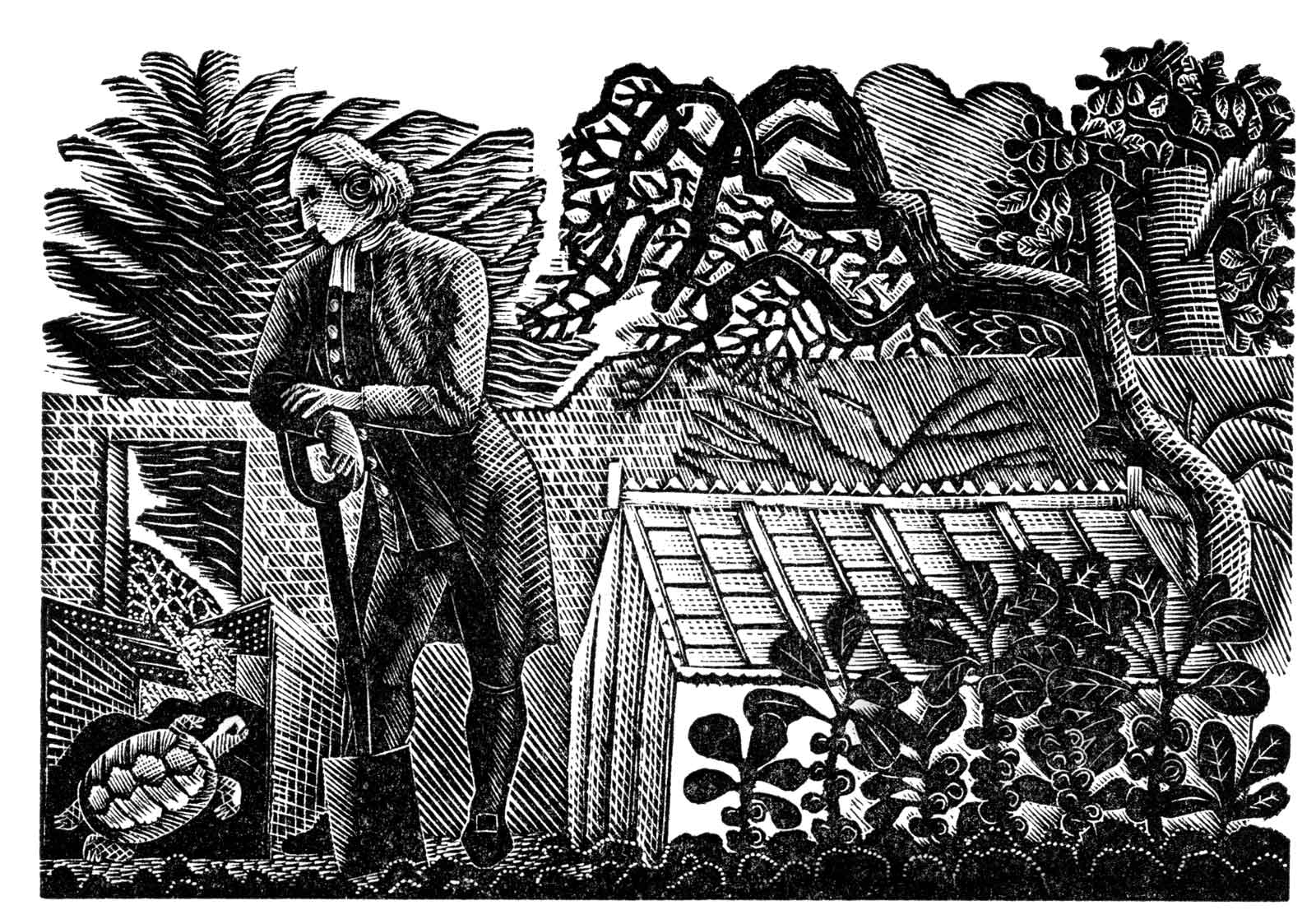
A print by Eric Ravillious of a man with a spade and a tortoise

Wood engraving of Gilbert White by Eric Ravillious

• • •

We used to meet on the first Wednesday of the month but PubSci is now on the third Wednesday. Join us upstairs at the Old King’s Head near London Bridge Underground (Borough High Street east side exit) every month apart from December for a regular dose of Sipping, Supping & Science.

image-third-wednesdays

Address:

The Old King’s Head (upstairs room)
King’s Head Yard
45-49 Borough High Street
London SE1 1NA

Sold Out : “Jinx!” – The Science of Freaky Coincidences with Prof. Chris French | 17th July

Why do we say “Jinx!” when two people say the same thing at the same time? Are coincidences as unlikely as we think? And why do some coincidences feel so spooky

On Wednesday 17th July PubSci is delighted to welcome back Chris French of the Anomalistic Psychology Unit at Goldsmiths, University of London, for a talk that is now fully booked out.

meaning-of-coincidences-dice-on

We’ve all had that uncanny feeling when things happen that seem too unlikely, too meaningful, too important to be attributed simply to random chance. Numerous well documented coincidences seem so unlikely that something more than blind probability appears to be at work. Paranormal explanations are often invoked for apparently precognitive dreams. So what’s really going on?

Conspiracy theorists and charlatans can play on our ignorance of causality, probability, and even what randomness really looks like, in order to make us think certain events have meaningful, perhaps sinister, connections. Some people make a career out of it. Even innocent coincidences can feel special to us. But why is this? And is it reasonable for sceptics to explain away such things as nothing more than “mere coincidences”?

Chris French is an expert in all things weird and freaky – how we experience them, why we believe in them and what’s really going on when we experience the uncanny. He’s already delighted PubSci with two talks in previous years, and this month he turns his attention to coincidences. At July’s PubSci, the author of The Science of Weird Shit explores the science and psychology of those freaky moments when things seem too unlikely to be “Just a coincidence”.

• • •

Book CoverI hope you reserved your place early, because the event is fully booked and there’s a long waiting list. For those lucky enough to be attending, Chris will have copies of his new book for sale: The Science of Weird Shit – Why Our Minds Conjure the Paranormal.

To make sure you don’t miss out on future events, subscribe to our Google Calendar to be the first to know when new talks are scheduled and follow PubSci on Eventbrite to be notified when tickets are available. You can also sign up to our own mailing list on any page on this site.

Learn more about Chris in “About the Speaker” below.

___

Join us upstairs at the Old King’s Head, near London Bridge tube. Doors open at 6.30pm for a 7pm start. Talks run for ~45 minutes and are followed by a Q&A session. The Old King’s Head has a happy hour before 7pm, and the kitchen serves excellent pub grub.

PubSci is a pay-what-you-can event – please consider making a donation with your reservation or a cash contribution on the night to help us cover our running costs.

We use Eventbrite to manage numbers every month. Subscribe now to be notified of forthcoming talks.

• • •

About the speaker

Chris French 2024Chris French is Emeritus Professor and Head of the Anomalistic Psychology Research Unit in the Psychology Department at Goldsmiths,University of London. He is a Fellow of the British Psychological Society and of the Committee for Skeptical Inquiry and a Patron of UK Humanists.

He has published well over 150 articles and chapters covering a wide range of topics. His main current area of research is the psychology of paranormal beliefs and anomalous experiences.

Chris frequently appears on radio and television casting a sceptical eye over paranormal claims as well as writing for the Guardian and the Skeptic magazine.

His academic reference book Anomalistic Psychology: Exploring Paranormal Belief and Experience was published with Anna Stone, and his latest book The Science of Weird Shit: Why Our Minds Conjure the Paranormal was published by MIT press earlier this year.

PubSci is delighted to welcome Chris to the latest in our series of monthly talks.

Coincidence or Aliens?

___

Support PubSci

There is no charge for attending PubSci talks, but we have a traditional whip-round to cover expenses – consider it a “Pay What You Can” event. Very few of us carry cash these days, so you can contribute digitally through our TipJar or make a donation when registering for ticketed events with Eventbrite. Please help PubSci continue putting on events. PubSci has no other source of funding.

We aim to keep PubSci accessible for all, although it is unsuitable for under 18s as we meet in the function room of  a pub. Regrettably, there is no wheelchair access. 

Check out the Future Events page where you can also subscribe to our Google Calendar so PubSci events automatically appear in your own Calendar.  You can find all our links on our LinkTree.

• • •

We used to meet on the first Wednesday of the month but PubSci is now on the third Wednesday. Join us upstairs at the Old King’s Head near London Bridge Underground (Borough High Street east side exit) every month apart from December for a regular dose of Sipping, Supping & Science.

image-third-wednesdays

Address:

The Old King’s Head (upstairs room)
King’s Head Yard
45-49 Borough High Street
London SE1 1NA

Next Event, News and ‘Thank You’s

meaning-of-coincidences-dice-on

Greetings from steamy South London.

July’s event is up on Eventbrite, and whilst I will be writing a blog post about it soon, you can read the most important details and find the booking link at our regular Next Event page (or click the image above). Meanwhile, here at PubSci towers, we’re breathing a sigh of relief as the temperature slowly drops, because the heat seems to have convinced WordPress that Orange is the new Black. 

In case you’re wondering, we’ll be welcoming back Professor Chris French to talk about the science and psychology of freaky coincidences. He’ll also be offering copies of his excellent new book for sale, rather wonderfully titled, The Science of Weird Shit: Why Our Minds Conjure the Paranormal. As always it’s the third Wednesday of the month, in this case Weds 17th July.

• • •

Huge thanks, of course, to June’s speaker, Eva Amsen. Remember, next time you hear about DNA fingerprinting or genetic testing, that it’s only possible thanks to some soupy bugs living in Yellowstone’s hot springs.

• • •

Roughly half of all humans experience menopause but it’s rarely talked about in public, and both policy and education are shamefully inadequate despite the efforts of a few notable voices. In fact research by the Fawcett Society found 80% of menopausal women feel unsupported in the workplace. Our friends at the Vagina Museum (the first museum of its kind in the world, now permanently housed in Bethnal Green), want to help set this right with an exhibition called Menopause: What’s Changed?

It’s due to open on 18th October 2024 – World Menopause Day – but over a dozen arts and heritage funders have declined to support it, so they’re running a fundraiser instead. If you want to support it, or know an organisation who would, just follow this GoFundMe link.

___

Don’t forget to register for July’s PubSci talk. As always. it’s a pay-what-you-can event – please consider making a donation with your reservation to help us cover our costs.

• • •

Support PubSci

There is no charge for attending PubSci talks, but we have a traditional whip-round to cover expenses – consider it a “Pay What You Can” event. Very few of us carry cash these days, so you can contribute digitally through our TipJar or make a donation when registering for ticketed events with Eventbrite. Please help PubSci continue putting on events. PubSci has no other source of funding.

We aim to keep PubSci accessible for all, although it is unsuitable for under 18s as we meet in the function room of  a pub. Regrettably, there is no wheelchair access. 

Check out the Future Events page where you can also subscribe to our Google Calendar so PubSci events automatically appear in your own Calendar.  You can find all our links on our LinkTree.

• • •

We used to meet on the first Wednesday of the month but PubSci is now on the third Wednesday. Join us upstairs at the Old King’s Head near London Bridge Underground (Borough High Street east side exit) every month apart from December for a regular dose of Sipping, Supping & Science.

image-third-wednesdays

Address:

The Old King’s Head (upstairs room)
King’s Head Yard
45-49 Borough High Street
London SE1 1NA
‘Science in Unexpected Places’ | 19th June, Eva Amsen

What do rubber ducks at sea have in common with edible art and a Japanese TV show?

On Wednesday 19th June PubSci is delighted to welcome celebrated science writer and blogger, Dr. Eva Amsen, to share favourite episodes from her entertaining new book, “Hey, There’s Science in This“.

Several yellow plastic ducks

Ducks Ahoy! (Image: Gaetan Lee – Creative Commons)

Real science can be found in the most unlikely places, and Eva Amsen has collected some of the best and funniest examples in her book, Hey, There’s Science in This.

For tonight’s talk, Eva has selected her favourite amusing stories from the book to delight, entertain and enlighten us as she explores the connections between hot springs and genetics, the psychology behind your study playlist, hiking trail geology and much more.

Hey There’s Science in This is an approachable and fun read that has garnered five star reviews since its publication on 28th March. Copies will be available to purchase at the event.

Come to June’s PubSci and discover the fun science behind the most unexpected things.

Places for this popular talk are very limited. Book yours on Eventbrite now for an entertaining evening that’s bound to satisfy everyone’s inner nerd. Copies of Eva’s books will be on sale after the talk.

A book cover

“Hey, There’s Science in This” was published in March to five star reviews.

          Book Cover for Biology - 100 ideas in 100 words

Join us upstairs at the Old King’s Head, near London Bridge tube on Wednesday 19th June.

Doors open at 6.30pm for a 7pm start. Talks run for ~45 minutes and are followed by a Q&A session. The Old King’s Head has a happy hour before 7pm, and the kitchen serves excellent pub grub.

Reserve your place now!  PubSci is a pay-what-you-can event – please consider making a donation with your reservation to help us cover our costs.

We use Eventbrite to manage event numbers. Subscribe to be notified of forthcoming talks

• • •

About the speaker

EVA-AMSEN-Donna-Ford2023-9 crop

Photo Credit: Donna Ford

Eva Amsen is a science writer based in London specialising in the interface between science and culture. She has written about science and scientists for numerous publications, including Nature, the British Medical Journal, Undark, Hakai, and the Forbes website, where she has a regular column.

Eva began her writing career with a science blog during her Biochemistry PhD at the University of Toronto. Some of those blog posts were collected into her first book, Hey, There’s Science in This, published in March 2024. She still blogs regularly via her Substack called Mixture.

Eva’s second book, Biology: 100 Ideas in 100 Words, allows readers to understand the most important concepts in biology through concise, easy-to-read summaries. Part of a cutting-edge series in partnership with The Science Museum, it was published by DK in May 2024.

PubSci is delighted to welcome Eva to the latest in our series of monthly talks.

___

Support PubSci

There is no charge for attending PubSci talks, but we have a traditional whip-round to cover expenses – consider it a “Pay What You Can” event. Very few of us carry cash these days, so you can contribute digitally through our TipJar or make a donation when registering for ticketed events with Eventbrite. Please help PubSci continue putting on events. PubSci has no other source of funding.

We aim to keep PubSci accessible for all, although it is unsuitable for under 18s as we meet in the function room of  a pub. Regrettably, there is no wheelchair access. 

Check out the Future Events page where you can also subscribe to our Google Calendar so PubSci events automatically appear in your own Calendar.  You can find all our links on our LinkTree.

• • •

We used to meet on the first Wednesday of the month but PubSci is now on the third Wednesday. Join us upstairs at the Old King’s Head near London Bridge Underground (Borough High Street east side exit) every month apart from December for a regular dose of Sipping, Supping & Science.

image-third-wednesdays

Address:

The Old King’s Head (upstairs room)
King’s Head Yard
45-49 Borough High Street
London SE1 1NA

How Insects Are Changing Our World – Erica McAlister & Adrian Washbourne | 15th May 2024

On Wednesday 15th May 2024, PubSci is delighted to welcome leading entomologist, Dr. Erica McAlister, and award-winning radio producer, Adrian Washbourne, for an evening of six-legged wonder.

The enormous compound eyes of a robber fly

The eyes of the robber fly inspired new solar cell designs (Credit: Thomas Shahan/Creative Commons)

Apologies for another tardy blog post. I’m just back from Mexico after viewing April’s total solar eclipse. You can read my personal blog post about what it’s like to experience an eclipse on LinkedIn, where you can also join the Science in the Pub (PubSci) LinkedIn group.

So, to business!

PubSci is next Wednesday 15th May, and it’s one you won’t want to miss.

Dr. Erica McAlister of London’s Natural History Museum has spoken at PubSci more than any other scientist, with good reason. Erica is on a mission to change our minds about flies. As keeper of flies and fleas at the Natural History Museum, her infectious enthusiasm for flying and sucking things is guaranteed to win you over.

Award-winning Radio producer Adrian Washbourne has made numerous programmes for BBC Science and recently produced two acclaimed series on insects for BBC Radio 4, fronted by Erica. Now they have published a book inspired by the series: “Metamorphosis, How Insects Are Changing Our World”.

Line drawing of a flea

Flea, from Robert Hooke’s ‘Micrographia’

PubSci is delighted to welcome Erica and Adrian who will bring us some of the highlights of their book – described as an “accessible, beautifully illustrated celebration of insects and their extraordinary contributions to humankind – to reveal the wonder of insects, historical figures who made breakthroughs in understanding them, and the vital role they play in ensuring life, as we know it, continues.

Book now on Eventbrite if you’d like to know how insects inspire human technology, if flies can help us lower our carbon footprint, and why the best mixtape to take into space isn’t what you think!

Metamorphosis will be on sale at PubSci, with the opportunity to get your copy signed by the authors.

• • •

PubSci takes place upstairs at the Old King’s Head near London Bridge tube. Doors open 6.30pm for a 7pm start. Talks run for ~45 minutes and are followed by a Q&A session. The Old King’s Head has a happy hour before 7pm and the kitchen serves excellent pub grub. 

We use Eventbrite to manage numbers – reserve your place now! PubSci is free to attend but please consider making a donation with your reservation to help us cover our costs.

• • •

About the speakers

A woman holding a fly

Courtesy of NHM

Dr. Erica McAlister is Principle Curator of Diptera (flies) and Siphonaptera (fleas) in the Department of Entomology at London’s Natural History Museum.

She is a regular guest on TV and Radio, including The Natural History Programme, The Living World, Who’s the Pest?, Natural History Heroes, Infinite Money Cage, No such thing as a Fish, The Museum of Curiosity, The Museum of Life, Springwatch and The Life Scientific. In 2019 she was the winner of the Zoological Society of London Award for Communicating Zoology.

Erica is the author of award-winning natural history books, The Secret Life of Flies (2017), The Inside Out of Flies (2020), and A Bug’s World (2022) –  a book for children illustrated by Stephanie Fizer Coleman.

Book cover for Metamorphosis

Metamorphosis will be available to purchase at the event

Adrian Washbourne is an award-winning producer who spent 35 years working for BBC Radio and the World Service. He has produced landmark documentary series on botany, art and science, and the history of medicine.

Adrian has won several Association of British Science Writers awards and was awarded the 2019 Medical Journalists’ Association Feature of the Year.

Metamorphosis – How Insects are Changing Our World is the result of Erica and Adrian’s work together on two celebrated series for BBC Radio 4, and was published in April 2024.

PubSci is delighted to welcome Erica and Adrian as our speakers for May. Subscribe to our calendar to be the first to know what’s happening each month.

___

Support PubSci

There is no charge for attending PubSci talks, but we have a traditional whip-round to cover expenses – consider it a “Pay What You Can” event. Not many of us carry cash these days, so you can contribute digitally through our TipJar or make a donation when registering for ticketed events with Eventbrite. Please help PubSci continue putting on events. We have no other source of funding.

We aim to keep PubSci accessible for all, although it is unsuitable for under 18s as we meet in the function room of  a pub. Regrettably, there is no wheelchair access. 

Check out the Future Events page where you can also subscribe to our Google Calendar so PubSci events automatically appear in your own Calendar.  You can find all our links on our LinkTree.

• • •

We used to meet on the first Wednesday of the month but PubSci is now on the third Wednesday. Join us upstairs at the Old King’s Head near London Bridge Underground (Borough High Street east side exit) every month apart from December for a regular dose of Sipping, Supping & Science.

image-third-wednesdays

Address:

The Old King’s Head (upstairs room)
King’s Head Yard
45-49 Borough High Street
London SE1 1NA