Category Archives: talks

19th July | Chris French: “Putting Paranormal Claims to the Test”

[Eventbrite registration required. Free to attend but donations to running costs welcome]

On Wednesday 19th July PubSci is delighted to welcome back Professor Chris French, renowned head of the Anomalistic Psychology Research Unit at Goldsmiths, University of London.
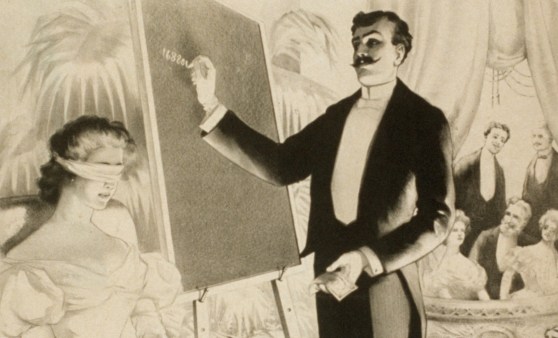
A Victorian stage magician demonstrating mind reading for money

1900s theatre poster advertising a mind reading act

Prof. French’s unit explores non-paranormal explanations for experiences that people have reported as paranormal. His team has also devoted considerable time and effort over the years to directly testing paranormal claims

In this talk, Chris presents an overview of these investigations, including claims of psychic ability and mediumship, “human magnetism”, dowsing, and precognitive dreams. Join us for a fun and fascinating evening exploring the claims people make, the beliefs they hold, and what happens when they are subject to scientific enquiry.

Spoiler alert: He is still a sceptic.

Two men with metal forks and spoons apparently stuck to their bodies

‘Human magnets’ in Vietnam compete to stick the most items to their bodies. Image © Ryan Hinkson

Join us upstairs at the Old King’s Head near London Bridge station. Doors open at 6.30pm for a 7pm start. The Old King’s Head has a happy hour before 7pm, and the kitchen serves excellent pub grub. We anticipate a large turnout for this event and are using Eventbrite to manage numbers. Please reserve your spot ASAP to avoid disappointment.

• • •
chris_french_131168_bill_robinson_small

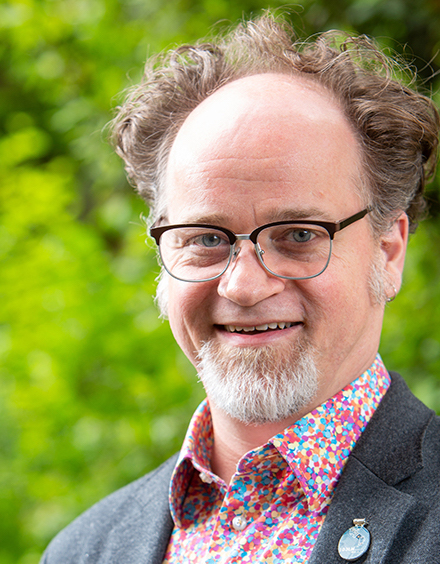
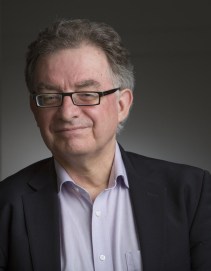
Professor Chris French. Image © Bill Robinson

Chris French is Emeritus Professor and Head of the Anomalistic Psychology Research Unit in the Psychology Department at Goldsmiths, University of London. He is a Fellow of the British Psychological Society and of the Committee for Skeptical Inquiry and a Patron of UK Humanists.

Chris has published well over 150 articles and chapters covering a wide range of topics. His main current area of research is the psychology of paranormal beliefs and anomalous experiences. He frequently appears on radio and television casting a sceptical eye over paranormal claims.

His most recent book is Anomalistic Psychology: Exploring Paranormal Belief and Experience and his next book, published by MIT Press, will be The Science of Weird Shit: Why Our Minds Conjure the Paranormal, is out next year.

• • •

Hands around a crystal ball

Join us for a mind-bending evening as Chris French describes testing claims of the paranormal. Will you be you convinced by the science?

• • •

Please support PubSci.

There is no charge for attending PubSci talks, but we have a whip-round to cover expenses. Because so few of us carry cash these days, you can contribute digitally too. Please help PubSci continue to put on events.

We aim to keep PubSci accessible for all, although it is unsuitable for under 18s as we meet in the function room of a pub. Regrettably, there is no wheelchair access. 

Please check our Future Events page where you can also subscribe to our iCal feed. The Spring/Summer talks programme will also be announced at this event. You can find all our links on our LinkTree.

logo-with-colour-details-cropped-lhs

We used to meet on the first Wednesday of the month but PubSci is now on the third Wednesday.

image-third-wednesdays

Address:

The Old King’s Head (upstairs room)
King’s Head Yard
45-49 Borough High Street
London SE1 1NA

Weds 17th May | Falsehoods and Fallacies – Framing COVID-19 in the misinformation pandemic

In a change* to the scheduled event, on Wednesday 17th May 2023 Richard Marshall (PubSci host), will give a talk on critical thinking and data representation in the context of the Covid-19 pandemic. This will be followed by a group discussion of insights arising from the pandemic, chaired by Kate Viscardi and Mike Lucibella.

London Antivaxx Protest (Irish Times) edited

Communicating complex ideas is a never-ending challenge for science and medicine, and getting it right can mean the difference between life and death. This is especially true when special interest groups run campaigns of confusion, obfuscation and misinformation – whether sincerely, naively, or maliciously – such as we witnessed during the Covid-19 pandemic.

Of course it’s perfectly valid to challenge a received narrative by interrogating what we’re told by official sources – something that science communication should not only rise to meet but actively welcome and embrace – but when dishonest tactics are employed to mislead the public, we need a mental toolkit to help us spot fallacies and sort the legitimate challenges from the logical heffalump traps.

In this talk, Richard will explore some of the tricks used to confuse the unwary, and dip into the mental processes that make us all vulnerable to them, as well as exploring a couple of real life examples from the pandemic misinformation playbook.

• • •

Screen Shot 2023-05-16 at 20.21.05

• • •

Richard Marshall has been programming and hosting PubSci since 2017. After studying Engineering at The University of Surrey, he worked in photography and journalism before returning to STEM to lecture in the Schools of Engineering and Maths at London South Bank University. He has run events since 1992 and is now a freelance science communicator, bringing the joy of science into primary schools as well as doing science-based standup.

Kate Viscardi has been involved with PubSci since its inception in 2011. Before retiring she was, for many years, senior lecturer in the School of Engineering at London South Bank University and the School Lead for Higher Apprenticeships. Kate previously headed the Women in Engineering Centre, and in 1989 she appeared on a BBC Tomorrow’s World Christmas Special as an expert panelist alongside Douglas Adams.

Mike Lucibella is a science communicator based in the Press and Media office at University College, London. He spent several years with the United States Antarctic Programme where he edited its newspaper, the Antactic Sun, as well as photographing the Earth’s sixth continent. He regularly gives talks on Antactica and its importance to our understanding of climate change. When not holding a microphone, camera or telephone, Mike can often be found with a geological hammer, hunting fossils.

* The speaker originally programmed for tonight, Dr Michael Byford, has had to pull out for health reasons. We apologise to those who were looking forward to Michael’s talk, and we wish Michael a speedy recovery.

__

Join us upstairs at the Old King’s Head, near London Bridge station. Doors open at 6.30pm for a 7pm start. The Old King’s Head has a happy hour before 7pm, and the kitchen serves excellent pub grub.

• • •

Please support PubSci.

There is no charge for attending PubSci talks, but we have a whip-round to cover expenses. Because so few of us carry cash these days, you can contribute digitally too. Please help PubSci continue to put on events.

We aim to keep PubSci accessible for all, although it is unsuitable for under 18s as we meet in the function room of  a pub. Regrettably, there is no wheelchair access. 

Please check our Future Events page where you can also subscribe to our iCal feed. The Spring/Summer talks programme will also be announced at this event. You can find all our links on our LinkTree.

__

We used to meet on the first Wednesday of the month but PubSci is now on the third Wednesday.

image-third-wednesdays

Address:

The Old King’s Head (upstairs room)
King’s Head Yard
45-49 Borough High Street
London SE1 1NA

17th May | Notice of event change to “Dr Michael Byford: What We Learnt from the Pandemic (And What We Didn’t):

Unfortunately Michael is unable to give this talk due to ill health. Please see the latest blog post for information on the replacement event or follow this link. We wish Michael a good recovery.

_ _ _ _ _ _ _ _ _ _ _ _ _ _ _ _ _ _ _ _ _ _

On Wednesday 17th May 2023 we are delighted to welcome biochemist and microbologist Michael Byford to PubSci to talk about what was learnt from the Covid-19 pandemic.

covid-19-4961257-1920-3_1595238814208_x2

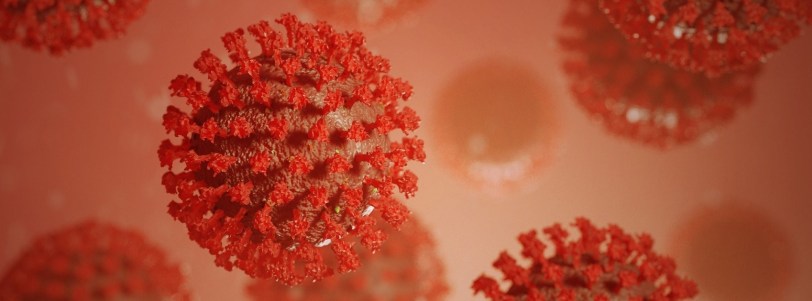
SARS-CoV-2 caused a global pandemic on a scale not seen for over a century. In this talk, Michael will outline the emergence of SARS-CoV-2, the virus responsible for Covid-19. He will also describe the nature of mRNA vaccines and how the pandemic spurred the development of this approach which is being adapted to fight other diseases.

This talk was originally scheduled for PubSci online in June 2021 but was postponed due to changing covid restrictions. Almost two years on, we gain the benefit of both hindsight and new insights.

__

Michael is one of our most prolific and popular speakers and we couldn’t be happier to welcome him as our first speaker of the new season. Anybody who remembers Michael’s 2019 talk on bacteriophages will know to expect a fascinating and informative evening.

• • •

FB_IMG_1559736087541

Michael Byford received his PhD in biochemistry in 1983 from the University of Southampton before joining the University of Washington where he discovered the “IQ domain” in a neurospecific protein and developed a method of detecting phosphorylated residues of amino acids, a key step in understanding metabolic pathways.

He returned to Southampton to initiate work on neuroblastoma, a highly aggressive tumour found only in children. Upon moving to the University of Oxford he worked on the first step in the synthesis of penicillin. He then worked for DEFRA primarily on Creutzfeldt Jacob (AKA “mad cow”) disease.

Following a brief spell working on DNA repair, Michael became senior lecturer in biochemistry at London South Bank University. After a period teaching environmental microbiology at the University of Portsmouth Michael returned to his native Sussex to tutor privately.

• • •

Join us upstairs at the Old King’s Head, near London Bridge station. Doors open at 6.30pm for a 7pm start. The Old King’s Head has a happy hour before 7pm to get you in the mood, and the kitchen serves excellent pub grub.

__

Please support PubSci. As usual, there is no charge for attending PubSci talks, but we have a whip-round to cover expenses. Because so few of us carry cash these days, you can contribute digitally too.

• • •

We aim to keep PubSci accessible for all, although it is unsuitable for under 18s as we meet in the upper room of a pub. Regrettably, there is no wheelchair access.

Check our Future Events page where you can also subscribe to our Google Calendar so PubSci events automatically appear in your own Calendar.  You can find all our links on our LinkTree.

__

NB PubSci used to meet on the first Wednesday of the month but is now on the third Wednesday.

image-third-wednesdays

Address:

The Old King’s Head (upstairs room)
King’s Head Yard
45-49 Borough High Street
London SE1 1NA
Reminder: Book now for PubSci on Friday 30th April with Dr Brock Craft

Apologies for the extra email, but we’re aware that the previous PubSci email went out before tickets were available on eventbrite. Mea culpa!

So here’s a gentle reminder that tickets are available to book right now for the next PubSci online, Friday 30th April at 7pm BST.

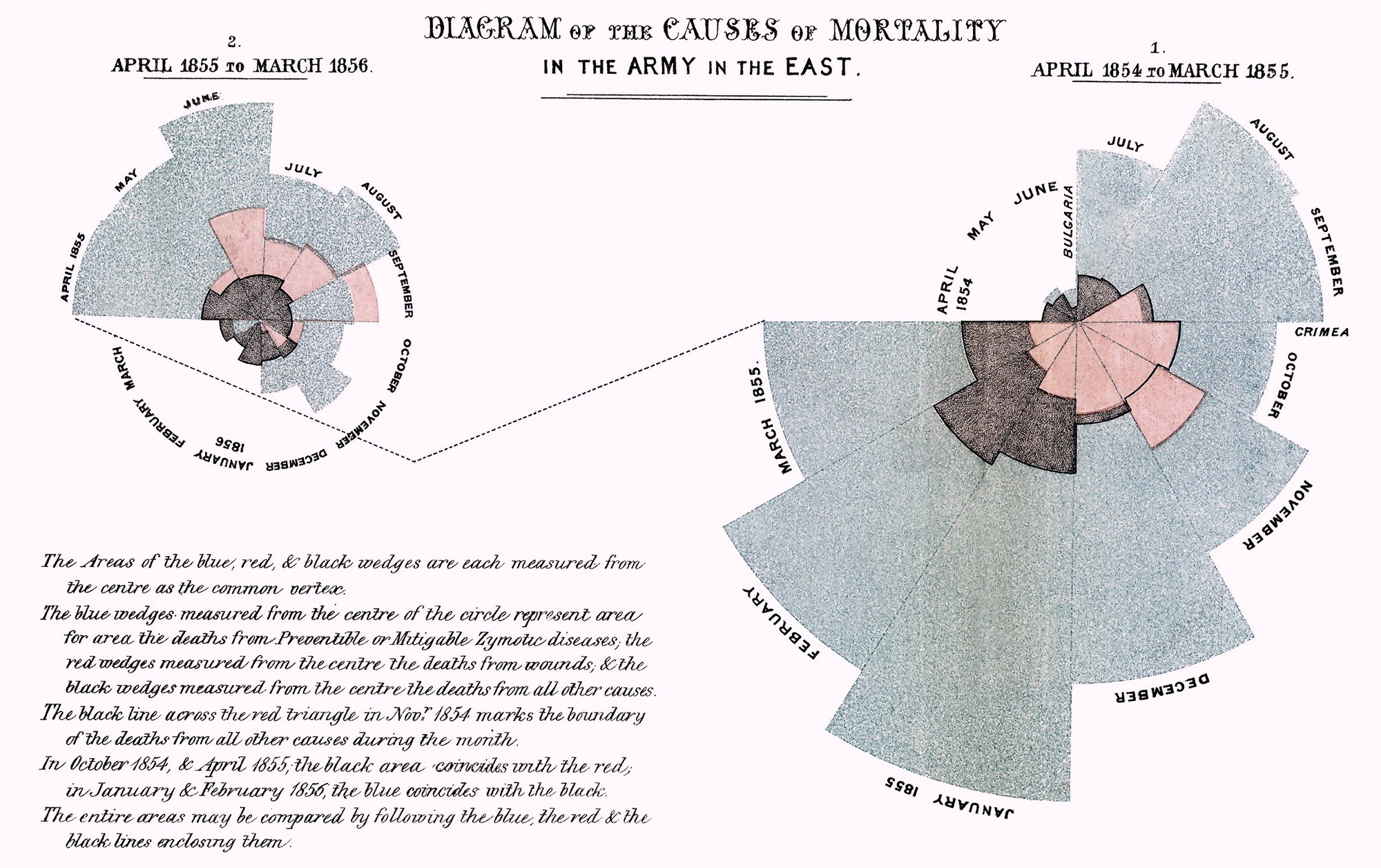
Forget about going to the actual pub – it will be cold and damp outside! Come to the virtual pub for some real science – like the vital lesson that NASA should have learnt from Florence Nightingale.

Follow the link for a fascinating look at the beautiful, terrible, powerful role of data visualisation in the modern world with Dr Brock Craft – it could literally save your life!

PubSci Online | Dr Brock Craft: Picture This – Why Data Visualisation Matters

On 28th Jan 1986 the space shuttle Challenger exploded shortly after lifting off from the Kennedy Space Center. Could better data visualisation have prevented this disaster? (AP Photo/Bruce Weaver, File)

PubSci Online | Dr Brock Craft: Picture This – Why Data Visualisation Matters

On 30th April, PubSci is delighted to welcome Dr Brock Craft, our third speaker of the 2021 programme, for a talk titled Picture This – Why Data Visualisation Matters in which Brock explains how data visualisation can be powerful, beautiful, and a matter of life and death.

space-shuttle-challenger

On 28th Jan 1986 the space shuttle Challenger exploded shortly after lifting off from the Kennedy Space Center. Could better data visualisation have prevented this disaster? (AP Photo/Bruce Weaver, File)

Talk Details

Data is all around us – now more than ever as we navigate a pandemic in daily charts, and we struggle urgently to weigh covid-19 fatalities against the lesser risk from vaccination. But data is more than tables of figures; how we present and visualise data can have literally life-or-death consequences for how we understand it, how we interpret it, and what patterns we discern in it.

Dr. Brock Craft is an Associate Teaching Professor in the Department of Human Centered Design & Engineering at the University of Washington. He specialises in Information Visualisation, Human-Computer Interaction, Physical Computing, and Learning Design.

In this talk he will demonstrate why data visualisation matters to everybody, how there is genuine beauty to be found in data, and how a simple data visualisation could have prevented the Challenger Space Shuttle Disaster.

• • •

brock-caft-hcdeDr Craft has spent much of his career finding innovative ways to represent data in appealing, accessible, or aesthetically pleasing ways. Associate Professor at the University of Washington since 2015, Brock was previously Lecturer in Physical Computing, at Goldsmiths, University of London and programme founder/Senior Tutor on the MA in Information Experience Design at Royal College of Art, London.
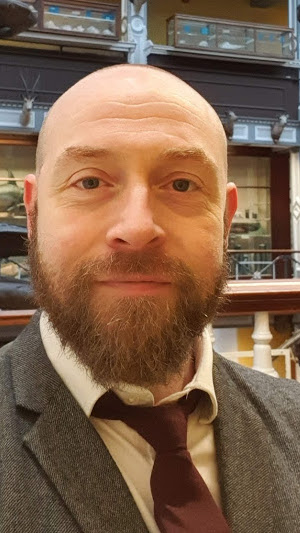
He has a Master’s in Human-Computer Interaction (HCI) from DePaul University, Chicago, and a PhD in Data Visualisation from University College of London Interaction Centre (UCLIC)

In 2007 Brock helped form Tinker London, a design consultancy focused on creating products that bridge the digital and the physical worlds. As a partner at Tinker, Brock designed products and experiences for high-profile clients including Sony, Nokia, The Evening Standard and the BBC, often using data visualisation techniques to create appealing visual representations.

Bridging his industry work with teaching and learning, Brock served as a research fellow at the London Knowledge Lab, where he focused on Learning Design, tools for pedagogy design, technology-enhanced learning, and interactive learning objects. “I have been investigating how people interact with technology and working to make it better for my entire career.”

Brock is the author of Arduino Projects for Dummies (2013) and co-author of Raspberry Pi Projects for Dummies (2015), both published by John Wiley & Sons

He is also creator of the Brockenspiel – a musical instrument that turns bar codes and magnetic swipe cards into music played on tubular bells, as featured on the BBC.

3_nightingale-mortality

Florence Nightingale’s famous Rose (or “Wedge”) Diagram of the Causes of Mortality in the Army of the East”

 __

Viewing the talk: Virtual PubSci is hosted live online via Zoom. We also stream events live on our YouTube channel where they remain available for at least 28 days.

Like all our events, this talk is free to attend, but you will need to register with Eventbrite to access Zoom. We have included the option to donate a small amount when you register to help cover web hosting fees etc.

Ticket sales go live at noon on Saturday 10th April. You’ll receive a confirmation email; the Zoom link is emailed on the day of the talk and available in the eventbrite online event page at the event start time.

More details on the event registration page.


Important Note: We aim to make our events accessible to all. You don’t have to pay, and you don’t need to install Zoom – Zoom can be run in a browser and events are streamed on the PubSci YouTube channel. Anybody wishing to support PubSci in our science communication can choose to make a donation when registering with eventbrite or contribute to our PayPal money pool, which goes directly to keeping PubSci online.

Please check our Future Events page where you can also subscribe to our iCal feed and don’t forget to check out our downloadable PDF schedule, which includes confirmed speakers with dates TBC.

Paolo Viscardi – Dismantling the ‘Dead Zoo’ | Friday 26th Feb 2021

On Friday 26th Feb we’re delighted to be kicking off a new season with an online talk by Paolo Viscardi, one of the founders of PubSci. Paolo, now based at the National Museum of Ireland in Dublin, will present Dismantling the Dead Zoo, streamed live on Zoom and YouTube.

Dead Zoo

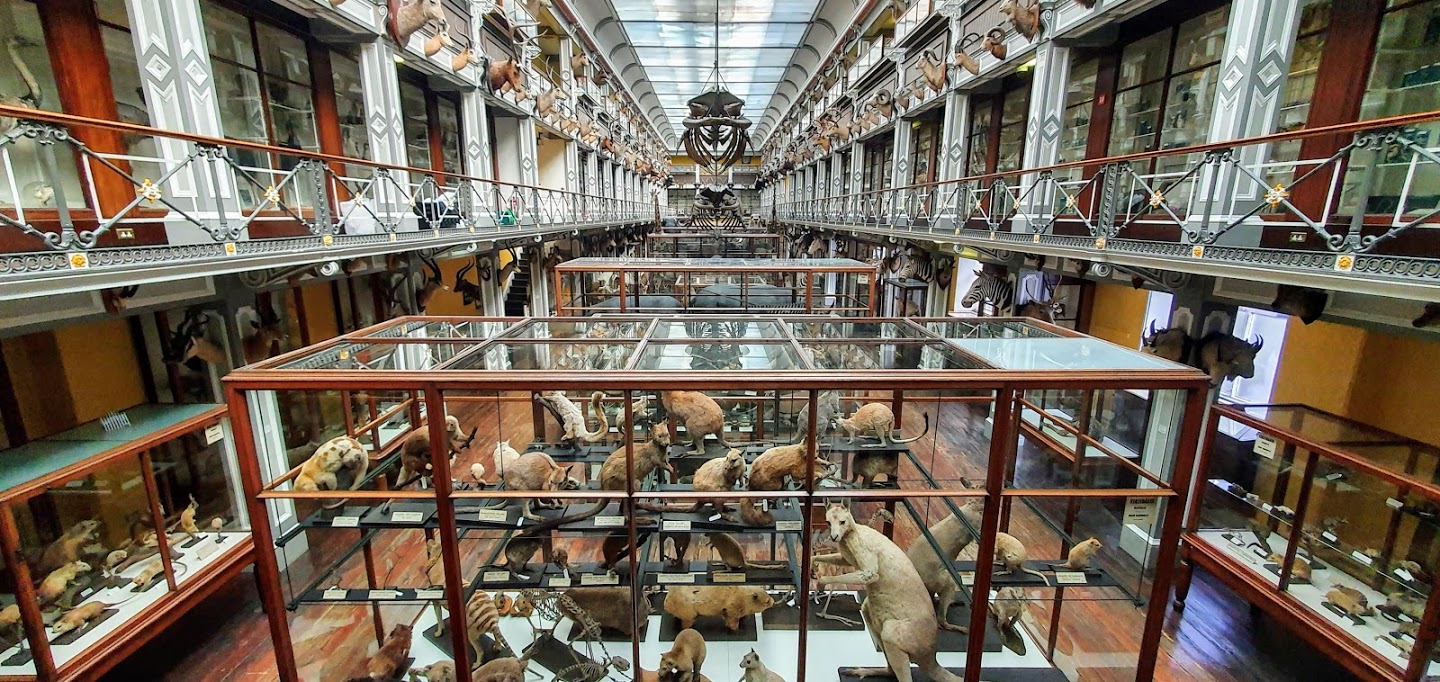
Dublin’s Dead Zoo in June 2020 © Paolo Viscardi, National Museum of Ireland


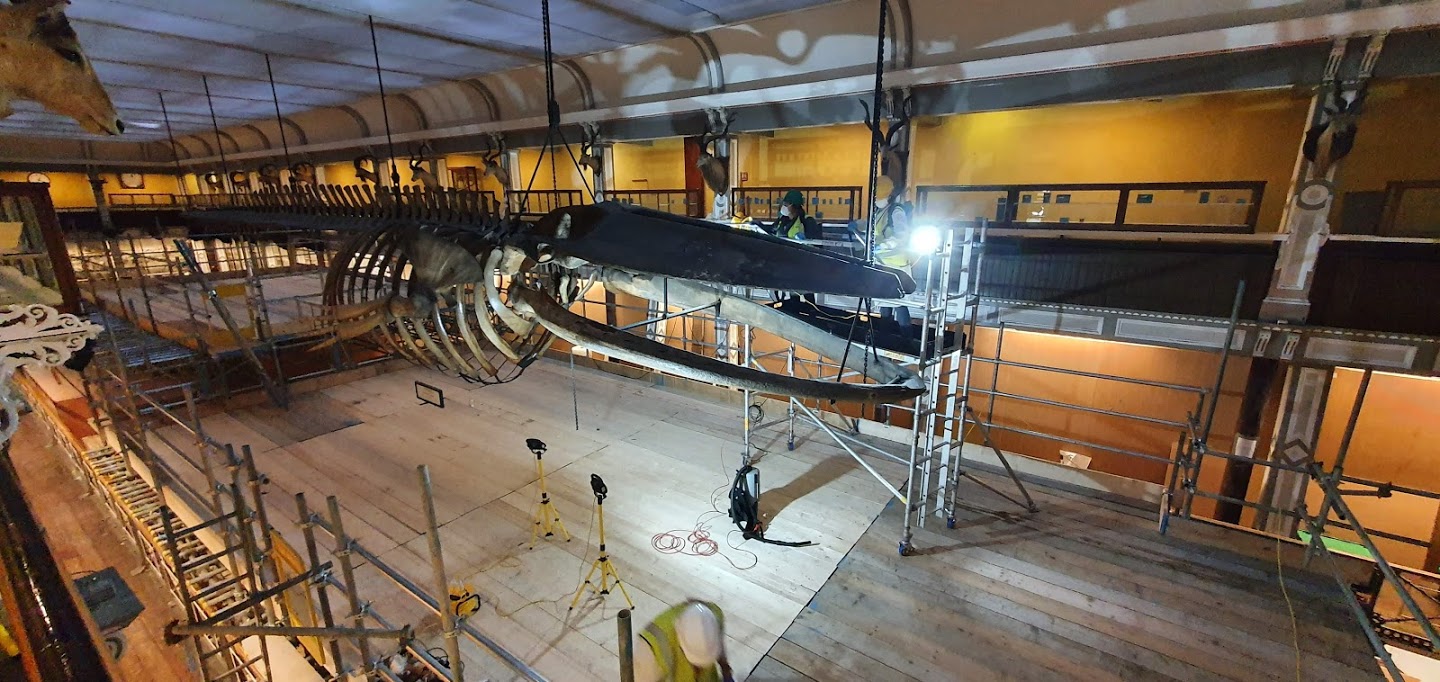
In Dismantling the Dead Zoo, Paolo will talk about decanting the scientifically important natural history collections in Dublin’s delightfully named Dead Zoo during the coronavirus pandemic to allow building renovations to take place.

Safely moving large, historic museum specimens, such as whales, requires an understanding of biomechanics, engineering and even chemistry. It also requires a head for heights, a strong back, and very careful planning – especially in a 164 year old building where floor-loading is theelephant in the room’. And, in this case, there are actual elephants in the room.

Paolo will answer audience questions after the talk.

____

Paolo in Dead Museum Crop 16x9

Paolo Viscardi

Paolo Viscardi is a Zoology Curator at the National Museum of Ireland and a trustee of the Natural Sciences Collections Association (NatSCA). His background is in biomechanics and he is particularly interested in bones. He is a keen science communicator and has worked as consultant and script editor on several TV documentaries. Paolo, now based in Dublin, is co-founder of PubSci.


Viewing the talk: Virtual PubSci is hosted live online via Zoom. We also stream events live on our YouTube channel where they remain available for at least 28 days.

Like all our events, this talk is free to attend, but you will need to register with Eventbrite to access Zoom. We have included the option to donate a small amount when you register to help cover web hosting fees etc.

Ticket sales go live at 1pm on Friday 12th February. You’ll receive a confirmation email; the Zoom link is emailed on the day of the talk.

More details on the event registration page.


Important Note: We aim to make our events accessible to all. You don’t have to pay, and you don’t need to install Zoom – Zoom can be run in a browser and events are streamed on the PubSci YouTube channel.

Please check our Future Events page where you can also subscribe to our iCal feed.

Whale skeleton

Preparing to dismantle the fin whale ©Paolo Viscardi, National Museum of Ireland

Chris French – Weird Science: An Introduction to Anomalistic Psychology

On Wednesday 7th August we’re privileged to welcome Professor Chris French, Head of the Anomalistic Psychology Research Unit at Goldsmiths, University of London. Chris will talk about the remarkable field of anomalistic psychology – the psychology of strange experiences and behaviours.

According to polls, over half the UK population believes in paranormal phenomena, and statistics suggest interest is increasing. Indeed, every ancient society we know of had some kind of supernatural belief system. But can belief in, and reported experience of, paranormal phenomena be explained in terms of psychological factors?

p029q3bp

Is the truth “out there” or is closer to home? Image courtesy of BBC

Professor Chris French heads the Anomalistic Psychology Research Unit in the Psychology Department at Goldsmiths. In this talk Chris will introduce the sub-discipline of anomalistic psychology, the study of extraordinary phenomena of behaviour and experience, in an attempt to explain the weird and the paranormal in terms of known psychological and physical factors.

chris_french_131168_bill_robinson_small

Professor Chris French © Bill Robinson

Chris is a Fellow of the British Psychological Society and of the Committee for Skeptical Inquiry, and a Patron of the British Humanist Association. He has published over 150 articles and chapters covering a wide range of topics. His main area of research is the psychology of paranormal beliefs and anomalous experiences. He frequently appears on radio and television casting a sceptical eye over paranormal claims.


Chris is deeply involved with Greenwich Skeptics in the Pub, which normally meets the same day as PubSci, so it’s a rare delight to welcome him to PubSci this month.

His most recent book , Anomalistic Psychology: Exploring Paranormal Belief and Experience,  will be on sale after the talk.

Join us upstairs at the Old King’s Head, near London Bridge station. Doors open at 6.30pm for a 7pm start and as usual the event is free, but we will have a whip-round to cover speaker’s expenses.

Not all in your head – What if a simple skin test could diagnose depression?

On Wednesday 3rd July we’re very excited to welcome Dr Parry Hashemi, Senior Lecturer in Bioengineering at Imperial College, London. Dr Hashemi will be speaking about her work towards developing a physiological test for clinical depression.

All-About-Serotonin-722x406

Serotonin is a type of neurotransmitter, sometimes called “happiness molecules” (Image: Shutterstock)

Serotonin is the primary target of antidepressants, yet they only work for 30% of patients. And, since we don’t fully understand the roles serotonin plays in depression, antidepressants have barely improved in 5 decades. The prevailing theory is that low levels of serotonin in the brain indicate clinical depression but we’ve not been able to measure it – until now.

Dr Parry Hashemi has worked with the serotonin molecule for 15 years, developing exquisitely sensitive techniques to measure serotonin levels in vivo and in real time while also studying conditions that suppress serotonin levels such as neuro-inflammation.

Now Dr Hashemi’s work has led to a groundbreaking proposition: that our physiological response to depressive triggers is written into our DNA, and by knowing where to look, a skin sample can be developed to objectively diagnose depression, finally removing the social stigma of this all-too common condition. Maybe it isn’t just in your head after all.


Parry Laughing

Dr Parry Hashemi. Image courtesy of Hashemilab.com

Parry Hashemi is an award-winning scientist working at the nexus of analytical chemistry, bioengineering and neuroscience. After 12 years establishing a highly regarded research lab in the USA (www.hashemilab.com) she recently accepted the role of Senior Lecturer in Bioengineering at Imperial college, London, where she completed her PhD in 2007.

Dr Hashemi remains an Associate Professor with the Department of Chemistry and Biochemistry at the University of South Carolina, and continues the work of HashemiLab in the UK.

Parry has not only been recognised for her scientific achievements, she is a powerful advocate of women in STEM subjects and received the UNC Women’s Advancement Award in 2010.

Join us upstairs at the Old King’s Head, near London Bridge station. Doors open at 6.30pm for a 7pm start and as usual the event is free, but we will have a whip-round to cover speaker’s expenses.

Important: April PubSci Event Change

Please note that Michael Byford’s talk on Bacteriophages has been postponed until Weds 1st May due to unforeseen circumstances.

The PubSci team apologises for the late notice – however, we won’t leave you at a loose end this evening. Please come to the Old King’s Head as usual, 6:30pm on Weds 3rd April.

In Part 1 the team behind PubSci will present a series of short talks on our favourite scientific topics. After the break we discuss the question: “Does the media have a duty to accurately report on Science or Is Climate Change Denial protected by Freedom of Expression?”

See this recent case for the current context:

https://www.independent.co.uk/environment/climate-change-sceptic-mislead-pulbic-inaccurate-statements-free-speech-plea-mps-a7657951.html