Tag Archives: talks

News, ‘Thank You’s, and Things for You to Do

Greetings from rainy South London.

26/09/2024 [Updated 03/10/2024]

Many thanks to Deborah Hyde for September’s PubSci talk on A Natural History of Vampires. It turns out everything we knew about folkloric Vampires was wrong… but we knew a lot about Vampire movies, which is something. Unsurprisingly, the truth comes down to poverty, disease, and a desperate need to understand and explain a world in which you have little control of your life and even less understanding of science and medicine.
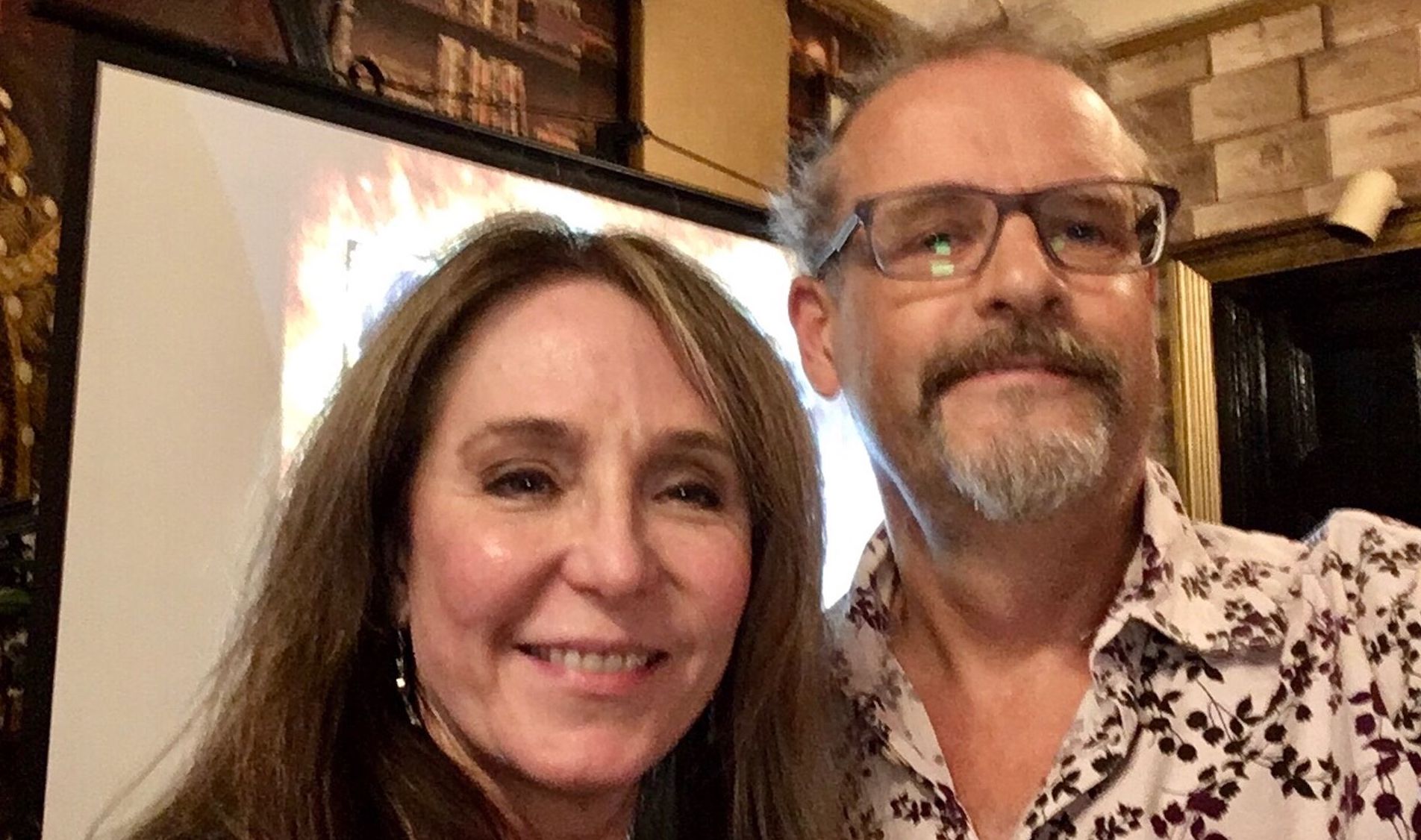
A woman and a man

Deborah and Richard at the King’s Head

I was in Athens just the day before, where I finally saw the Antikythera Mechanism, an incredibly complex astronomical computer from a shipwreck dated to at least 60BCE. Coming face-to-face with this ancient scientific instrument – the likes of which wouldn’t be seen again for 1,300 years – was a surprisingly profound and moving experience for me. If any readers find themselves in Athens, I strongly encourage a visit to the stunning National Archaeological Museum as well as the Acropolis museum.

A rusted brass cog wheel found in an ancient shipwreck

The Antikythera Mechanism: a 2,100 year old mechanical computer.

Talking of mechanical computers, our friends at the Ri (AKA The Royal Institution of Great Britain) have asked me to share a fantastic event with you. On Tuesday 8th October 2024, we celebrate Ada Lovelace Day  in honour of the world’s first computer programmer (and daughter of the “mad, bad, dangerous to know” Lord Byron). Ada Lovelace Day Live is a cabaret-style evening of science and entertainment presenting seven truly inspiring STEM practitioners and communicators, all hosted by the wonderful Dr Sally Le Page. Check the lineup and get your tickets from the Ri website to attend live or watch online.

And if you’re free and in reach of London on Friday 27th September, do come to The Scientist and the Forger presented by Professor Jehane Ragai of Cairo University. You don’t have to dress up for Friday discourses any more, but it’s quite fun if you want to do so. I’ll be stewarding at the event so come and say hello if you’re there.

October’s PubSci

We have a great talk lined up for Wednesday 16th October. In Killer Whales to Killer Heels, we’ll be Demystifying the Menopause with Dr. Diane Keeble Ramsay from University of Suffolk. Get your tickets on Eventbrite now to learn about a topic that’s directly relevant to at least 50% of people alive today.

Full details of PubSci events are published in a new blog post soon after tickets go live on Eventbrite, but you can always see a brief preview in the PubSci calendar and on our regular Next Event page. Read on for more ways to stay informed of forthcoming PubSci events.

• • •

Good news

Summer-Autumn 2024PubSci’s programme is still available to download or print. If you didn’t realise we even had one, follow this link for a preview of events to the end of the year.

Of course, you may prefer PubSci events to appear in your calendar app automatically rather than looking at a flyer pinned to your fridge. Fear not! You can view or subscribe to our Google calendar feed here. Or just click this link to subscribe in one step by downloading the .ics file.

Get with the programme

Since we’ve got an events programme, why not share it with friends and colleagues? It takes me a while to plan and produce every quarter and I’d hate it to go unused! How about printing off a copy and pinning it on your staff noticeboard? Everybody is welcome at PubSci.

• • •
Screenshot

Follow PubSci wherever you are…

Did you know PubSci is on Facebook and Bluesky (and Twitter though I’m trying to move off that). We even have a LinkedIn group, which I’d really love you to join.

And if you want to find all the links in just one place, then you need to head to our Linktree. What’s linktree, you ask? It’s a kind of mini website that’s optimised for mobile viewing and hosts links to all your stuff. Basically it’s like an index to everything you want to put online – and it’s free. Nope, we don’t have a “partner link” or get a kickback for recommendations, I just really like it.

• • •

Support PubSci

There is no charge for attending PubSci talks, but we have a traditional whip-round to cover expenses – consider it a “Pay What You Can” event. Very few of us carry cash these days, so you can contribute digitally through our TipJar [awaiting link update] or make a donation when registering for ticketed events with Eventbrite. Please help PubSci continue putting on events. PubSci has no other source of funding.

We aim to keep PubSci accessible for all, although it is unsuitable for under 18s as we meet in the function room of  a pub. Regrettably, there is no wheelchair access. 

Check out the Future Events page where you can also subscribe to our Google Calendar so PubSci events automatically appear in your own Calendar.  You can find all our links on our LinkTree.

• • •

We used to meet on the first Wednesday of the month but PubSci is now on the third Wednesday. Join us upstairs at the Old King’s Head near London Bridge Underground (Borough High Street east side exit) every month apart from December for a regular dose of Sipping, Supping & Science.

Address:

The Old King’s Head (upstairs room)
King’s Head Yard
45-49 Borough High Street
London SE1 1NA

September’s Event, More News and ‘Thank You’s

The shadow of Count Orlok from the 1922 film Nosferatu

Count Orlok in F.W. Murnau’s 1922 “Nosferatu”

Greetings from windy South London.

First of all, many thanks to Steph Holt for August’s PubSci talk on Gilbert White. A special shout-out to the Goth WI posse who took advantage of their month off to come to the Old King’s Head. Sorry you can’t make the next one because it’s right up your street.

You see, we’re beating the October rush by getting our spook on early this year with a September Halloween Special looking at the natural history of vampires. If you think that doesn’t sound like it would contain much science, you’ve obviously never met September’s speaker, Deborah Hyde.

Full details of the event will be published in this blog once it’s been created on Eventbrite, but you can see a preview on our regular Next Event page (or click the image above). Read on for more ways to stay informed of forthcoming PubSci events. In the meantime, put 18th September in your diary.

• • •

Good news!

Summer-Autumn 2024PubSci’s Summer and Autumn programme is now available to download or print. If you didn’t realise we even had a programme, follow that link for a preview of scheduled events to the end of the year.

Of course, you may just want PubSci events to appear in your calendar app automatically, rather than looking at a flyer pinned to your fridge. Fear not! You can view or subscribe to our Google calendar feed here. Or just click this link to subscribe in one step by downloading the .ics file.

• • •

Get with the programme!

Since we’ve got an events programme, why not share it with friends and colleagues? It takes me a while to plan and produce every quarter and I’d hate it to go unused! How about printing off a copy and pinning it on your staff noticeboard? Everybody is welcome at PubSci.

• • •

Screenshot

Follow PubSci wherever you are…

Did you know PubSci is on Facebook and Bluesky (and Twitter though I’m trying to move off that). We even have a LinkedIn group, which I’d really love you to join.

And if you want to find all the links in just one place, then you need to head to our Linktree. What’s linktree, you ask? It’s a kind of mini website that’s optimised for mobile viewing and hosts links to all your stuff. Basically it’s like an index to everything you want to put online – and it’s free. Nope, we don’t have a “partner link” or get a kickback for recommendations, I just really like it.

• • •

And finally

Roughly half of all humans experience menopause but it’s rarely talked about in public, and both policy and education are shamefully inadequate despite the efforts of a few notable voices. Research by the Fawcett Society found 80% of menopausal women feel unsupported in the workplace. Our friends at the Vagina Museum want to help set this right with an exhibition called Menopause: What’s Changed?

It’s due to open on 18th October 2024 – World Menopause Day – but over a dozen arts and heritage funders have declined to support it, so they’re running a fundraiser instead. If you want to support it, or know an organisation who would, just follow this GoFundMe link.

…aaand October’s PubSci falls just two days earlier, so we’re hosting a special talk for everybody called Menopause Demystified. Yup, that includes the blokes too.

See you in the pub!

• • •

Support PubSci

There is no charge for attending PubSci talks, but we have a traditional whip-round to cover expenses – consider it a “Pay What You Can” event. Very few of us carry cash these days, so you can contribute digitally through our TipJar [awaiting link update] or make a donation when registering for ticketed events with Eventbrite. Please help PubSci continue putting on events. PubSci has no other source of funding.

We aim to keep PubSci accessible for all, although it is unsuitable for under 18s as we meet in the function room of  a pub. Regrettably, there is no wheelchair access. 

Check out the Future Events page where you can also subscribe to our Google Calendar so PubSci events automatically appear in your own Calendar.  You can find all our links on our LinkTree.

• • •

We used to meet on the first Wednesday of the month but PubSci is now on the third Wednesday. Join us upstairs at the Old King’s Head near London Bridge Underground (Borough High Street east side exit) every month apart from December for a regular dose of Sipping, Supping & Science.

image-third-wednesdays

Address:

The Old King’s Head (upstairs room)
King’s Head Yard
45-49 Borough High Street
London SE1 1NA

Next Event, News and ‘Thank You’s

meaning-of-coincidences-dice-on

Greetings from steamy South London.

July’s event is up on Eventbrite, and whilst I will be writing a blog post about it soon, you can read the most important details and find the booking link at our regular Next Event page (or click the image above). Meanwhile, here at PubSci towers, we’re breathing a sigh of relief as the temperature slowly drops, because the heat seems to have convinced WordPress that Orange is the new Black. 

In case you’re wondering, we’ll be welcoming back Professor Chris French to talk about the science and psychology of freaky coincidences. He’ll also be offering copies of his excellent new book for sale, rather wonderfully titled, The Science of Weird Shit: Why Our Minds Conjure the Paranormal. As always it’s the third Wednesday of the month, in this case Weds 17th July.

• • •

Huge thanks, of course, to June’s speaker, Eva Amsen. Remember, next time you hear about DNA fingerprinting or genetic testing, that it’s only possible thanks to some soupy bugs living in Yellowstone’s hot springs.

• • •

Roughly half of all humans experience menopause but it’s rarely talked about in public, and both policy and education are shamefully inadequate despite the efforts of a few notable voices. In fact research by the Fawcett Society found 80% of menopausal women feel unsupported in the workplace. Our friends at the Vagina Museum (the first museum of its kind in the world, now permanently housed in Bethnal Green), want to help set this right with an exhibition called Menopause: What’s Changed?

It’s due to open on 18th October 2024 – World Menopause Day – but over a dozen arts and heritage funders have declined to support it, so they’re running a fundraiser instead. If you want to support it, or know an organisation who would, just follow this GoFundMe link.

___

Don’t forget to register for July’s PubSci talk. As always. it’s a pay-what-you-can event – please consider making a donation with your reservation to help us cover our costs.

• • •

Support PubSci

There is no charge for attending PubSci talks, but we have a traditional whip-round to cover expenses – consider it a “Pay What You Can” event. Very few of us carry cash these days, so you can contribute digitally through our TipJar or make a donation when registering for ticketed events with Eventbrite. Please help PubSci continue putting on events. PubSci has no other source of funding.

We aim to keep PubSci accessible for all, although it is unsuitable for under 18s as we meet in the function room of  a pub. Regrettably, there is no wheelchair access. 

Check out the Future Events page where you can also subscribe to our Google Calendar so PubSci events automatically appear in your own Calendar.  You can find all our links on our LinkTree.

• • •

We used to meet on the first Wednesday of the month but PubSci is now on the third Wednesday. Join us upstairs at the Old King’s Head near London Bridge Underground (Borough High Street east side exit) every month apart from December for a regular dose of Sipping, Supping & Science.

image-third-wednesdays

Address:

The Old King’s Head (upstairs room)
King’s Head Yard
45-49 Borough High Street
London SE1 1NA

‘Science in Unexpected Places’ | 19th June, Eva Amsen

What do rubber ducks at sea have in common with edible art and a Japanese TV show?

On Wednesday 19th June PubSci is delighted to welcome celebrated science writer and blogger, Dr. Eva Amsen, to share favourite episodes from her entertaining new book, “Hey, There’s Science in This“.

Several yellow plastic ducks

Ducks Ahoy! (Image: Gaetan Lee – Creative Commons)

Real science can be found in the most unlikely places, and Eva Amsen has collected some of the best and funniest examples in her book, Hey, There’s Science in This.

For tonight’s talk, Eva has selected her favourite amusing stories from the book to delight, entertain and enlighten us as she explores the connections between hot springs and genetics, the psychology behind your study playlist, hiking trail geology and much more.

Hey There’s Science in This is an approachable and fun read that has garnered five star reviews since its publication on 28th March. Copies will be available to purchase at the event.

Come to June’s PubSci and discover the fun science behind the most unexpected things.

Places for this popular talk are very limited. Book yours on Eventbrite now for an entertaining evening that’s bound to satisfy everyone’s inner nerd. Copies of Eva’s books will be on sale after the talk.

A book cover

“Hey, There’s Science in This” was published in March to five star reviews.

          Book Cover for Biology - 100 ideas in 100 words

Join us upstairs at the Old King’s Head, near London Bridge tube on Wednesday 19th June.

Doors open at 6.30pm for a 7pm start. Talks run for ~45 minutes and are followed by a Q&A session. The Old King’s Head has a happy hour before 7pm, and the kitchen serves excellent pub grub.

Reserve your place now!  PubSci is a pay-what-you-can event – please consider making a donation with your reservation to help us cover our costs.

We use Eventbrite to manage event numbers. Subscribe to be notified of forthcoming talks

• • •

About the speaker

EVA-AMSEN-Donna-Ford2023-9 crop

Photo Credit: Donna Ford

Eva Amsen is a science writer based in London specialising in the interface between science and culture. She has written about science and scientists for numerous publications, including Nature, the British Medical Journal, Undark, Hakai, and the Forbes website, where she has a regular column.

Eva began her writing career with a science blog during her Biochemistry PhD at the University of Toronto. Some of those blog posts were collected into her first book, Hey, There’s Science in This, published in March 2024. She still blogs regularly via her Substack called Mixture.

Eva’s second book, Biology: 100 Ideas in 100 Words, allows readers to understand the most important concepts in biology through concise, easy-to-read summaries. Part of a cutting-edge series in partnership with The Science Museum, it was published by DK in May 2024.

PubSci is delighted to welcome Eva to the latest in our series of monthly talks.

___

Support PubSci

There is no charge for attending PubSci talks, but we have a traditional whip-round to cover expenses – consider it a “Pay What You Can” event. Very few of us carry cash these days, so you can contribute digitally through our TipJar or make a donation when registering for ticketed events with Eventbrite. Please help PubSci continue putting on events. PubSci has no other source of funding.

We aim to keep PubSci accessible for all, although it is unsuitable for under 18s as we meet in the function room of  a pub. Regrettably, there is no wheelchair access. 

Check out the Future Events page where you can also subscribe to our Google Calendar so PubSci events automatically appear in your own Calendar.  You can find all our links on our LinkTree.

• • •

We used to meet on the first Wednesday of the month but PubSci is now on the third Wednesday. Join us upstairs at the Old King’s Head near London Bridge Underground (Borough High Street east side exit) every month apart from December for a regular dose of Sipping, Supping & Science.

image-third-wednesdays

Address:

The Old King’s Head (upstairs room)
King’s Head Yard
45-49 Borough High Street
London SE1 1NA

Paolo Viscardi – Dismantling the ‘Dead Zoo’ | Friday 26th Feb 2021

On Friday 26th Feb we’re delighted to be kicking off a new season with an online talk by Paolo Viscardi, one of the founders of PubSci. Paolo, now based at the National Museum of Ireland in Dublin, will present Dismantling the Dead Zoo, streamed live on Zoom and YouTube.

Dead Zoo

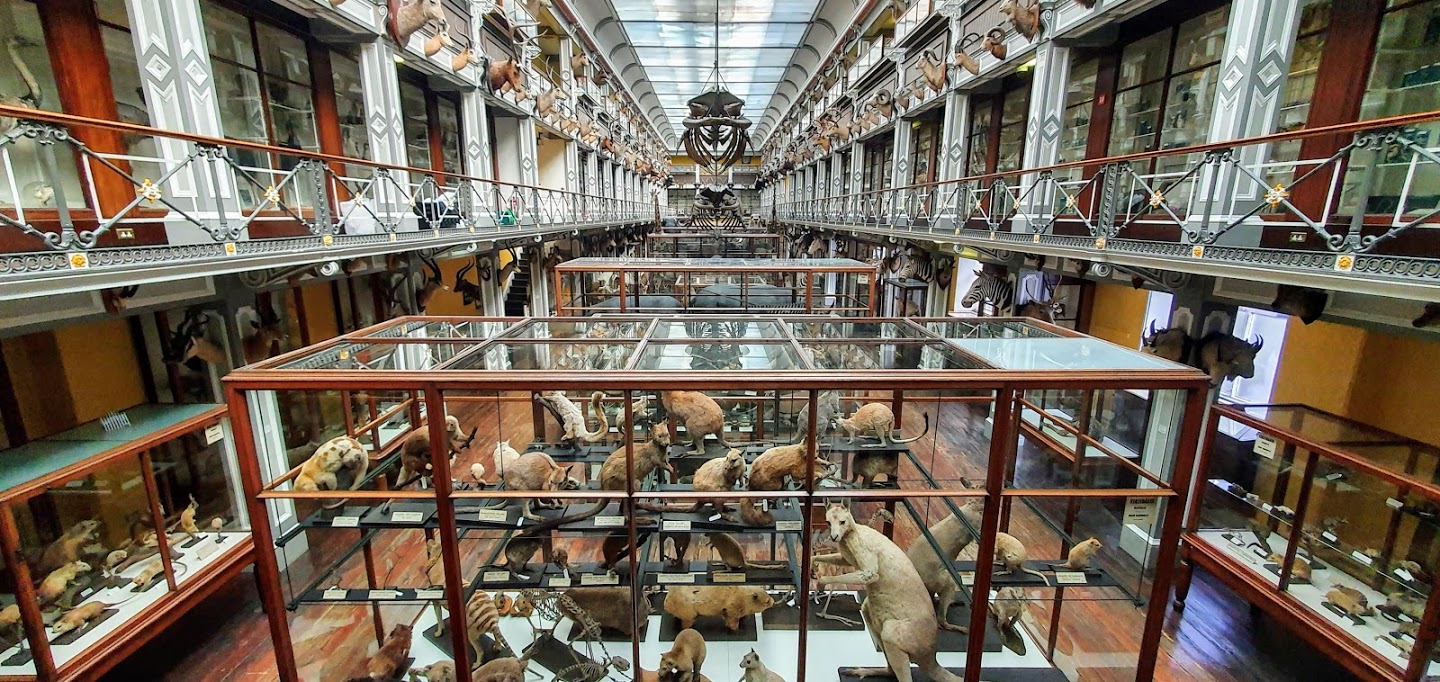
Dublin’s Dead Zoo in June 2020 © Paolo Viscardi, National Museum of Ireland


In Dismantling the Dead Zoo, Paolo will talk about decanting the scientifically important natural history collections in Dublin’s delightfully named Dead Zoo during the coronavirus pandemic to allow building renovations to take place.

Safely moving large, historic museum specimens, such as whales, requires an understanding of biomechanics, engineering and even chemistry. It also requires a head for heights, a strong back, and very careful planning – especially in a 164 year old building where floor-loading is theelephant in the room’. And, in this case, there are actual elephants in the room.

Paolo will answer audience questions after the talk.

____

Paolo in Dead Museum Crop 16x9

Paolo Viscardi

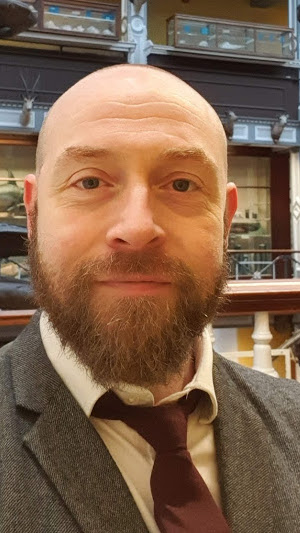
Paolo Viscardi is a Zoology Curator at the National Museum of Ireland and a trustee of the Natural Sciences Collections Association (NatSCA). His background is in biomechanics and he is particularly interested in bones. He is a keen science communicator and has worked as consultant and script editor on several TV documentaries. Paolo, now based in Dublin, is co-founder of PubSci.


Viewing the talk: Virtual PubSci is hosted live online via Zoom. We also stream events live on our YouTube channel where they remain available for at least 28 days.

Like all our events, this talk is free to attend, but you will need to register with Eventbrite to access Zoom. We have included the option to donate a small amount when you register to help cover web hosting fees etc.

Ticket sales go live at 1pm on Friday 12th February. You’ll receive a confirmation email; the Zoom link is emailed on the day of the talk.

More details on the event registration page.


Important Note: We aim to make our events accessible to all. You don’t have to pay, and you don’t need to install Zoom – Zoom can be run in a browser and events are streamed on the PubSci YouTube channel.

Please check our Future Events page where you can also subscribe to our iCal feed.

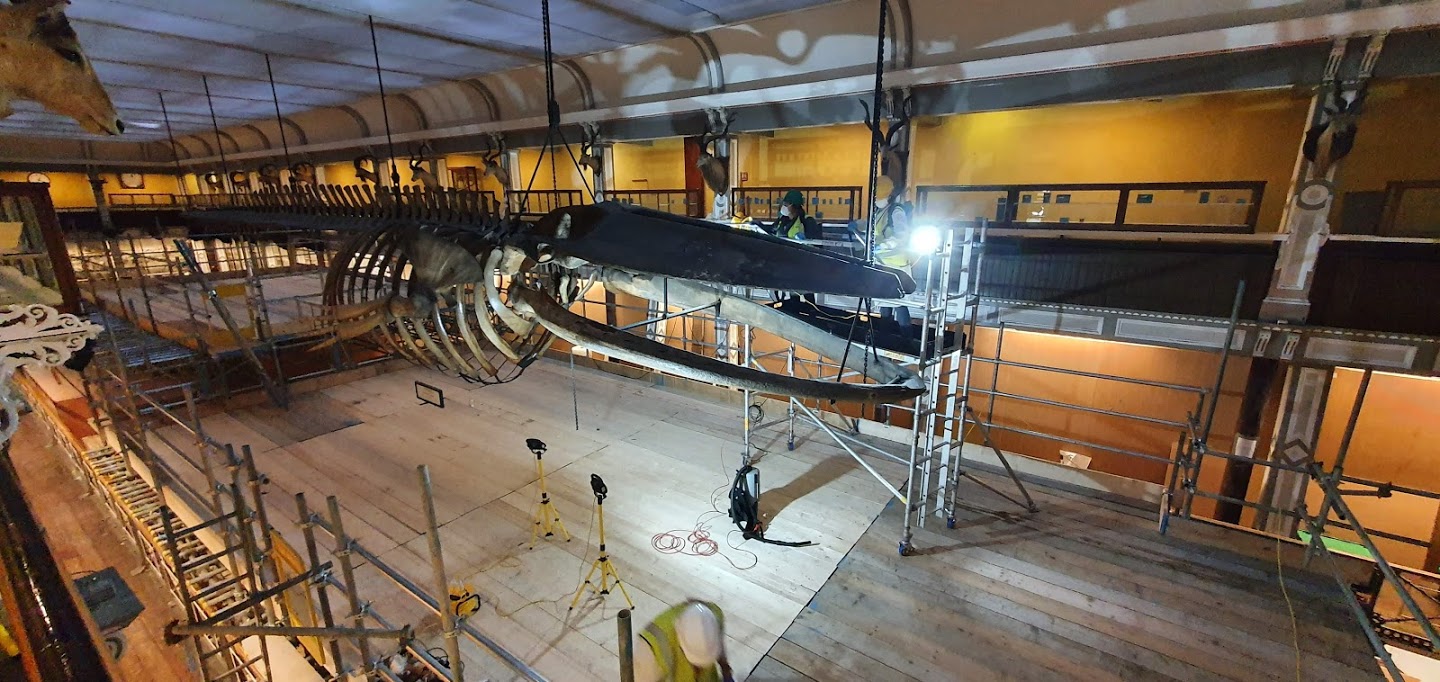
Whale skeleton

Preparing to dismantle the fin whale ©Paolo Viscardi, National Museum of Ireland

Dr Rebecca Nesbit – Honeybees or Hairworms?

On Wednesday 5th September we’re pleased to welcome Dr Rebecca Nesbit, who will be asking the question “Honeybees or Hairworms – which would you save?” to explore conservation priorities and the nature of “Natural”. Ecologist and writer Rebecca Nesbitt trained honeybees to detect explosives before starting a career in science communication. She currently works for Nobel Media, visiting universities around the world with Nobel Laureates. She published her first novel in 2014, and a popular science book ‘Is that Fish in your Tomato?’ in July 2017.

Rebecca Nesbit portrait photo small

‘Save the Honeybee’ stories are never far from the news, but is the species really under threat? Given that they are managed by beekeepers, should we see them as livestock not wildlife? Parasites such as the hairworm, on the other hand seldom attract attention – would they be a better use of conservation funds? This PubSci, Dr Rebecca Nesbit will examine how we set conservation priorities, and whether the arguments for protecting nature really stack up. Expect lively debate!

bees-18192_960_720

Join us upstairs at the Old King’s Head, near London Bridge station. Doors open at 6pm for a 7pm start and as usual the event is free, but we will have a whip-round to cover speaker’s expenses.

Prof Peter Doyle – Disputed Earth: Geology and the Western Front

On Wednesday 4th October we’re pleased to welcome Professor Peter Doyle of London South Bank University, who is a geologist and military historian. Peter will be exploring the significance of terrain, geology and geologists in the Great War (1914–1918), drawing on examples from his new book Disputed Earth (you can buy a signed copy on the night if you like!)
DE BW
To the outside observer the trench warfare of the First World War I seems like a static slog of attrition, but in reality the trenches pitted military engineers against artillerymen in an arms race that saw trenches and artillery pieces become ever more sophisticated.
Trench lines snaked across Europe, cutting through varied terrain, with every aspect of the ground conditions having an impact on the health and well-being of the men. This included the ability of the trenches to protect their occupants, stop attacks, and aid in the assault. Men were mired in seemingly bottomless mud, facing hills and ridges, with high ground to be taken at all cost, the significance of geology to the outcome of the conflict was very real. Military engineers enlisted geologists, who helped drain the trenches, map out and combat unsuitable ground, design and build dug-outs and pill-boxes. Geologists ensured the supply of water and other resources and improved the lot of the frontline soldier.
KONICA MINOLTA DIGITAL CAMERA
Geology had a significant role in this defensive war; but arguably it had an even greater one in planning the offence, by influencing the effects on artillery fire, undermining the enemy, controlling the flow of poisonous gas, or permitting the use of tanks. A tangible example of how knowledge can become power in the most immediate sense.
Join us upstairs at the Old King’s Head, near London Bridge station. Doors open at 6pm for a 7pm start and as usual the event is free, but we will have a whip-round to cover costs – we hope to see you there!

Jane Hallam – Fishtopia! An irreverent celebration of fish diversity

On Wednesday 5th July we have something fishy going on at PubSci.

Fish are great, and Jane Hallam loves fish. An aquarist with over fifteen years of experience in public aquaria, zoos, and billionaires’ private tanks, she’s here to talk about some of her favourite fish – the ugly, the misunderstood, the weird and the fabulous. From the mating rituals of deep-sea anglerfish to record-breaking sharks, there will be something for anyone with a passing interest in our watery friends.

Jane Hallam

Join us upstairs at the Old King’s Head, near London Bridge station. Doors open at 6pm for a 7pm start and as usual the event is free, but we will have a whip-round to cover costs – we hope to see you there!


CANCELLED-Dr Mike Shanahan – How fig trees can save the planet

Unfortunately tonight’s planned talk has been rescheduled to August due to disruption following the recent terrorist attack in nearby Borough Market. However, the Old King’s Head should be reopened today and some of the PubSci regulars will be there to socialise.

On Wednesday 7th June we’re delighted to welcome Dr Mike Shanahan, a freelance writer and illustrator with a research background in rainforest ecology, who will be talking about the ecological and cultural importance of fig trees.

FigTree

Fig trees fed our pre-human ancestors, influenced diverse cultures and played key roles in the dawn of civilisation. They feature in every major religion, starring alongside Adam and Eve, Krishna and Buddha, Jesus and Muhammad. This is no coincidence – fig trees are special. They evolved when giant dinosaurs still roamed and have been shaping our world ever since.

And all because 80 million years ago these trees cut a curious deal with some tiny wasps. Thanks to this deal, figs sustain more species of birds and mammals than any other trees. As Mike will explain, fig trees could help restore lost rainforests, conserve wildlife and tackle climate change. In a time of falling trees and rising temperatures, their story offers hope.

Mike’s book Ladders to Heaven: How fig trees shaped our history, fed our imaginations and can enrich our future was published in 2016 – copies will be available on the night if you fancy getting the detailed inside scoop.

Join us upstairs at the Old King’s Head, near London Bridge station. Doors open at 6pm for a 7pm start and as usual the event is free, but we will have a whip-round to cover costs – we hope to see you there!

Barbecue, roasts and toast – how humans evolved a nose for cooked food

On Wednesday 3rd May we’re pleased to welcome Tom Husband who will be talking about the chemistry of cooked food and how (and why) we’ve evolved to want it.

TomHusband

Tom Husband

Tom Husband is a science writer and teacher who is fascinated by the chemistry of the every day. This talk combines his twin passions for the chemistry of food and of life. His book The Chemistry of Human Nature was recently published by the Royal Society of Chemistry. He is aware that the word “chemistry” has been over-used during this introduction.

Join us upstairs at the Old King’s Head, near London Bridge station. Doors open at 6pm for a 7pm start and as usual the event is free, but we will have a whip-round to cover costs – we hope to see you there!